
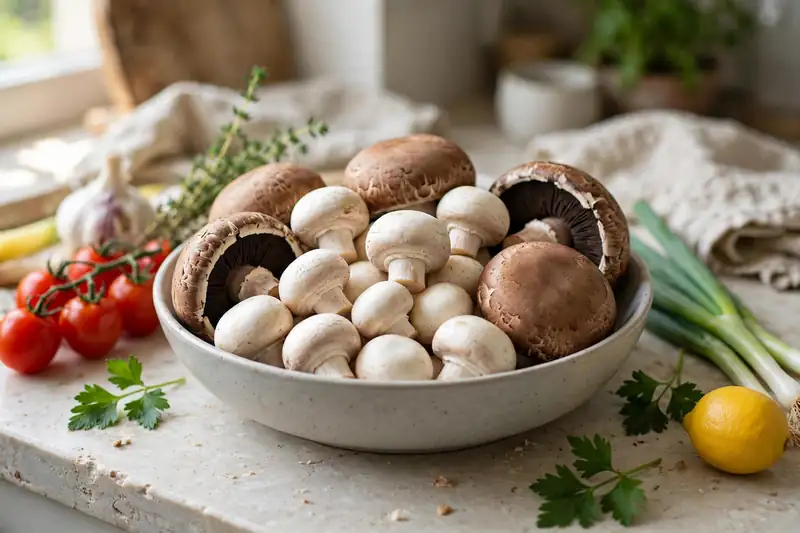
Can dogs eat mushrooms? It depends entirely on where the mushroom came from: plain, store-bought mushrooms are safe for dogs in small amounts, but wild mushrooms can be deadly, and no owner can reliably tell the difference. That split makes this one of the most important “can dogs eat” answers to get exactly right. The short version: grocery store yes, plain, small, occasional; backyard or trail no, ever; and treat any wild-mushroom incident as an emergency.
The short answer: store yes, wild never
Every mushroom question divides into two unrelated foods that share a name. Store-bought culinary mushrooms, grown in controlled conditions and positively identified, are non-toxic, and PetMD confirms they are fine for dogs. Wild mushrooms, anything growing in your yard, park, or woods, are a different universe: some harmless, some causing liver failure, and telling them apart takes real expertise.

Dogs are the most commonly reported victims of mushroom poisoning, precisely because they grab and swallow before anyone can intervene. Never let familiarity with the grocery-store kind create confidence about the wild kind. They are different risk universes, and the only safe rule is that no wild mushroom is ever food for your dog.
Which store mushrooms are safe
The safe grocery list is short, and every item on it must be plain and positively identified. White button, cremini, and portobello are all the same species, Agaricus bisporus, at different maturities, and they are the most common and the safest bet. Shiitake is safe, but cook it rather than serving it raw. Oyster mushrooms are safe in small amounts.

Keep expectations modest even with the safe list. PetMD notes that store mushrooms offer dogs minimal nutritional benefit. There are far more nutritious vegetables, so mushrooms are a “permitted” food, not a “recommended” one. A few small chopped pieces mixed into food or offered as a treat is the right scale, and no dog needs mushrooms the way they need their regular balanced diet.
Raw vs. cooked: preparation rules
Plain cooked mushrooms are safer and easier for dogs to digest than raw ones. Light sauteing in a dry pan or steaming with nothing added is enough. Raw store-bought mushrooms are not toxic, but their tough cell walls make them harder to digest, and large raw pieces are a mild choking risk for small dogs.

The preparation rules matter more than the variety you choose. Cook them plain, with no butter, oil, salt, garlic, onion, or sauces, and chop them small. When in doubt, cook them plain and keep the pieces tiny. How much is safe? Keep it small and occasional: a few small chopped pieces, a couple of times a week at most, inside the 10 percent treat allowance. Dogs with sensitive stomachs may get mild digestive upset even from safe varieties, so introduce slowly and watch.
The seasoning trap
In cooked mushroom dishes, the mushroom is rarely the problem; the company it keeps is. Garlic and onion are toxic to dogs. Butter and oil bring pancreatitis risk. Salt, cream sauces, and wine reductions all turn a safe mushroom into a dangerous meal. Pizza mushrooms, mushroom risotto, and creamy mushroom soup are all out, every time.
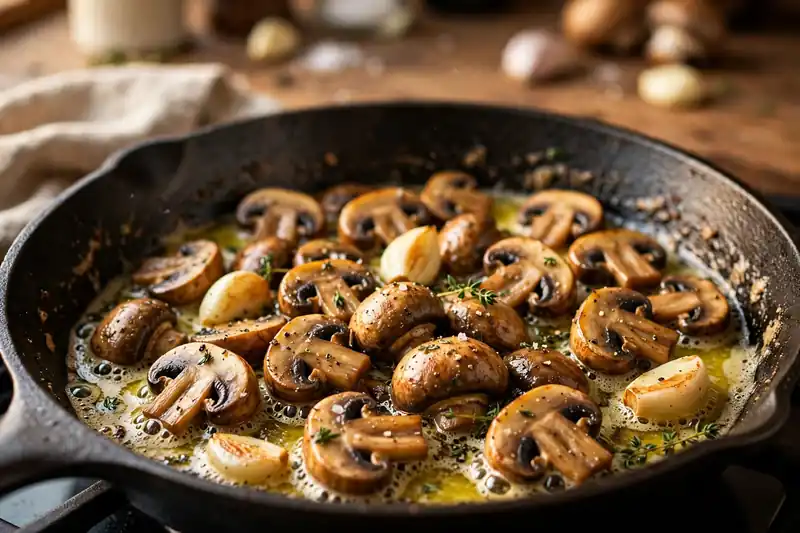
Only mushrooms you have cooked plain, separately, count as safe. The same logic covers canned mushrooms: the mushrooms themselves are not toxic, but the canning liquid is usually salty, so rinse them thoroughly and offer only a small amount, occasionally. Fresh plain mushrooms, cooked with nothing added, are the better choice. And mushrooms used as ingredients in reputable commercial dog foods are cultivated, identified species used in controlled amounts; that safety does not transfer to your own kitchen experiments or to anything foraged.
The wild mushroom emergency
Wild mushrooms should be categorically treated as dangerous: there is no safe amount of an unidentified specimen, and field identification is unreliable for non-experts. A wrong guess can mean liver failure, kidney damage, neurological collapse, or death, and the cruelest part is that symptoms can lie to you before the worst damage lands.
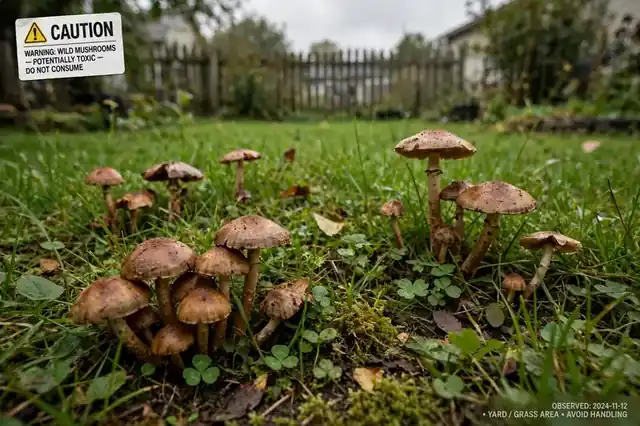
Three facts every dog owner should carry. First, symptoms can be delayed: with the deadliest species, early vomiting and diarrhea appear within 2 to 6 hours, then deceptively ease, before catastrophic liver failure develops 24 to 72 hours later. That false recovery kills dogs whose owners decided they were “fine.” Second, never use a phone app to clear a wild mushroom for dog consumption; apps are not reliable enough for a life-or-death call. Third, prevention is a habit: scan your yard regularly, especially after rain, supervise dogs on walks and hikes and at dog parks, and teach a rock-solid “leave it” for ground finds.
The deadliest wild mushrooms: names to know
Two names carry most of the fatality risk. The death cap, Amanita phalloides, shows a greenish-yellow cap, white gills, and a cup-like volva at the base, and it contains amatoxins that destroy the liver, growing near oaks and hardwoods. The destroying angel, Amanita virosa and relatives, is pure white and equally lethal.

Both share the cruelest trait in toxicology: the victim feels better before getting worse, as early vomiting fades and liver failure develops silently over one to three days. No field guide, memory trick, or phone app makes an amateur identification safe. Knowing these names is useful for respect, not for identification; the rule stays absolute, and no wild mushroom is ever food.
What to do if your dog eats a wild mushroom
Treat it as a poisoning emergency from the first second, and do not wait for symptoms. Call your veterinarian immediately. If it is after hours, call an emergency vet clinic or the ASPCA Animal Poison Control Center at 888-426-4435, though a consultation fee may apply. The Pet Poison Helpline at 855-764-7661 is another option.
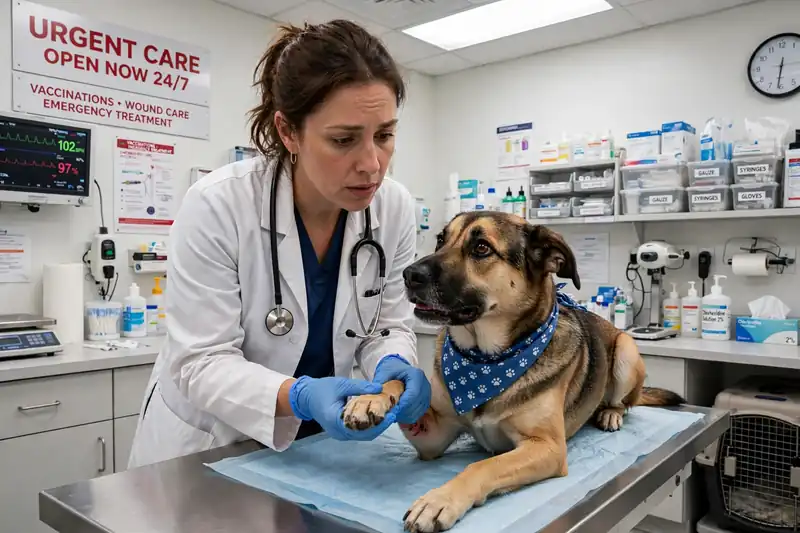
Collect a sample of the mushroom, ideally intact and including the base, for identification. If the dog ate it all, photograph the spot where it grew and note the surroundings: grass, wood chips, near trees. Note the time of ingestion and your dog’s weight. Do not induce vomiting unless your vet specifically instructs it. Then go in. With mushroom poisoning, early treatment, before the deceptive recovery phase, is what saves lives. Do not “wait and see.”
Poisoning symptoms: the timeline
Because different toxins act differently, watch for a wide range of signs. In the first 0 to 6 hours, expect vomiting, diarrhea, drooling, and abdominal pain; that gastrotoxic picture is the most common early presentation. Neurological signs can follow with some species: wobbliness, tremors, seizures, abnormal behavior, excessive salivation, tearing, and urination.

Then comes the deceptive improvement. With amatoxins, the gastrointestinal signs ease after several hours, and then liver and kidney failure develop one to three days later. Late signs include jaundice with yellow gums or eyes, dark urine, and collapse. This is why “he seems better now” is never a reason to skip the vet. Any wild-mushroom ingestion warrants an immediate vet visit regardless of symptoms, because the emergency was already real before the first sign appeared.
Mushroom season and yard checks
Risk is seasonal, and knowing the calendar helps. Mushrooms flush hardest in fall and after heavy rains, in mulched garden beds, lawns, and wooded trail edges, exactly where dogs sniff with the most enthusiasm. Most wild-mushroom poisonings cluster in these wet autumn weeks.
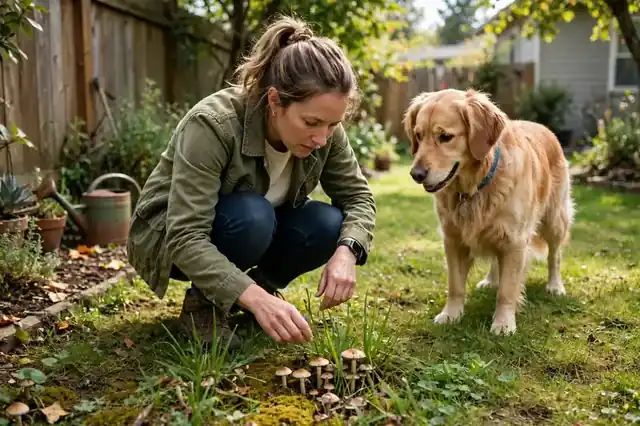
Make post-rain yard checks a habit during mushroom season: walk the yard before the dog goes out, and remove anything sprouting. On hikes, keep dogs on the trail and enforce that “leave it” at every interesting smell. A few minutes of prevention beats an emergency clinic visit every time, and it costs nothing but attention.
Teaching “leave it”: the life-saving command
“Leave it” is the most valuable command for mushroom country, trainable in weeks. Start indoors by holding a treat in a closed fist. The instant your dog pulls away, mark and reward with a better treat from the other hand. Build up to floor treats, then outdoor distractions, always trading up.
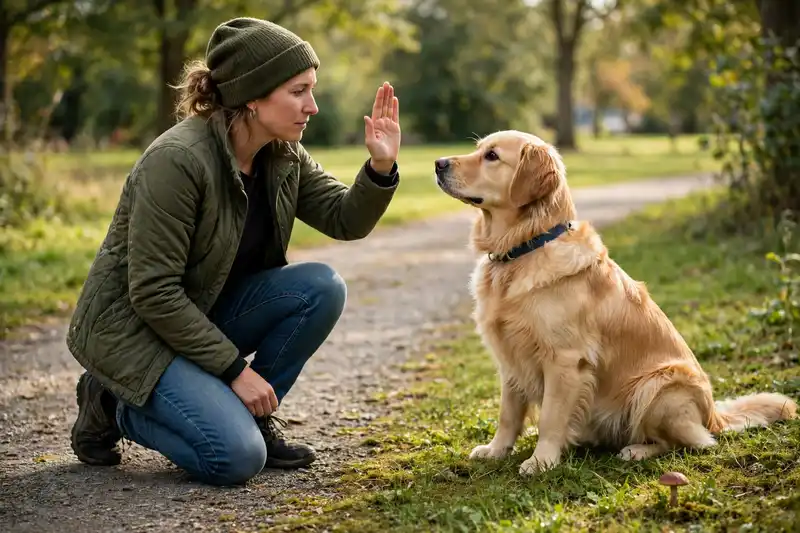
Practice on walks with planted “finds.” The goal is a reflex, not a debate: the nose goes down toward something unknown, the command lands, the dog disengages and looks at you for the payoff. That reflex is what stands between your dog and a death cap. One related note on mushroom extracts and powders marketed for dogs, like reishi, lion’s mane, or turkey tail: the AKC notes they should not be given as whole or raw mushrooms, extracts from trusted sources are the form used, and even then only with veterinary guidance. Raw chaga mushrooms contain xylitol, which is deadly to dogs. Do not experiment with medicinal mushrooms on your own; that is a conversation for your vet, not a DIY project.
Frequently Asked Questions
Can dogs eat raw mushrooms from the store?
They are not toxic, but raw mushrooms are harder to digest and a mild choking consideration. Plain cooked is the safer, easier option. Chop small either way.
Which mushrooms are safe for dogs?
Plain, positively identified store-bought types: white button, cremini, portobello, shiitake, and oyster. Cooked plain, no seasonings, in small amounts.
My dog ate a mushroom in the yard. What should I do?
Treat it as an emergency: call your vet or the ASPCA Animal Poison Control Center at 888-426-4435 immediately. Collect a sample or photograph where it grew, note the time, and do not wait for symptoms.
Can dogs eat mushrooms every day?
No. Occasional only, a few times a week at most. Even safe varieties can cause mild digestive upset in quantity, and mushrooms offer dogs minimal nutrition compared with other vegetables.
Are portobello mushrooms safe for dogs?
Yes. Portobellos are the mature form of the same species as white button and cremini, Agaricus bisporus. Plain and cooked, in small amounts.
Can dogs eat mushrooms on pizza?
No. Pizza brings cheese, oils, salt, and often garlic and onion; the toppings are the problem. Only plain mushrooms you cook separately count.
How can I tell if a wild mushroom is poisonous?
You almost certainly cannot. Reliable identification requires mycological expertise, and phone apps are not trustworthy for this. Treat every wild mushroom as potentially deadly.
What are the signs of mushroom poisoning in dogs?
Vomiting, diarrhea, drooling, and abdominal pain within hours; neurological signs like tremors, seizures, and wobbliness with some species; and with the deadliest toxins, a deceptive improvement followed by liver failure one to three days later. Any wild-mushroom ingestion warrants an immediate vet visit regardless of symptoms.
For the same plain-only, small-portion thinking across the foods dogs meet most often, see our wider guide to what human food dogs can eat. For another vegetable where preparation decides safety, our broccoli guide follows the same logic, and our potato guide covers a food with its own strict cooked-only rule.
This article is general information only and is not a substitute for veterinary advice. If your dog has a health condition, is on a prescription diet, or you are unsure about any food, check with your veterinarian first. In any suspected poisoning, contact your veterinarian or an animal poison helpline immediately.

1 thought on “Can Dogs Eat Mushrooms? Safe Store Types vs. Wild Danger”