
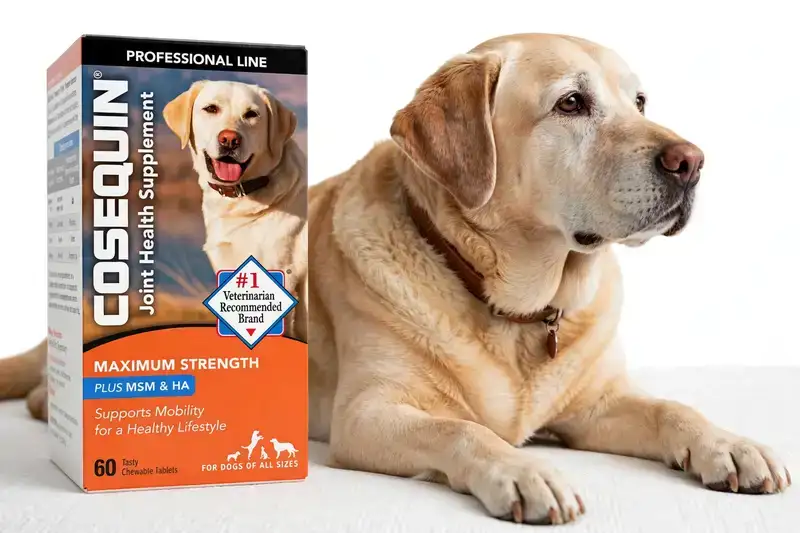
Cosequin for dogs is the joint supplement veterinarians recommend more than any other. Made by Nutramax Laboratories, it combines glucosamine and chondroitin sulfate to support cartilage health in dogs with arthritis, aging joints, or recovery needs. It is not a painkiller and it does not rebuild joints overnight, but it has the longest track record of any canine joint supplement. This guide covers what is inside, the weight-based dosing, when to start, and an honest look at what the evidence actually says.
What is Cosequin for dogs?
Cosequin is a joint health supplement for dogs made by Nutramax Laboratories Veterinary Sciences, built around glucosamine hydrochloride and chondroitin sulfate, the two compounds most associated with cartilage support. It comes in chewable tablets, soft chews, and sprinkle capsules, and it is sold over the counter, though most owners start it on a veterinarian’s recommendation.

Walk into any vet clinic and ask about joint supplements, and Cosequin is the name you will hear first. Nutramax has sold it for over 25 years, and the company claims the number one veterinarian-recommended position based on surveys of small animal vets. That reputation rests on two things: consistent manufacturing quality and published safety data. Unlike many pet supplements that appear and vanish, Cosequin carries the NASC quality seal, which means an independent body audits its manufacturing and labeling. It is a supplement, not a drug, so the FDA does not review it for effectiveness before sale. That distinction matters. Cosequin supports joint structure and may ease the discomfort of arthritis over time, but it is not an anti-inflammatory drug and will not replace prescribed pain medication for a dog in real pain.
What is in Cosequin DS?
Each Cosequin DS chewable tablet contains 500 mg of glucosamine hydrochloride, 400 mg of sodium chondroitin sulfate, and 3 mg of manganese ascorbate. Glucosamine and chondroitin are natural compounds found in healthy cartilage, and manganese helps in the formation of cartilage. A separate version, Cosequin DS Plus MSM, adds methylsulfonylmethane for additional joint support.

The ingredient list is short, which is a good sign in a supplement. Glucosamine hydrochloride is the headline act: it is a building block of cartilage, the smooth tissue that cushions joints. Sodium chondroitin sulfate is thought to help cartilage resist breakdown and hold water, keeping it springy. Manganese plays a supporting role in cartilage formation. The “DS” stands for double strength, meaning each tablet carries twice the actives of the original regular-strength formula, so larger dogs need fewer tablets. The Plus MSM version adds methylsulfonylmethane, a sulfur compound some vets like for its mild anti-inflammatory properties. When you compare products, look past the marketing and read the guaranteed analysis panel. Many cheaper joint chews list impressive ingredients in tiny amounts. Cosequin’s label tells you exactly how many milligrams you are getting, and that transparency is part of why vets trust it.
How does Cosequin work?
Cosequin supplies the raw materials cartilage needs to maintain itself: glucosamine to support cartilage building and chondroitin to help slow its breakdown. The idea is to protect the joint from the inside over weeks and months, not to mask pain like a drug does. Think of it as joint maintenance rather than joint repair.
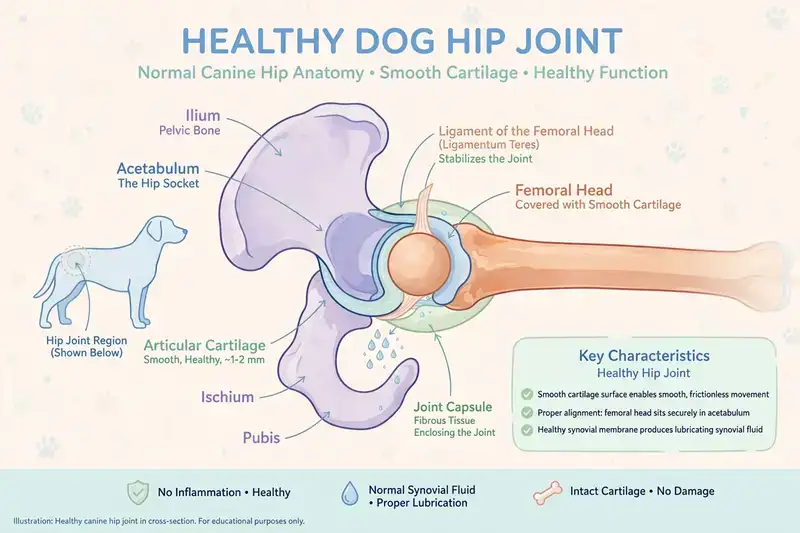
To understand the pitch, picture what arthritis does. The cartilage lining a dog’s hip or knee gradually wears thin, bone starts rubbing on bone, and inflammation follows. Glucosamine is one of the molecules cartilage is made from, so the theory is that supplying more of it helps the body keep up with repair. Chondroitin is believed to inhibit the enzymes that chew cartilage apart and to help the tissue retain water, which is what gives cartilage its shock-absorbing quality. In practice, the honest summary is more modest. VCA Animal Hospitals notes that controlled studies have failed to show a clear beneficial effect of glucosamine and chondroitin in dogs, even as millions of owners and many vets continue to use them. The supplements appear safe, some dogs seem to move better on them, and they are often used alongside proven treatments like omega-3 fatty acids, weight management, and prescription pain relief. Go in with realistic expectations: support, not miracles.
Cosequin dosage chart by weight
Dosing has two phases: a higher daily amount for 4 to 6 weeks, then a lower maintenance level. For Cosequin DS chewables: 10 to 24 pounds, 1 tablet daily then half; 25 to 49 pounds, 2 then 1; 50 to 100 pounds, 3 then 1 to 2; over 100 pounds, 4 then 2. Under 10 pounds, half a tablet daily.

The two-phase system exists because joint supplements need time to build up in the tissues. The initial loading period saturates the system, and the maintenance dose keeps it there. Do not skip the loading phase and do not guess at fractions: the tablets are scored, so halving them is easy and accurate. A few practical notes matter here. First, these are the manufacturer’s label directions for the DS chewable tablets; soft chews and sprinkle capsules have their own charts, so read the package you actually bought. Second, “give as directed by your veterinarian” is printed on the label for a reason. Your vet may adjust the dose for a dog with other conditions or one already taking joint medications. Third, more is not better. Doubling the dose will not speed results and only wastes money. If you are unsure which product or strength you have, bring the box to your vet visit rather than guessing.
When should a dog start Cosequin?
Most dogs start Cosequin when stiffness, slowing down, or a diagnosed joint condition appears, which is often in the senior years. Large and giant breeds, dogs with hip or elbow dysplasia, dogs recovering from cruciate surgery, and very active sporting dogs sometimes start earlier as preventive support. The decision belongs to your vet, who knows your dog’s joints.

There is no magic birthday for starting a joint supplement. The classic candidate is the senior dog that takes a minute to rise in the morning, hesitates at stairs, or cuts walks short. But joint trouble is not only a senior issue. A young Labrador with hip dysplasia, a Border Collie coming back from knee surgery, or a working dog pounding hard ground for years can all benefit from early support. Some vets suggest starting large-breed puppies on joint support as they grow, since fast growth stresses developing joints, but that is a conversation for your vet, not a default. One thing to avoid is starting Cosequin as a response to sudden, severe lameness. A dog that suddenly will not bear weight needs a diagnosis first. Supplements support a plan; they do not substitute for one.
How long before you see results?
Expect 4 to 6 weeks of consistent daily dosing before judging whether Cosequin is helping. Joint supplements work gradually as their building blocks accumulate in cartilage, so there is no first-dose effect. If you see no change after six weeks at the correct dose, talk to your vet about adjusting the plan rather than just continuing indefinitely.

This is where most owners go wrong. They give the chews for ten days, see no transformation, and quit, or they keep buying boxes for a year without ever assessing. Set a calendar reminder for the six-week mark when you start. What counts as improvement? Easier rising, more willingness on walks, better stair confidence, more play. Keep it concrete: film a short video of your dog getting up on day one and compare it at week six. Small changes are real changes in an arthritic dog. Also remember that Cosequin works best as part of a full joint plan. A supplement cannot overcome obesity, and an overweight arthritic dog will improve more from losing five pounds than from any chew. Pair the supplement with weight control, gentle consistent exercise, and any prescribed medication, and you give it a fair test.
Side effects and safety
Cosequin is considered very safe, and side effects are rare. The most commonly reported issue is mild digestive upset or loose stool, usually when starting or at higher doses. Dogs with diabetes or blood sugar regulation problems should have their glucose monitored while taking glucosamine products, and any supplement should be discussed with your vet first.

The safety profile is genuinely reassuring. Overdose is unlikely to cause serious harm, though it may cause diarrhea. That said, a few cautions are worth knowing. The diabetes note comes straight from veterinary product information: glucosamine is an amino sugar, and while it does not clearly raise blood sugar in dogs, vets prefer to monitor diabetic patients rather than assume. Allergic reactions are uncommon but possible, particularly in dogs with shellfish allergies, since some glucosamine is derived from shellfish. Pregnant or nursing dogs have not been well studied, so skip it unless your vet advises otherwise. And keep the tasty chewables out of reach. Dogs love the flavor, and a dog that eats half the box will not be poisoned, but may spend the night with an upset stomach. Store supplements like medication: up high, sealed, and away from clever noses.
Cosequin vs Dasuquin: what is the difference?
Both are Nutramax joint supplements, but Dasuquin adds avocado and soybean unsaponifiables (ASU) to the glucosamine and chondroitin base, plus MSM in most versions. ASU is the key differentiator: it is shown to help protect cartilage from breakdown. Many vets consider Dasuquin the step up for dogs with more advanced joint disease, while Cosequin suits mild or early cases.

Think of them as siblings, not rivals. Cosequin is the original: glucosamine, chondroitin, manganese, decades of use. Dasuquin takes that foundation and adds ASU, a patented extract that research suggests shields cartilage from the enzymes that degrade it, along with MSM for connective tissue support. The newest Dasuquin Advanced versions add eggshell membrane as well. Price follows the ingredient list: Dasuquin costs more. Which one your dog needs depends on the situation. For a young large breed started on preventive support, or a senior with mild stiffness, Cosequin is the standard starting point. For a dog with diagnosed moderate to severe arthritis already on the supplement path, many vets reach for Dasuquin. Do not stack them together; pick one. And whichever you choose, it complements but never replaces weight management, exercise, and prescribed pain control.
Dogs who should skip it or check with the vet first
Healthy young small-breed dogs with no joint issues do not need Cosequin. Dogs with shellfish allergies should check the glucosamine source first, and diabetic dogs need glucose monitoring as noted above. Any dog already taking multiple supplements or medications should have the combination reviewed by a vet to avoid redundancy and interactions.

Supplements are so normalized now that owners sometimes treat them like vitamins: harmless, so why not? But every product should earn its place. A healthy two-year-old Beagle with sound joints gains nothing from daily joint chews except a lighter wallet. Dogs with shellfish allergies deserve a label check, since glucosamine is often shellfish-derived; vegetarian-source options exist if needed. Dogs on blood thinners or with bleeding disorders should mention any new supplement to the vet, as a general principle. And here is the underappreciated one: the dog already taking three different joint products bought on three different recommendations. Overlapping glucosamine from multiple sources just piles up cost without benefit. Bring every supplement and medication to the vet visit, get one coherent plan, and drop the duplicates.
How to give Cosequin to a picky dog
Most dogs take Cosequin chewables willingly because they are flavored like treats. For picky dogs, crumble the tablet over food, hide it in a small ball of peanut butter or cream cheese, or switch to the sprinkle capsules designed to be opened over meals. Give it with or after food to keep the stomach settled.

Pilling a reluctant dog every day for years is nobody’s idea of fun, so make the routine easy from the start. The chewables are designed to be tasty, and for most dogs they genuinely work as treats. If yours is suspicious, do not chase the dog around the kitchen. Crumble the tablet and mix it into a spoonful of wet food or plain yogurt, or wrap it in a small piece of xylitol-free peanut butter. The sprinkle capsules exist precisely for difficult cases: pull apart, sprinkle on moist food, done. One caution with the food-hiding method: make sure the full dose is actually eaten. A dog that licks the peanut butter off and spits the tablet behind the couch is getting nothing. And build the habit into an existing routine, like breakfast, because joint supplements only work when they are given every single day. A supplement given four days a week is a supplement half wasted.
Cosequin earns its reputation through consistency: clear labeling, quality manufacturing, and a safety record built over decades. It will not cure arthritis, but as part of a vet-guided plan with sensible weight and exercise, it is a reasonable way to support aging joints. For dogs whose joint pain needs prescription-level help, our guide to carprofen dosage for dogs explains how vets manage arthritis pain medically. And for a food-based way to support joints, bone broth for dogs covers a gentle homemade addition, while our salmon skin guide looks at omega-3s from real fish.
Frequently Asked Questions
How long does Cosequin take to work in dogs?
Most dogs need 4 to 6 weeks of daily dosing at the label’s initial level before you can fairly judge results. Look for easier rising, better stamina on walks, and more willingness to play or climb stairs.
Can Cosequin be given long term?
Yes. The label’s maintenance level is designed for long-term daily use, and many dogs stay on it for years. Your vet should review it at regular checkups along with everything else the dog takes.
Is Cosequin safe for all dogs?
It is considered very safe, with rare mild digestive upset as the main side effect. Dogs with diabetes, shellfish allergies, or those that are pregnant should only use it under veterinary guidance.
What is the difference between Cosequin and Dasuquin?
Dasuquin adds avocado/soybean unsaponifiables (ASU) and usually MSM to the glucosamine-chondroitin base. Vets often recommend Dasuquin for more advanced joint disease and Cosequin for mild or early cases.
Can I give Cosequin with other joint supplements?
Check with your vet first. Stacking multiple glucosamine products usually just duplicates the same ingredients at extra cost. One well-chosen product at the right dose beats three overlapping ones.
Does Cosequin replace arthritis pain medication?
No. Cosequin supports cartilage but is not a painkiller or anti-inflammatory drug. Dogs with significant arthritis pain still need veterinary pain management, and Cosequin works alongside it, not instead of it.
What if my dog eats too many Cosequin chews?
Serious harm is unlikely, but expect digestive upset or diarrhea. Call your vet for guidance, especially for a small dog that ate a large number, and store the container out of reach going forward.
This article is general information only and is not a substitute for veterinary advice. If your dog has a health condition, is on medication, or you are unsure about any supplement, check with your veterinarian first.



1 thought on “Cosequin for Dogs: What It Does and How to Dose It”