

Can Dogs Eat Black Olives? What Vets Want You to Know
Can dogs eat black olives? The short answer is yes, black olives are not toxic to dogs. But that “yes” comes with real conditions. Most olives sold for humans are cured in heavy brine, packed with salt, and often sold with the pit still in or stuffed with ingredients dogs should never eat. A plain, pitted black olive given occasionally is unlikely to harm a healthy dog, yet olives are far from an ideal treat. This guide explains exactly where the line sits, so you can decide with confidence.
Are black olives toxic to dogs?

No. Neither black nor green olives contain anything poisonous to dogs. The American Kennel Club confirms that olives are not toxic and can be safe in small quantities. That puts olives in a very different category from genuinely dangerous foods like grapes, chocolate, or anything sweetened with xylitol, one stray olive is not an emergency.
But “not toxic” is not the same as “good for them.” The olive itself is a small package of monounsaturated fat with some vitamin E and antioxidants. Dogs eating a complete, balanced dog food already get everything they need, so olives add nothing essential. Think of them the way the AKC frames it: an occasional, plain olive is acceptable, not something to build into your dog’s diet.
Black olives vs green olives, is there a difference?
Nutritionally, almost none that matters for your dog. Black and green olives come from the same fruit; black olives are simply picked riper. Both carry the same sodium load from curing, the same fat content, and the same pit hazard.
What matters far more than color is preparation. A plain black olive and a plain green olive are equally fine in tiny amounts. A garlic-stuffed green olive and a plain black olive are very different stories. When choosing, ignore the color and read the preparation: plain, pitted, and low-sodium wins every time.
The sodium problem
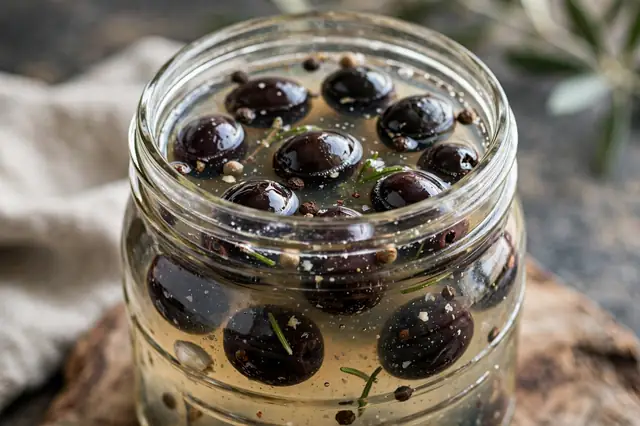
This is the number one reason vets are lukewarm about olives. Olives are cured in brine, and canned black olives typically carry a heavy salt load. Too much sodium can leave a dog excessively thirsty and, in larger amounts, lead to dehydration. In rare, extreme cases, very high salt intake can cause salt toxicosis, with symptoms like vomiting, tremors, and seizures.
A single olive will not do this. The risk builds when a dog gets into the can or is handed olives regularly. If you want to share an olive, choose a low-sodium variety, drain and rinse it well under running water to wash off surface brine, and keep it to an occasional treat, not a daily habit. Dogs with heart or kidney conditions, where sodium matters more, should skip olives entirely unless your vet says otherwise.
The pit problem: choking, teeth, and blockages

Olive pits are the most immediate physical danger. A pit can lodge in a dog’s throat, crack a tooth during chewing, or, if swallowed, cause an intestinal blockage, particularly in small breeds. The AKC specifically flags pits as a choking and obstruction hazard.
This is non-negotiable: only ever offer pitted olives. If your dog steals an olive with the pit in, watch closely. A large dog that crunches and passes it may be fine, but any sign of gagging, pawing at the mouth, drooling, vomiting, or abdominal pain means a vet visit. When in doubt, call your vet and describe what happened, they would much rather hear from you early.
Stuffed and seasoned olives: the hidden dangers
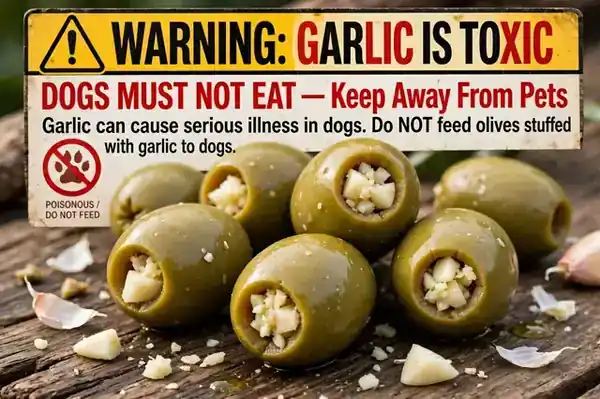
Plain olives are one thing; the olives on a relish tray are another. Common stuffings and marinades include ingredients that range from merely unhealthy to genuinely toxic for dogs:
- Garlic and onion: both damage dogs’ red blood cells and are toxic even in small amounts. Garlic-stuffed olives are an absolute no.
- Blue cheese and feta: high in fat and salt; blue cheese can also contain compounds that upset dogs.
- Jalapeños and chili: not toxic, but irritating to a dog’s mouth and stomach.
- Anchovies: not toxic, but very salty.
- Herb oils and marinades: often contain garlic.
If your dog grabs a stuffed olive, identify the stuffing first. Plain pimento is the least worrying; garlic or onion means calling your vet. When sharing intentionally, stick to plain olives and nothing else.
How many black olives is safe?
There is no official serving size, because olives are not a recommended treat. But veterinary guidance converges on a sensible rule: an occasional olive or two, not a handful, and not every day.
As a rough guide for plain, pitted, rinsed black olives:
- Small dogs (under 20 lbs): half to one olive, occasionally.
- Medium dogs (20-50 lbs): one olive, occasionally.
- Large dogs (over 50 lbs): one to two olives, occasionally.
“Occasionally” means a few times a month at most, olives should never become a routine treat. And the 10% treat rule still applies: all extras combined, olives included, should stay within about 10% of your dog’s daily calories.
What to do if your dog ate a bunch of olives
First, figure out what kind. Plain pitted olives in quantity? The main risks are salt-related: offer fresh water, skip the next treat, and watch for vomiting, diarrhea, excessive thirst, or lethargy over the next day. Most dogs bounce back with rest and water.
Olives with pits? Watch for choking signs, gagging, or abdominal pain, and check stools over the next day or two for the passed pits. Stuffed olives with garlic or onion? Call your veterinarian, describe the stuffing and the amount eaten. Garlic and onion toxicity can have delayed onset, so do not just “wait and see” with those.
When in doubt, a quick call to your vet costs nothing and buys peace of mind. Note roughly how many olives were eaten, whether pits were involved, and your dog’s weight before you call.
Healthier alternatives worth trying

If you like the idea of sharing small savory treats, several options beat olives on every measure, lower sodium, better nutrition, and fewer hazards:
- Blueberries: antioxidant-rich, low-calorie, and most dogs love them.
- Cucumber slices: hydrating and almost calorie-free.
- Carrot coins: crunchy, good for teeth, and easy to portion.
- Apple slices: sweet and fibrous (no seeds or core).
- Plain cooked green beans: low-calorie and filling.
Each of these delivers more nutrition with less risk than an olive. Olives are fine as a rare novelty; these make better regulars.
Dogs who should skip olives
Most healthy adult dogs can handle an occasional plain olive, but some should pass. Dogs with heart disease or kidney problems need strict sodium control, olives do not fit. Dogs prone to pancreatitis should avoid fatty extras generally. Very small breeds face the highest choking risk if a pit is ever involved, so be extra strict or skip olives. And dogs on prescription diets often have no room for salty extras, check with your vet first.
Olive oil vs whole olives: which is the better choice?
If your interest in olives is the health angle, the famous Mediterranean fats, olive oil is the simpler, safer vehicle. A small drizzle of plain olive oil over food delivers monounsaturated fats and antioxidants with no pits to remove, no sodium load to rinse off, and no seasoning gamble. Small amounts are generally considered safe for dogs: roughly a teaspoon for small dogs up to a tablespoon for large dogs, a few times a week.
But olive oil demands the same portion discipline as olives, for a stricter reason: calories. At about 120 calories per tablespoon, free pouring adds up fast, and too much fat at once can cause digestive upset or contribute to pancreatitis risk in susceptible dogs. It also counts fully within the 10% treat allowance. And skip flavored or infused olive oils entirely, garlic-infused oil carries the same red-blood-cell risk as garlic itself.
So which should you choose? If the goal is nutrition with minimum fuss, the oil wins, one ingredient, easy to measure, no prep. If the goal is an occasional novelty your dog enjoys crunching, a properly prepared olive wins on entertainment. Neither is necessary, a complete, balanced dog food already covers your dog’s fat requirements, and neither should become a daily habit. Think of both as condiments, not foods.
Serving olives safely: a quick routine
When you do share olives, make it a routine rather than an improvisation:
- Start with the right jar. Plain black olives in water or brine, no garlic, no peppers, no “Mediterranean” seasoning blends.
- Rinse. A quick rinse under running water washes off surface brine and loose salt.
- Pit every one. Cut each olive open and remove the pit completely, never assume a jar labeled “pitted” has no strays.
- Count them out. One or two for a small dog, a few for a large dog. Portion first; never serve straight from the jar.
- Watch the first time. Any new food deserves a 24-hour observation window for digestive upset.
Done this way, an olive becomes what it should be: a rare, safe, slightly silly treat, not a dietary statement.
The honest summary: black olives sit in the “not toxic, but not recommended” zone. A plain, pitted, rinsed olive now and then is unlikely to hurt a healthy dog, but the sodium, the fat, and the ever-present pit risk mean olives earn no place as a regular treat. If you share, share plain, pitted, and rarely, and keep the stuffed, seasoned, and brined varieties far from your dog’s reach.
For the same plain-only, small-portion thinking across the foods dogs meet most often, see our wider guide to what human food dogs can eat. And for another garden food with a firm portion rule, our tomato guide covers similar ground.
Frequently Asked Questions
Can dogs eat black olives every day?
No. Even plain black olives carry enough sodium that daily feeding is a bad idea. Keep them to an occasional treat, a few times a month at most, and never as a routine.
Are green olives or black olives better for dogs?
Neither is meaningfully better. Both are safe only when plain, pitted, and low-sodium. Ignore the color and check the preparation instead.
Can dogs eat olives with pits?
No, never offer olives with pits intentionally. Pits can choke a dog, crack teeth, or block the intestines, especially in small breeds. Always choose pitted olives.
Can dogs have olive oil instead?
A tiny amount of plain olive oil is generally considered safe, but it adds calories fast and offers dogs nothing they lack on a balanced diet. It is not a health food for dogs despite its reputation in human nutrition.
My dog ate olives from a martini, what should I do?
Alcohol-soaked olives are a double problem: the alcohol itself is toxic to dogs, plus the sodium. Call your veterinarian right away and describe how many were eaten.
Are canned black olives worse than fresh?
Canned olives are cured in brine and saltier than fresh-cured ones. If sharing, rinse canned olives thoroughly, or choose a low-sodium variety.
What are the signs of too much salt in dogs?
Excessive thirst, vomiting, diarrhea, tremors, and in severe cases seizures. If your dog got into a large quantity of salty olives and shows these signs, contact your vet promptly.
Can dogs eat green olives?
The same rules apply: plain, pitted, rinsed, and rare. Green olives are often saltier and more bitter than black olives, which makes them even less appealing as a dog treat, but they are not more dangerous. Kalamata and other varieties follow the same rule: the variety matters less than the preparation. Whatever the color, seasoned or stuffed olives stay off the menu, and when in doubt, skip the olive entirely; your dog will not miss it.
This article is general information only and is not a substitute for veterinary advice. If your dog has a health condition, is on a prescription diet, or you are unsure about any food, check with your veterinarian first.


