

The joint supplement aisle is a wall of promises, and not all of them rest on solid ground. Joint supplements for dogs range from well-studied ingredients to expensive placebos, and the difference matters when your dog is stiff in the morning. This guide sorts the ingredients by what research shows, explains how to pick a quality product, and covers the unglamorous factor that beats every bottle: keeping your dog lean.
What joint supplements claim to do
Joint supplements aim to protect cartilage, ease inflammation, and support mobility in dogs with arthritis or joint wear. They are nutraceuticals, not drugs, which means nobody has to prove they work before selling them. Most combine several ingredients, and quality varies enormously between brands.
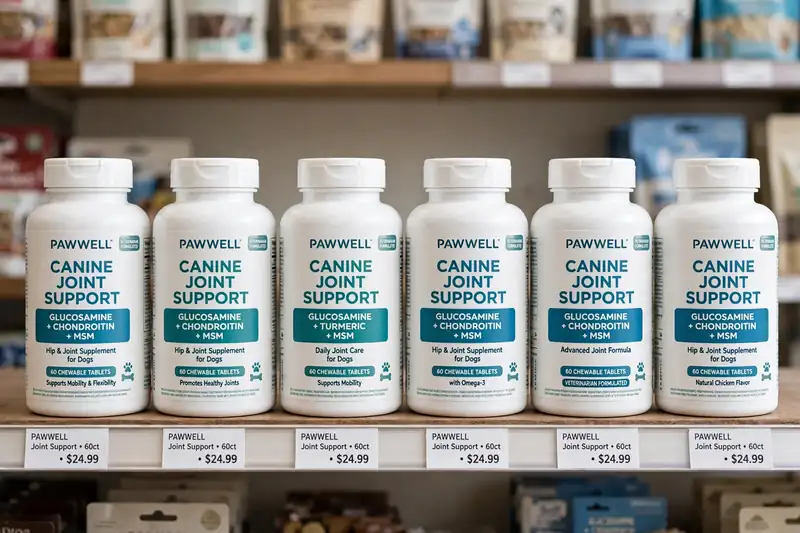
That loose regulation is the first thing to understand. The FDA does not review pet supplements for safety or effectiveness before they hit the shelves, so a label can promise more than the bottle delivers. Some products do not even contain the labeled amount of their star ingredient. This does not mean all joint supplements are useless. It means the ingredient list, the dose, and the manufacturer’s testing matter more than the marketing. Supplements also work slowly. They support the joint environment over weeks; they do not mask pain the way a prescribed anti-inflammatory does. Set expectations accordingly: steadier movement over time, not a miracle by Friday.
Omega-3 fatty acids: the strongest evidence
Of all joint supplement ingredients, omega-3 fatty acids from fish oil have the most consistent research behind them. EPA and DHA reduce the inflammatory signals that make arthritic joints ache and swell. VCA‘s nutrition guidance calls omega-3s the supplement with the most support in the literature for canine joint disease.

Dose is where most owners go wrong. A drizzle of fish oil on dinner is not a therapeutic dose. Veterinary sources describe meaningful joint support at much higher intakes, roughly a teaspoon of standard fish oil per 20 pounds of ideal body weight daily, though your vet should set the exact amount for your dog. Concentration matters too: many products are mostly filler oil with modest EPA and DHA, so check the label for actual milligrams. Omega-3s also support skin, coat, and immune function, which makes them one of the few supplements doing double duty. Give them with food to reduce the chance of stomach upset, and store the oil properly, since rancid fish oil helps nobody.
Glucosamine and chondroitin: the honest picture
Glucosamine and chondroitin are the most famous joint ingredients and the most debated. They are building blocks of cartilage, so the theory is sound. But systematic reviews of dog trials show mixed and weak results, and VCA’s nutrition page states that controlled studies failed to show benefit in dogs. Many vets still include them in multi-ingredient formulas.

Why the disconnect? Some small studies and plenty of owner reports suggest benefit, especially when the pair is combined with other ingredients and given early. The risk is low, which is why vets keep recommending them despite thin evidence. If you use them, look for a stated milligram amount per serving rather than a vague “joint blend,” and give the pair six to eight weeks before judging. Do not expect them to replace pain medication in a dog that is clearly hurting. And be skeptical of premium prices built on these two ingredients alone, since the evidence does not justify paying triple for the same milligrams.
MSM, green-lipped mussel, and ASU
Beyond the famous pair sit several second-tier ingredients with modest but real research. MSM supplies sulfur involved in connective tissue and may ease mild discomfort. Green-lipped mussel from New Zealand brings natural omega-3s plus cartilage compounds, with encouraging trial results. Avocado and soybean unsaponifiables, called ASU, show some ability to slow cartilage breakdown.

These ingredients usually appear in combination formulas rather than alone, and that is fine. Joint supplements tend to work better as teams, with each ingredient covering a different part of the problem: building blocks, inflammation control, and cartilage protection. Green-lipped mussel deserves a special mention because it delivers both omega-3s and chondroitin-like compounds in one ingredient. ASU is the newcomer of the group, with the least long-term data but a plausible mechanism. As always, the dose on the label decides whether the ingredient is present in a meaningful amount or just sprinkled in for the marketing panel.
Undenatured type II collagen (UC-II)
UC-II is undenatured type II collagen from chicken sternum cartilage, and it works differently from everything above. Instead of supplying building blocks, tiny daily doses teach the immune system to stop attacking joint cartilage, a process called oral tolerance. A published dog study found it more effective than glucosamine and chondroitin for arthritis symptoms.

The doses are strikingly small, just milligrams a day, which surprises owners used to gram-scale glucosamine scoops. That small dose is the point: it is a signaling molecule, not a raw material. UC-II can be used alongside glucosamine and chondroitin, and VCA lists undenatured type II collagen among the nutraceuticals with evidence for degenerative joint disease. Research is still thinner than for omega-3s, but the early trials are genuinely promising. If your dog has not responded to a classic glucosamine formula, UC-II is the ingredient most worth discussing with your vet next.
How long before you see results
Expect four to eight weeks of daily dosing before judging any joint supplement. Cartilage and inflammation change slowly, and owners who quit after ten days never gave the product a fair trial. Keep a simple log: stairs, rising from rest, walk distance, and playfulness, scored weekly. Small, steady gains are the realistic win.

The log matters because memory lies. Owners remember the bad days and forget the gradual good ones, or they credit the supplement for a good week that was really about weather. Write down concrete markers: how long the dog takes to stand after a nap, whether it still avoids the stairs, how far it walks before slowing. Photograph nothing; measure behavior. If nothing has changed after eight consistent weeks at the right dose, that product is not working for your dog. Tell your vet rather than stacking a second and third supplement on top. More bottles do not add up to more effect.
How to choose a quality product
Since regulation is light, you do the quality control. Choose products from established veterinary brands such as Nutramax (Cosequin, Dasuquin) or VetriScience, which invest in research and manufacturing standards. Look for a NASC quality seal, stated milligram doses for every active ingredient, and ideally third-party testing for purity and strength.

Read the label like an auditor. “Proprietary blend” without amounts tells you nothing. The ingredient order and the guaranteed analysis tell you everything. Avoid products that lead with flavorings and fillers and bury the actives. Price is a weak signal: expensive does not mean effective, but suspiciously cheap usually means underdosed. Ask your vet which products they use; clinics see the outcomes across hundreds of dogs and develop strong opinions. And keep the packaging or a photo of the label, so your vet can check exactly what your dog is getting at the next visit.
Weight: the supplement no bottle sells
Excess weight punishes joints more than any supplement can compensate for. Every extra pound multiplies the load on hips, knees, and elbows, and fat tissue itself promotes inflammation. VCA notes that roughly 40 percent of dogs under four already show X-ray evidence of osteoarthritis. A lean dog on no supplements often moves better than an overweight dog on three.

Weight loss is the highest-value joint intervention available, and it is free. Ask your vet for your dog’s ideal weight and a feeding plan to reach it; most owners overestimate how much food a dog needs. Pair the diet with appropriate exercise: short, regular walks and low-impact swimming beat weekend warrior outings that leave the dog sore for days. Physical rehabilitation, with guided exercises and sometimes underwater treadmill work, pairs especially well with supplements. Think of the supplement as supporting cast. Diet, weight, and movement are the leads.
Safety and side effects
Joint supplements are generally safe, with stomach upset the most common complaint. Too much fish oil can cause diarrhea or interfere with clotting, and glucosamine may affect blood sugar, so diabetic dogs need monitoring. Start any new supplement at a low dose for a few days, then build to the label amount.

Introduce one product at a time so you know which one caused a reaction if the dog’s stomach objects. Loose stool in the first week often settles; persistent vomiting or diarrhea means stop and call the vet. Tell your vet about every supplement at every visit, because natural does not mean interaction-free. This matters most before surgery, when fish oil’s mild blood-thinning effect can matter, and in dogs on multiple medications. Keep all supplements stored like medicine: sealed, away from heat, and far from curious mouths, since flavored chews taste like treats to a dog.
When supplements are not enough
Supplements support joints; they do not replace pain relief, weight control, or veterinary care. If your dog limps, struggles to rise, yelps when touched, or has stopped playing, that dog needs a vet exam, not a new bottle. Modern arthritis care includes prescription anti-inflammatories, monthly pain-relief injections, physical therapy, and sometimes surgery.

Do not let supplements delay real treatment. A dog in pain that gets only glucosamine is a dog suffering needlessly while the owner feels proactive. The best outcomes come from layered care: the right weight, the right exercise, proven supplements, and prescription pain control when the vet says it is time. Newer options like monthly anti-nerve-growth-factor injections have changed what is possible for arthritic dogs. Ask your vet for a full arthritis plan at the first sign of stiffness, and let supplements play their supporting role inside it.
Joint supplements work best as part of a bigger plan: lean body, sensible exercise, proven ingredients, and honest talks with your vet. For the omega-3 angle, our guide to salmon skin for dogs covers a natural source with its own cautions. When pain needs more than nutrition, our carprofen dosage guide explains the prescription option vets pair with these supplements. And for the full picture of safe feeding, see what human food dogs can eat.
Frequently Asked Questions
Do joint supplements really work for dogs?
Some do. Omega-3 fatty acids have the strongest evidence for easing arthritis pain and improving mobility. Glucosamine and chondroitin have weaker, mixed evidence but low risk. UC-II collagen shows promise in early trials. Results take four to eight weeks.
What is the best joint supplement for dogs?
Veterinarians most often recommend products with studied ingredients, stated doses, and quality testing, from brands like Nutramax or VetriScience. The best formula for your dog depends on its condition, weight, and what it already eats, so ask your vet.
When should I start my dog on joint supplements?
Large and giant breeds, athletic dogs, and seniors benefit most, and starting early in at-risk dogs may slow progression. But supplements never replace keeping the dog lean, which matters more than any bottle.
Can joint supplements replace pain medication?
No. Supplements support the joint environment slowly; they do not provide the pain relief of prescription anti-inflammatories. A dog that limps or struggles to rise needs a vet exam, not just a supplement.
Are there side effects of joint supplements in dogs?
They are generally safe. The most common issue is mild stomach upset, especially with fish oil. Introduce new products gradually, one at a time, and tell your vet about everything your dog takes.
How long should my dog stay on joint supplements?
Most dogs with arthritis stay on them long term, since stopping usually lets symptoms creep back. Reassess with your vet at least yearly to confirm the product is still earning its place.
Can puppies take joint supplements?
Large-breed puppies at risk of joint problems sometimes get them on veterinary advice, but dosing and product choice need a vet’s input. Never guess a puppy dose from an adult label.
This article is general information only and is not a substitute for veterinary advice. If your dog shows joint pain, limping, or stiffness, have a veterinarian evaluate it before starting any supplement.



1 thought on “Joint supplements for dogs: what the evidence supports”