Pork shows up in dog food more often than many owners realize. Plenty of commercial recipes list pork meal or pork protein, which tells you pork is not a forbidden meat. The answer is simple: plain, fully cooked pork is safe for dogs. The trouble starts with how pork usually reaches the table: seasoned with garlic and onion, rubbed with spices, fried in its own fat, or processed into bacon, sausage, and ham. This guide covers what plain pork offers, how to cook it safely, how much to serve by dog size, and which forms of pork to keep away from your dog.

Can dogs eat pork? The short answer
Yes. Plain pork that is fully cooked, boneless, and unseasoned is safe for dogs, and pork itself is not toxic to them. The problems come from how pork is usually served to people: heavy seasoning, garlic and onion, excess fat, and processed products like bacon. Feed plain pork only, and keep it as an occasional treat.
Pork earns its place the way other meats do. It is a complete animal protein, carrying all the amino acids a dog needs to build and repair muscle. Dog food makers use it for a reason. The AKC guide to human foods dogs can and cannot eat lists pork as acceptable when cooked and unseasoned, with the same plain-and-moderate rule that covers most table foods.
Two rules shape everything below. Cook the pork completely, and keep it plain. If you already check the list of human foods dogs can eat before sharing from your plate, pork lands on the safe side of that list once those two rules are met.

Pork nutrition: protein, fat, and what dogs actually get
Pork gives dogs complete protein plus thiamin, vitamin B6, vitamin B12, zinc, and phosphorus. The downside is fat. Lean cuts like tenderloin run about 3 to 4 grams of fat per 100 grams, while belly and shoulder can top 30 grams. That fat gap decides whether pork is a fine treat or a stomach problem waiting to happen.
Thiamin is where pork stands out. Pork is one of the richest food sources of this B vitamin, which dogs need for energy metabolism and nerve function. Zinc and phosphorus support immunity and bones, and the protein quality matches chicken and beef.
The fat deserves your attention. Lean tenderloin compares well with skinless chicken breast; pork shoulder, belly, and spare ribs do not. A fatty cut can end in vomiting or loose stool the same day, and dogs with a sensitive pancreas can get worse. Choose lean cuts, trim the visible fat before cooking, and pork behaves like any other lean meat in the rotation. Lean turkey plays the same role in many owners’ kitchens, and the two meats swap in and out of the treat rotation the same way.

How to cook pork safely for dogs
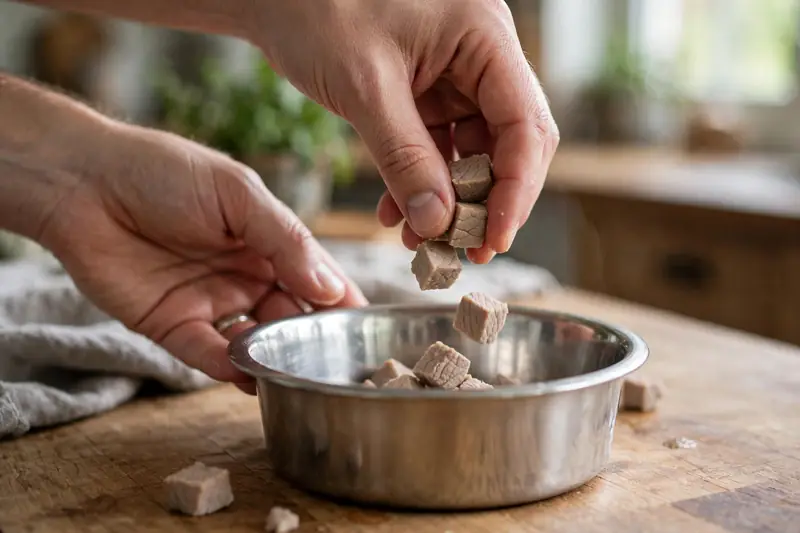
Cook pork plain with no salt, garlic, onion, butter, or spices, and keep cooking until the inside reaches at least 145 degrees Fahrenheit, with ground pork taken to 160. Let it cool completely, cut it into small bite-size pieces, and remove every bone before it reaches your dog.
Boil pork chunks in plain water until cooked through, or bake them on a tray with no oil. Pan cooking works too if you skip the oil and seasoning. The goal is pork done all the way through, with no pink in the center and clear juices.
Garlic and onion damage a dog’s red blood cells, and both show up in pork rubs, marinades, and sausage seasoning. Salt-heavy rubs and barbecue sauce add sodium and sugar a dog does not need. If the pork was cooked for people first, cook a separate plain piece for the dog. The garlic guide explains how little allium it takes to cause trouble.
Trichinosis and parasites: why pork must be fully cooked
Trichinosis comes from the roundworm Trichinella spiralis, which can live in raw or undercooked pork muscle. Thorough cooking kills the larvae, so fully cooked pork carries no trichinosis risk. Commercial pork in the United States has a very low infection rate today, but the rule stays firm: never serve pork that is raw, rare, or pink in the middle.
The larvae settle into muscle tissue, and the result can be vomiting, diarrhea, muscle pain, fever, and lethargy days or weeks later. A dog with those signs after eating raw pork needs a vet visit, not a wait-and-see approach.
Freezing does not solve the problem on its own. Some Trichinella species survive freezing, so frozen raw pork is not automatically safe. Heat is the reliable kill step. An instant-read thermometer takes the guesswork out: 145 degrees for whole cuts with a short rest, 160 for ground pork. The Merck Veterinary Manual covers parasitic disease in dogs for owners who want the full veterinary picture.

How much pork is safe: portions by dog size
Keep pork under 10 percent of your dog’s daily calories. Small dogs get 1 to 2 tablespoons of cooked pork pieces. Medium dogs can have about a quarter cup, and large dogs up to half a cup. Serve it as small pieces a few times a week, not daily, alongside balanced dog food rather than as a replacement.
Dog food is formulated so a full day’s ration delivers complete nutrition, and every calorie of pork is a calorie of that balanced food the dog skips. A small topper is harmless; a bowl of pork instead of dinner, repeated daily, creates gaps no single meat can fill.
| Dog size | Safe amount of cooked pork | Frequency |
|---|---|---|
| Small (under 20 lbs) | 1 to 2 tablespoons, cut small | A few times a week |
| Medium (20 to 50 lbs) | About a quarter cup, cut small | A few times a week |
| Large (over 50 lbs) | Up to half a cup, cut small | A few times a week |
The first time, give less than the chart and watch your dog for a day. A tablespoon for a big dog and a teaspoon for a small one is enough for a trial. You would rather learn about a sensitive stomach from a tiny serving.

Pork bones: why cooked bones are never safe
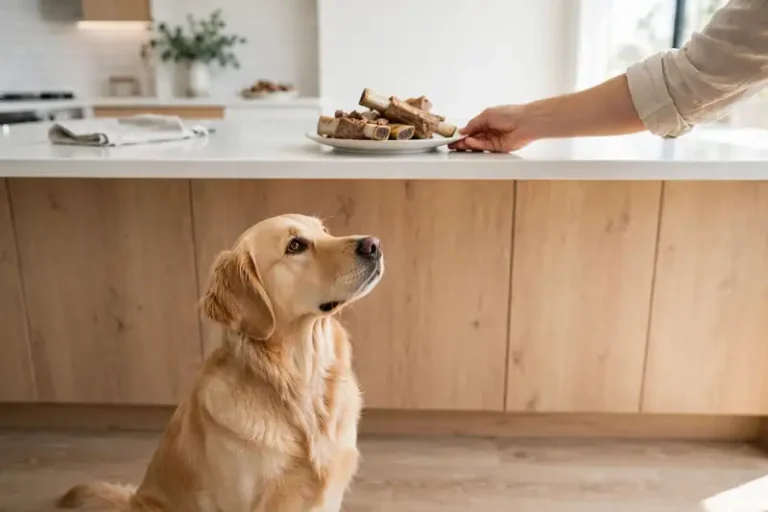
Never give a dog a cooked pork bone. Cooking makes bones brittle, and a cooked pork bone can splinter into sharp pieces that cut the mouth and throat, puncture the stomach or intestines, or lodge in the gut. Raw pork bones divide vets over tooth fractures and bacterial contamination. The safest choice is to skip pork bones entirely.
Rib bones and chop bones are the usual culprits. They look like the perfect dog treat after dinner. The splinter risk is real enough that vets treat cooked bone ingestion as an emergency when symptoms appear: drooling, gagging, vomiting, bloody stool, or a dog that suddenly refuses food. The general bones guide covers which bones carry the worst risks and why.
Some vets and raw feeders accept large raw bones under supervision, while others point to cracked teeth, choking, and salmonella as reasons to avoid them. If you are considering raw bones at all, ask your own vet first and never leave a dog alone with one. For most owners, a sturdy commercial chew gives the same satisfaction with less risk.
Processed pork, excess fat, and pancreatitis risk
Bacon, sausage, pepperoni, ham, and pork rinds are too fatty, salty, or heavily seasoned for dogs. Fatty pork of any kind can also trigger pancreatitis, a painful inflammation of the pancreas that needs a vet. Small stolen bites usually pass without drama, but a large fatty meal can cause vomiting, diarrhea, or worse.
Bacon is the one owners ask about most. It is mostly fat and salt, and raw bacon carries the added bacterial risk of uncooked meat. Cooked bacon is safer on the bacteria front but still a fat bomb. A single small piece dropped on the floor is not an emergency. A few strips snatched off a plate can be, especially for a small dog.
Sausage and pepperoni bring seasoning into the mix. Garlic powder, onion powder, fennel, and hot pepper are standard in sausage blends, and pepperoni adds paprika and chili heat. Dogs do not handle spice blends well, and the allium content makes these worse than plain fatty pork. Ham looks milder but is cured with heavy salt, and a thick slice can deliver a day’s sodium in a few bites. Pork rinds are deep-fried skin: pure fat and salt with no nutritional upside.
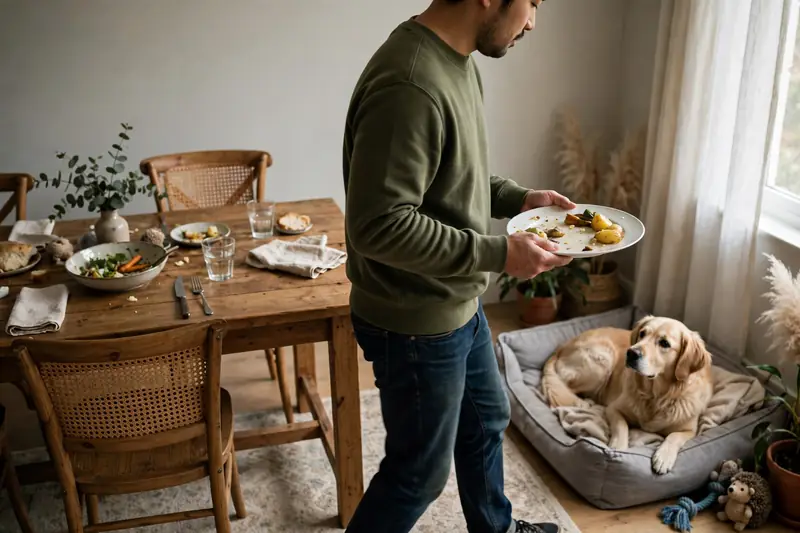
Fat trimmings deserve their own warning. Cutting the fat off a pork chop and tossing it to the dog concentrates the riskiest part of the meat into one serving, and the pan grease is no better. This is the classic route to pancreatitis: repeated vomiting, a hunched posture from belly pain, loss of appetite, and lethargy. Miniature schnauzers, Yorkshire terriers, and overweight dogs see it more often, and a dog that has had it once is likelier to get it again. Dogs with a history of it should get lean pork only, or none, per their vet. A dog with an upset stomach after fatty food may only need a bland diet and rest; the gastroenteritis guide explains when gut trouble is routine and when it needs a vet.

Raw pork and raw diets: what vets warn about
Raw pork carries bacteria such as salmonella and parasites such as trichinella, and veterinary organizations advise against feeding it. Raw diet advocates argue that dogs digest raw meat better than people do, but the major veterinary bodies still warn that raw meat exposes both the dog and the household to infection.
The dog can get sick from contaminated meat, and the people in the home can get sick from handling it. Raw meat preparation spreads bacteria to cutting boards, bowls, and hands, and dogs on raw diets can shed salmonella in their stool without looking ill.
If you feed a raw diet and want to include pork, talk to your vet about the specific risks and safe handling. Most vets who accept raw feeding still single out pork as a meat that needs extra caution because of the parasite history. The raw meat guide covers the broader debate, the handling rules, and which meats vets consider the riskiest raw. For everyone else, the cooked-pork route in this article gives the dog the protein without the gamble.

When to call the vet
Call your vet if your dog ate raw or undercooked pork, swallowed a pork bone or bone fragment, or ate a large amount of bacon, sausage, or other processed pork. Also call if your dog shows repeated vomiting, diarrhea that lasts more than a day, belly pain, bloating, lethargy, or loss of appetite after eating pork.
A small taste of plain cooked pork almost never needs a call. The scenarios that do are raw meat, bones, a fatty binge, or seasoned products with garlic or onion. If the pork came from a package, bring it or photograph the ingredient list before you call.
For after-hours situations, the ASPCA Animal Poison Control line is the resource most vets point owners to. Note the time your dog ate the pork, how much, and what kind. That information shapes every recommendation they give. The VCA Hospitals site also has detailed explainers on pancreatitis and bone ingestion for owners who want to understand what the vet is checking for.
Frequently asked questions about dogs and pork
Daily feeding, pork versus chicken, pork rinds, barbecue pork, puppies, and raw pork accidents are the questions that come up most in vet clinics and search results. The answers below give the short version of each. Your vet’s advice wins for any dog with a medical condition.

Can dogs eat pork every day?
They can, but it should not be a daily staple unless your vet builds it into the diet. Daily pork pushes treats past the 10 percent rule and crowds out balanced nutrition. A few times a week as a topper is the right rhythm.
Is pork better than chicken for dogs?
Neither is better in any meaningful sense. Both are complete proteins, and dogs do well on either. Pork has more thiamin; chicken is usually leaner and cheaper. The best choice is the lean meat your dog digests well and your budget supports.
Can dogs eat pork rinds?
No. Pork rinds are deep-fried pork skin, which means they are almost entirely fat and salt with no real nutrition. They can upset the stomach and contribute to pancreatitis risk, and the hard pieces are a choking hazard for small dogs. There is no safe serving size worth aiming for. Offer a lean piece of plain cooked pork instead.
Can dogs eat pulled pork or pork with barbecue sauce?
No. Pulled pork is usually cooked with rubs, sauces, garlic, onion, and sugar, and barbecue sauce adds more of the same. Even if you rinse the sauce off, the seasoning has soaked into the meat. Cook a separate plain piece for your dog instead of sharing the barbecue batch.
Can puppies eat pork?
Yes, in tiny amounts. A puppy over eight weeks old can have a teaspoon or two of plain cooked pork as a rare treat. Puppies have sensitive digestion and precise nutritional needs, so pork stays a small extra on top of proper puppy food.
My dog ate raw pork. What should I do?
Watch your dog closely for a few days. A single small piece often passes without incident, but raw pork carries bacterial and parasite risks. Call your vet if you see vomiting, diarrhea, lethargy, or loss of appetite, and mention exactly what your dog ate.
Can dogs eat pork fat trimmings?
No. Fat trimmings are the riskiest part of the pork: concentrated fat that can cause vomiting, diarrhea, or pancreatitis. Trimming fat off meat and feeding it to the dog is one of the most common ways a holiday dinner ends in a vet visit. Throw trimmings in the trash where your dog cannot reach them.
Plain cooked pork earns its yes when it is lean, fully cooked, boneless, unseasoned, and served in modest amounts a few times a week. The forms to keep away are raw pork, cooked bones, and the whole processed lineup of bacon, sausage, pepperoni, ham, and pork rinds. Dogs that should skip pork or check with the vet first are those with pancreatitis history, chronic digestive problems, or sodium-restricted diets.