Is Salami Bad for Dogs? Risks, Symptoms, and Safer Treats
Is salami bad for dogs? Yes, salami packs too much salt and fat, and most recipes add garlic or onion powder, so dogs should skip it entirely. Salami brings nothing a dog needs. A single slice can upset a small dog’s stomach, and a larger portion can trigger pancreatitis or salt poisoning.
The risk climbs with the amount eaten, the dog’s size, and the spice mix in that brand. Dog owners who want a meaty treat have far safer choices, and this guide walks through each risk, the warning signs, and what to do after a dog grabs a slice.
Is salami bad for dogs?
Salami is bad for dogs because it combines three problems in one slice: high salt, high fat, and seasonings such as garlic and onion powder that can damage red blood cells. Dogs handle salt and fat far worse than people do, and the cured meat offers no nutrition that a balanced dog food lacks.

Salami starts as pork or beef, then curing, fermentation, and drying turn it into a shelf stable sausage. That process concentrates salt and fat while the meat loses water. One ounce can carry 400 to 600 milligrams of sodium according to competitor tables, and a single thin slice can hold 200 to 300 milligrams.
Dogs need only a small amount of sodium each day, so one slice can exceed a small dog’s whole day of salt. Fat runs just as high, with some slices carrying 3 to 4 grams of fat in 10 grams of meat. Those numbers explain why salami causes trouble even in portions that look tiny to a person.
What is in salami that harms dogs?
Salami harms dogs through salt, fat, garlic, onion, black pepper, and other spices, plus nitrites used in curing, and each ingredient adds a separate strain on the gut, kidneys, pancreas, and blood. Salt pulls water from body tissues and forces the kidneys to work harder. Fat floods the pancreas with work it cannot handle in one sitting.
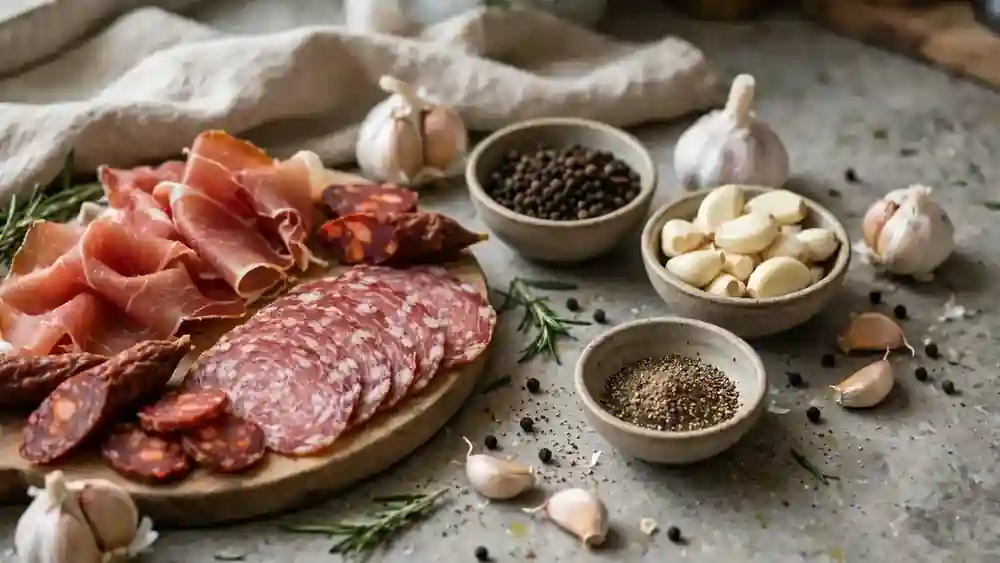
Labels vary by brand, so two salamis can carry different risks. Some recipes use garlic powder as a main flavor. Others lean on onion powder, paprika, fennel, or chili flakes.
A few add wine or sugar. Dog owners should read the label before they assume any salami is mild, because the spice list decides whether the slice also carries a toxin. The ASPCA warns that garlic and onion can damage red blood cells in larger amounts, and its guidance on sharing human food points owners toward lean cooked meat instead of processed meat.
That advice fits salami well, since the cured sausage sits on the wrong side of every measure that counts.
Can a small piece of salami hurt a dog?
A small piece of salami can hurt a dog, and the risk depends on the dog’s size, health, and the spice mix, so a toy breed faces more danger from one slice than a large healthy dog does. Small dogs carry less body weight to absorb the salt and fat, and their kidneys and pancreas feel the load sooner.
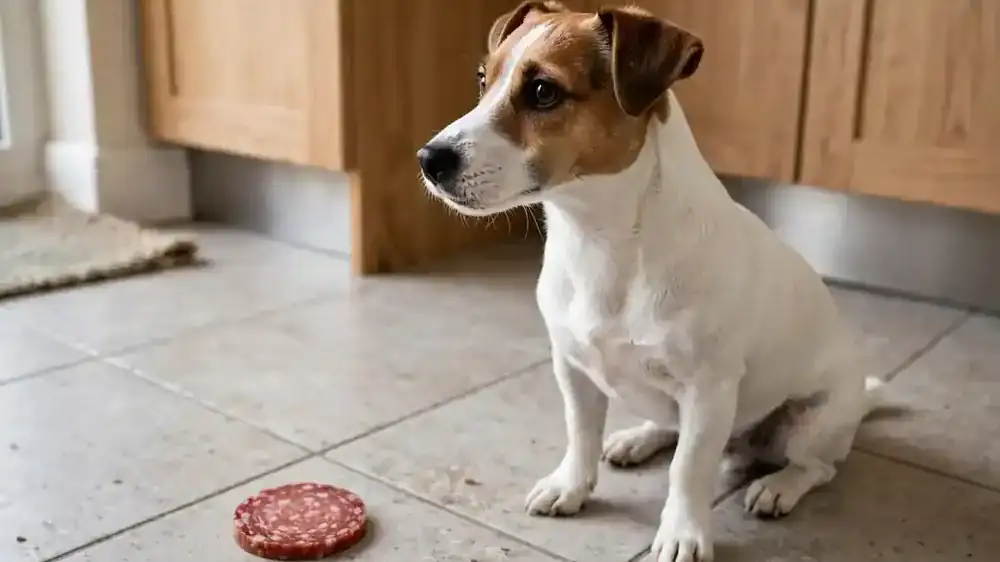
Size math makes the point clear. A 5 pound dog that eats one slice takes in far more salt per pound than a 60 pound dog that eats the same slice. That difference explains why vets warn small dog owners more strongly.
A large dog that eats a whole salami log faces a different problem, because the total salt and fat load can overwhelm even a big body. Owners should note the time, the amount, and the brand, then watch for thirst, vomiting, or loose stool over the next day. A quick call to the vet beats a wait and see approach when the dog is small, young, old, or already sick.
How does salami cause pancreatitis in dogs?
Salami can cause pancreatitis in dogs because a sudden load of fat forces the pancreas to release large amounts of digestive enzymes at once, and those enzymes can start digesting the pancreas itself. Pancreatitis brings pain, vomiting, loss of appetite, and sometimes fever, and severe cases need hospital care with fluids and pain relief.

Pancreatitis does not always follow one fatty meal, and that uncertainty tempts owners to take a chance. VCA notes that a fatty meal can trigger pancreatitis in some dogs, and the Merck Veterinary Manual lists dietary indiscretion as a common risk factor in dogs. Some dogs eat fatty scraps for years without a crisis, then one rich meal tips them over. Other dogs react after a single large portion.
Breed and body condition shape the risk, since overweight dogs and some breeds carry higher odds. Once a dog has had pancreatitis, the next fatty meal can trigger another episode, so vets often put those dogs on a low fat diet. Salami has no place in that diet, or in any dog’s regular feeding plan, because the fat content alone disqualifies it.
Too much salt and what it does to a dog
Too much salt can dehydrate a dog, raise thirst and urination, and in severe cases cause sodium poisoning with vomiting, tremors, seizures, or collapse. Salt draws water out of cells, and the body struggles to restore balance when the dose is large. Dogs that eat a lot of salami may drink bowl after bowl of water, then vomit or grow weak.
The FDA lists salt among the edible dangers for pets, and its list also names garlic, onions, and fatty foods as hazards. Salami delivers all three at once, which makes its salt load harder to brush aside.
Sodium poisoning is rare from a single slice, yet it stays possible when a dog eats a large amount or cannot reach water. Dogs left without fresh water after a salty meal face the worst odds. Owners should always leave clean water within reach and watch how much the dog drinks.
Excessive thirst, restlessness, vomiting, or a wobbly walk all call for a vet visit the same day. Do not offer extra salt or salty snacks to “balance” the meal, and do not try home remedies. Fresh water, a calm dog, and a vet call cover the right response.
Are garlic and onion in salami toxic to dogs?
Garlic and onion in salami are toxic to dogs because compounds in allium vegetables damage red blood cells, and the damage can lead to anemia with weakness, pale gums, and rapid breathing. Powdered forms count too, and salami often uses garlic powder or onion powder for flavor.
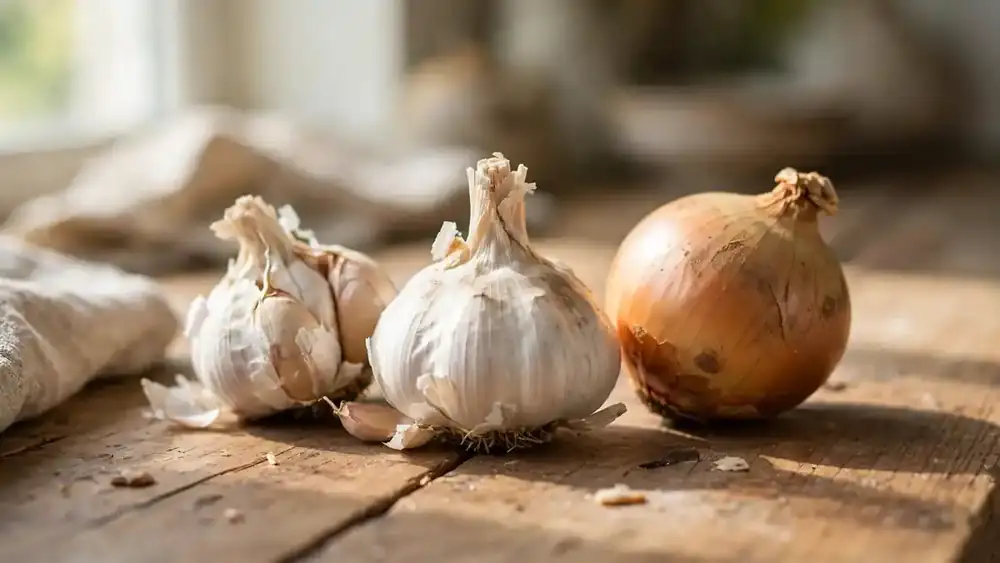
Anemia from garlic or onion does not always show up the same day. Red blood cell damage can build over a few days, so a dog may seem fine at first and then grow tired, lose appetite, or show pale gums. Urine may turn dark in severe cases.
Vets diagnose the problem with blood tests and treat it with supportive care, and severe cases may need a transfusion. Owners should never assume a small amount of powder is harmless, because the dose depends on the brand and the dog’s weight. Reading the label and keeping salami away from dogs removes the guesswork entirely.
What are the symptoms after a dog eats salami?
Symptoms after a dog eats salami include vomiting, diarrhea, excessive thirst, drooling, belly pain, lethargy, weakness, pale gums, tremors, and loss of appetite, and the exact mix depends on how much the dog ate. Mild cases show only soft stool or one bout of vomiting.

Timing matters. Gut upset can start within a few hours, while anemia signs may take one to three days to appear. That delay catches owners off guard, because a dog that looked fine on day one can fade on day three.
Keep a simple note of what the dog ate, how much, and when, plus any symptoms with times. That note helps the vet judge the risk fast. A dog that vomits repeatedly, passes bloody stool, collapses, or shows pale gums needs emergency care, not a wait until morning.
A bright dog with one soft stool still deserves a vet call for advice.
What should you do if your dog eats salami?
Call your veterinarian if your dog eats salami, and share the amount, the brand, and the time, because the vet can judge the risk from the dog’s size and health history. Offer fresh water and keep the dog calm indoors while you wait for advice.

Vets may ask owners to bring the dog in for an exam, blood tests, or fluids, depending on the amount eaten and the symptoms. A small accidental bite in a healthy large dog may need only monitoring at home. A large amount in a small dog, a puppy, or a dog with kidney, heart, or pancreas disease may need care the same day.
Keep the salami package or a photo of the label, because the ingredient list tells the vet whether garlic or onion powder was present. The ASPCA Animal Poison Control Center at (888) 426-4435 can also advise, and a consultation fee may apply. Fast, calm action beats panic every time.
Which salami types are riskiest for dogs?
Hard salami, Genoa salami, soppressata, and spicy salami all carry high salt and fat, and spicy versions add chili, pepper, and extra garlic that raise the risk further. Hard salami packs the most salt per slice because drying concentrates it. Genoa salami runs softer yet still carries heavy fat and garlic. Soppressata often uses coarse pork fat and bold spices.

Cured meat also carries bacteria risks that cooking would kill. Salami is fermented and dried rather than cooked, so bacteria such as E. coli, listeria, and salmonella can survive in some batches.
Healthy adult dogs often handle small bacterial loads, yet puppies, seniors, and dogs with weak immune systems face higher odds of illness. That risk adds another reason to skip salami, even when the spice mix looks mild. Owners who want a sausage style treat should look for treats made for dogs, with a clear ingredient list and no garlic, onion, or excess salt.
Can dogs eat ham, bacon, or other processed meats instead?
Dogs should avoid ham, bacon, and other processed meats for the same reasons they should avoid salami, because those meats also carry high salt, high fat, and seasonings that strain the gut, kidneys, and pancreas. Ham brings a heavy salt load in every slice.
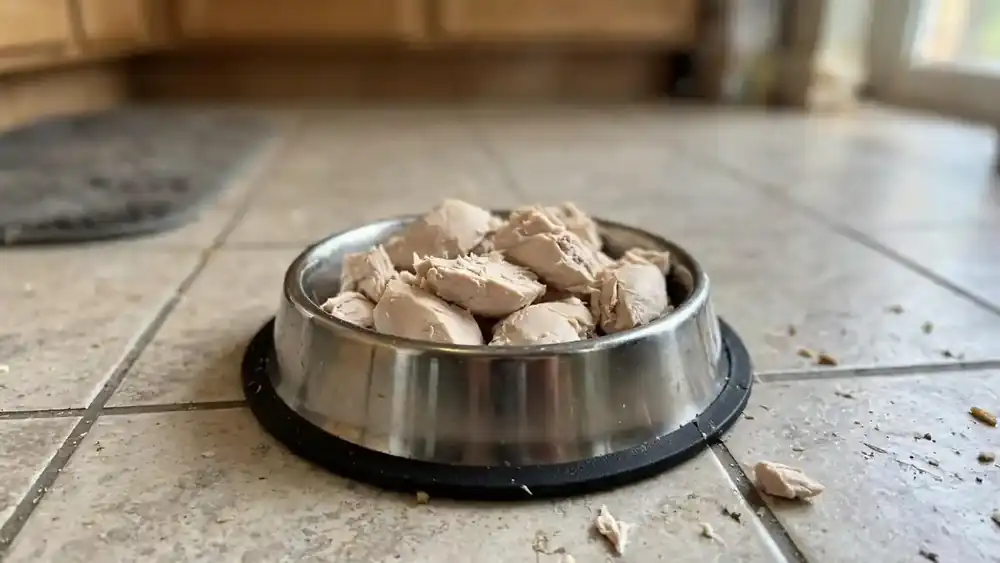
Pork is safer only when it is lean, plain, and cooked, without curing or spice rubs. Raw bacon adds raw meat risks on top of salt and fat, and cheese can work as a rare small treat only in tiny portions.
Plain cooked meat beats processed meat every time. Chicken served plain, skinless, and unseasoned gives dogs protein without the salt and spice load. Ground beef works the same way when it is lean, cooked, and free of onion and garlic.
Dog owners should treat any meat from the deli case with suspicion and check the label for salt, garlic, onion, and nitrites. When the label lists any of those, the meat belongs on the person’s plate, not the dog’s bowl. That simple check prevents most processed meat mistakes.
Frequently asked questions about salami and dogs
Salami questions come up often, because the meat sits on many snack boards and dogs beg for a taste. The answers below cover the most common situations, from a stolen slice to a puppy that grabbed a whole log. Each answer keeps the same rule in view: salami is a people food, and dogs do better without it.

Can dogs eat a tiny piece of salami?
A tiny piece of salami may pass without harm in a healthy adult dog, yet vets advise against offering any on purpose. The salt, fat, and spices give the dog nothing useful, and a small dog or a dog with health problems can react to one slice. Treat the bite as an accident, watch the dog, and call the vet with questions.
What happens if my dog eats salami?
A dog that eats salami may develop vomiting, diarrhea, thirst, or belly pain within hours, and anemia signs can appear one to three days later when garlic or onion was present. Large amounts raise the risk of pancreatitis and salt poisoning. Note the amount and brand, offer water, and call the vet for advice based on the dog’s size.
Is hard salami worse than soft salami for dogs?
Hard salami is often worse because drying concentrates salt and fat per slice, yet soft salami still carries enough of both to cause trouble. Spicy versions add chili and extra garlic that can irritate the gut. No deli salami is safe for dogs, and the type changes the degree of risk rather than removing it.
Can puppies eat salami?
Puppies should never eat salami. Their digestion is still developing, their body weight is low, and their kidneys and pancreas handle salt and fat poorly. A single slice can upset a puppy’s stomach, and garlic or onion adds a toxic risk. Offer puppy safe treats made for young dogs instead.
Can dogs eat salami with no garlic or onion?
Salami with no garlic or onion is still a poor choice, because the salt and fat alone can cause vomiting, diarrhea, and pancreatitis. Removing one risk leaves two behind. Plain cooked lean meat gives dogs the same meaty taste without the salt, fat, or spice load that makes salami risky.
What treats can I give my dog instead of salami?
Plain cooked chicken, turkey, or lean beef, cut small and served without salt or seasoning, make the best swaps for salami. Single ingredient dog treats and small pieces of dog safe vegetables also work well. Keep treats under 10 percent of daily calories, and check with your vet when the dog has a medical condition.
Salami stays on the people side of the snack board. The salt, fat, and spices stack up against dogs, and the safer swap takes less than a minute to prepare. Plain cooked meat, a dog treat from a trusted brand, or a small piece of dog safe food gives a dog the reward without the vet visit. Owners who keep cured meat out of reach and read labels before sharing food will dodge the most common salami mistake, and their dogs will never miss the slice.