Can Dogs Eat Bok Choy? Safety, Benefits, and Serving Guide
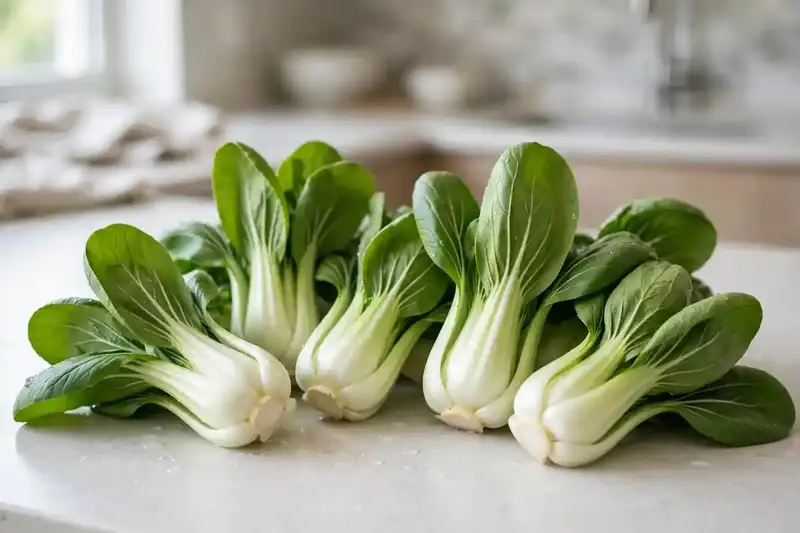
Yes, dogs can eat bok choy when it is plain, cooked, and served in a small amount. Bok choy is a mild leafy green from the cabbage family, and the American Kennel Club names it as a safe cabbage type for dogs in limited amounts. Cooking softens the fibrous stalks, lowers the plant compounds that can bother the thyroid, and makes the leaves easier to digest. A spoonful now and then suits most healthy adult dogs. Dogs with thyroid trouble, kidney stones, or a sensitive stomach need a vet check first, and seasoned stir fry versions stay off the menu.
The short answer above covers most cases, and the rest of this guide fills in the parts that change the answer: raw versus cooked, leaves versus stalks, portion size by body weight, and the health conditions that turn a harmless green into a poor choice.
Can dogs eat bok choy?
Dogs can eat bok choy in small amounts when the leaves and stalks are washed, chopped fine, cooked plain, and served without salt, oil, butter, garlic, onion, or sauce. Bok choy is not toxic to dogs, and the American Kennel Club lists it among cabbage types considered safe in limited amounts.
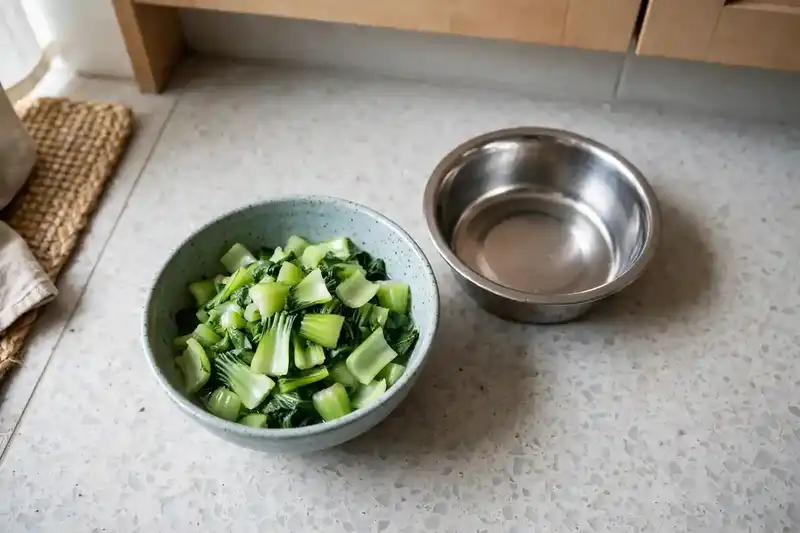
Bok choy belongs to Brassica rapa, the same species group as turnips and Napa cabbage. The AKC cabbage guide names bok choy as a safe cabbage type in limited amounts. Its leaves are tender and its stalks are crisp, white, and full of water.
Vets who write about cabbage and cauliflower stress the same two points: moderation and plain preparation. A dog that eats a few steamed pieces once or twice a week faces little risk. A dog that eats a full bowl of raw bok choy every day faces gas, loose stool, and a higher load of goitrogens, the plant compounds that can slow iodine uptake in the thyroid.
What nutrients does bok choy offer dogs?
Bok choy offers dogs vitamins A, C, and K, plus folate, potassium, calcium, and fiber in a low calorie package. Vitamin A supports vision and skin, vitamin C supports immune function, vitamin K helps blood clot, and fiber supports steady digestion. Dogs on a complete diet already get these nutrients, so bok choy adds variety rather than filling a gap.
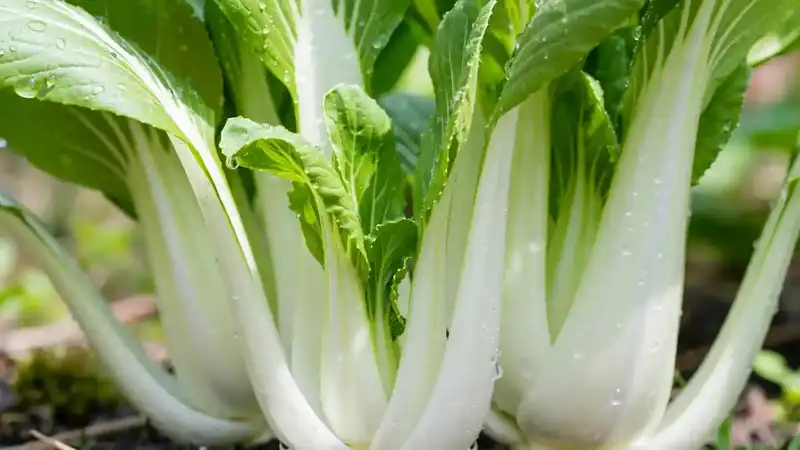
Water makes up most of a bok choy leaf, so a small serving adds almost no calories. The AKC guide to fruits and vegetables dogs can and cannot eat places leafy greens in the treat category, not the staple category. That low energy density helps owners of dogs that beg for snacks but need to hold weight. A spoonful of steamed bok choy gives a dog something to chew without the fat and salt that come with most table scraps.
Calcium in bok choy looks useful on paper, yet oxalates in the same leaves can bind some of that calcium. Dogs that already form calcium oxalate stones face a different calculation, and that group should skip bok choy until a vet weighs in. Folate and potassium play quiet roles in cell growth and muscle function, and bok choy supplies both in small amounts that fit a treat, not a meal.
Is raw bok choy safe for dogs?
Raw bok choy is not toxic, but cooked bok choy is the safer choice for dogs. Raw leaves and stalks are tough, harder to digest, and carry more goitrogens and oxalates than cooked leaves. Raw pieces also raise the choking risk, since crisp stalks can lodge in a small dog’s throat.

Goitrogens deserve a plain explanation. Bok choy contains glucosinolates, and an enzyme called myrosinase turns them into compounds that can block iodine uptake in the thyroid gland. Heat deactivates myrosinase, so cooked bok choy carries far less of that effect.
Raw stalks also resist chewing. Dogs that gulp food can swallow a long raw stalk piece whole, and that piece can irritate the throat or gut. Chopping raw bok choy fine lowers the risk, but steaming does more: it softens the stalk, breaks down tough fiber, and lets some water soluble oxalates leach into the cooking water, which owners then discard. Owners who want to share bok choy should cook it first and keep raw pieces out of the bowl.
How should bok choy be cooked for dogs?
Bok choy for dogs should be washed, chopped into small pieces, and steamed or blanched in plain water for two to three minutes, then cooled before serving. No salt, oil, butter, garlic, onion, soy sauce, or stock goes in the pot. Discard the cooking water, since it carries leached oxalates, and serve the leaves and stalks plain.
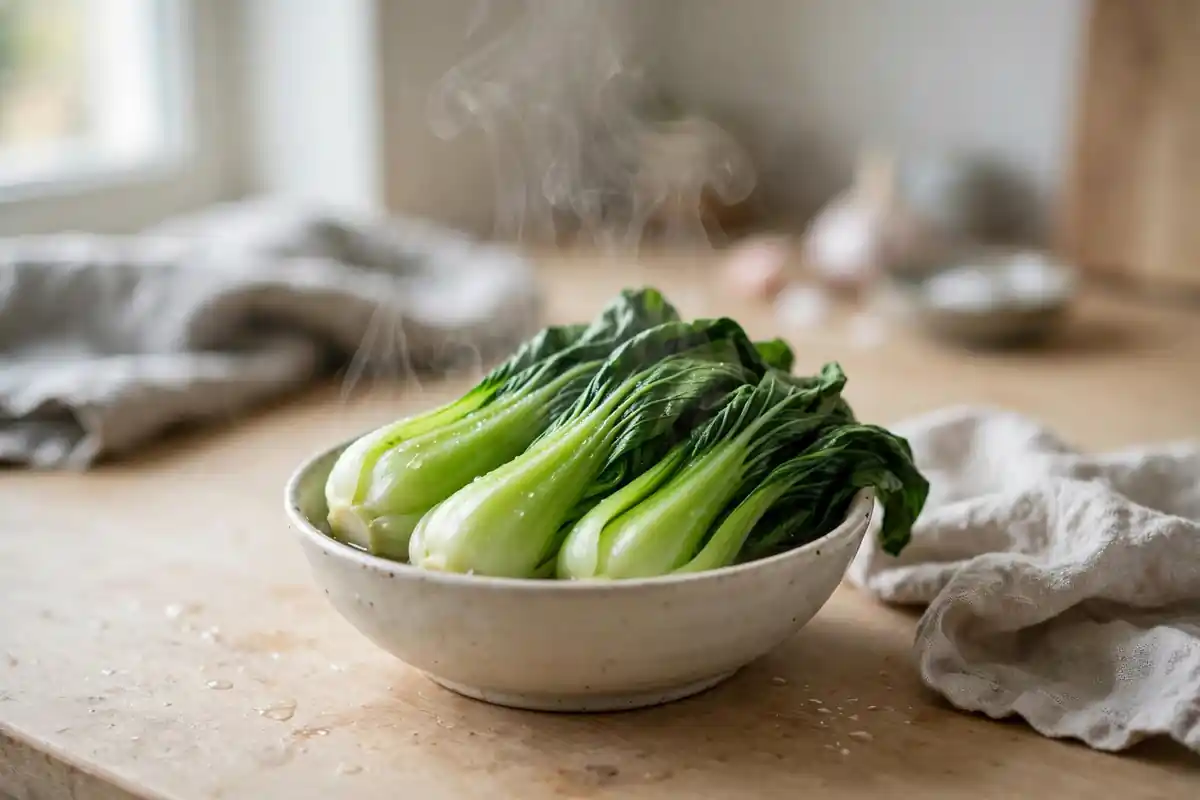
Washing matters because bok choy grows low to the ground and soil hides between the leaves. Separate the leaves, rinse each one under running water, and trim the tough base.
Cut the white stalks into pieces no wider than a pea for small dogs and no wider than a thumbnail for large dogs. Leaves can stay in slightly larger ribbons, since they wilt fast in steam. A steamer basket over boiling water works well, and a short boil in plain water works too.
Cooling is a step owners skip. Steamed bok choy holds heat inside the stalks, so spread the pieces on a plate for a few minutes before offering them. Mix the cooled pieces into the dog’s regular food or offer them by hand as a treat.
How much bok choy can a dog eat?
A small dog under 15 pounds can have one to two teaspoons of cooked chopped bok choy, a medium dog of 15 to 50 pounds can have one to two tablespoons, and a large dog over 50 pounds can have up to a quarter cup. Offer it once or twice a week, starting with half the amount.
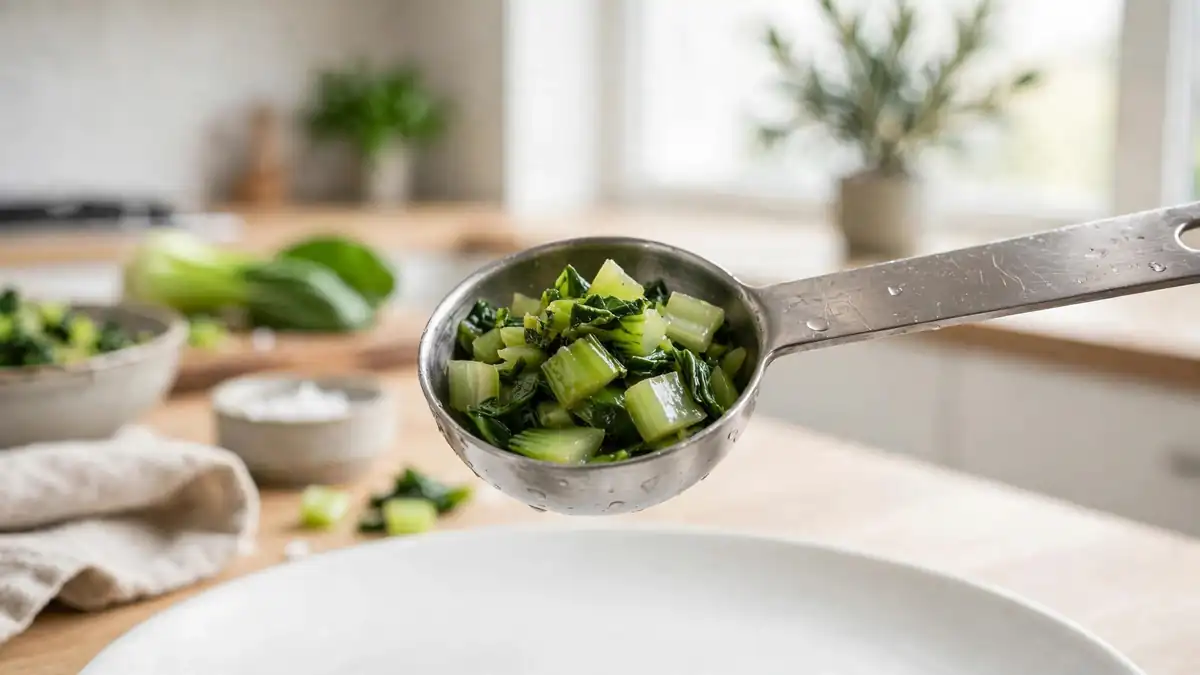
These amounts come from the serving ranges that feeding guides repeat for leafy greens, and they fit the 10 percent treat rule that the AKC applies to broccoli and other vegetables. A quarter cup of cooked bok choy weighs little and adds few calories, so the limit here is fiber and plant compounds, not energy. Dogs with small stomachs feel fiber faster, so a teaspoon can still cause gas in a toy breed that never ate greens before.
First introductions deserve patience. Offer half the target amount, wait 24 to 48 hours, and watch the stool, appetite, and energy. Loose stool or extra gas means the amount was too much or the dog’s gut needs a slower start. Owners can try again a week later with a smaller piece, or drop bok choy and pick a gentler green such as carrots.
Can bok choy upset a dog’s stomach?
Bok choy can upset a dog’s stomach when the portion is too large, the leaves are raw, or the dog’s gut is new to cruciferous vegetables. Gas, soft stool, vomiting, and loss of appetite are the usual signs, and they tend to pass within a day once feeding stops.

Gas is the most common complaint, and it follows the same pattern as cabbage and broccoli, two close relatives that the AKC flags for gas. Brussels sprouts cause the same problem in many dogs. Bok choy fiber ferments in the large intestine, and that fermentation makes gas. Dogs prone to bloat face a sharper concern, since gas can add pressure in a deep chested dog.
Allergy to bok choy is rare, but sensitivity is not. Itching, face swelling, or hives after eating bok choy point to an allergic reaction and need same day vet advice. More often, the problem is simple overload: a dog that ate a whole head of bok choy from the garden will have a sore gut for a day. Remove the food, offer water, and keep bok choy out of reach until the gut settles.
Which dogs should skip bok choy?
Dogs with kidney disease, a history of calcium oxalate bladder stones, thyroid disease, inflammatory bowel disease, or chronic diarrhea should skip bok choy or eat it only with a vet’s approval. Puppies under six months and dogs on a prescription diet also need a vet check first.

Kidney and stone risk comes from oxalates. Oxalates bind calcium in urine and can feed calcium oxalate stones in dogs that already form them.
A healthy dog clears a small oxalate load without trouble, but a dog with stone history does not get the same margin. Thyroid risk comes from goitrogens, which matter most for dogs on thyroid medication or with diagnosed hypothyroidism. Cooking lowers goitrogens, yet it does not remove them, so the cautious choice for these dogs is to skip bok choy.
Dogs with inflammatory bowel disease or chronic diarrhea react to fiber changes fast. Bok choy fiber can speed gut transit and loosen stool in a gut that is already inflamed. Puppies face a simpler issue: their stomachs are small, their diets are set for growth, and new foods can trigger diarrhea that dehydrates a small pup fast.
What seasonings and dishes make bok choy unsafe?
Seasonings make bok choy unsafe when they add onion, garlic, chives, leeks, excess salt, butter, oil, soy sauce, chili, or sugar. The ASPCA lists onion, garlic, and chives as foods that can irritate the gut and damage red blood cells in dogs. Stir fry bok choy and bok choy soup with stock should never go to a dog.
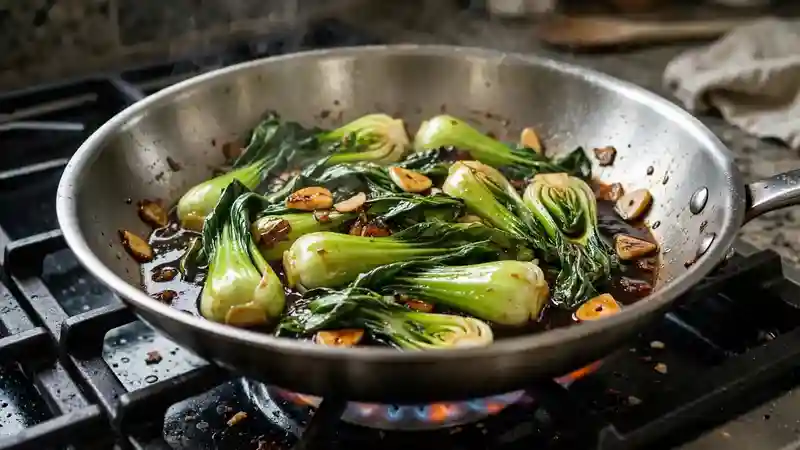
Restaurant bok choy is almost never plain. Cooks toss it in hot oil with garlic, ginger, soy sauce, and sometimes oyster sauce or chili flakes.
The ASPCA list of people foods to avoid feeding pets covers onion, garlic, and chives as red blood cell risks. Each of those adds a separate risk: oil and butter add fat that can trigger pancreatitis in sensitive dogs, salt adds sodium that strains dogs with heart or kidney disease, and garlic and onion damage red blood cells. A single garlic clove in a pan of bok choy will not poison a large dog, but the risk is needless when plain steamed bok choy costs nothing extra.
Packaged bok choy dishes hide the same extras under labels, and onion powder is more concentrated than fresh onion, so owners should read labels and check the seasoning before sharing any dish from a plate.
How does bok choy compare with cabbage and broccoli?
Bok choy compares well with cabbage and broccoli, since all three are cruciferous vegetables that are safe for dogs in small plain amounts. Bok choy is milder and softer than cabbage, so dogs often accept it faster. Broccoli carries isothiocyanates that can irritate the gut, and the AKC caps broccoli under 10 percent of daily intake.
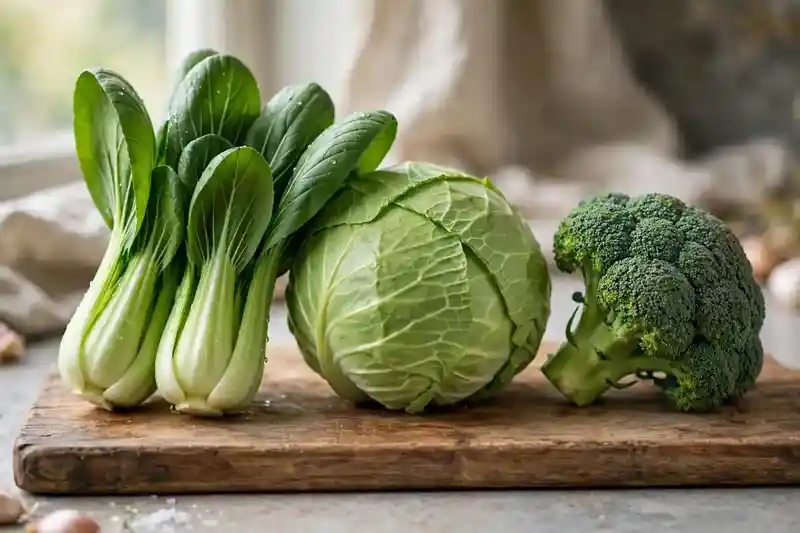
Cabbage is the closest match. The AKC calls cabbage safe in moderation and names bok choy as a safe cabbage type, while warning that cabbage makes a large amount of gas.
Broccoli follows the same moderation rule, and the AKC broccoli guide caps it under 10 percent of daily intake. Bok choy leaves are thinner than cabbage leaves and wilt faster, which helps digestion. Owners who already feed cabbage can swap in bok choy at the same small portion without changing the routine.
Broccoli differs in one clear way: its florets hold isothiocyanates, compounds that can irritate a dog’s stomach even in modest amounts. Bok choy lacks that specific irritant, which makes it a gentler pick for dogs that reacted to broccoli. Kale and Spinach sit nearby in the leafy green group, yet spinach carries more oxalic acid and kale carries its own thyroid concerns, so bok choy holds its own as a mild middle choice.
Frequently asked questions about bok choy for dogs
The questions below cover the details owners ask most about bok choy: raw versus cooked leaves, safe portions for small and large dogs, thyroid and kidney concerns, and what to do if a dog eats seasoned bok choy from the dinner table. Each answer gives the short version first, then the detail you need to act on it.

Can puppies eat bok choy?
Puppies can eat a tiny piece of plain cooked bok choy after six months of age, but a vet check comes first. Puppy diets are balanced for growth, and new foods can trigger diarrhea. Offer a pea sized piece once, watch the stool for a day, and keep treats under 10 percent of daily calories.
Can dogs eat bok choy leaves and stalks?
Dogs can eat both the leaves and the stalks when the pieces are chopped small and cooked plain. Leaves are tender and wilt fast, while stalks are crisp and need steaming to soften. Trim the tough base, discard any browned ends, and cut stalks into pea sized pieces for small dogs.
Can dogs eat bok choy every day?
Dogs should not eat bok choy every day. Daily feeding raises the goitrogen and oxalate load and can cause gas or loose stool over time. Once or twice a week in a small amount gives variety without that buildup. Rotate bok choy with other dog safe vegetables across the week.
Can dogs eat bok choy from stir fry?
Dogs should not eat bok choy from stir fry. Stir fry bok choy usually carries oil, garlic, onion, soy sauce, salt, or chili, and the ASPCA warns that onion and garlic can damage a dog’s red blood cells. Cook a separate plain portion for the dog instead of sharing from the pan.
What should I do if my dog eats a large amount of bok choy?
Remove any bok choy that is left, offer fresh water, and watch the dog for vomiting, diarrhea, gas, or lethargy over the next 24 hours. Call a vet if vomiting repeats, diarrhea lasts more than a day, the belly looks swollen, or the dog seems weak. Bring the packaging or note the amount eaten.
Is bok choy better than spinach for dogs?
Bok choy is a gentler choice than spinach for many dogs, since spinach carries more oxalic acid, which can block calcium absorption and raise kidney stone risk. Bok choy still carries oxalates, so neither green suits a dog with stone history. Healthy dogs can eat either green in small plain amounts.
Bok choy earns its place as an occasional treat, not a daily staple. Plain cooked leaves and stalks in a small amount suit most healthy adult dogs, while raw pieces, big portions, and seasoned dishes cause the problems owners want to avoid. Start with half a serving, watch the stool for a day, and keep the green to once or twice a week. Dogs with thyroid trouble, kidney stones, or a sensitive gut need a vet’s word first. When in doubt, skip the share and offer a plain treat the dog already tolerates.