

Homemade dog food recipes can feed a healthy adult dog well, but only when a vet or a board certified veterinary nutritionist checks the recipe and a complete supplement closes the nutrient gaps. Most recipes found online fail that test, and a bowl of fresh meat and rice is not a complete diet on its own. The four recipes below use amounts from vet published sources, and each one needs the supplement step and a vet sign off.
Cooking for a dog sounds simple, and the ingredients look wholesome. The hard part is invisible: calcium, iodine, zinc, and vitamins D and E run short in almost every home cooked bowl. This guide shows what a balanced bowl needs, gives four recipes with real amounts from vet sources, and explains the mistakes that turn good intentions into a deficient diet.
Can homemade food really be complete and balanced?
Homemade food can be complete and balanced, yet most published recipes are not, and the gap is bigger than most owners expect. Researchers at UC Davis analyzed 200 home prepared recipes and found that 95 percent lacked at least one essential nutrient.

More than 83 percent had multiple deficiencies, and only 9 of the 200 met all AAFCO minimums.
A diet earns the label complete and balanced when it meets AAFCO nutrient profiles for a life stage, either adult maintenance or growth and reproduction. Commercial food carries that claim on the bag after testing or feeding trials. Homemade food carries no label, so the burden of meeting those numbers falls on the recipe and the cook. The AAFCO guide to understanding pet food explains that AAFCO does not approve or certify individual foods, and it sets the model language states use for labels.
The good news is that the failures follow a pattern. Calcium runs short because meat is high in phosphorus and low in calcium. Vitamin D, vitamin E, iodine, zinc, and choline run short because whole foods alone rarely supply them in the right amounts. A vet formulated supplement fixes those gaps, and that is why every recipe in this article assumes one is used.
The five parts every homemade bowl needs
Every homemade bowl needs five parts: a lean protein, a cooked carbohydrate, cooked vegetables, a healthy fat, and a complete vitamin and mineral supplement dosed to the dog weight. Skip any one part and the bowl stops being a diet and becomes a snack with good intentions.
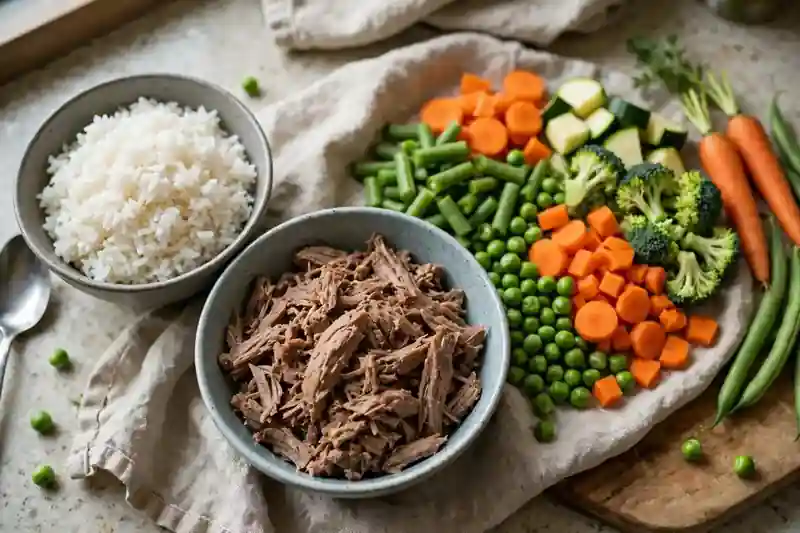
Protein drives the amino acid profile, and muscle meat such as chicken, turkey, beef, or fish supplies it. Carbohydrates such as rice, oats, or sweet potatoes give steady energy and help the meal feel filling. Vegetables add fiber and micronutrients, and carrots, green beans, and pumpkin all work well when cooked plain. Our guide to whether dogs can eat carrots covers safe preparation, and the page on whether dogs can eat sweet potatoes explains how to cook them plain.
Fat and supplements finish the bowl. A small amount of fish oil or vegetable oil supplies essential fatty acids, and the supplement supplies calcium, zinc, iodine, and vitamins D and E. Cook everything plain, with no onion, garlic, salt, butter, or seasoning. A related live article on making homemade food for dogs covers the same ground, and the recipes below build on it with specific amounts and vet guidance.
Recipe 1: chicken and rice for a small adult dog
Recipe 1 is a chicken and rice bowl for a 15 pound adult dog, using amounts published by MSPCA-Angell Animal Medical Center: 3 ounces of cooked dark meat chicken, 1 and 1 third cups of cooked white rice, 1 tablespoon of cooked mixed vegetables, 1 to 2 teaspoons of vegetable oil, and 1.5 scoops of Balance IT Canine supplement.
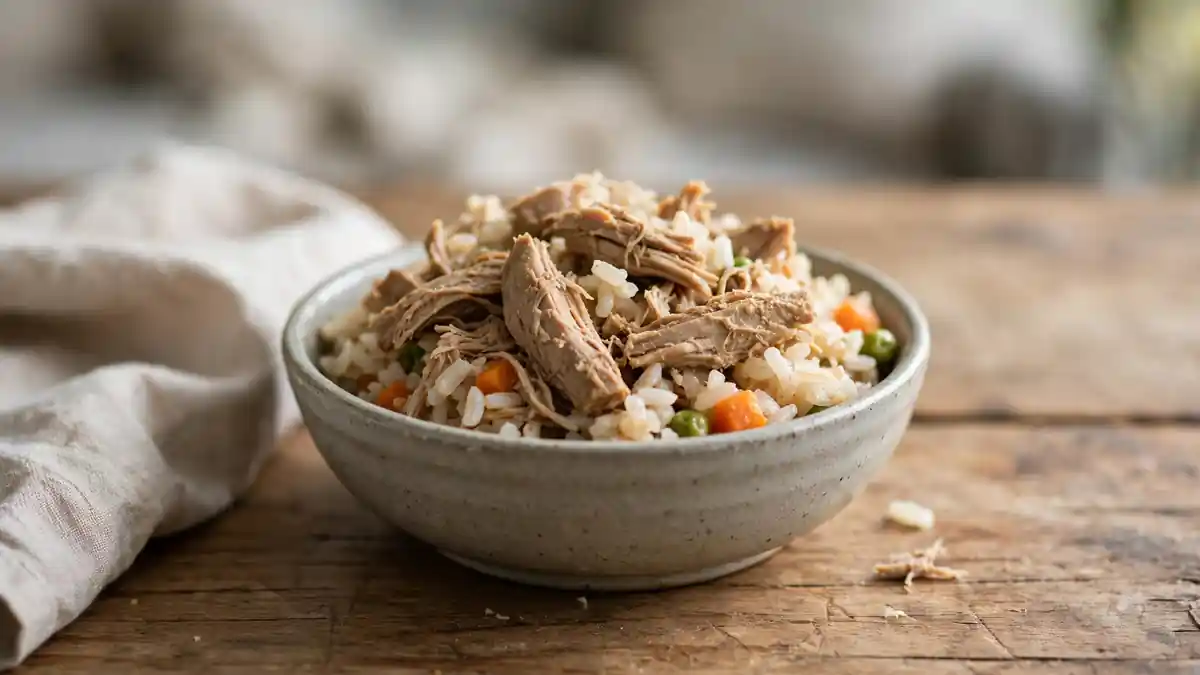
Cook the chicken plain, with no skin, bones, or seasoning, and cook the rice until soft. Stir in the cooked vegetables and the oil, let the bowl cool to room temperature, then mix in the supplement at serving time. The supplement is not optional: MSPCA-Angell notes that leaving it out produces a diet with many nutritional deficiencies.
This recipe suits a healthy adult dog at maintenance, not a puppy, a pregnant dog, or a dog with kidney disease or diabetes. Scale it only with your vet, since doubling the food without adjusting the supplement throws the calcium balance off. Our guide to how to boil chicken for dogs covers the plain cooking method this recipe assumes.
Recipe 2: turkey and brown rice for a medium adult dog
Recipe 2 is a turkey and brown rice bowl that makes 7 servings for a medium sized adult dog. It pairs lean ground turkey with brown rice, leafy greens, carrots, peas, pumpkin, eggs, fish oil, and a calcium supplement for balance.
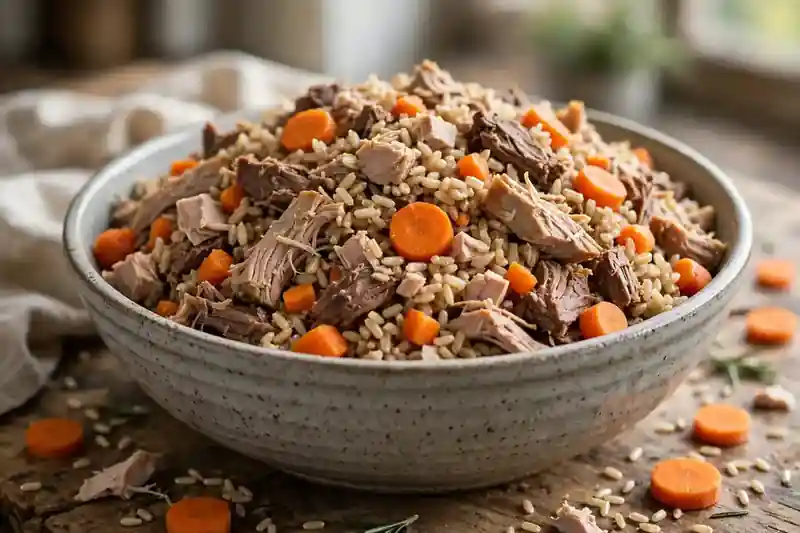
The full amounts are: 1 pound of lean ground turkey or chicken cooked, 3 cups of cooked brown rice, 2 cups of lightly steamed leafy greens, 1 cup of shredded carrots, 1 cup of peas or green beans, half a cup of unsweetened pumpkin puree, 2 cooked eggs, 2 teaspoons of fish oil, and 1 teaspoon of ground eggshell powder or a calcium supplement.
Brown the turkey in a pan with no oil or seasoning, drain any fat, and cook the rice separately. Steam the greens and carrots until soft, then mix everything in a large bowl and stir in the pumpkin, chopped eggs, fish oil, and eggshell powder once the mix has cooled. Divide into 7 equal portions and refrigerate what the dog will eat within 3 days.
Eggs add protein and fat, and pumpkin adds soluble fiber that firms stools. Our page on whether dogs can eat eggs covers safe preparation, and the pumpkin guide explains why plain puree beats pie filling. Ask your vet to confirm the portion for your dog weight, since a medium dog can mean 25 pounds or 50 pounds, and the daily amount changes with it.
Recipe 3: turkey, beef, and sweet potato for a large adult dog
Recipe 3 is a turkey and beef bowl with sweet potato that provides about 1,200 calories and serves a 50 pound adult dog for 2 to 3 days. It uses lean meat, brown rice, sweet potato, green beans, carrots, fish oil, and ground eggshells.
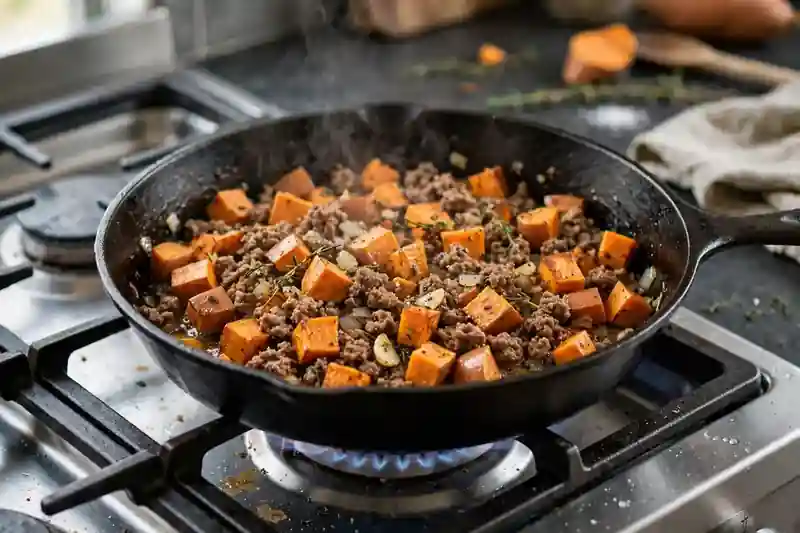
The full amounts are: 1 pound of lean ground turkey or beef at an 85 to 15 fat ratio, 1 cup of cooked brown rice, 1 cup of diced steamed sweet potatoes, half a cup of chopped green beans, a quarter cup of finely diced carrots, 2 tablespoons of fish oil, and 1 teaspoon of ground eggshells for calcium.
Cook the meat plain and drain the fat, steam the sweet potatoes and vegetables until soft, then mix everything and add the fish oil and eggshells after cooling. Sweet potatoes give slow digesting carbohydrates and fiber, and green beans add bulk with few calories. The rice and sweet potato together keep the meal filling without a heavy fat load.
This recipe works as a base for a healthy adult dog, yet it still needs a complete vitamin and mineral supplement to meet AAFCO profiles, and your vet should confirm that before it becomes the daily diet. Store portions in sealed containers, refrigerate for up to 3 days, and freeze the rest. Never serve the bowl hot, and never add seasoning to make it taste better to you.
A bland chicken and rice meal for upset stomachs
A bland chicken and rice meal for upset stomachs is a short term recovery food, not a complete daily diet. It gives the gut simple ingredients to digest while it settles, and vets often suggest it for a few days after a stomach upset.

The AKC describes it as plain chicken and boiled rice, with no seasoning or fat. Use skinless, boneless chicken boiled plain and white rice cooked soft, in roughly equal parts by volume, served in small meals three or four times a day instead of two large ones. Keep the portions small at first, watch the stool, and move back to the regular food over two or three days once the stool firms. Our guide to whether dogs can eat rice covers the plain preparation.
Call your vet before starting a bland diet when the dog has vomited more than once, has blood in the stool, or will not drink. A bland meal hides symptoms but does not treat parasites, pancreatitis, or a blockage. Puppies dehydrate fast, so a puppy with diarrhea needs a vet visit sooner than an adult with the same signs.
Supplements: the step that makes a recipe complete
Supplements make a homemade recipe complete because whole foods alone cannot supply calcium, iodine, zinc, and vitamins D and E in the right amounts and ratios. A complete canine vitamin and mineral premix, dosed to the dog weight, closes that gap, and every recipe in this article assumes one is used.
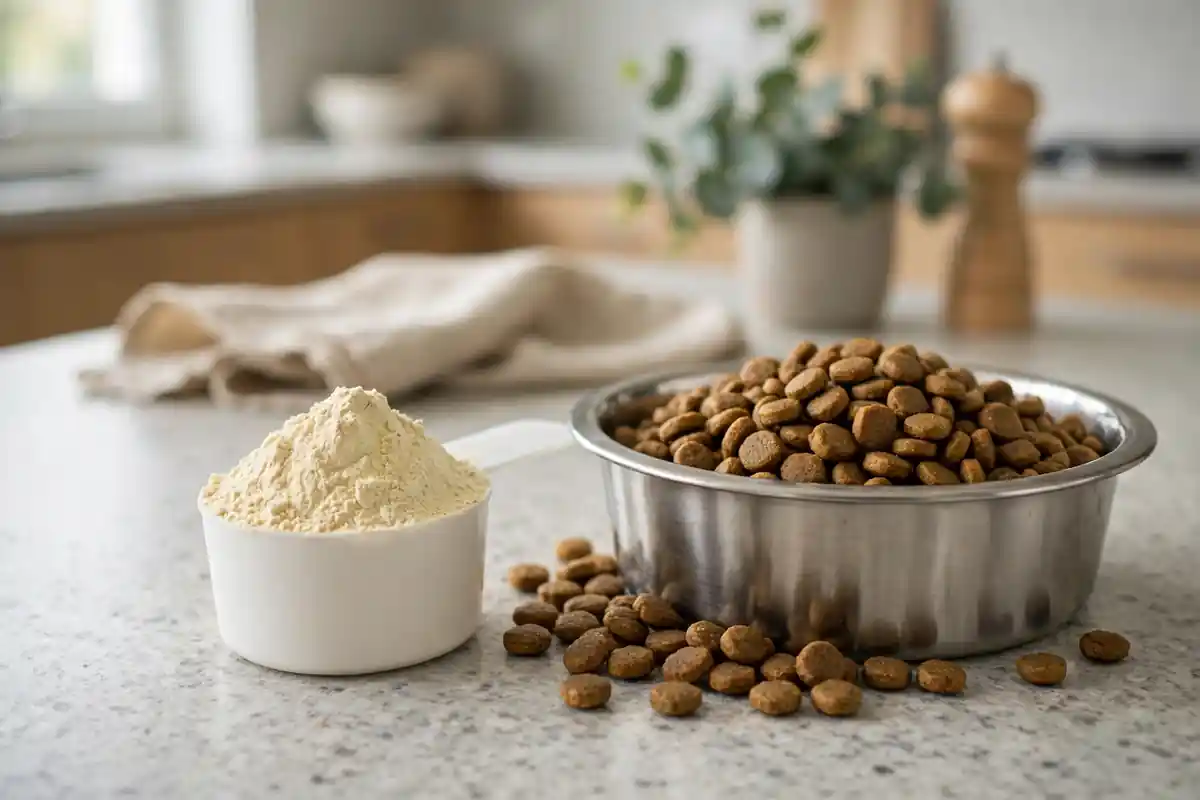
Balance IT Canine is the supplement named in the vet published recipes used here, and it was developed by a board certified veterinary nutritionist. Other complete premixes exist, yet the dose and the brand must match the recipe your vet approved, since each premix has a different nutrient profile. Do not swap in a human multivitamin or a generic pet vitamin and assume it covers the same ground.
Calcium deserves a closer look. Meat is high in phosphorus and low in calcium, and the right ratio for dogs sits near 1.2 parts calcium to 1 part phosphorus. Ground eggshell powder supplies calcium, yet the amount must match the meat in the bowl, so ask your vet to check the math. Too little calcium weakens bones over time, and too much can harm a growing puppy.
Foods that never belong in a homemade recipe
Foods that never belong in a homemade recipe include chocolate, xylitol, grapes, raisins, onions, garlic, macadamia nuts, avocado, raw bread dough, and alcohol, since each one can poison a dog or damage the gut. Check every ingredient before it goes in the pot, including sauces and spice blends that hide onion or garlic powder.

Xylitol is the one to fear most in a kitchen. The FDA warns that xylitol can drop a dog blood sugar within 10 to 60 minutes, and it hides in some peanut butters, sugar free baked goods, and chewable vitamins. Read the label on every jar, including a brand you have bought before, since recipes change. Our page on xylitol poisoning in dogs lists the signs and the emergency steps.
Raw meat brings a different risk. Vets generally do not recommend raw homemade diets, since raw meat can carry Salmonella and other bacteria that sicken dogs and the people who handle the food. Our page on Salmonella in dog food explains the handling risks, and the raw feeding guide covers why cooking is the safer choice for most homes. Cook all meat through, wash hands and boards after handling, and store leftovers cold.
Storage, portions, and the switch from kibble
Storage, portions, and the switch from kibble decide whether a homemade diet works in real life. Cooked food spoils fast in a warm fridge, and a good portion means nothing when the dog eats twice as much as planned each day.
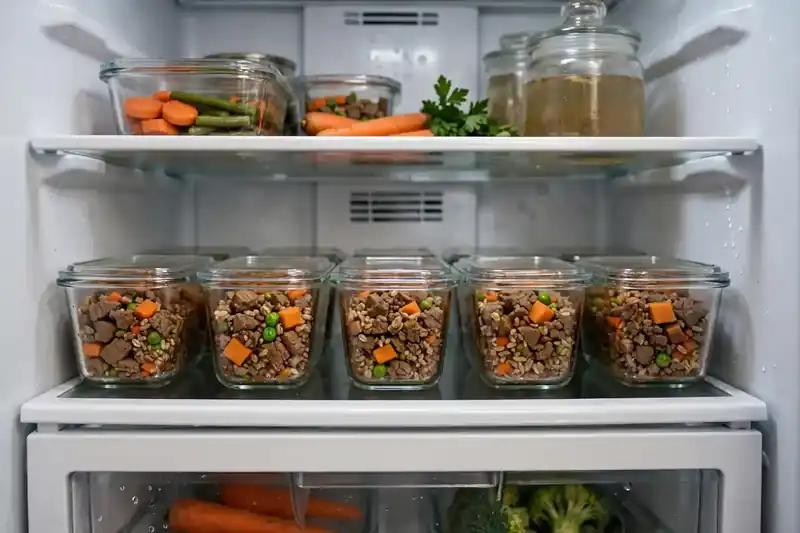
Refrigerate cooked food for up to 3 days, freeze the rest in daily portions, and thaw in the fridge, never on the counter.
Portions come from your vet, not from the bowl. A vet sets the daily calories from the dog weight, body condition, and activity, then splits that total across two meals. Weigh the food on a kitchen scale for the first two weeks, since cups and handfuls drift by 20 percent or more. Reweigh the dog monthly on the same scale and report the trend.
Switch from kibble over 7 to 10 days, mixing a quarter homemade with three quarters kibble at first, then moving the ratio up every two or three days. Watch stool, appetite, and energy at each step, and hold the ratio longer when the stool softens. A home prepared diet must be formulated by a veterinary nutritionist for a food trial, as VCA explains, and the same care applies when homemade food becomes the daily diet.
Frequently asked questions about homemade dog food recipes
Owners ask the same questions about homemade dog food recipes, and the answers below cover the ones vets hear most. Each answer assumes a vet or a board certified veterinary nutritionist has checked the recipe, since an unreviewed recipe can look complete and still miss key nutrients.

Can I feed homemade dog food every day?
You can feed homemade dog food every day when a vet or a board certified veterinary nutritionist formulated the recipe, a complete supplement is used at the right dose, and the vet checks the dog weight and blood work over time. A recipe copied from a blog without that review is a gamble, and the UC Davis study shows how often that gamble loses.
How much homemade food should I feed my dog?
How much homemade food to feed depends on the dog weight, age, activity, and the recipe calorie count, so your vet should set the daily amount. As a rough frame, the turkey and sweet potato recipe in this article gives about 1,200 calories and serves a 50 pound adult dog for 2 to 3 days. Weigh portions on a scale and adjust from the monthly weigh in.
Do I need a supplement for homemade dog food?
You need a supplement for homemade dog food, since whole foods alone cannot supply calcium, iodine, zinc, and vitamins D and E in the right amounts. Use a complete canine vitamin and mineral premix at the dose your vet sets for the dog weight. Leaving the supplement out is the most common mistake in home cooking.
Can puppies eat homemade dog food?
Puppies can eat homemade food only when a board certified veterinary nutritionist formulates the recipe for growth, since puppies need more protein, calcium, and calories than adults, and the wrong calcium level can harm developing bones. Never feed a puppy an adult maintenance recipe. Ask your vet before cooking for a puppy.
Is homemade dog food better than kibble?
Homemade dog food is not automatically better than kibble, and a complete and balanced kibble beats an unbalanced homemade bowl every time. Home cooking wins on ingredient control and freshness, while kibble wins on tested nutrient balance and convenience. The better diet is the one that meets AAFCO profiles and fits your dog.
What should I do if my dog will not eat homemade food?
If your dog will not eat homemade food, check the temperature first, since dogs prefer food at room temperature over food straight from the fridge. Warm it gently, offer a small portion, and remove the bowl after 20 minutes. Call your vet when a dog refuses food for more than a day, since appetite loss can signal illness.
Homemade dog food recipes reward the owners who treat them like a prescription, not a hobby. Pick a recipe from a vet published source, add the complete supplement at the right dose, cook everything plain, and let your vet check the balance before it becomes the daily diet. Bring the recipe and the supplement label to the next visit, and keep cooking only while the vet says the plan still fits your dog.


