Can Dogs Have Cardamom? Safety, Risks and Safe Amounts

Dogs can have cardamom in tiny amounts, since the spice is non-toxic for healthy adult dogs, but cardamom earns no place as a regular dog treat because the safe amount is a pinch and the risky forms are easy to reach by mistake. A sprinkle in a homemade treat is one thing. A spoonful, a whole pod, or a drop of cardamom oil is another. Pregnant dogs should skip it entirely. The rest of this guide sorts the safe uses from the ones worth avoiding.
Can dogs have cardamom?
Dogs can have cardamom in very small amounts when the dog is a healthy adult and the cardamom is plain ground spice or a small piece of pod. Veterinary sources class cardamom as non-toxic for dogs, and a pinch mixed into food is unlikely to cause harm.

The spice adds flavor without calories, which sounds useful, but dogs gain nothing they need from it. Cardamom should stay an occasional pinch, never a daily habit, and never a supplement.
What is cardamom?
Cardamom is a warm aromatic spice from the seeds of plants in the ginger family, and it comes in two main types. Green cardamom comes from Elettaria cardamomum and carries a fresh, slightly sweet scent. Black cardamom comes from Amomum subulatum and tastes smokier and stronger.

Both types are sold as whole pods, loose seeds, or ground powder. Ground powder is the form most dogs will meet, since it goes into curries and rice dishes, plus chai and baked goods.
Cardamom flavor comes from essential oils in the seeds. Cineole and alpha-terpineol lead the mix. Those oils give cardamom its smell and its bite.
The same oils are the reason large amounts irritate a dog gut. A pinch of ground spice carries only a trace of oil, while a drop of pure cardamom oil carries a concentrated dose. That gap between forms is the single most useful fact about cardamom safety, and it shapes every rule that follows. Oil is different.
Most dogs meet cardamom inside other foods rather than as a spice on its own. Cardamom hides in chai lattes and curries. Rice dishes carry it too.
Spice blends like garam masala carry it as well. Those dishes often carry other ingredients that matter more. A curry may hold onion and garlic, a chai latte may hold milk and sugar, and a baked treat may hold nutmeg or xylitol. Judge the whole dish, not the cardamom alone, and keep the dog bowl plain when the human plate carries seasoning.
Is cardamom toxic to dogs?
Cardamom is not toxic to dogs in the way onion and garlic are, and no veterinary poison list names cardamom as a toxin. VCA notes that all forms of onion, garlic, chive, and leek are poisonous to dogs, including raw, cooked, dried, powdered, and liquid forms.

The ASPCA list of people foods to avoid covers onion, garlic, chocolate, grapes, xylitol, and raw yeast dough, and cardamom does not appear on it. That absence is reassuring, but it does not mean cardamom is harmless in every amount. Non-toxic and safe at any dose are two different claims, and cardamom sits firmly in the first group only.
Large amounts of cardamom can cause stomach upset, loose stool, and vomiting, and high doses can act as a laxative. Allergic reactions are rare, but they happen, and signs include itching, swelling, vomiting, and trouble breathing. A dog that shows those signs after eating cardamom should stop getting the spice and see a vet. The risk picture is mild next to true spice poisons, yet mild is not the same as zero.
Green cardamom vs black cardamom for dogs
Green cardamom is the milder of the two types and the one most dogs will meet in food. Green cardamom pods hold small dark seeds with a fresh, sweet, almost lemony scent, and ground green cardamom is the standard spice in baking and chai. Black cardamom pods are larger, darker, and smokier, and the flavor is stronger and more resinous.
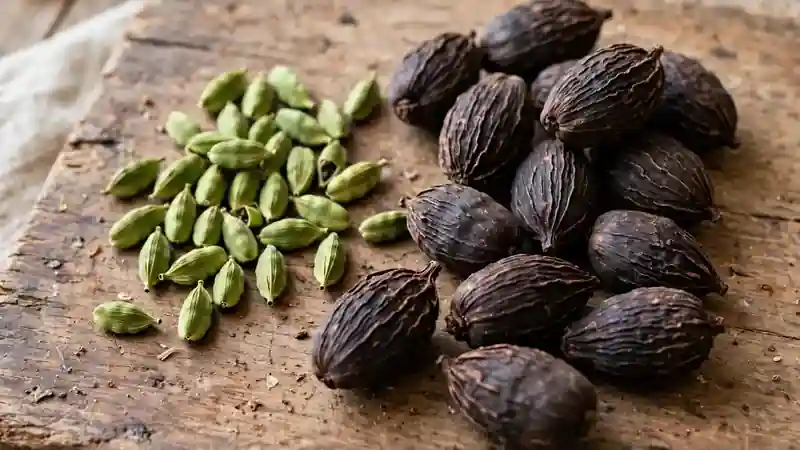
Black cardamom shows up in savory curries and rice dishes more than in sweets.
For dogs, the difference between the two types is small but real. Black cardamom carries a stronger flavor and a higher load of aromatic oils per pinch, so it is easier to overdo. Green cardamom is the safer pick when a recipe needs a trace of spice, and black cardamom should be used in even smaller amounts.
Never feed either type as whole pods to a dog. Pods are tough, fibrous, and easy to choke on, and the seeds inside are the concentrated part. Green wins.
Cardamom oil and extracts: the form that changes everything
Cardamom essential oil is the one form of cardamom that owners should treat as dangerous. Essential oil is a concentrated extract of the same compounds in the spice, and a few drops carry far more active oil than a spoonful of ground spice.

Dogs that lick cardamom oil can develop mouth irritation, drooling, vomiting, and diarrhea, and oil on the skin can irritate the skin as well. Never add cardamom oil to dog food, dog treats, or a diffuser in a room where a dog cannot leave.
Cardamom extract and cardamom flavoring sit between ground spice and pure oil. Extracts are made with alcohol or glycerin and carry a concentrated flavor, so a small amount goes a long way. Baked goods made with cardamom extract are usually fine in the tiny amounts a dog might steal, but the extract itself should never be given straight.
The rule is simple: ground spice in a pinch is the only form that belongs near a dog bowl, and every stronger form stays on the shelf. Oil stays off limits.
Diffusers deserve a separate warning. A diffuser spreads cardamom oil through the air in fine droplets, and a dog in a closed room cannot move away from it. Dogs that breathe diffused oil can develop coughing, sneezing, and watery eyes, and a dog that licks oil residue off fur or paws gets a direct dose. Run diffusers only in rooms the dog can leave, and never point one at a dog bed.
How much cardamom can a dog have?
No veterinary body publishes a serving amount for cardamom, so state that gap plainly instead of filling it with a made up number. Competitor pages suggest a pinch of ground cardamom, often less than one eighth of a teaspoon, once or twice a week at most.

That range is kitchen practice, not a studied dose, but it is a reasonable ceiling for a healthy adult dog. A pinch means the spice you can hold between thumb and forefinger, not a measured spoonful.
Start with less than a pinch the first time and watch the dog for a day. Loose stool, vomiting, or a sudden loss of appetite means the dog did not tolerate it, so never offer the spice again. Small dogs should get less than large dogs, and always mix the spice into food rather than feeding it straight. A pinch is enough.
Cardamom has no nutritional job in a dog diet, so there is no reason to push the amount up. When a recipe calls for cardamom, the dog portion can simply skip it. No studied dose exists.
Mixing cardamom into a homemade treat is the only sensible way to offer it. A pinch stirred through a batch of treats spreads the spice so thin that no single treat carries much of it. Sprinkling cardamom over kibble is a poor idea, since the dog may eat the spice straight and the flavor may put the dog off its food. Treats made for dogs should use dog friendly flavors first, and cardamom should stay a rare addition, not a staple.
Pregnant dogs and cardamom: the one hard no
Pregnant dogs should not eat cardamom. Veterinary reviewed sources flag cardamom as unsafe for pregnant dogs because of a possible miscarriage risk linked to large amounts in people, and the same caution extends to dogs. Few dog studies cover cardamom, which is exactly why caution wins here.

A spice with no nutritional benefit is not worth any risk to a pregnancy, however small that risk may be.
Nursing dogs should also skip cardamom, since the spice passes into milk. Puppies under twelve months should skip it too, since their digestive systems are still settling and their livers process plant compounds more slowly than an adult dog. These are the only groups where the advice flips from a careful yes to a flat no. Owners with a pregnant or nursing dog should treat cardamom like any other avoid list item and keep it out of the dog bowl entirely.
Dogs on medication and dogs with sensitive stomachs
Dogs on medication should not get cardamom without a vet check. Cardamom has a slight blood thinning effect at high doses, so dogs on blood thinning medication face a real interaction risk. Some sources also flag possible interactions with antibiotics and insulin, though the evidence is thin.

The practical point is plain: a spice that changes how the body handles other drugs is a spice to clear with the vet first.
Dogs with sensitive stomachs should skip cardamom as well. The same aromatic oils that give cardamom its flavor can irritate a gut that is already unhappy, and a dog with chronic digestive trouble gains nothing from the spice. Dogs on prescription diets should skip it unless the vet approves, since vets build prescription diets around strict limits. A vet visit costs less than a gut flare, and a quick question at the next appointment settles the matter for good.
Safer spices and flavors for dog treats
Cinnamon is the easiest swap for cardamom in dog treats. Cinnamon gives baked treats a warm scent without the pregnancy warning that cardamom carries, and dogs tolerate it well in small amounts. Still use both spices in small amounts, since no spice belongs in a dog bowl by the spoonful.

Ginger is another ginger family relative that suits dogs better than cardamom, since owners widely use ginger for upset stomachs and carries a longer safety record in dog food.
Turmeric is a third option, and it is the spice with the most dog specific guidance behind it. Turmeric shows up in dog treats and supplements far more often than cardamom, and vets discuss it openly. The AKC guide to fruits and vegetables dogs can and cannot eat is a useful check before sharing any kitchen food with a dog.
Plain flavors beat spices for most dogs, though. Honey gives treats sweetness without spice oils, and plain pumpkin or peanut butter gives flavor without any spice risk at all. When a recipe needs warmth, cinnamon is the safer pick, and cardamom can stay in the human portion. The dish matters more.
Frequently asked questions about cardamom and dogs
Cardamom questions usually split into two groups, which are the safety question for healthy dogs and the pregnancy question for breeding dogs. The answers below cover both groups plus the oil question, the amount question, and the allergy question. The same rule runs through all of them: a pinch of ground spice is the outer limit.

Is cardamom safe for dogs?
Cardamom is safe for healthy adult dogs in very small amounts, such as a pinch of ground spice mixed into food. The spice is non-toxic, but large amounts can cause stomach upset, diarrhea, and vomiting. Pregnant dogs, nursing dogs, puppies, and dogs on medication should skip it or check with a vet first.
Is cardamom toxic to dogs?
Cardamom is not toxic to dogs in the way onion and garlic are. Onion and garlic damage red blood cells, and the Merck Veterinary Manual puts garlic at three to five times more toxic than onion. Cardamom has no such effect, and the risk stays limited to gut upset from large amounts and reactions in sensitive dogs.
Can pregnant dogs eat cardamom?
Pregnant dogs should not eat cardamom. Veterinary reviewed sources link large amounts of cardamom to a possible miscarriage risk in people, and vets apply the same caution to dogs. Nursing dogs should also skip it, since cardamom passes into milk. There is no nutritional reason to risk it.
Can dogs have cardamom essential oil?
Dogs should never have cardamom essential oil. The oil is a concentrated extract, and even a few drops can irritate the mouth, cause drooling and vomiting, and upset the gut. Oil on the skin can irritate the skin too. Keep cardamom oil out of dog food, treats, and diffusers.
How much cardamom can I give my dog?
No published dog dose exists for cardamom. Competitor guidance suggests a pinch of ground spice, often less than one eighth of a teaspoon, once or twice a week at most for a healthy adult dog. Start with less, watch for loose stool or vomiting over the next day, and stop the spice when any sign shows up.
Can dogs be allergic to cardamom?
Dogs can be allergic to cardamom, though reactions are rare. Signs include itching, swelling, vomiting, and trouble breathing. Stop feeding the spice at once and call a vet when any of those signs appear. A dog that reacted once should never get cardamom again.
Cardamom is a spice dogs can taste in a pinch, but it is not a spice dogs need. The ground spice is non-toxic in tiny amounts, the oil is a real hazard, and pregnant dogs should skip it entirely. Cinnamon and ginger do the same job in dog treats with fewer warnings attached. Keep cardamom in the human spice rack, and let the dog bowl stay plain.