Can Dogs Have Maple Syrup? Pure, Imitation, and Xylitol Risks
Can dogs have maple syrup? A tiny lick of pure maple syrup is not toxic, but dogs should never get syrup on purpose, and sugar free or imitation syrup can be deadly. Pure maple syrup is mostly sugar and water, so it adds calories without nutrition. Imitation syrups often hide xylitol, a sweetener that can kill a dog in small amounts. This guide explains the difference between pure and imitation syrup, the xylitol danger, the sugar risks, and what to do when a dog licks a plate.
Can dogs have maple syrup?
Dogs can have maple syrup only as a tiny accidental lick of the pure kind, and even that lick is not a treat, because pure maple syrup is concentrated sugar with almost no nutrition. The syrup comes from maple tree sap, and it holds sucrose, water, and trace minerals such as manganese and zinc.

Pure maple syrup is not toxic the way chocolate or grapes are toxic, and that fact tempts owners to share it. Safety is a spectrum, not a switch, and a food can be nontoxic yet still harmful. Maple syrup sits on that middle ground.
It will not poison a healthy dog in a tiny amount, yet it can upset the stomach, spike blood sugar, and add weight when given often. Owners who want to share a sweet taste with their dog should pick a dog safe food instead, and keep the syrup bottle in the pantry.
What is the difference between pure and imitation maple syrup?
Pure maple syrup comes only from maple tree sap, while imitation syrup is usually corn syrup with maple flavor, caramel color, and often a sugar substitute such as xylitol. Pure syrup lists one ingredient on the label: maple syrup. Read the label every time, since brands change recipes without warning.
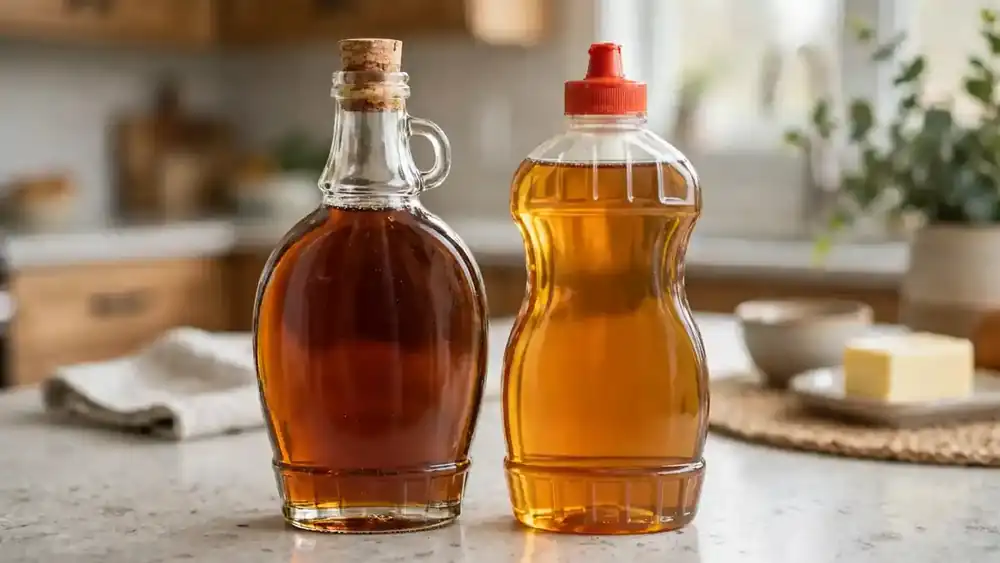
Price and color give clues too. Pure maple syrup costs more, tastes less sweet than corn syrup, and pours thinner. Imitation syrup costs less, tastes very sweet, and pours thick.
Some bottles mix the two, with a little real maple syrup and a lot of corn syrup, and those blends still carry the imitation risks. The safest habit is to buy pure maple syrup for the household and keep all syrup bottles out of the dog’s reach. A dog that licks a plate with pure syrup faces a sugar problem, while a dog that licks a plate with imitation syrup may face a poison emergency.
Why is xylitol in syrup so dangerous for dogs?
Xylitol is dangerous for dogs because it triggers a rapid release of insulin, and that insulin crash can drop blood sugar to life threatening levels within 10 to 60 minutes. Liver failure can follow in severe cases, and there is no antidote for xylitol poisoning.
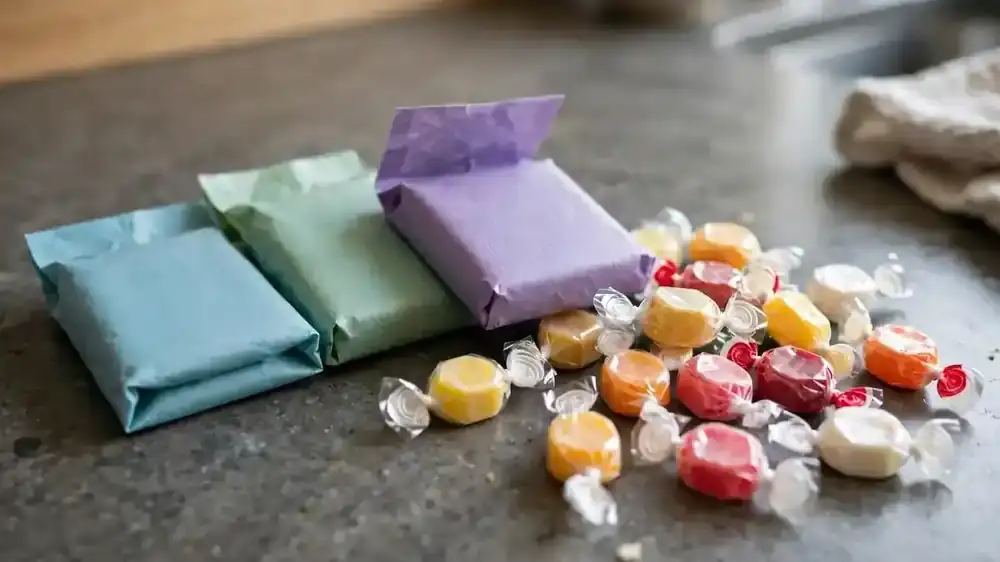
The FDA explains that xylitol does not stimulate insulin release in people, yet in dogs it causes a potent insulin release that can lead to hypoglycemia, seizures, and liver failure. The AKC adds that xylitol cases remain nearly 75 percent higher in 2025 than in 2020.
Xylitol hides under other names, and that is the part many guides skip. Labels may list birch sugar, wood sugar, or birch bark extract instead of xylitol, and all three names mean the same sweetener. Sugar free, reduced sugar, diabetic friendly, and no sugar added labels all signal a risk, and the AKC warns that xylitol listed as a first or second ingredient likely means a high dose.
A small breed dog can react badly to as few as two pieces of certain sugarless gum, so a few licks of a xylitol syrup can be enough. Owners should check every syrup, candy, gum, peanut butter, and toothpaste label for those names before the product enters the house.
How much maple syrup can a dog have?
No veterinary body sets a safe maple syrup amount for dogs, so owners should give none on purpose, and treat a tiny lick as an accident rather than a portion. Some guides suggest half a teaspoon for a medium dog, yet that figure comes from blogs, not from vets, and other guides say dogs should never get syrup at all.
Treats in general should stay under 10 percent of daily calories, as VCA advises in its dog treats guide.
Size shapes the risk. A small dog that licks a teaspoon of syrup takes in far more sugar per pound than a large dog that licks the same amount. Dogs with diabetes, obesity, or pancreas problems should get no syrup at all, because the sugar spike can trigger a crisis.
Puppies should get no syrup either, since their growing bodies handle sugar poorly. Owners who want a number should ask their vet, yet most vets will give the same answer: zero on purpose, and a vet call when the dog eats a large amount. That answer is simple, and it is the safest one.
What does sugar do to a dog’s health?
Sugar harms dogs by spiking blood glucose, adding empty calories, feeding mouth bacteria that cause dental decay, and raising the risk of obesity and insulin resistance over time. A single sugary meal can upset the stomach with vomiting or diarrhea, and repeated sugar can push a dog toward weight gain.
Sugar does not cause diabetes in one meal, yet it feeds the conditions that lead there. Dogs that eat sugary foods often also eat fewer balanced foods, and the extra calories add up week by week. Insulin resistance grows when the body must handle sugar spikes again and again, and that resistance raises the odds of diabetes later.
The trace minerals in pure maple syrup cannot offset that damage, because the sugar load dwarfs them. Owners who want a sweet treat for their dog should pick a fruit with fiber and water, not a syrup that is nearly all sugar.
What are the signs of xylitol poisoning in dogs?
Signs of xylitol poisoning in dogs include vomiting, weakness, staggering, poor coordination, collapse, seizures, and yellowing of the skin or eyes, and symptoms can start within 30 minutes of eating xylitol. The FDA lists vomiting first, followed by decreased activity, weakness, staggering, incoordination, collapse, and seizures.

Owners should keep the product package or a photo of the label, because the vet needs to know the sweetener and the amount. The AKC advises owners to post the Pet Poison Helpline number, (855) 764-7661, and the local emergency vet number where the whole household can see them. Vets may stabilize blood sugar, give intravenous fluids, and monitor the dog for a day or more.
There is no antidote for xylitol poisoning, and the treatment is supportive care given fast. A quick call beats a wait every time, and the cost of the call is far lower than the cost of a delay.
What should you do if your dog eats maple syrup?
Check the label first if your dog eats maple syrup, because the label decides whether the case is a sugar problem or a poison emergency. When the syrup was pure maple syrup and the amount was small, offer fresh water, watch the dog for vomiting, diarrhea, or thirst for 24 hours, and call the vet with questions.

Do not induce vomiting at home unless a vet or poison control tells you to do so, since vomiting can cause more harm and can bring syrup back up into the throat. Do not offer food to “soak up” the syrup, and do not give the dog sugar water or honey to raise blood sugar, because those steps can confuse the vet’s treatment. Keep the dog calm and indoors, and note any symptoms with times.
A dog that ate pure syrup in a large amount may need care for stomach upset and blood sugar monitoring. A dog that ate xylitol syrup needs emergency care, and the vet may keep the dog for monitoring even when the dog still looks bright.
Which dogs should never have maple syrup?
Diabetic dogs should never have maple syrup, because the sugar can spike blood glucose fast and trigger a crisis that needs emergency vet care. Maple syrup is nearly all sugar, and a diabetic dog’s body cannot handle that spike. Even a small amount can throw off insulin dosing and blood sugar control for hours.

Diabetes management depends on steady food, steady insulin, and steady blood sugar, and syrup breaks all three at once. A dog that eats syrup may drink more water, urinate more, grow weak, or collapse, and those signs can look like a diabetes emergency. Vets may need to check blood sugar, give fluids, and adjust insulin after a syrup eating.
Owners should tell the vet at once when a diabetic dog eats any sweet food, and share the amount and the time. Prevention is far easier than treatment, and a locked pantry beats a vet visit.
Can puppies have maple syrup?
Puppies should never have maple syrup, because their growing bodies handle sugar poorly and their small weight makes even a tiny amount a large dose per pound. Puppies also face a higher risk from xylitol, since their organs are still developing and their blood sugar can drop fast. A puppy that licks a plate with imitation syrup faces a poison emergency, and a puppy that licks pure syrup faces stomach upset and a sugar spike. Owners should keep syrup bottles high in a closed cabinet, and clean plates before a puppy can lick them.
Puppy feeding should stay simple: a balanced puppy food, fresh water, and treats made for puppies. Sweet human foods add nothing a puppy needs, and they can set up bad habits that last into adulthood. A puppy that learns to beg for sweet food will keep begging, and the owner will keep facing the same risk.
The ASPCA advises owners to stick to lean cooked meats and dog safe vegetables for treats, and to avoid processed meats and sugary foods. That guidance fits puppies best of all, because their health depends on a clean start.
What sweet treats are safer than maple syrup for dogs?
Safer sweet treats for dogs include small pieces of dog safe fruit, plain cooked sweet potato, and single ingredient dog treats, all served in tiny amounts within the 10 percent treat budget. Fruit beats syrup on every measure, because it brings fiber, water, and vitamins with its sweetness.
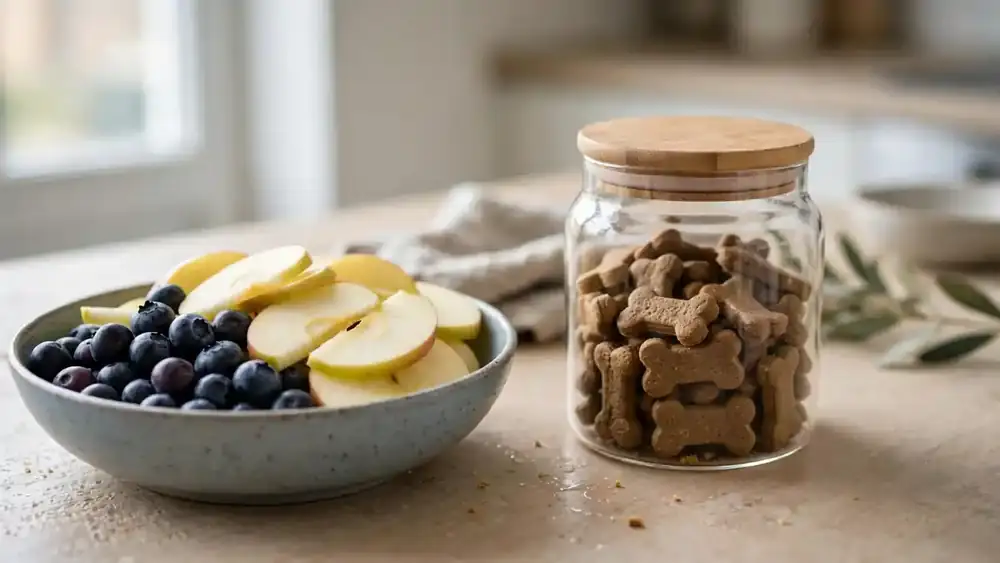
Honey can work in a tiny amount for healthy adult dogs, yet it is also sugar, so owners should keep it rare. Pancakes made plain, without syrup, butter, or sugar, can work as a rare treat. Ice cream is a poor swap, because it brings sugar, fat, and lactose that many dogs cannot digest. Marshmallows are worse, because some carry xylitol and all carry sugar with no nutrition.
Fruit beats syrup on every measure. Blueberries, apple slices without seeds, and banana pieces bring fiber, water, and vitamins with their sweetness, and dogs can eat them in small amounts. Plain cooked sweet potato brings fiber and vitamin A in a soft piece that dogs love.
Single ingredient dog treats give owners a safe, measured option without label guesswork. Owners should check every treat label for xylitol, even on products that do not look sweet, because the sweetener hides in gum, candy, peanut butter, and toothpaste. Peanut butter is safe only when the label shows no xylitol, and the xylitol poisoning guide on this site explains the signs to watch for.
Frequently asked questions about maple syrup and dogs
Maple syrup questions come back to the same split: pure versus imitation, and sugar versus poison. The answers below give short guidance for each case, and they all point to the same rule. Pure syrup in a tiny lick is not toxic, imitation syrup can be deadly, and no syrup belongs in a dog’s diet on purpose.

Is maple syrup toxic to dogs?
Pure maple syrup is not toxic to dogs, yet it is very high in sugar and should only appear as a tiny accidental lick. Imitation and sugar free syrups can be toxic, because they often contain xylitol, which can cause low blood sugar, seizures, and liver failure. Check the label every time.
Can dogs have sugar free maple syrup?
Dogs should never have sugar free maple syrup. Sugar free syrups often use xylitol, also called birch sugar, which is highly toxic to dogs even in small amounts. A few licks can trigger a dangerous insulin release and a blood sugar crash. Call the vet at once when a dog eats any sugar free syrup.
Can dogs eat pancakes with maple syrup?
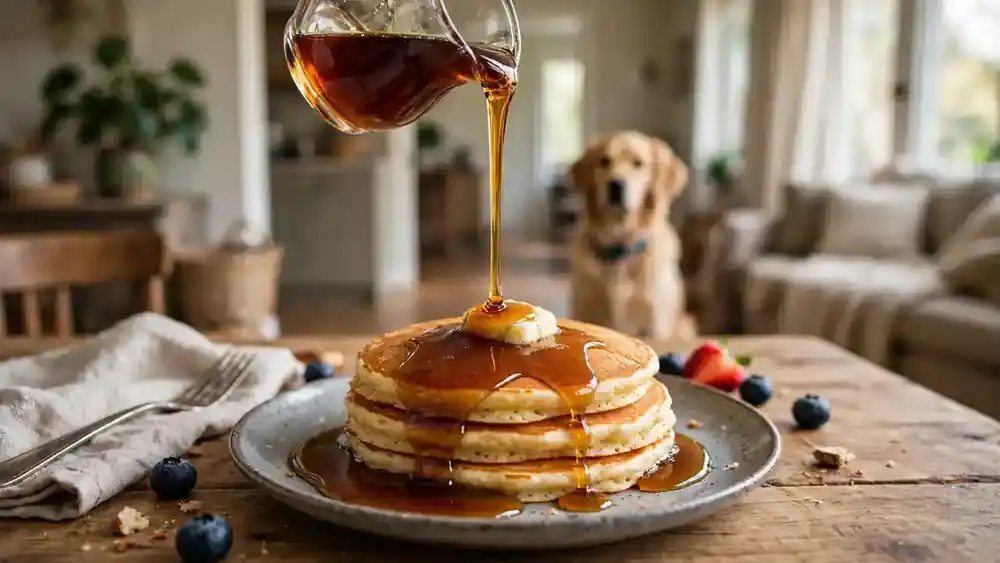
Dogs should not eat pancakes with maple syrup. Pancakes alone can work as a rare plain treat, yet syrup adds sugar and a possible xylitol risk on top. Serve pancakes plain, without syrup, butter, or sugar, and keep the portion small. Clean the plate before the dog can lick it.
Can diabetic dogs eat maple syrup?
Diabetic dogs should never eat maple syrup. The sugar can spike blood glucose fast and trigger a crisis that needs emergency care. Keep all syrup, honey, and sweet foods out of reach, and ask the vet for safe treats that fit the dog’s diet.
Can puppies eat maple syrup?
Puppies should never eat maple syrup. Their small weight makes even a tiny amount a large dose per pound, and their growing bodies handle sugar poorly. Puppies also face a higher risk from xylitol in imitation syrup. Keep syrup bottles in a closed cabinet and clean plates promptly.
What should I do if my dog eats syrup with xylitol?
Call your vet or an emergency clinic at once, and do not wait for symptoms. Share the brand, the amount, and the time, and keep the bottle or a photo of the label. Do not induce vomiting unless a professional tells you to. Xylitol poisoning can start within 30 minutes, and fast care gives the dog the best chance.
Maple syrup looks harmless on a breakfast table, yet the bottle hides two different stories. Pure syrup is sugar without nutrition, and imitation syrup can hide a poison that kills dogs. Owners who read labels, keep syrup out of reach, and choose a fruit or a dog treat instead will never face the hard version of this lesson.
A dog that never tastes syrup loses nothing, and a dog that licks a xylitol syrup can lose everything. Keep the bottle closed, keep the label in view, and keep the dog safe.