
Is Grain Free Bad for Dogs? What the FDA Evidence Actually Says

If you have heard that grain-free dog food might damage your dog’s heart, you are asking exactly the right question: is grain free bad for dogs? The honest answer is that grain-free food is not proven harmful, but the FDA has been investigating a possible link between certain grain-free diets and a heart condition called dilated cardiomyopathy. Most dogs do not need grain-free food at all. This guide walks through what the FDA found, what scientists still do not know, and how to decide what belongs in your dog’s bowl. For general guidance on feeding extras, see our guide to what human food dogs can eat.
Is Grain-Free Bad for Dogs? The Short Answer
Grain-free dog food is not proven to be bad, but it is not healthier either, and the FDA is investigating a possible connection between grain-free diets heavy in peas and lentils and dilated cardiomyopathy (DCM), a serious heart disease. Unless your vet has diagnosed a true grain allergy, a grain-inclusive food from a reputable brand is the safer default choice.

That middle-ground answer frustrates people who want a simple yes or no, but it is where the science actually sits. Grain-free diets are not poison. Millions of dogs have eaten them without issue. At the same time, the pattern the FDA spotted was real enough to trigger a multi-year investigation, and veterinary cardiologists take it seriously. The practical takeaway: there is no benefit to going grain-free without a medical reason, and there may be a risk, so the burden of proof sits with grain-free, not with grains.
This is also a good moment to say what this article is not. It is not a reason to panic if your dog has been eating grain-free food for years. It is a reason to have an informed conversation with your vet, which we will help you prepare for below.
What the FDA Actually Found
In 2018 the FDA’s Center for Veterinary Medicine began investigating DCM reports in breeds not typically prone to the disease, and found many affected dogs were eating grain-free diets rich in peas, lentils, chickpeas, and other pulses. The FDA has not declared grain-free food unsafe or recalled any product over this; the diet-link investigation continues.

The key detail most headlines skip: the FDA’s concern was never really about the missing grain. It was about what replaced the grain. When manufacturers remove corn, wheat, and rice, they typically fill the gap with legumes and pulses, and those ingredients showed up again and again in the reported DCM cases. The FDA’s public updates and Q&A pages at FDA Animal & Veterinary lay out the timeline and stress that the relationship is an association under study, not a proven cause.
Researchers have since dug deeper. A widely cited PLOS ONE study examined the ingredient patterns, and a 2025 feeding trial followed dogs on different diets for 18 months looking at heart measurements. The picture emerging is nuanced: some legume-heavy formulations appear to affect heart function markers, while others do not. “Grain-free” turns out to be too broad a label to be useful. What matters is the specific recipe.
What Is DCM in Plain Terms?
Dilated cardiomyopathy (DCM) is a heart disease where the heart muscle weakens and the chambers stretch out, so the heart cannot pump blood efficiently. Dogs with DCM tire easily, cough, breathe rapidly, and can develop fluid buildup or sudden collapse. It is serious and sometimes fatal, which is why even a possible dietary link got so much attention.

Some breeds, like Dobermans and Great Danes, are genetically prone to DCM regardless of diet. What alarmed cardiologists was seeing DCM in breeds with no genetic predisposition: Golden Retrievers, mixed breeds, and others. Diet became a suspect because it was one of the few things these unusual cases had in common.
DCM can be silent in its early stages, which is part of what makes it frightening. A dog can look and act normal while the heart is changing. That is why the “watch for symptoms” advice below matters, and why vets sometimes recommend heart screening (an echocardiogram) for dogs that have eaten suspect diets long term. The Merck Veterinary Manual has a solid technical overview if you want the clinical detail.
The Grain Allergy Myth
True grain allergies in dogs are rare, affecting well under 1% of dogs, and most food allergies involve proteins like beef, dairy, or chicken, not grains. The idea that grains are a common allergen or filler came from marketing, not from veterinary research, and it is the main reason grain-free food became popular.

Here is how the myth took hold. Years ago, some brands positioned corn and wheat as cheap fillers, and “grain-free” sounded like an upgrade, the way “gluten-free” did for people. Pet owners extrapolated from human diet trends. But dogs evolved alongside humans eating starchy foods for thousands of years, and their digestive systems handle cooked grains well. Corn, rice, and barley provide energy, fiber, and nutrients in a highly digestible form.
If your dog genuinely has a food allergy, the signs are itchy skin, recurrent ear infections, or chronic digestive upset, and diagnosis requires an elimination diet trial run by your vet, not a guess at the pet store. Switching to grain-free on a hunch usually just swaps one set of ingredients for another without ever identifying the real trigger.
Peas, Lentils, and Legumes: The Real Suspect
Current research points less at the absence of grain and more at high levels of peas, lentils, chickpeas, and other pulses used to replace grain in some recipes. These ingredients may interfere with taurine metabolism or contain compounds that affect heart function, though the exact mechanism is still being studied.

This distinction matters enormously for shoppers. Two foods can both say “grain-free” on the bag while being completely different recipes. One might use peas as the second ingredient and lentils as the fourth; another might be built on sweet potato and animal protein with modest legume content. Reading the ingredient list beats reading the marketing claims every time.
It also means grain-inclusive foods are not automatically safe and grain-free foods are not automatically risky. A grain-inclusive food loaded with pea protein could theoretically raise the same concerns. Focus on the full ingredient panel and the manufacturer’s testing practices rather than treating any single label claim as a guarantee.
Taurine and the Heart Connection
Taurine is an amino acid that supports heart muscle function, and low taurine levels have been linked to DCM in some dogs, particularly Golden Retrievers. Certain grain-free formulations appear to reduce taurine availability, possibly because legumes affect how dogs synthesize or absorb it, though researchers have not pinned down the full mechanism.

Dogs can make their own taurine from other amino acids, which is why taurine deficiency used to be considered mainly a cat problem. The DCM investigation changed that thinking. Some affected dogs had low blood taurine and improved when switched to a different diet plus taurine supplementation, which strengthened the dietary hypothesis.
Should you supplement taurine yourself? Not without vet guidance. Blood taurine testing exists, and your vet can decide whether it makes sense for your dog. Random supplementation can mask the underlying dietary issue while the real problem continues. The fix researchers keep coming back to is simpler: feed a well-tested diet and let the formulation do the work.
Warning Signs Worth Knowing
Watch for unusual tiredness, coughing, rapid or labored breathing, reduced appetite, fainting, or a swollen belly, and see your vet promptly if any appear. These can signal heart trouble, and while most turn out to be something else, DCM is not a wait-and-see condition.
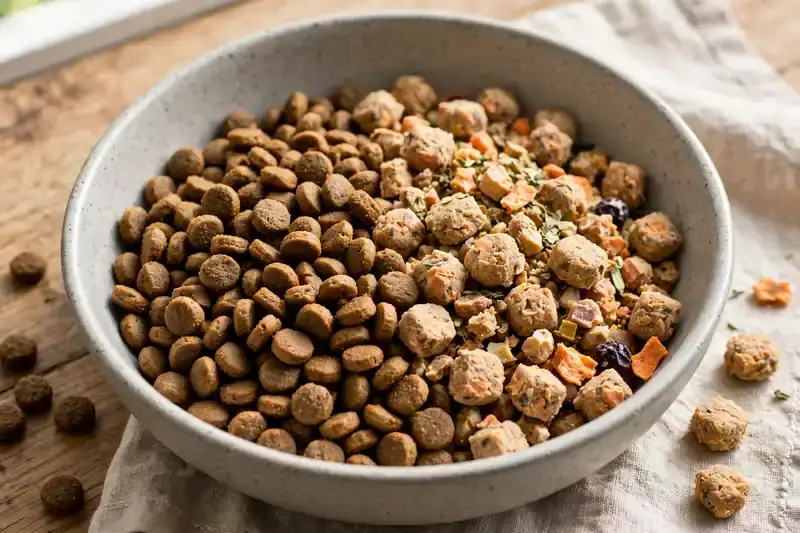
Early DCM often shows up as exercise intolerance first: a dog that used to love long walks now wants to stop halfway. Coughing, especially at night or after activity, is another classic sign as fluid begins affecting the lungs. A swollen abdomen can indicate fluid accumulation from a struggling heart.
Do not try to diagnose this at home, and do not switch foods in a panic the night you notice a cough. Note the symptoms, call your vet, and mention your dog’s diet history, including how long they have eaten grain-free. That diet history is genuinely useful information for your vet. If your dog is already dealing with a sensitive stomach during all this, our bland diet for dogs guide can help you feed gently while you sort out the longer-term plan.
Should You Switch Your Dog Off Grain-Free?
For most dogs, yes, switching to a grain-inclusive food from a reputable manufacturer is the reasonable move unless your vet diagnosed a grain allergy or prescribed the current diet. Transition gradually over 7 to 10 days to avoid digestive upset, and tell your vet about the change at your next visit.

The gradual transition matters more than people expect. A sudden food swap is one of the most common causes of diarrhea in dogs. Mix increasing amounts of the new food with decreasing amounts of the old over a week or more. If your dog’s stomach protests, slow down. A spoonful of bone broth for dogs over the new kibble can make the unfamiliar food more appealing during the switch.
There are exceptions. If your vet specifically prescribed a grain-free diet for a diagnosed condition, stay the course and discuss the DCM question with them directly. Dogs with certain medical conditions eat therapeutic diets, like those for kidney disease in dogs, where the formulation priorities are completely different. Vet-prescribed always outranks general advice.
How to Choose a Safer Dog Food
Look for an AAFCO nutritional adequacy statement on the label, a manufacturer that runs feeding trials (not just lab analysis), and a named animal protein among the first ingredients. Big, established brands with veterinary nutritionists on staff and published research are the lowest-risk choice.
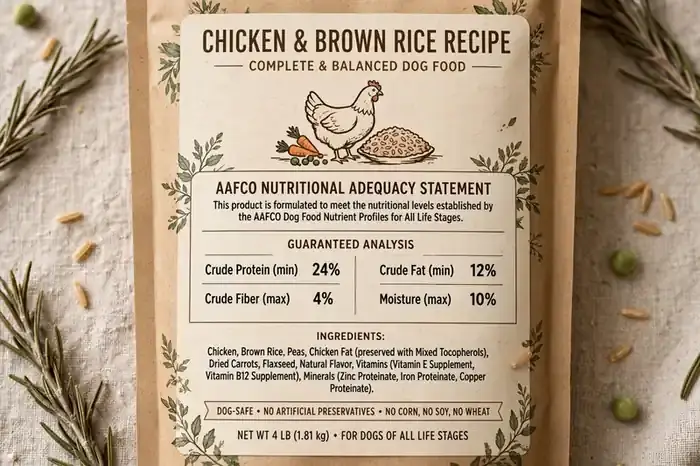
The AAFCO statement is the single most useful line on the bag. “Formulated to meet AAFCO profiles” means the recipe was calculated to be complete. “Animal feeding tests using AAFCO procedures” is stronger: it means dogs actually ate the food in a controlled trial and did well. That second claim costs manufacturers real money, which is why its presence signals a serious company.
Beyond the label, consider the company’s track record. Do they employ full-time veterinary nutritionists? Do they manufacture in their own facilities or outsource? Have they published peer-reviewed research? These questions sound intense for buying kibble, but this is your dog’s entire nutrition. The AKC’s nutrition resources offer practical label-reading guidance from a trusted source.
What to Ask Your Vet About Diet
Bring your dog’s full diet history, including brands, how long they have eaten grain-free, and any symptoms, and ask whether a diet change or heart screening makes sense. Specific questions beat vague worry: ask about taurine testing, echocardiograms, and which foods they recommend for your dog’s breed and age.

Vets answer diet questions all day, and most welcome an owner who arrives informed rather than panicked. Useful questions include: Does my dog’s breed have DCM risk? Given how long they have eaten this food, do you recommend an echocardiogram? Which specific foods do you trust? Should we test taurine levels? Write the answers down.
One thing to avoid: walking in demanding a specific test or supplement you read about online. Describe what you have learned, share the FDA context, and let the vet apply it to your individual dog. PetMD’s nutrition section has vet-reviewed explainers you can read beforehand so the conversation starts from shared facts.
Frequently Asked Questions
Is grain-free dog food being recalled?
No. The FDA has not recalled any grain-free food over the DCM investigation and has not declared these diets unsafe. The agency continues to study the possible association. Individual products have been recalled over the years for unrelated reasons like contamination, which is a separate issue.
Do grains cause allergies in dogs?
Rarely. True grain allergies affect a tiny fraction of dogs. The most common food allergens are beef, dairy, chicken, and wheat (in that rough order), and even those are uncommon compared to environmental allergies. Most itchy dogs are reacting to pollen, dust mites, or fleas, not their kibble.
Is taurine deficiency the cause of diet-related DCM?
It appears to be part of the story but not the whole story. Some affected dogs had low taurine and improved with diet change plus supplementation, while others had normal taurine levels. Researchers are still investigating how certain ingredients might affect the heart through other pathways.
Are boutique grain-free brands riskier than big brands?
The FDA’s reports included foods from many manufacturers, large and small. That said, big established brands are more likely to employ veterinary nutritionists, run feeding trials, and publish research. Those practices reduce risk generally, which is why vets tend to recommend them.
Can I just add taurine powder to grain-free food?
Ask your vet first. Supplementing without testing can mask a dietary problem while it continues. If taurine testing shows a deficiency, your vet may recommend supplementation alongside a diet change. The diet itself is usually the thing that needs fixing.
How long does it take to transition dog foods safely?
Plan on 7 to 10 days minimum. Start with about 25% new food mixed into the old, and increase gradually. Dogs with sensitive stomachs may need two weeks. If diarrhea appears, step back to the last ratio that worked and hold there for a few days. A spoonful of chicken broth over the new kibble can make the unfamiliar food more inviting during the switch.
What grains are good for dogs?
Cooked rice, barley, oats, and corn are all well-digested by dogs and provide energy and fiber. Whole grains in a balanced commercial food are perfectly healthy for the vast majority of dogs. There is no nutritional reason to avoid them without a vet’s diagnosis.


