Meloxicam Dose for Dogs: What Vets Prescribe and What to Watch

Meloxicam dose for dogs is 0.2 mg per kg of body weight on the first day of treatment, then 0.1 mg per kg once daily from the second day onward. Meloxicam is a prescription drug, so a vet has to decide that your dog needs it, pick the exact amount, and set the length of treatment.
What is meloxicam and what does it treat in dogs?
Meloxicam is a prescription non-steroidal anti-inflammatory drug, or NSAID, that eases pain and swelling in dogs. Vets prescribe it most often for osteoarthritis pain and for pain after surgery. The drug blocks enzymes that make prostaglandins, the chemicals behind inflammation and pain. It comes as a liquid or chewable tablets, and a vet may inject it in the clinic.
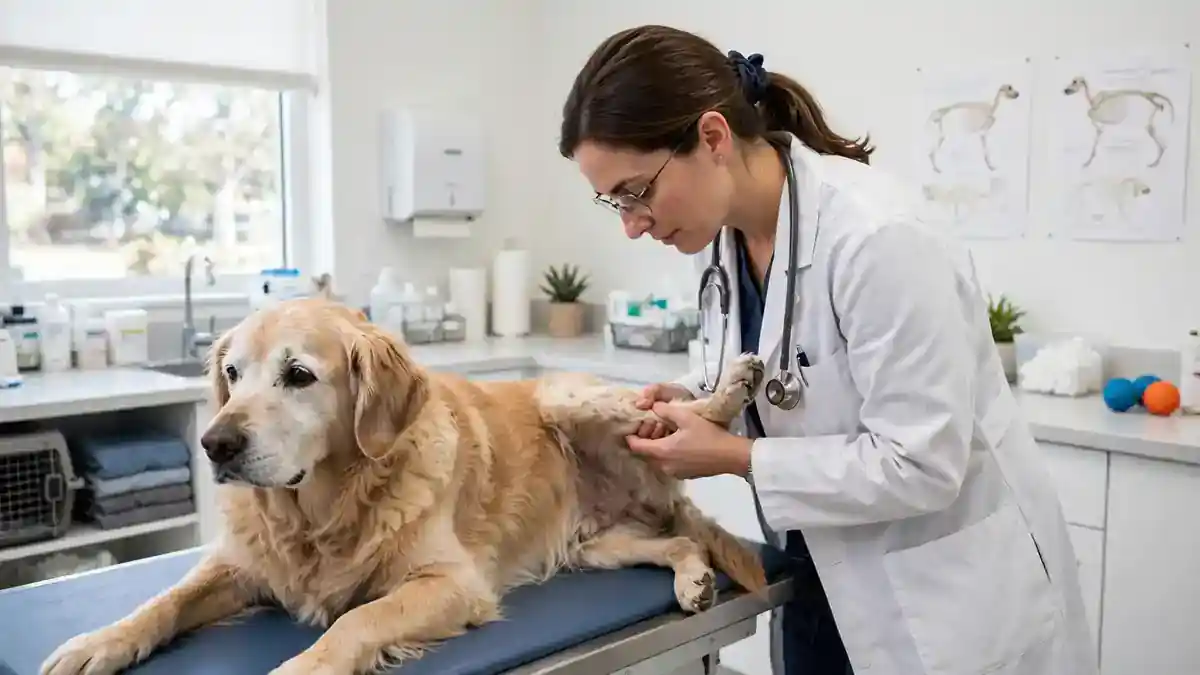
Meloxicam belongs to the oxicam class of NSAIDs. The brand name most owners know is Metacam, and generic meloxicam plus brands such as Loxicom carry the same active ingredient. Vets reach for it when a dog has sore joints, limps after activity, or needs pain control after an operation.
The drug does not fix worn cartilage or heal a torn ligament. Pain eases while the drug is in the system. Swelling drops and movement gets easier too.
Owners sometimes ask why a vet picks meloxicam over another pain drug.
Age, weight, liver and kidney health, and other medicines all shape the choice, along with how the dog responded to NSAIDs before. Carprofen dose for dogs follows a different pattern, and Galliprant for dogs works through a different pathway altogether. Your vet weighs those options against your dog’s bloodwork and history.
What is the labeled meloxicam dose for dogs?
The labeled meloxicam dose for dogs is 0.2 mg per kg on day one only, then 0.1 mg per kg once daily from day two onward. That equals 0.09 mg per lb on the first day and 0.045 mg per lb each day after. Your vet sets the exact amount for your dog, and you should never raise it alone.
Day one uses a loading dose, double the daily amount, to bring drug levels up fast.
Every day after that uses the lower maintenance dose, given once every 24 hours. The label directs vets to use the lowest dose that controls pain for the shortest time that works, and it allows the dose to drop further once a dog has responded for at least four days. That last point rarely shows up in owner guides, and it is the reason a vet may lower the amount at a recheck.
The oral suspension comes in two strengths in the United States, 0.5 mg per mL and 1.5 mg per mL. The 1.5 mg per mL liquid is the standard strength for most dogs, while the weaker liquid suits very small dogs, where a tiny volume is easier to measure right. Volume depends on strength, so a number in mL from one bottle means nothing for the other bottle. Always read the strength printed on your bottle before you draw up a dose.
How the dose works out by weight
A 10 kg dog gets 2 mg on day one and 1 mg daily after that. A 20 kg dog gets 4 mg on day one and 2 mg daily after that.
A 30 kg dog gets 6 mg on day one and 3 mg daily after that. Those figures follow straight from the labeled mg per kg rates. Your vet converts the mg amount into mL for the liquid strength you hold, or into tablet pieces for the chewable form.
How do you measure the liquid dose without mistakes?
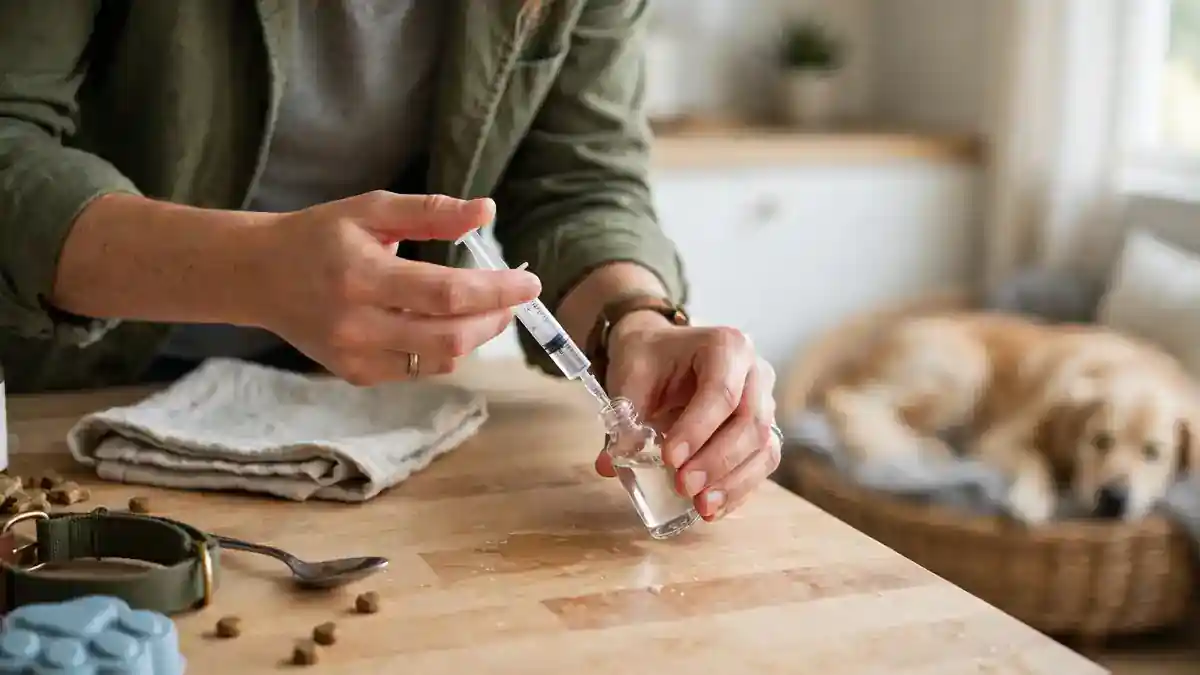
The liquid dose is measured with the syringe that comes in the box, and that syringe is marked in body weight for the maintenance dose. Shake the bottle well before every dose. Draw up the amount your vet wrote down and give it with food. A kitchen spoon is not a measuring tool for this drug.
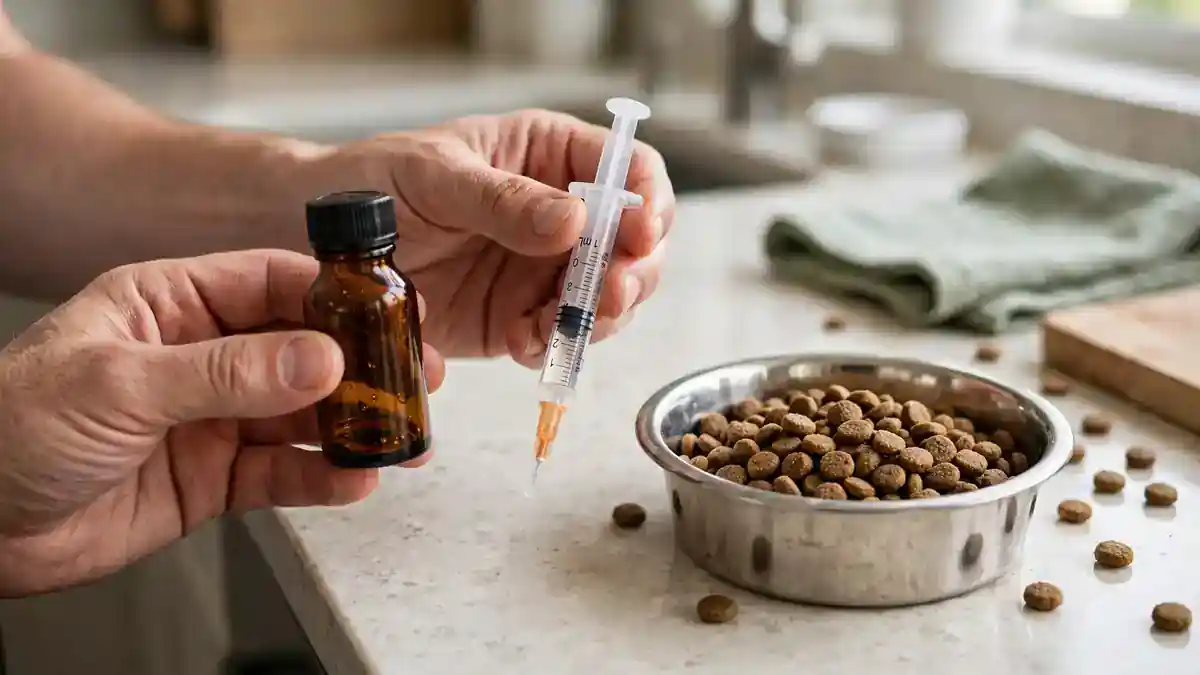
Small volumes leave little room for error. The difference between 0.3 mL and 0.6 mL is a double dose, and the syringe marks sit close together.
Read the syringe at eye level and check the number twice. Squirt the liquid into the mouth or mix it with a small amount of food as your vet directed. The Metacam label on DailyMed states the day one dose and the daily dose after that, and it stresses precise dosing with a syringe of the right size.
Missed dose rules
Vets give a clear rule for a missed dose, and it is worth learning before the first bottle runs low. Give the missed dose when you remember it, unless the next dose is less than 12 hours away.
Then skip the missed one and give the next dose at its normal time. Never give two doses at once to catch up, and never add an extra dose because the dog still limps. A double dose raises the risk of stomach ulcers and kidney strain without adding pain relief.
How long can a dog stay on meloxicam?
A dog can stay on meloxicam for weeks or months when a vet monitors the treatment, and many arthritic dogs take it long term. The vet sets the length and checks bloodwork before treatment starts and during it. The dose drops to the smallest amount that keeps the dog comfortable. Stopping or restarting the drug is a vet decision.

Short courses cover surgery recovery and injuries. A dog that had an operation may take meloxicam for a few days, then stop once healing allows it.
Arthritis is different. Joint wear does not heal, so the drug may run for months, with rechecks to confirm the liver and kidneys still cope. The label supports this pattern: after at least four days of response, the vet can adjust the dose down to the lowest amount that still controls pain.
Bloodwork is the safety net for long courses. A baseline blood test before the first dose records liver and kidney values, and repeat tests during treatment catch changes early. VCA advises annual blood testing before and after starting meloxicam to watch liver and kidney function. A dog that starts vomiting or goes off food between tests still needs a call the same day, because bloodwork cannot warn you between visits.
What side effects should owners watch for?
The most common meloxicam side effects in dogs are vomiting, soft stools, diarrhea, or a drop in appetite. These gut effects showed up most often in the field studies on the label. Rare but serious effects include stomach ulcers, kidney damage, liver damage, or bleeding, so any black stool or vomit with blood needs a vet call right away.

Gut upset usually shows up in the first week. A dog that vomits once after the first dose may settle, and a dog that vomits twice or refuses food needs a call.
Black, tarry stools point to bleeding higher in the gut. Blood in vomit points the same way. Both signs mean stop the drug and call the vet, because an ulcer can deepen fast while the drug continues.
Kidney strain shows up differently. Watch for drinking far more water than usual and urinating more or less than usual.
A dog that seems weak or wobbly needs a vet call. Liver trouble can show as yellowing of the gums or the whites of the eyes, and the inside of the ear flap is a spot owners can check. VCA lists changes in urination and yellowing of the skin as reasons to stop the drug and contact the vet right away.
Which dogs should not take meloxicam?
Meloxicam should not go to dogs with a known allergy to it or to other NSAIDs, dogs with bloody vomit or bloody stools, dogs with kidney or liver disease, dogs that are dehydrated, or puppies under six months old. Vets also avoid it in breeding, pregnant, or nursing dogs, or in dogs already taking another NSAID or a steroid.
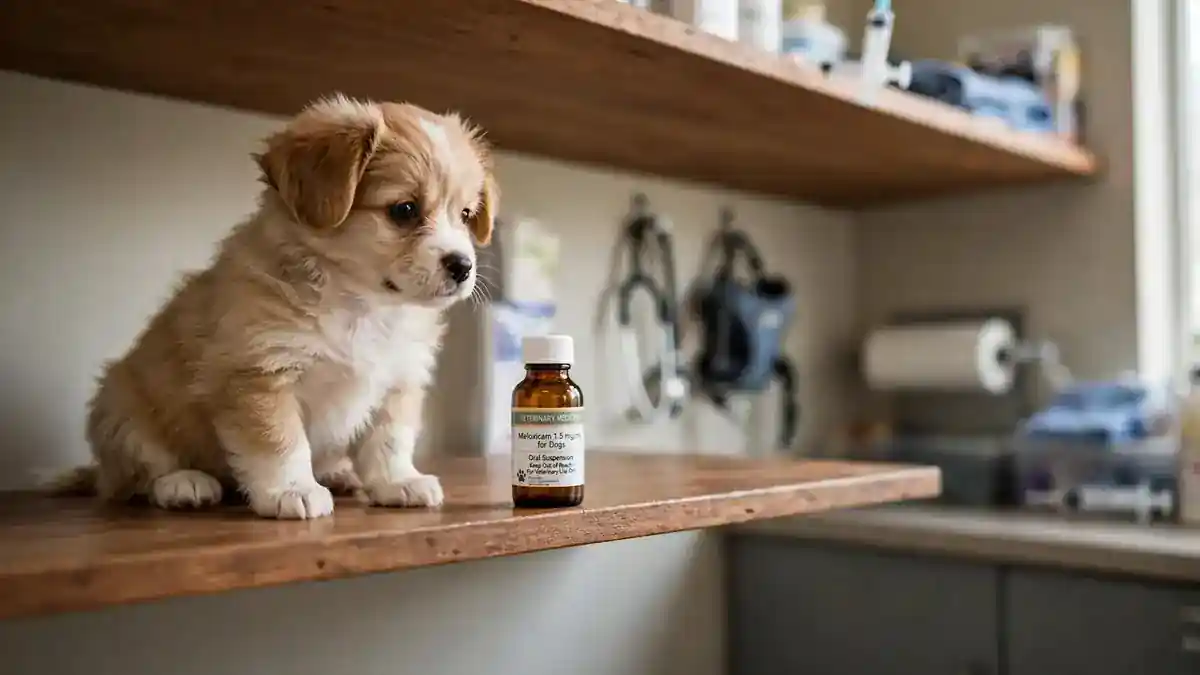
Age limits come from the label. Safety has not been established in dogs younger than six months, and the same gap applies to breeding, pregnant, or nursing dogs. A puppy with a sore leg needs a different plan, and a pregnant dog with joint pain needs the vet to weigh options that carry no label support at all. VCA Animal Hospitals lists these groups in its meloxicam guide, along with dogs that have ulcers, heart disease, or a bleeding disorder, where the drug needs extra care.
What happens if a dog gets too much meloxicam?
Too much meloxicam can cause vomiting, diarrhea, stomach ulcers, kidney failure, or death, so an overdose is an emergency. Call your vet or an emergency clinic, and have the bottle, the amount missing, and your dog’s weight ready. Do not wait for symptoms, and do not try to make the dog vomit unless a vet tells you to.

Overdose signs build over hours. Vomiting and diarrhea come first.
Loss of appetite follows, then weakness and a wobbly walk. Black stools signal bleeding in the gut, and a dog that stops urinating may have kidney damage underway. At five times the labeled dose, beagles in the label safety studies developed vomiting, blood in the stool, or acute renal failure within days.
Treatment depends on how much was taken and how fast the dog reaches care. Vets may give activated charcoal to bind drug still in the gut, intravenous fluids to protect the kidneys, or medicines to shield the stomach lining. Blood tests track kidney and liver values over the next day or two. Time matters more than any home remedy, so the phone call comes first.
Keep the bottle where a dog cannot chew it open, and keep human meloxicam tablets in a separate place from the dog liquid.
A dog that eats a whole bottle of chewable tablets has taken a massive overdose, and the bottle will look empty before the owner notices. Count tablets when a new bottle starts. Store it high and closed, out of reach.
Can dogs take human meloxicam tablets?
Human meloxicam tablets hold the same active ingredient, but dogs should only take them when a vet prescribes that form and dose. Human tablets come in strengths made for people and are hard to split into a dog dose, though a vet may use them off label for a large dog. Never give a dog a tablet from your prescription.
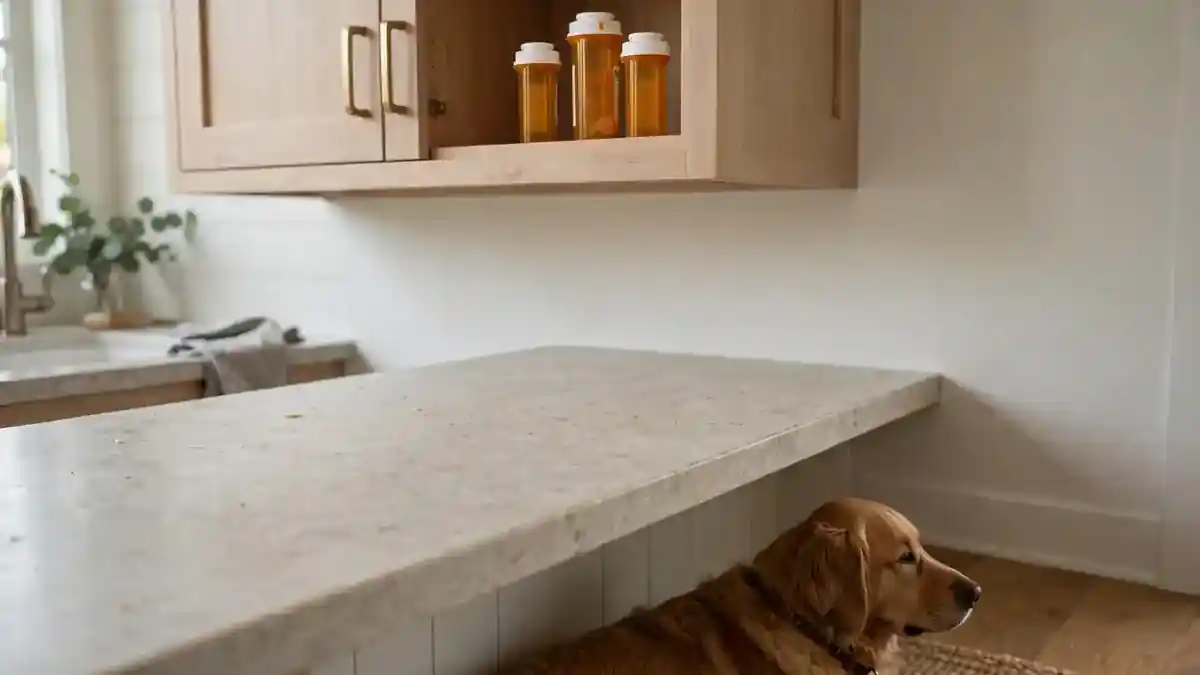
The confusion is easy to see. Meloxicam for people sells as Mobic and as generic tablets in 7.5 mg and 15 mg strengths. A 15 mg tablet holds far more drug than a small dog needs in a day, and splitting a tablet into eighths gives a rough dose at best. Vets that use human tablets do so for large dogs, where the math works out.
Human NSAIDs as a group cause more trouble than human meloxicam alone. Ibuprofen for dogs is toxic at small amounts, and aspirin for dogs can cause stomach ulcers after a single dose at old recommended levels. Meloxicam sits in a different spot: a vet drug with a dog label and a known dose, plus monitoring rules. That difference is why the vet form exists.
Ask the vet which form your dog takes and why. Liquid suits small dogs and precise dosing.
Chewable tablets suit dogs that take pills well. The injection is a vet clinic drug, given once to start treatment or control post-surgical pain. Each form has its own label, and the dose in mg stays the same across forms.
What should you ask your vet before the first dose?
Ask your vet four things before the first dose: the exact dose in mg and mL, how long the course runs, what bloodwork happens before and during treatment, or which signs mean stop the drug and call. Write the answers down, because a verbal dose gets misremembered at home. A short list on the bottle beats a good memory.

Bloodwork questions matter most for older dogs. Ask whether the vet ran a baseline panel and when the next test falls due. Ask what values would end the course.
Ask about other medicines too, including joint supplements and flea treatments, because interactions hide in the full list. Joint supplements for dogs can support an arthritic dog, and gabapentin for dogs sometimes joins an NSAID for pain that one drug cannot cover. The vet decides those combinations, never the owner.
A short checklist for the first week
Watch appetite at every meal and note stool color and firmness. Watch water intake too. A dog that eats well and moves easier is responding.
Normal stools complete the picture. A dog that vomits, skips two meals, or passes black stool needs a call the same day. Keep the vet number on the fridge, and keep the bottle where you can read the label without hunting for it.
Frequently asked questions about meloxicam dose for dogs
Meloxicam raises the same six questions in almost every vet visit. The answers below use the labeled dose and the VCA and FDA guidance, and each one still ends the same way: your vet sets the dose for your dog.
How much meloxicam can I give my dog?
Give only the amount your vet prescribed. The labeled pattern is 0.2 mg per kg on day one and 0.1 mg per kg once daily after that, which works out to 0.09 mg per lb on day one and 0.045 mg per lb daily after. Never start the drug or raise the dose without a vet order.
Is meloxicam safe for dogs?
Meloxicam is FDA approved for dogs and is safe for most dogs when a vet prescribes it. The dose stays labeled while bloodwork monitors the liver and kidneys. Gut upset is the most common problem. Serious harm is rare but real, which is why monitoring and owner watchfulness matter.
Can I give my dog meloxicam every day?
Daily use is normal for arthritis, and many dogs take meloxicam once a day for months under vet care. The vet checks bloodwork during long courses and drops the dose to the lowest amount that controls pain. Daily use without vet checks is a different matter, and it raises the risk.
What if I miss a dose of meloxicam?
Give the missed dose when you remember it, unless the next dose falls due in less than 12 hours. Then skip the missed dose and give the next one at its normal time. Never give two doses at once, and tell the vet about the missed dose at the next visit.
Can meloxicam be given with other pain medicine?
Meloxicam must never mix with another NSAID or with a steroid such as prednisone, because the combination raises the risk of stomach ulcers and kidney damage. Some vets pair it with a non-NSAID pain drug, such as gabapentin, for hard pain. Only the vet makes that call.
How fast does meloxicam work in dogs?
Pain relief often starts within a few hours of the first dose, and the full effect builds over the first days of treatment. Peak blood levels arrive about two and a half hours after an injection at the labeled dose. A dog that shows no change after several days needs a vet recheck, because the pain may need a different plan.
Meloxicam helps many arthritic dogs move easier, and the labeled dose gives owners a clear pattern to check against the vet order. Keep the bottle labeled and measure with the syringe from the box.
Give each dose with food. Call the vet fast when appetite, stool, or water intake changes. The FDA page on NSAIDs for dogs and the VCA guide to NSAIDs both stress the same point: a prescription NSAID, a labeled dose, and bloodwork checks keep the treatment safe.