
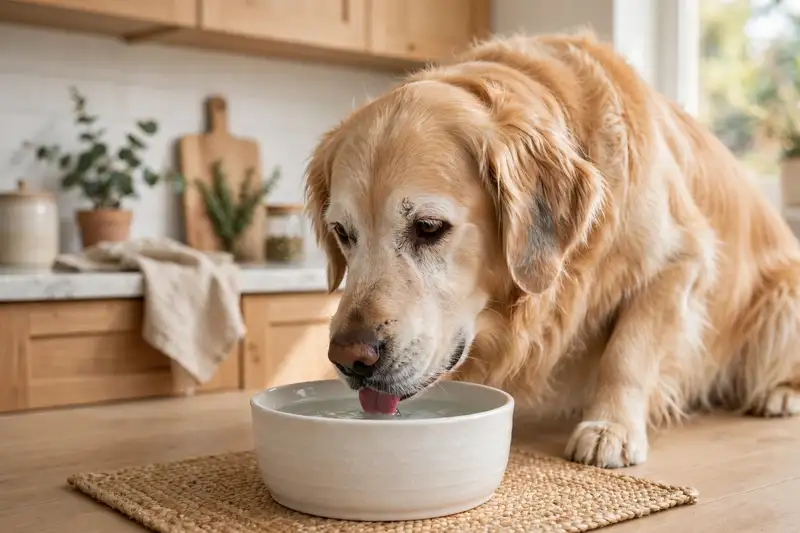
Kidney disease is one of the most common serious conditions in older dogs, and it is sneaky: by the time most owners notice something wrong, roughly two-thirds of kidney function is already gone. That sounds bleak, but it is not the end of the story. With the right diet, fluids, and medication, many dogs live comfortably for months or years after diagnosis. This guide covers what kidney disease is, the signs at every stage, how vets diagnose and stage it, what treatment looks like, and how you can give your dog the best possible life with it.
What is kidney disease in dogs?
Kidney disease means the kidneys can no longer filter waste from the blood efficiently. It comes in two forms: chronic disease, which develops slowly over months or years and cannot be cured, and acute injury, which strikes suddenly, often from a toxin, and can sometimes be reversed with fast treatment. Most canine cases are chronic and tied to aging.

The kidneys do far more than make urine. They filter waste like urea and creatinine out of the blood, balance water and electrolytes, regulate blood pressure, and produce hormones that drive red blood cell production. That is why kidney disease affects the whole dog: waste builds up, water balance shifts, blood pressure rises, and anemia develops. Chronic kidney disease is strongly tied to age. Small dogs typically show early signs between 10 and 14 years, while large breeds can reach kidney failure as early as 7. The kidneys have enormous reserve capacity, which is both a blessing and a curse. It keeps the dog feeling fine while damage accumulates, and it hides the disease until that reserve is spent. Routine senior bloodwork is the only reliable way to catch it early.
Early signs most owners miss
The earliest signs are increased thirst and increased urination. The struggling kidneys produce larger amounts of more diluted urine, and the dog drinks more to compensate for the water loss. This stage is called compensated kidney disease, and many owners mistake it for normal aging or hot weather.

Pay attention to the water bowl. If you are refilling it noticeably more often, or the dog is asking out at night when it never did before, that is data, not a quirk. Dilute urine looks almost clear and has little smell. Some dogs also show a subtle drop in appetite or mild weight loss that gets blamed on age. Because these signs creep in slowly, they are easy to normalize. “He’s just getting old” is the sentence vets hear most often, and it is usually wrong in a fixable way. This is the stage where treatment works best: diet changes and monitoring started early slow the disease measurably. If your senior dog’s drinking habits have changed, a simple blood and urine test answers the question. Do not wait for the dramatic signs. By then, the easy window has closed.
Advanced signs and symptoms
Once roughly two-thirds of kidney tissue has failed, waste accumulates fast and the disease looks sudden. Advanced signs include poor appetite, lethargy, vomiting, diarrhea, weight loss, pale gums from anemia, bad breath with a chemical or ammonia smell, and mouth ulcers. These signs mean the disease is advanced and the dog needs veterinary care promptly.

The bad breath is distinctive. Owners describe it as smelling like ammonia or chemicals, and it comes from urea building up in the blood and saliva. Mouth ulcers make eating painful, which worsens the appetite loss in a vicious cycle. Pale gums reflect anemia, since failing kidneys produce less of the hormone that drives red blood cell production. Vomiting may be occasional at first, then more frequent. Some dogs develop diarrhea. Lethargy deepens as toxins accumulate. None of these signs are subtle, which is why owners often feel the disease “came out of nowhere.” It did not. The early stage was the increased drinking nobody flagged. If your dog shows several of these advanced signs, do not try home management. This needs bloodwork, staging, and a treatment plan from your vet.
What causes kidney disease?
Chronic kidney disease usually results from age-related wear, but infections, dental disease, high blood pressure, autoimmune conditions, and genetics can contribute. Acute kidney injury has clearer triggers: toxins like antifreeze and grapes or raisins, certain medications, severe dehydration, urinary blockages, and infections such as leptospirosis. Some breeds carry inherited kidney problems.

For the chronic form, “cause” is often just time plus bad luck. Years of filtering take their toll, and some dogs’ kidneys age faster than others. Chronic dental disease is an underappreciated contributor: bacteria from infected gums circulate in the blood and stress the kidneys for years. Acute kidney injury is the preventable emergency. Antifreeze tastes sweet and a small amount can destroy the kidneys; grapes and raisins are documented kidney toxins in dogs. Certain human pain relievers damage kidneys too. This is why the acute form demands instant action: if your dog may have eaten antifreeze, grapes, or medication, that is an emergency vet visit, not a wait-and-see. Acute injury caught within hours can sometimes be reversed. Caught late, it becomes permanent.
How vets diagnose and stage kidney disease
Diagnosis starts with bloodwork (BUN, creatinine, and SDMA), a urinalysis checking concentration and protein, and blood pressure measurement. Vets then use the IRIS staging system, which grades the disease from stage 1 to 4 based on blood creatinine, with sub-stages for urine protein levels and blood pressure. Staging guides treatment and prognosis.

Each test answers a different question. Creatinine and BUN show how much waste the kidneys are leaving in the blood. SDMA can flag trouble earlier, when less function is lost. The urinalysis reveals whether the kidneys can still concentrate urine, and the urine protein-to-creatinine ratio (UPC) measures protein loss, which worsens the outlook. Blood pressure matters because kidney disease both causes and is worsened by hypertension. The IRIS stages run from 1 (kidney damage present but waste levels still normal) to 4 (severe waste buildup, often a crisis). Staging only applies to stable chronic disease, not acute injury. The stage does not just label the disease. It tells your vet which treatments to start now and which to hold in reserve, and it gives you a realistic picture of what the coming months look like.
Treatment: diet, fluids, and medication
Treatment aims to slow the disease and keep the dog comfortable, not to cure it. The cornerstones are a prescription renal diet with restricted protein and low phosphorus, fluid therapy to support hydration, and medications for nausea, blood pressure, and phosphorus control. Most dogs do well for months or years on the right plan.

Expect a tailored plan, not a single prescription. The renal diet is usually the first and most impactful change: controlled protein reduces waste the kidneys must handle, and phosphorus restriction has been shown to slow disease progression. Fluids range from encouraging more drinking at home to subcutaneous fluids you learn to give yourself, to IV fluids at the clinic during crises. Medications are added as needed: phosphate binders mixed into food, anti-nausea drugs for appetite, blood pressure medication, and drugs that reduce protein leaking into the urine. Your vet will recheck bloodwork regularly and adjust. The plan evolves with the disease. What matters most is that treatment starts. Dogs that get a proper plan keep their quality of life far longer than dogs that do not, and the difference is measured in good months, not just days.
Feeding a dog with kidney disease
A veterinary renal diet is the single most important dietary step. These prescription foods, such as Hill’s k/d, Royal Canin Renal Support, and Purina NF, are formulated with controlled protein, restricted phosphorus, added omega-3 fatty acids, and adjusted sodium. Transition gradually, because many dogs resist the change, and never start a renal diet without your vet’s direction.

The diet works, and that is not marketing. In a controlled trial, dogs on a renal diet had fewer kidney-related crises and lived longer than dogs on regular food. The catch is palatability. Renal diets taste different, and a dog that is already nauseous may refuse them. Transition over one to two weeks, mixing increasing amounts into the old food. Warming the food slightly can help. If your dog will not eat the prescription diet at all, tell your vet rather than forcing it. A dog that eats a less-than-perfect diet beats a dog that eats nothing, and your vet can suggest alternatives or appetite support. Avoid high-phosphorus extras and salty treats. Fresh water must be available at all times. Never restrict water for a kidney dog, no matter how much it drinks. The drinking is compensating for what the kidneys waste.
Home care and monitoring
Home care centers on fresh water always available, the prescribed diet fed consistently, medications given on schedule, and watching for changes in appetite, energy, vomiting, or drinking habits. Many owners learn to give subcutaneous fluids at home, which sounds daunting and becomes routine within a week. Keep a simple log of weight, appetite, and water intake.

The log is your early-warning system. Weigh the dog weekly on the same scale. Note appetite as good, fair, or poor each day. Track vomiting episodes. These small records let your vet spot trends months before a crisis. Subcutaneous fluids deserve a special mention because owners fear them unnecessarily. Your vet or tech will teach you the technique, and most dogs tolerate it calmly, some even napping through it. It is one of the most effective things you can do at home for a mid-stage kidney dog. Watch the mouth too: ulcers and bad breath signal worsening uremia. And keep up with recheck appointments even when the dog seems fine. “Seems fine” is exactly when bloodwork catches the drift before symptoms do.
Prognosis and quality of life
With appropriate treatment, many dogs maintain a good quality of life for months or years. Dogs diagnosed early, eating a renal diet, with blood pressure and urine protein controlled, do best. Late-stage dogs with poor appetite, anemia, or repeated crises have a shorter outlook. The goal is comfort, not just lab numbers.

Ask your vet for honesty about where your dog sits on that spectrum. Stage 1 and 2 dogs often live comfortably for a long time with diet and monitoring. Stage 3 needs more active management. Stage 4 is about keeping the dog comfortable and watching for the point where treatment stops helping. Quality-of-life markers matter more than any single lab value: Is the dog eating? Interested in walks? Seeking company? Comfortable? When the bad days start outnumbering the good despite treatment, it is time for the hardest conversation, and your vet will guide it without rushing you. Until then, most kidney dogs surprise their owners. They adapt to the routine, they enjoy their days, and the diagnosis becomes a managed condition rather than a countdown.
Can kidney disease be prevented?
Chronic kidney disease cannot be fully prevented, but you can lower the odds and catch it earlier. Keep up with annual senior bloodwork, maintain good dental care, keep toxins like antifreeze and grapes out of reach, treat urinary infections promptly, and never give human pain relievers without veterinary direction. Early detection is the closest thing to prevention.

The senior blood panel is the star here. Once a year from middle age onward, a simple blood and urine test can catch kidney decline while the dog still feels fine, which is when diet changes help most. Dental cleanings protect the kidneys from years of circulating bacteria. Toxin-proofing the house and garage costs nothing: antifreeze stored sealed and high, grapes never in reach, medications in cabinets. Prompt treatment of urinary tract infections keeps them from climbing to the kidneys. None of this guarantees healthy kidneys forever. Genetics and time have their say. But dogs whose owners do these things get diagnosed earlier, start treatment sooner, and live better. That is a meaningful win against a disease that rewards early action above all else.
Kidney disease asks a lot of owners: special food, fluids, pills, rechecks, and hard decisions. But it also gives back more than most diagnoses. Dogs adapt, routines settle in, and many families get wonderful extra years they did not expect. Start with your vet, commit to the diet, and keep the water bowl full. For everyday nutrition questions along the way, our human food guide is the safe reference, and for gentle hydration support our broth guides and bone broth guide can help. If dehydration ever becomes a concern, our electrolytes guide explains what is safe.
Frequently Asked Questions
What are the first signs of kidney disease in dogs?
Increased thirst and urination are the earliest signs. The dog drinks noticeably more, urinates larger amounts of dilute urine, and may need to go out at night. Subtle appetite loss or weight loss can follow. These signs are easy to dismiss as aging, so changed drinking habits in a senior dog deserve a vet check.
How long can a dog live with kidney disease?
It varies widely by stage and treatment. Dogs diagnosed early, eating a renal diet, with controlled blood pressure and protein loss, can live comfortably for years. Advanced-stage dogs have a shorter outlook. Many dogs maintain a good quality of life for months or years with appropriate treatment.
What should dogs with kidney disease eat?
A veterinary prescription renal diet with controlled protein and restricted phosphorus is the standard recommendation. These diets have been shown to reduce kidney-related crises and extend life compared with regular food. Transition gradually, keep fresh water available always, and never start a renal diet without your vet’s guidance.
Can kidney disease in dogs be cured?
Chronic kidney disease cannot be cured or reversed. Treatment slows progression, manages symptoms, and protects quality of life. Acute kidney injury, the sudden form often caused by toxins, can sometimes be reversed if treated very quickly, which is why suspected poisoning is an emergency.
Should I limit my dog’s water if it drinks too much?
No, never restrict water for a dog with kidney disease. The increased drinking compensates for water the failing kidneys waste. Limiting water risks dangerous dehydration. Always keep fresh water available and report major changes in drinking to your vet.
Are grapes really dangerous for dog kidneys?
Yes. Grapes and raisins are documented causes of acute kidney injury in dogs, and the toxic amount varies unpredictably between dogs. Even a small amount can be dangerous for a sensitive dog. Any grape or raisin ingestion warrants an immediate call to your vet or poison control.
What do the IRIS stages mean?
IRIS stages 1 through 4 describe how far chronic kidney disease has progressed, based on blood creatinine in a stable dog, with sub-stages for urine protein and blood pressure. Lower stages mean earlier disease and a better outlook. Staging helps your vet choose treatments and estimate what to expect.
This article is general information only and is not a substitute for veterinary advice. If your dog shows signs of kidney disease, see your veterinarian for testing and a treatment plan.
Source: VCA Animal Hospitals: Chronic Kidney Disease in Dogs.


14 thoughts on “Kidney Disease in Dogs: Signs, Stages, and Treatment”