
Tuna sits in a strange middle ground for dogs. It is not toxic the way chocolate or grapes are. But tuna is also one of the fish highest in mercury, and mercury builds up quietly over time. So the answer is a careful yes: an occasional small taste of plain canned tuna is fine, but tuna should never be a regular part of the diet.

Can dogs eat tuna? The short answer
Yes, dogs can eat tuna, but only as a rare treat in small amounts. Tuna is high in mercury, and mercury builds up in the body over time, so regular feeding is unsafe. Choose plain canned light tuna in water with no salt added, drain it well, and serve a small portion once in a while.
Tuna itself will not poison your dog in a single bite. Every serving adds a little methylmercury, and dogs clear mercury slowly. A forkful from your sandwich now and then is a non-event. A scoop of tuna mixed into dinner every day is a slow build toward trouble, and that is why vets put tuna in the “sometimes, barely” column rather than the safe list. The AKC guide to human foods dogs can and cannot eat puts fish in the occasional-treat category with the same small-amount warning.
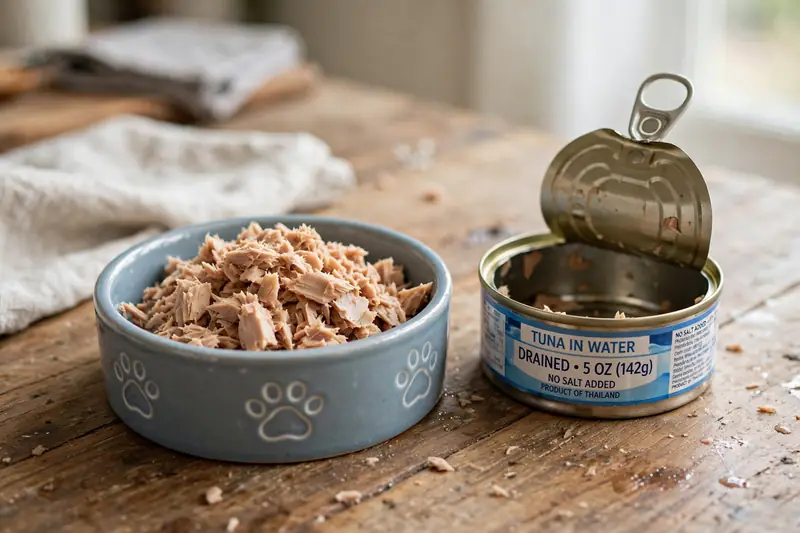
Why mercury is the main concern with tuna
Mercury is the reason tuna gets a caution label. Big predatory fish like tuna accumulate methylmercury from everything they eat over years at sea, and dogs eliminate mercury slowly, so the metal builds up in their tissues with repeated servings.
Mercury settles into oceans, tiny organisms absorb it, small fish eat those organisms, and big fish like tuna eat the small fish. Each step concentrates it further. A tuna can live a decade or more, giving it years of accumulation. When your dog eats tuna regularly, mercury stores up in muscle, kidney, and nerve tissue faster than the body can flush it.
The risk is genuinely slow and cumulative, which makes it easy to underestimate. One bite does nothing. Ten bites over a month do almost nothing. But tuna as a staple, the way some owners add it to kibble every day because their dog loves it, can push mercury load into the danger zone over months. The damage tends to show in the kidneys and the nervous system first, with gut trouble usually appearing alongside, which is why the warning-signs section below matters more for tuna than for almost any other human food. Small dogs carry more risk per bite, since the same spoonful is a bigger dose for their body weight.
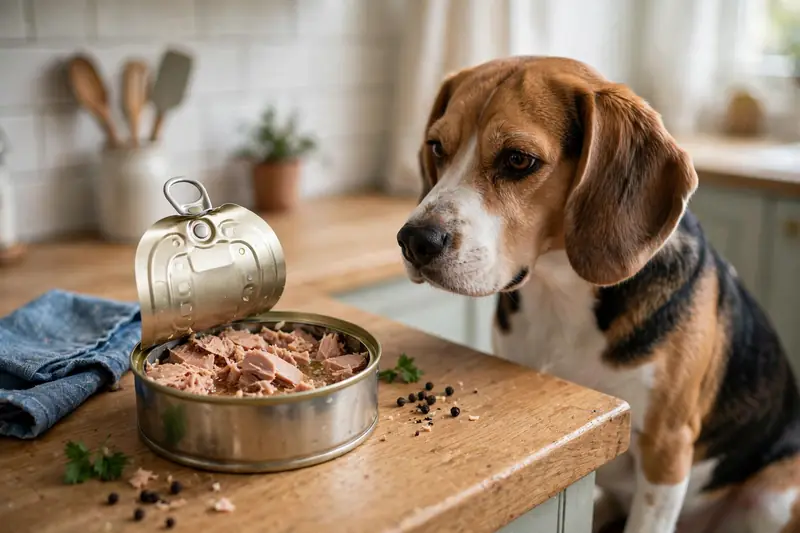
Albacore vs skipjack: which tuna is safer for dogs
Canned light tuna, usually made from skipjack, is the safer pick because it comes from a smaller species with less mercury. Albacore, sold as white tuna, is larger and carries noticeably more mercury, so it should be a smaller serving and an even rarer treat.
“Chunk light” tuna is typically skipjack, a smaller, shorter-lived fish that sits lower on the mercury scale. “Solid white” or “albacore” comes from a bigger fish that lives longer and accumulates more. Yellowfin and bigeye, common in sushi-grade tuna, sit up near albacore. Fresh tuna steaks follow the same ladder: the fancier the cut, the higher the mercury load tends to be.
The FDA’s own fish advice ranks canned light tuna among its lower-mercury “best choices” while placing albacore and yellowfin tuna in a higher-mercury group to eat less often, and that ranking holds just as well for dogs. So if you are going to share tuna at all, make it canned light tuna in water. Save the albacore for yourself.
| Tuna type | Typical mercury level | Notes for dogs |
|---|---|---|
| Canned light tuna (skipjack) | Lower | Best choice if sharing tuna at all |
| Canned albacore (white) tuna | Higher | Smaller portions, far less often |
| Yellowfin or bigeye (sushi-grade) | Higher | Skip it for dogs |
| Fresh tuna steaks | Varies, often higher | Not worth the risk as a dog treat |

Canned tuna in water vs oil vs flavored varieties
Plain canned tuna in water with no salt added is the only canned tuna worth sharing. Oil-packed tuna adds unnecessary fat and calories, and flavored varieties often contain onion or garlic, which are unsafe for dogs. Drain every can thoroughly and read the ingredient list before you share a bite.
Water-packed is the default for a reason. Tuna in oil doubles down on the richness: the oil adds a heavy load of fat and calories that a dog’s stomach did not ask for, and oily foods can set off digestive upset or worse in dogs prone to pancreatitis. Water-packed tuna is lean, simple, and easy to portion. Drain it thoroughly, because the packing liquid holds most of the salt.
Salt matters more than most people expect. A regular can of tuna can carry several hundred milligrams of sodium, which is a real chunk of a small dog’s daily budget. No-salt-added cans exist and cost about the same; if tuna is going to appear at all, that is the version to buy. Dogs with heart or kidney conditions should not get canned tuna at all without their vet’s word.
Flavored tuna is where sharing turns genuinely dangerous. Lemon-herb, sweet-and-spicy, and savory pouches often contain onion or garlic powder, and both damage dogs’ red blood cells. Some varieties contain other seasonings that upset the stomach. Read the ingredient list every time, and if you see alliums or anything you cannot identify, the can stays with the humans.

How much tuna can dogs have and how often
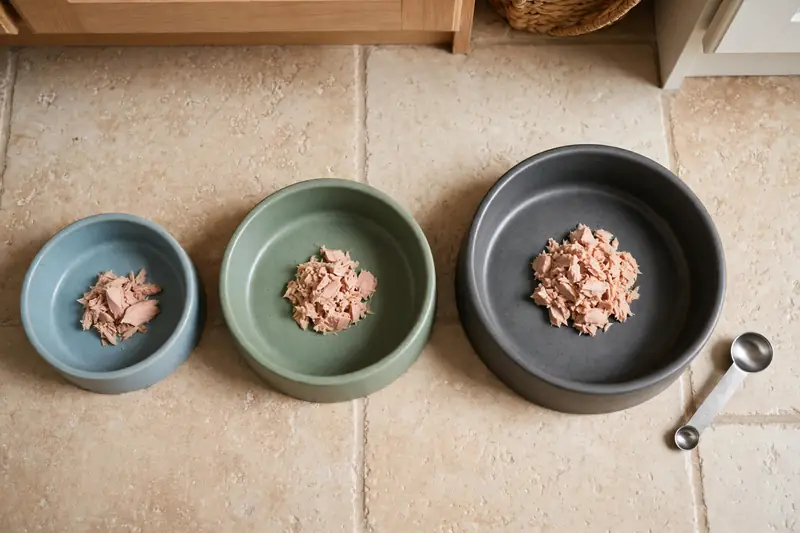
Keep tuna to a rare treat: a small spoonful once a week or less for most dogs, always under 10 percent of daily calories. A few tablespoons is plenty for a large dog, and a teaspoon or two is enough for a small one.
Think of tuna as a bite-sized topper or occasional reward, never a food group. Once a week is the ceiling for canned light tuna in water, and once or twice a month is more honest for most households. If you find yourself reaching for the can more than that, switch to one of the safer fish in the alternatives section.
| Dog size | Safe serving of drained canned light tuna | How often |
|---|---|---|
| Small (under 20 lbs) | 1 to 2 teaspoons | Once a week at most |
| Medium (20 to 50 lbs) | 1 to 2 tablespoons | Once a week at most |
| Large (over 50 lbs) | 2 to 3 tablespoons | Once a week at most |
Mix the tuna into regular food rather than serving it alone, so your dog still eats a balanced meal. The first time, serve half the amount in the chart and watch for a full day. Some dogs react to any new fish with soft stool, and your dog’s stomach sets the real limit, not the chart.
The nutritional benefits of tuna in small amounts
Tuna is genuinely nutritious, which is part of why the question keeps coming up. It delivers complete protein, omega-3 fatty acids, selenium, vitamin D, and B vitamins in a form dogs digest easily. Your dog’s regular food covers these already, so treat tuna as a bonus rather than a health food.
The protein is the headliner. Tuna is dense, complete animal protein with all the amino acids dogs need, which supports muscle, skin, and coat. A spoonful stirred into kibble can coax a picky eater back to the bowl, and it is a trick many owners discover on their own.
The omega-3s do real work too. Tuna contains EPA and DHA, the same fatty acids that support coat shine and skin health. If omega-3s interest you as a routine addition, our fish oil for dogs guide covers supplements that deliver the same benefits without the mercury baggage.
Selenium, vitamin D, and B vitamins round out the package. Selenium supports antioxidant function, vitamin D supports bones, and B vitamins help energy metabolism. Your dog’s regular food already covers all of these, though. Tuna is a tasty bonus, never a nutritional necessity. If you are feeding it for health reasons, you are better off with a lower-mercury fish or a vet-approved supplement, and your dog will not miss the tuna.

Tuna sandwiches, tuna salad, and mayo: what to avoid
Do not share your tuna sandwich. The tuna itself is the least of it: mayo adds a pile of fat and calories, and tuna salad often hides chopped onion or celery, with onion being genuinely dangerous for dogs. Keep the whole sandwich away from the bowl.
A plain tuna sandwich is two problems stacked. The bread is harmless, but the mayo is not dog food. A tablespoon of mayonnaise carries roughly 90 calories of pure fat, which can upset the stomach and, in sensitive dogs, trigger pancreatitis. That is the mild part. The real danger is what tuna salad usually contains. Chopped onion is a classic tuna salad ingredient, and onions are toxic to dogs: they damage red blood cells and can cause anemia, with signs that may take days to show. Garlic shows up in some recipes with the same allium risk.
Celery, the other common mix-in, is fine for dogs, but it rarely travels alone. Pickles, relish, and mustard bring salt and spices a dog’s gut does not need. The rule is simple: if the tuna came out of your sandwich, it stays out of the dog bowl.

Signs of mercury poisoning in dogs and when to worry
Mercury poisoning builds slowly, so watch for loss of appetite, vomiting, diarrhea, tremors, anxiety, vision trouble, or hair loss after repeated tuna feeding. If your dog has eaten tuna regularly for weeks or shows these signs, call your vet. Early attention gives your vet the best chance to help.
A single can eaten by accident is not a poisoning emergency. A dog that raids the pantry and eats a can of tuna will most likely face an upset stomach from the salt and richness, not mercury poisoning. Watch for vomiting, diarrhea, and loss of appetite over the next day, keep water available, and call your vet if symptoms last more than 24 hours.
The worry case is the steady drip: tuna mixed into food daily for weeks or months. Signs of chronic mercury exposure in dogs can include loss of appetite, vomiting and diarrhea, tremors or unsteady movement, restlessness or anxiety, vision problems including blindness, kidney trouble, and hair loss. The Merck Veterinary Manual’s food hazards section describes the neurological, kidney, and gut effects that heavy-metal exposure can produce in animals.
There is no home test and no home fix. If the pattern fits, your vet will want to know how much tuna, which type, and for how long. Blood work can point to kidney effects, and treatment depends on what the exam finds. The best move is prevention: keep tuna rare enough that this section stays theoretical. For after-hours guidance, the ASPCA Animal Poison Control line is the resource most vets recommend.

Better fish options: salmon, sardines, and whitefish
If your dog loves fish, salmon and sardines beat tuna on every measure that matters. They carry far less mercury, pack the same omega-3 benefits, and you can feed them more often with a clear conscience, since mercury barely registers in these smaller fish.
Sardines are the standout. They are small, short-lived fish, which means little mercury accumulation, and they are rich in omega-3s, calcium from the soft edible bones, and protein. Canned sardines in water with no salt added, drained well, make an easy topper. Cooked salmon is the other easy win: bake or poach a plain fillet, remove every bone, and serve a modest portion. If you want the fish angle without the prep, salmon skin in small cooked amounts is another way many owners use salmon scraps safely.
Whitefish like cod and tilapia work too. They are lean, low in mercury, and easy on the stomach, which makes them a good pick for dogs with sensitive guts. Shrimp earns a mention as another low-mercury seafood treat, served plain and cooked with the shell off.
The rules stay the same whatever fish you pick. Cooked only, never raw: raw fish can carry parasites and an enzyme called thiaminase that destroys vitamin B1. Plain, with no butter, garlic, or seasoning, and no bones in cooked fish. Your dog gets the fish flavor it loves, and you skip the mercury math entirely.

Tuna for puppies, seniors, and dogs with health conditions
Puppies should skip tuna or get only a tiny taste on rare occasions, since young nervous systems are more vulnerable to mercury. Seniors and dogs with kidney, heart, or liver disease should avoid tuna unless their vet approves. When in doubt about any treat, the vet’s word wins.
Puppies are still building the nervous system that mercury damages, and they have less body mass to dilute every dose. A lick off your finger will not hurt, but there is no reason to make tuna a puppy treat when safer options exist. Stick to puppy-formulated food and vet-approved training treats through the first year.
A healthy senior on regular adult food can handle the same rare, tiny tuna treat as an adult. But many seniors eat prescription diets with precisely controlled sodium, protein, and minerals, and a salty can of tuna can work against all of that. Dogs with kidney disease are the biggest concern, since mercury and excess sodium both stress the kidneys. When in doubt, the vet’s word wins over any treat.
One last group: dogs with fish allergies. Fish ranks among the less common but real canine food allergies, with itchy skin, paw chewing, and ear trouble as the usual signs after repeated exposure. If your dog reacts to salmon or whitefish, tuna is off the menu too.

Frequently asked questions about dogs and tuna
Your vet’s guidance wins for any dog with a medical condition.
Can dogs eat raw tuna?
No. Raw fish can carry parasites, and tuna contains thiaminase, an enzyme that breaks down vitamin B1 with repeated feeding. Sushi-grade describes quality for humans, not safety for dogs. Cook tuna fully or stick to canned.
Can dogs eat tuna every day?
No. Daily tuna turns the mercury concern from theoretical to real, since the metal accumulates over time. Keep tuna to a small serving once a week at most, and choose a lower-mercury fish like sardines or salmon if your dog wants fish more often.
Can dogs drink the water from a tuna can?
They should not. Tuna water is very salty and can upset the stomach or overload a small dog with sodium. Drain the tuna well and discard the liquid.
Can dogs eat tuna in olive oil?
A tiny taste will not poison a dog, but oil-packed tuna is a poor choice. The oil adds a lot of fat and calories that can upset the stomach, and it offers no benefit over water-packed. If oil-packed is all you have, drain and rinse it thoroughly.
Is tuna good for a dog’s coat?
Tuna’s omega-3s support a healthy coat, but the mercury trade-off makes it a poor routine choice. Sardines, cooked salmon, or a vet-approved fish oil supplement deliver the same fatty acids more safely.
Can dogs be allergic to tuna?
Yes. Fish allergies are less common than beef, dairy, or wheat allergies in dogs, but they exist. Watch for itchy skin, paw chewing, red ears, and stomach upset after repeated fish exposure. If you suspect an allergy, stop the fish and talk to your vet.
Can dogs eat tuna salad sandwiches?
No. Tuna salad usually contains mayo and often onion, which is toxic to dogs. Share only plain, drained, water-packed tuna that you set aside before making your own sandwich.
A rare spoonful of plain canned light tuna is a safe occasional topper for a healthy dog. But tuna’s mercury load means it should never be a habit, a meal base, or a daily add-in. If your dog is a fish fan, make sardines or cooked salmon the regular treat and save the tuna can for the rarest of occasions.


1 thought on “Can Dogs Eat Tuna? Mercury Risk, Safe Portions, and Better Fish Choices”