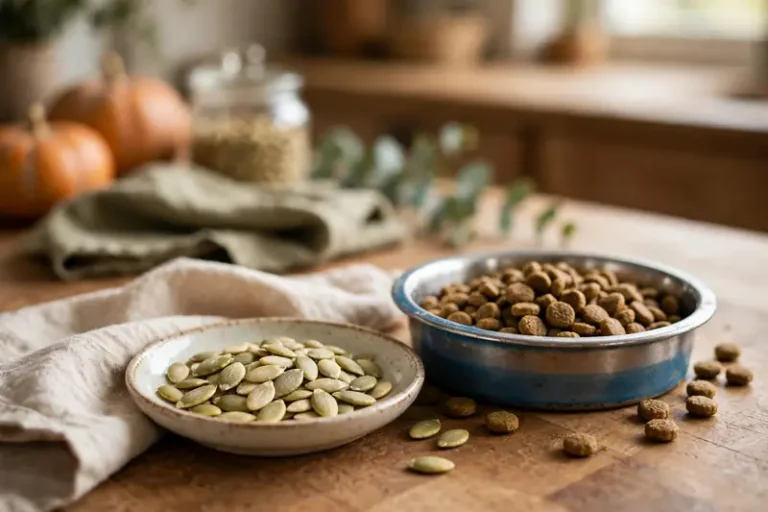
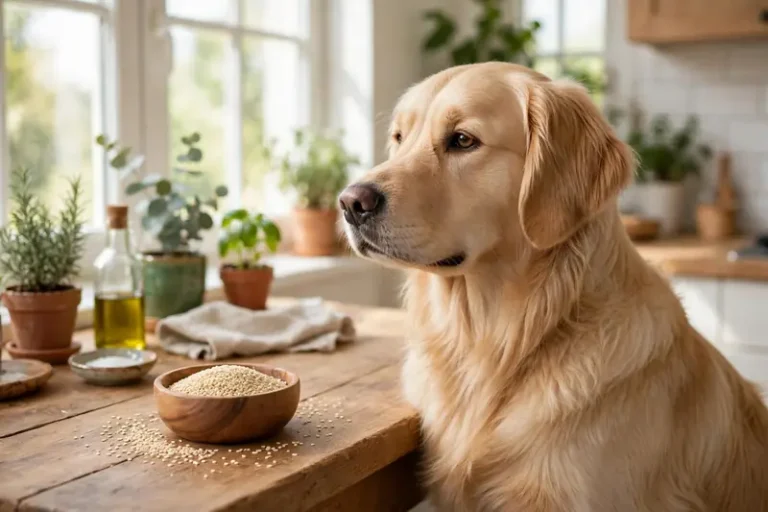
Peanut butter without xylitol is safe for dogs in small amounts. That is the whole answer, and the trap sits in the second half of the sentence. Xylitol, a sweetener that is harmless to people, can kill a dog, and food makers have started printing it on labels under a friendlier name: birch sugar. The jar in your pantry is probably fine. The sugar-free jar marketed as the healthy choice might not be. This guide shows you how to tell in five seconds, how much is sensible, and what to do if the wrong jar got licked.

What peanut butter is safe for dogs? The short answer
Peanut butter is safe for dogs when the ingredient list contains no xylitol, also labeled as birch sugar, wood sugar, or birch bark extract. Choose plain, unsalted peanut butter with as few ingredients as possible, ideally just peanuts. Keep portions small, since peanut butter is calorie-dense and high in fat.
The AKC puts it plainly: most peanut butter is safe for dogs, and in moderation it can be a useful source of protein, healthy fats, and vitamins B and E plus niacin. The healthiest option is unsalted peanut butter, a dog-specific peanut butter, or homemade. The AKC’s peanut butter guide adds the critical warning: some manufacturers have switched to xylitol, and that one ingredient changes everything. If you already feed your dog peanut butter from the existing jar, the peanut butter for dogs overview covers the basics; this article goes deeper on choosing a safe jar.
Peanut butter earns its place as a training and enrichment tool, not as a health food. Dogs love it, it stuffs toys well, and it hides pills. None of that makes it nutritious in any meaningful quantity. Think of it as the cheese of the dog world: a superb bribe, a poor meal.

Xylitol: the one ingredient that rules a jar out
Xylitol is a sugar alcohol used to sweeten sugar-free gum, candy, baked goods, toothpaste, and some peanut butters. People metabolize it without drama. Dogs do not. In a dog’s body, xylitol triggers a rapid, powerful release of insulin, and that insulin surge drags blood sugar down to dangerous levels within minutes.
The FDA’s consumer update on xylitol says blood sugar can drop within 10 to 60 minutes of eating it, and its warning poster says poisoning can start within 20 minutes. Signs start with vomiting, then weakness, staggering, collapse, and seizures. Larger doses can injure the liver, with liver failure possible within a day or two. The FDA’s “Paws Off Xylitol” warning is blunt: xylitol poisoning can kill a dog, and every second counts.
How much does it take? The Merck Veterinary Manual gives two thresholds: more than about 100 mg per kilogram of body weight is associated with low blood sugar, and more than about 500 mg per kilogram can cause severe liver injury in some dogs. A 10 kg dog hits the first threshold at a single gram. Some sugar-free gums carry 0.3 grams or more per piece, which is why vets treat any xylitol exposure as an emergency. Peanut butter rarely carries that much per serving, but “rarely” is not a safety plan. Check the label every time, including on a brand you have bought before, because recipes change without announcement.

Birch sugar, wood sugar, and other label names
Here is the part that catches careful owners. Xylitol does not always say “xylitol” on the label. The FDA notes it can also appear as birch sugar, wood sugar, or birch bark extract. “Birch sugar” sounds like something from a health food store, which is exactly why it works as camouflage. It is the same molecule with a friendlier name.
Pet Poison Helpline lists the aliases to watch for: xylitol, birch sugar, birch bark extract, wood sugar, and sometimes D-xylitol or xylite. If the ingredient list contains anything sweet-sounding that is not sugar, honey, or molasses, look it up before the jar goes near the dog. Sugar-free, no-sugar-added, and “naturally sweetened” on the front of the jar are all cues to read the back with suspicion.
This matters more now than it did five years ago. Sugar-free positioning has spread from gum into nut butters, protein spreads, and “low sugar” pantry products. Pet Poison Helpline’s xylitol guide, reviewed by a board-certified veterinary toxicologist, stresses the same point: xylitol turns up in places owners do not expect, and peanut butter is one of them. When a product’s whole pitch is sweetness without sugar, assume xylitol until the label proves otherwise.
The five-second label check
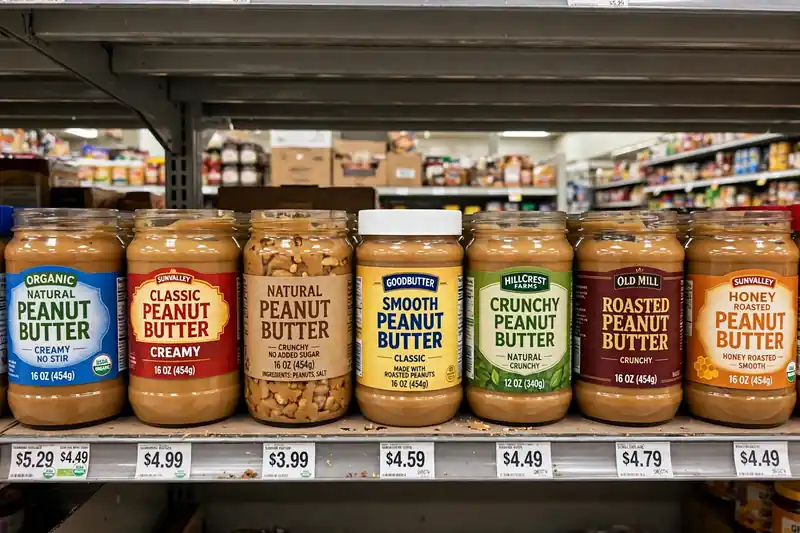
Turn the jar around. Read the ingredient list, not the front. You are looking for a short list: peanuts, maybe salt. That is the pass. Anything with xylitol, birch sugar, wood sugar, or birch bark extract fails instantly, no matter what the front promises.
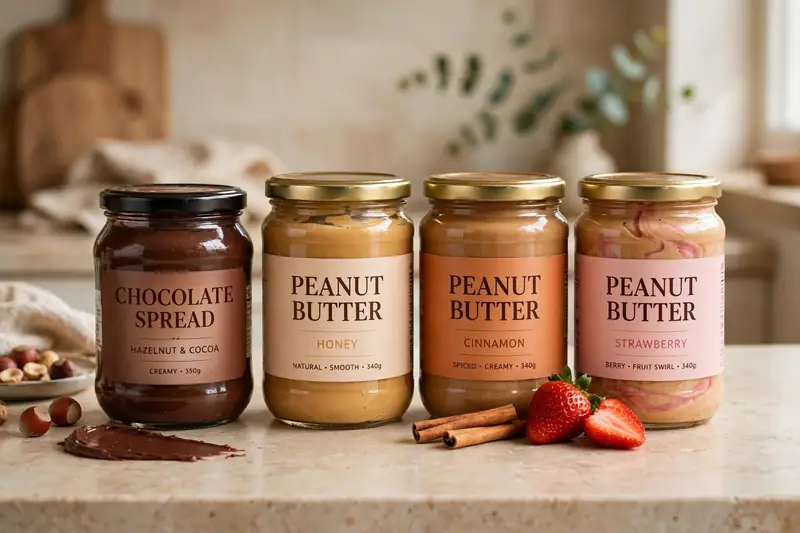
A few more things to weigh while you have the jar in your hand. Added sugars will not poison a dog, but they add empty calories to a treat that is already calorie-dense. Palm oil is harmless too, but it is a cheap filler that adds fat without benefit. High sodium is worth avoiding for the same reason the AKC flags it: dogs do not need the extra salt, and unsalted versions exist. Chocolate-flavored spreads are an automatic no, since chocolate brings its own toxicity.
The best jar is boring: peanuts, ground. Some natural brands separate, with oil on top; stir it once and refrigerate, and it stays mixed. If the ingredient list reads like a chemistry exam, put it back. Your dog cannot taste the difference between a three-ingredient peanut butter and a twelve-ingredient one. Only your worry changes.
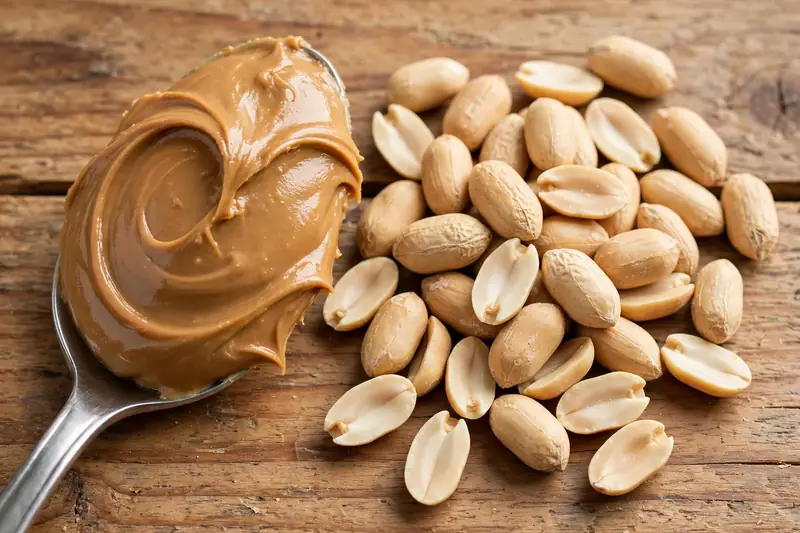
Types to skip
Sugar-free peanut butter is the headline skip, for the xylitol reason above. But a few other jars deserve the same treatment.
Flavored peanut butters, honey-roasted, chocolate swirl, cookie dough, and the rest, pile on sugar, flavorings, and sometimes cocoa. None of it helps the dog. “Natural” on the label means nothing regulated; it is marketing, not a safety certification. A natural-labeled jar can still contain xylitol, still be loaded with palm oil, and still be 100 calories a tablespoon. Read the ingredients, not the adjectives.
Reduced-fat peanut butter sounds virtuous and is usually worse. Manufacturers replace the removed peanut oil with sugar, corn syrup, or other fillers to keep the texture, so the dog gets more sugar and a longer ingredient list for barely fewer calories. Full-fat plain peanut butter in a tiny amount beats a spoonful of the engineered version every time.
Powdered peanut butter is the odd one out: mostly defatted peanut flour, far fewer calories, and useful for sprinkling. Check its label too, since flavored versions add sweeteners. And whatever you choose, keep the jar where the dog cannot counter-surf it. A determined labrador can eat a pound of peanut butter in minutes, and the emergency then is pancreatitis, not poisoning.
How much peanut butter dogs can have
Peanut butter is a treat, and treats stay within about 10 percent of daily calories. That is the VCA’s general rule, and peanut butter makes the math uncomfortably easy: one tablespoon of smooth peanut butter carries roughly 96 calories, per USDA data. For a small dog eating 400 calories a day, a single tablespoon is already a quarter of the treat budget.
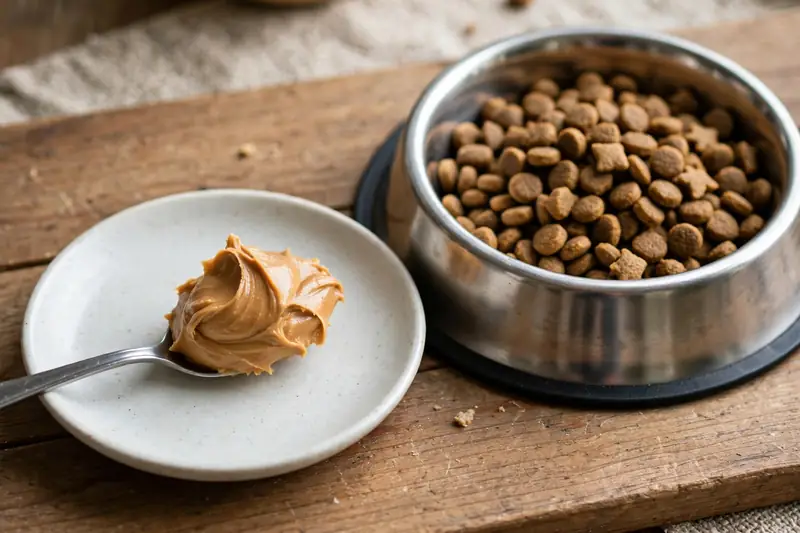
Translate that into real servings. A teaspoon smeared on a lick mat is plenty for a small dog. A tablespoon stuffed in a toy suits a medium or large dog. These are occasional servings, not daily rations. Dogs that get peanut butter every day tend to get roly-poly, and extra weight shortens lives more reliably than almost anything else owners do with love.
The fat content is the second limiter. Rich, fatty foods can trigger pancreatitis, a painful inflammation of the pancreas, especially in dogs already prone to it. One sensible serving will not do it. A jar-raiding incident might. If your dog has a history of pancreatitis, ask your vet before peanut butter enters the picture at all.
Crunchy vs creamy: does the texture matter
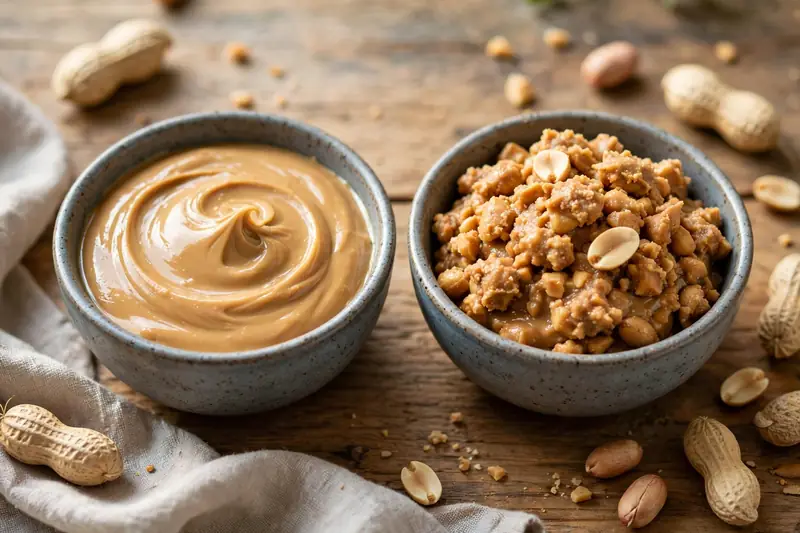
Nutritionally, no. Crunchy and creamy versions of the same brand are near-identical in calories, fat, and protein. The difference is mechanical, and it cuts both ways.
Creamy spreads thinner, which makes it better for lick mats and for hiding pills: it coats and sticks. Crunchy gives the dog something to crunch, which some dogs find more satisfying, but the peanut chunks are a mild choking consideration for tiny dogs and enthusiastic gulpers. Neither texture changes the safety question. The label decides that.
One texture note worth keeping: very thick, dry natural peanut butter can be hard for some dogs to swallow comfortably in a big glob, and no dog enjoys the peanut-butter-roof-of-mouth panic. Thin smears beat globs. Spread it, do not scoop it.
Puppies and peanut butter
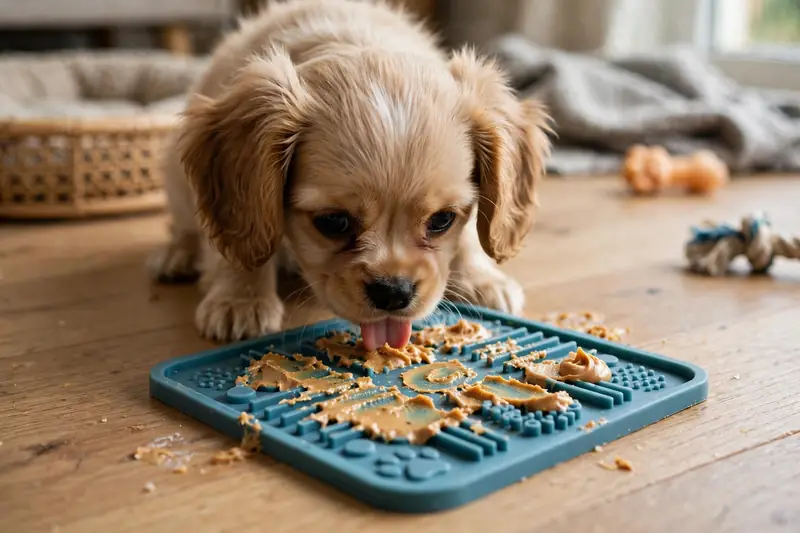
Puppies can have peanut butter once they are eating solid food well, usually around eight weeks and up. The same rules apply, tightened: xylitol-free, unsalted, and in tiny amounts. A pea-sized smear is a training jackpot for a puppy. A tablespoon is a stomach ache.
Puppies are also the best argument for the lick mat. A smear of peanut butter on a textured mat buys ten minutes of calm focus, which during the land-shark phase of puppyhood is worth more than gold. Freeze the smeared mat and it lasts longer. Just factor the calories into the day, since puppies have small budgets and big appetites.
Skip peanut butter entirely for puppies with ongoing digestive trouble, and go especially light with breeds prone to pancreatitis. When in doubt, the vet’s word beats the internet’s, including this article.
Smart ways to serve it
Peanut butter’s real talent is delivery. A smear inside a hollow rubber toy, frozen overnight, turns a boring afternoon into a project. A thin layer on a lick mat calms anxious dogs during storms or crate time. A pea-sized dab coats a pill better than any commercial pill-hiding trick, and most dogs swallow the evidence without noticing the medicine.
A few serving rules keep it safe. Serve at room temperature or chilled, never warmed to the point of runny, since runny peanut butter is easier to inhale in a gulp. Keep servings thin rather than deep. Do not let the dog chew the toy apart to get the last smear; take it away when the food is gone. And wash the toys and mats regularly. Old peanut butter goes rancid, and rancid fat upsets stomachs.
For training, peanut butter works best as the jackpot, not the routine reward. Routine rewards should be small, dry, and quick to eat. The peanut butter squeeze tube or a dab on your finger is the big prize for the big win: the first clean recall, the calm settle in a chaotic park. Scarcity keeps it powerful.

What to do if your dog ate xylitol peanut butter
Act fast and do not wait for symptoms. Xylitol moves quickly: the FDA says blood sugar can drop within 10 to 60 minutes, and the Pet Poison Helpline notes signs can begin within 10 to 15 minutes. Call your vet, an emergency clinic, or a poison control line immediately. In North America that means the ASPCA Animal Poison Control Center or Pet Poison Helpline, both 24/7.
Do not induce vomiting unless the vet tells you to. Note the product name, the ingredient list, how much is missing from the jar, and your dog’s weight; the vet needs all four to judge the dose. The Merck Veterinary Manual’s thresholds, about 0.1 g per kg for blood sugar effects and 0.5 g per kilogram for liver injury, are what the vet will be calculating against. Vets treat xylitol exposure with IV dextrose, monitoring, and liver support, and the prognosis is excellent when caught early. The VCA’s xylitol toxicity guide and the Merck Veterinary Manual’s xylitol toxicosis page both stress the same thing: speed matters more than anything else.
If the jar was xylitol-free and the dog simply overate, the risk shifts to stomach upset and pancreatitis. Watch for vomiting, belly pain, and loss of appetite over the next day or two, and call the vet if any appear.

Frequently asked questions about peanut butter for dogs
Which peanut butter brands are safe for dogs?
No brand is permanently safe, because recipes change. Instead of memorizing brand lists, read every jar’s ingredient list for xylitol, birch sugar, wood sugar, or birch bark extract. A boring jar with just peanuts and maybe salt is the safest bet regardless of brand.
Is there xylitol in natural peanut butter?
Sometimes. “Natural” is not a regulated safety claim, and some natural-positioned spreads use xylitol or birch sugar as the sweetener. The front of the jar tells you nothing. Only the ingredient list counts.
Can dogs be allergic to peanuts?
Yes, though it is uncommon. Signs include itchy skin, ear inflammation, and digestive upset after eating peanuts or peanut butter. If symptoms appear consistently after peanut butter and resolve when you stop, talk to your vet about a food trial.
Can peanut butter cause pancreatitis in dogs?
A sensible serving will not, but a large amount of fatty food can trigger pancreatitis in susceptible dogs. The classic emergency is the counter-surfed jar. Dogs with a history of pancreatitis should only get peanut butter on the vet’s say-so.
Is almond butter safer than peanut butter for dogs?
Not inherently. The same rules apply: no xylitol, minimal ingredients, small portions. Almond butter is usually pricier with no safety advantage. The almond butter guide and the almonds overview cover the details, and cashews follow the same pattern.
My dog ate a whole jar of regular peanut butter. What now?
Watch for vomiting, diarrhea, and belly pain over the next 24 to 48 hours, and call your vet for advice, especially for a small dog or one prone to pancreatitis. Skip the next few meals’ worth of treats to balance the calorie bomb, and secure the pantry.
Can dogs eat peanuts themselves?
Yes, plain dry-roasted or raw unsalted peanuts, shelled, in small amounts. The peanuts guide has the details. Most dogs prefer the butter, and the butter is easier to portion.
Safe peanut butter is a label, not a brand. Flip the jar, read the ingredients, reject anything with xylitol or its aliases, and keep servings small. Do that and peanut butter stays what it should be: the best bribe in the dog world, delivered safely. For the full list of people foods that pass the test, keep the human foods dogs can eat guide handy.
Disclaimer: This article is for general information only and is not veterinary advice. If your dog has eaten a product containing xylitol or shows symptoms like vomiting, weakness, or collapse, contact your veterinarian or an animal poison control center immediately.