
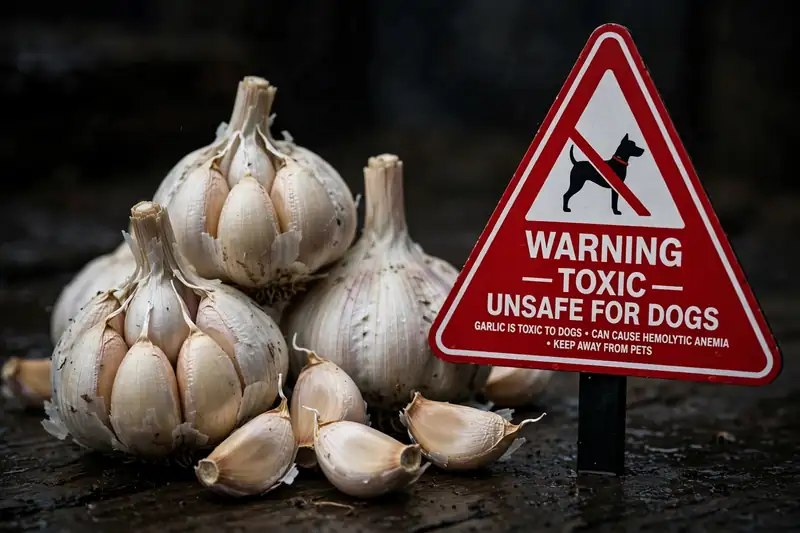
No, dogs must not have garlic. Garlic is toxic to dogs in every form: raw, cooked, powdered, or as an ingredient in seasoned food. It damages red blood cells and can cause a life-threatening anemia, sometimes days after the dog ate it. If your dog has already eaten garlic, skip to the emergency steps below and act now, do not wait for symptoms.
If your dog ate garlic, act now
- Stay calm and figure out how much. Check what was eaten, how much, and when. Save the packaging, your vet will want the ingredient list.
- Call your veterinarian immediately. If it is after hours, call an emergency animal hospital.
- Call a poison hotline: Pet Poison Helpline 855-764-7661 or ASPCA Animal Poison Control 888-426-4435. (Consultation fees may apply, they are worth it.)
- Do NOT induce vomiting unless told to. A professional needs to decide that based on timing, amount, and your dog’s condition.
- Note the time. Garlic poisoning symptoms are often delayed 24-72 hours, so the clock matters even if your dog looks fine right now.
“Looks fine” means nothing with garlic. The damage happens silently over days. Early professional guidance is the difference between a scare and a crisis.
Why garlic is toxic to dogs
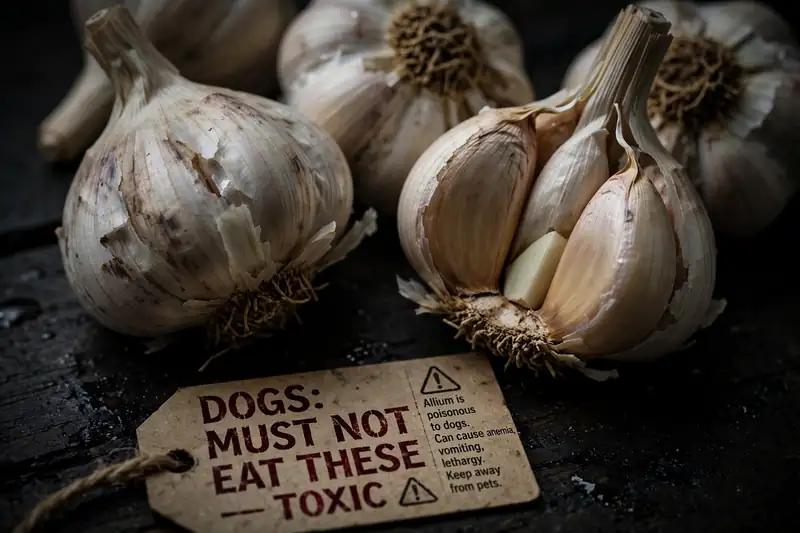
Garlic belongs to the Allium family (with onions, leeks, chives, and shallots), and all Alliums share the same weapon: sulfur-containing compounds called thiosulfates. Dogs, unlike humans, lack sufficient levels of the enzyme needed to break these compounds down.
Here is what happens inside the dog, step by step:
- Thiosulfates are absorbed into the bloodstream after the dog eats garlic.
- They oxidize red blood cells, literally damaging the hemoglobin that carries oxygen.
- Damaged cells form Heinz bodies (clumps of damaged protein inside the cells) and become fragile.
- The body destroys the damaged cells faster than it can replace them.
- The result: hemolytic anemia, too few healthy red blood cells to carry oxygen properly.
Cooking does not help. Heat does not break down thiosulfates, so cooked garlic, garlic powder, garlic salt, garlic bread, and seasoned meat are all dangerous. Garlic powder is especially concerning because it is concentrated, a small amount of powder equals much more fresh garlic.
How much garlic is dangerous
This is where garlic surprises people: it does not take much. Veterinary toxicology sources cite a toxic dose in the range of roughly 15-30 grams of garlic per kilogram of body weight, but clinical signs have been reported at lower exposures, and garlic is estimated to be about five times more potent than onions by weight.
What does that mean in real terms?
- For a 10 kg (22 lb) dog, the often-cited toxic threshold starts around 150 grams of garlic, roughly 25-30 cloves. That sounds like a lot, and it is, but garlic powder changes the math dramatically.
- Garlic powder is far more concentrated than fresh garlic. A teaspoon of powder can carry the punch of multiple cloves, and seasoned foods (garlic bread, seasoned meats, sauces) can deliver meaningful doses in ordinary portions.
- Repeated small exposures add up. A dog that gets garlicky table scraps regularly can accumulate damage over days, oxidative injury to red blood cells is cumulative.
The honest rule: there is no established “safe” amount. Some sources note tiny accidental tastes may cause no symptoms, but no veterinary authority sets a safe dose, and individual sensitivity varies. Treat every exposure as worth a vet call.
Symptoms of garlic poisoning
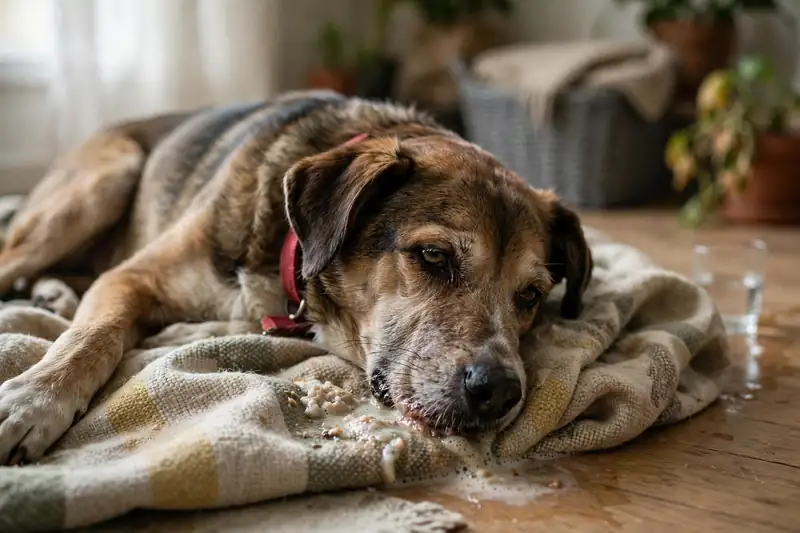
The cruel part of garlic toxicity is the delay. Symptoms typically appear 24-72 hours after ingestion, sometimes up to a week. Owners often miss the connection because the dog seemed fine for days. Watch for:
- Lethargy and weakness, the hallmark of anemia; the dog tires easily, plays less
- Pale gums, lift the lip and look; pale or white gums signal low red blood cells
- Rapid breathing or elevated heart rate, the body compensating for low oxygen
- Vomiting and diarrhoea, can appear earlier, within hours
- Abdominal pain, drooling
- Dark or reddish-brown urine, hemoglobin from destroyed red blood cells (a serious sign)
- Collapse, in severe cases
If you see pale gums, dark urine, or collapse at any point after a known or suspected garlic exposure, that is an emergency, go to the vet immediately.
Every form is dangerous, no exceptions

- Raw garlic cloves, the obvious one.
- Cooked garlic, heat does not destroy thiosulfates. Cooked in food, roasted, sautéed: still toxic.
- Garlic powder and garlic salt, concentrated and especially dangerous; check seasoning blends.
- Garlic bread, garlic butter, seasoned meats, common accidental exposures.
- Baby food, some brands contain onion or garlic powder; always read labels.
- “Natural” flea and tick supplements containing garlic, marketed for pets, still risky (see the myth section below).
- Garlic-infused oils and sauces, the compounds transfer into the oil.
Read ingredient labels on anything seasoned. Onion and garlic powder hide in an enormous range of processed foods, stocks, gravies, sauces, spice mixes, frozen meals, and restaurant leftovers.
The “garlic for fleas” myth, please stop
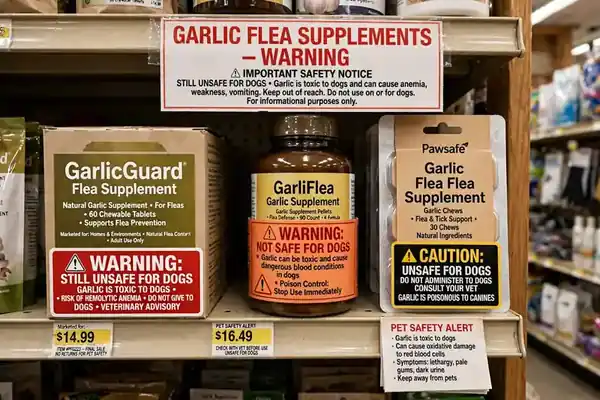
One of the most persistent and dangerous myths in dog care: that garlic repels fleas, ticks, or worms, and that “small daily doses” are safe and beneficial. You will find this claim on blogs, in old books, and on supplement labels.
The veterinary position is clear: there is no reliable evidence garlic prevents fleas or parasites in dogs, and the “safe small dose” concept has no established safe threshold. What the myth delivers is chronic low-level exposure, exactly the cumulative oxidative damage described above, in exchange for unproven benefit. Some dogs on long-term “garlic supplements” develop anemia that nobody connects to the supplement.
Safe, proven flea and tick prevention exists: vet-prescribed topicals, oral preventatives, and collars with established safety profiles. Use those. Garlic belongs in your kitchen, not your dog’s healthcare.
Garlic vs onion, both dangerous
Garlic and onions poison dogs by the same mechanism, and both should be kept away. The differences that matter:
- Garlic is more potent per gram, roughly five times the thiosulfate concentration of onions.
- Onions are eaten in larger quantities, a whole onion in a stew is a more common accident than a whole head of garlic.
- All Alliums count, leeks, chives, shallots, scallions. Chives are a particular garden hazard because dogs may chew them outdoors.
- The treatment is the same, decontamination, monitoring, supportive care, and bloodwork to track red blood cell levels.
If your household cooks with Alliums (most do), the rule is simple: seasoned human food does not go to the dog. Ever.
Breeds at higher risk
All dogs are susceptible, but some face extra danger:
- Japanese breeds. Akitas and Shiba Inus are reported to be more sensitive to Allium toxicity due to differences in their red blood cells.
- Dogs with existing anemia or blood disorders, less margin for red blood cell loss.
- Puppies and small dogs, smaller body weight means a given amount of garlic is a larger dose per kilogram.
- Dogs on certain medications, some drugs affect red blood cells or liver function; garlic adds risk.
If your dog is in one of these groups, be extra strict, and mention any garlic exposure to your vet even if the amount seemed trivial.
Prevention: garlic-proofing your kitchen and garden
Most garlic poisonings are accidents, and accidents are preventable. A few habits close the common routes:
- Counter discipline. Dogs counter-surf; garlic left on low counters or in open grocery bags is an invitation. Put Alliums away, high and closed.
- Trash security. Onion and garlic skins, trimmings, and spoiled bulbs go in a lidded bin, the smell that attracts you to cooking attracts dogs to the trash.
- Garden awareness. If you grow garlic, chives, or onions, fence the bed or train a solid “leave it.” Chive patches are a particular hazard because dogs graze them like grass.
- Guest briefing. Visitors and kids are the classic accidental feeders. A simple “no human food for the dog, please” covers garlic and everything else.
- Label literacy. Scan ingredient lists on stocks, sauces, baby food, and “natural” pet products for onion/garlic powder before anything reaches the dog’s bowl.
These habits take a week to build and then run on autopilot. The dogs most at risk are not neglected dogs, they are loved dogs in busy kitchens where one dropped clove meets one fast nose.
Diagnosis and treatment at the vet

If you call early, before symptoms, your vet may:
- Induce vomiting (if ingestion was recent, typically within 1-2 hours) to remove unabsorbed garlic.
- Administer activated charcoal to bind remaining toxins in the gut.
- Start IV fluids to support circulation and help flush the system.
If anemia has developed (usually discovered 2-5 days later via bloodwork), treatment becomes supportive and more intensive:
- Oxygen therapy for severe cases.
- Blood transfusions when red blood cell counts drop dangerously low.
- Hospitalization with monitoring until counts stabilize and regenerate, which can take days to weeks.
The prognosis is generally good with prompt treatment, but severe cases can be fatal. The single biggest factor in outcomes is time, early calls save lives. This is why “wait and see” is the wrong strategy with garlic.
The honest summary: garlic is not a gray-area food. It is toxic to dogs in all forms, in doses smaller than most people expect, with damage that appears days later and can be life-threatening. There is no safe amount, no safe preparation, and no legitimate health use. Keep Alliums out of the dog’s reach, read labels on seasoned foods, and if exposure happens, call your vet immediately, hours matter.
For the same danger-first clarity on the other great canine toxin, read our grape guide, another food where “wait and see” can be fatal. And for the full landscape of safe and unsafe foods, see what human food dogs can eat.
Frequently Asked Questions
How much garlic is toxic to dogs?
Toxicity is cited around 15-30 grams per kilogram of body weight, but signs have occurred at lower exposures, garlic is about five times more potent than onions, and powder is highly concentrated. There is no established safe dose, treat any exposure as worth a vet call.
My dog ate a small piece of garlic, will he be OK?
Possibly, a single tiny taste often causes no symptoms. But do not assume: call your vet, report the amount and your dog’s weight, and follow their guidance. Symptoms can be delayed 24-72 hours, so monitoring matters.
Can dogs eat cooked garlic?
No. Cooking does not destroy the toxic thiosulfates. Cooked, roasted, powdered, or as an ingredient, all forms are dangerous.
Can garlic kill a dog?
Yes, in sufficient quantity. Severe hemolytic anemia can be fatal without treatment. Prompt veterinary care gives a good prognosis, but this is a genuinely life-threatening toxin, not a mild irritant.
Is garlic powder worse than fresh garlic?
Per spoonful, yes, powder is concentrated, so a small amount delivers far more thiosulfates than the same volume of fresh garlic. Seasoned foods are a common source of accidental poisoning for this reason.
Can I give my dog garlic for fleas?
No. There is no reliable evidence it works, and chronic small doses can cause cumulative red blood cell damage and anemia. Use vet-prescribed flea and tick preventatives instead.
How long after eating garlic do symptoms appear?
Typically 24-72 hours, sometimes up to a week. Early GI signs (vomiting, diarrhoea) may appear within hours; anemia signs (lethargy, pale gums, dark urine) follow days later.
Are onions as dangerous as garlic?
Both are toxic by the same mechanism. Garlic is more potent per gram, but onions are more commonly eaten in large quantities. Keep all Alliums, onions, garlic, leeks, chives, shallots, away from dogs.
This article is general information only and is not a substitute for veterinary advice. Garlic poisoning can be life-threatening, if your dog has eaten garlic, contact your veterinarian, Pet Poison Helpline (855-764-7661), or ASPCA Animal Poison Control (888-426-4435) immediately.

11 thoughts on “Can Dogs Have Garlic? No — Toxic for Dogs”