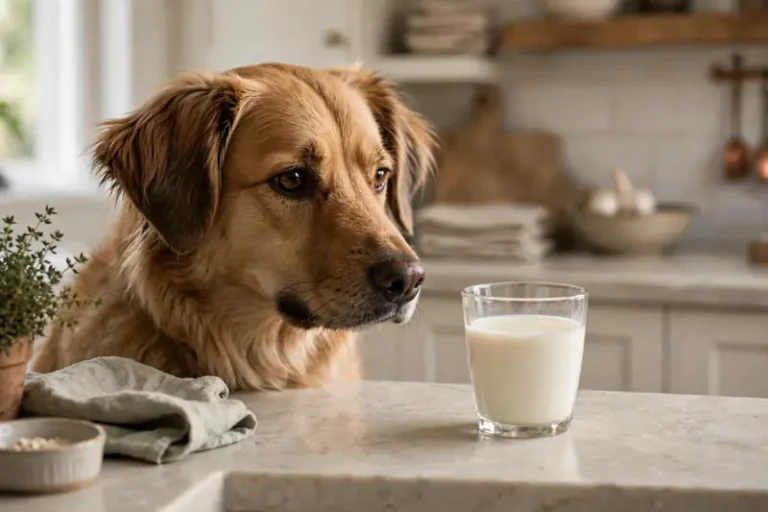
You pour it into your coffee every morning, and your dog watches the carton like it holds something for him. Dogs can drink almond milk in small amounts, but only the plain unsweetened kind with no xylitol. The milk itself is not toxic. The danger sits in the ingredient list, where sweeteners and flavorings hide. A splash as an occasional treat is fine for most dogs. A daily bowl is not.

It earned its place in human kitchens as a lactose-free alternative, and owners naturally wonder whether it solves the milk problem for dogs too. Cow’s milk upsets many dogs because of lactose. It skips lactose entirely, which looks like a win. The full picture is less tidy. The nut milk brings its own risks and offers dogs almost no nutrition, and one common sweetener turns it lethal. The carton deserves a careful read before a single splash hits the bowl.
Can dogs drink almond milk? The direct answer
Almond milk confuses owners because it looks like milk and pours like milk. Yes, dogs can drink plain unsweetened almond milk in small amounts, and it is not toxic to them. The conditions matter more than the permission. No xylitol, no added sugar, no chocolate or flavorings, and only a few tablespoons as an occasional treat. Miss any of those conditions and the answer changes.
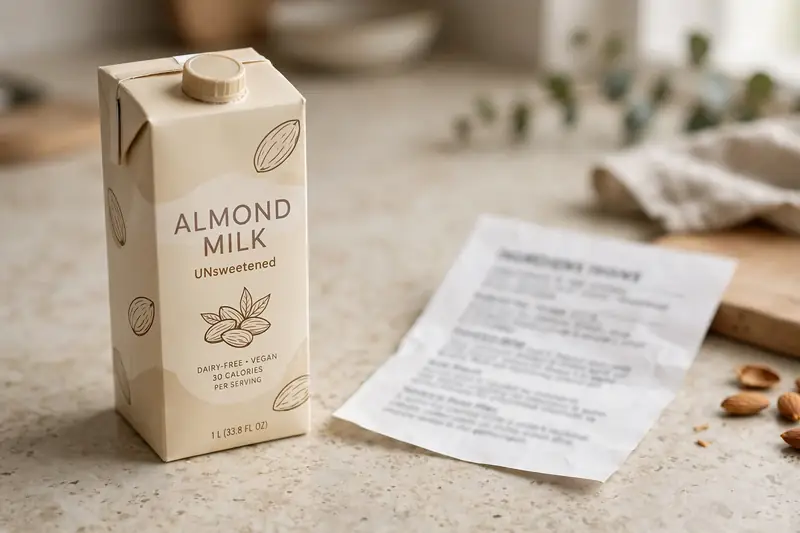
Vet-reviewed sources land in the same place: non-toxic but nutritionally empty for dogs, and it should never replace water. The VCA’s feeding guidelines put all treats and extras at roughly 10 percent of daily calories, and this drink counts against that budget. Some vets take a stricter line and call it an unnecessary risk as a regular treat, which is worth hearing. The sections below show exactly where the risk lives, which sweeteners to fear, and how much is too much, so owners can decide with facts instead of guesswork.
Why almond milk is not toxic to dogs
Almonds themselves are not on any major poison list for dogs. The milk contains no compound that poisons dogs, which is why vets call it non-toxic rather than safe. That distinction matters. Non-toxic means it will not poison. Safe would mean it does some good. It does neither harm nor good in its plain form.
The ASPCA’s people foods to avoid names the true dangers, from xylitol and grapes to chocolate. Almond milk appears on no such list. Dogs lack the enzyme trouble they have with lactose, because it contains no lactose at all. That single fact makes it gentler than cow’s milk for most stomachs.
But gentleness is not nutrition. A dog’s body extracts almost nothing useful from it, which is why no vet recommends it as anything beyond an occasional novelty.
The xylitol problem hiding on the label
Xylitol is the ingredient that turns a harmless splash into an emergency. Some brands sweeten with xylitol, also labeled as birch sugar, and even a small amount can cause a fatal blood sugar crash in dogs. Vomiting, weakness, seizures, and liver failure can follow within hours. Every carton needs a label check before the dog gets any.
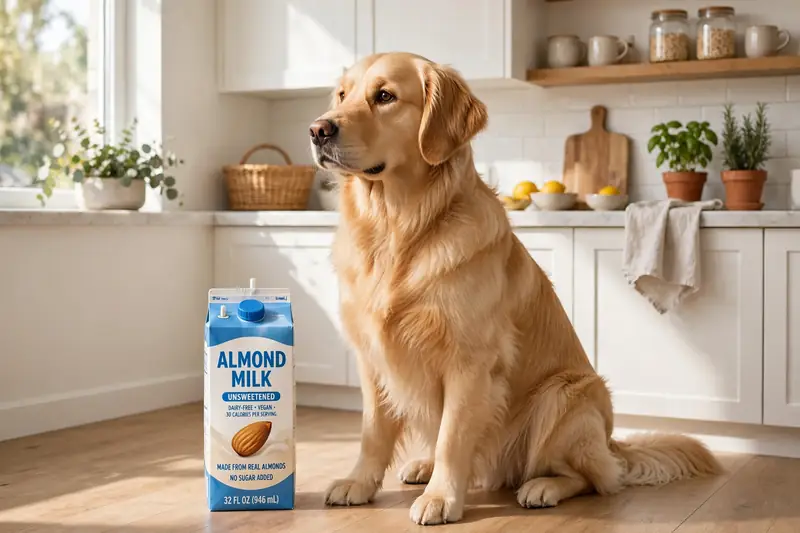
Here is the label trick worth memorizing. Scan the ingredients for anything ending in “itol.” Xylitol is the notorious one, but the habit of checking every “-itol” catches label surprises across products.
PetMD’s xylitol poisoning guide documents how fast the damage moves: a dog’s pancreas floods the blood with insulin, blood sugar collapses, and the dog can go from wobbly to seizing within the hour. Dogs that survive the initial crash still face liver injury over the following days, which is why vets monitor xylitol cases for at least three days after exposure. If the label lists xylitol or birch sugar, the carton stays far from the dog, and any dog that already drank from it needs a vet immediately.
Other label traps: sugar and flavorings

Xylitol is the killer, but ordinary sugar is the everyday thief. Most flavored versions carry added sugars that push dogs toward obesity and dental disease with zero nutritional payback. Vanilla and chocolate versions add the most, and sweetened varieties are not far behind. The chocolate version doubles the danger, because chocolate brings theobromine, which is toxic to dogs on its own.
Manufacturers sweeten it because the plain kind tastes thin and nutty, and shoppers prefer the flavored versions. Labels list cane sugar and honey most often. Syrups appear too.
Preservatives and thickeners like carrageenan round out the ingredient list on shelf-stable cartons. None of these poison a dog outright. They just convert a neutral splash into a sugary habit, and sugary habits are how dogs end up overweight with rotting teeth, while the vet bills for dental cleanings under anesthesia cost far more than the carton ever did. The rule is simple: if the carton lists anything beyond almonds and water, it does not go in the dog’s bowl.
How much almond milk is safe to serve
Portion size keeps a neutral treat from becoming a problem. A few tablespoons of plain unsweetened almond milk as an occasional treat is the safe ceiling for most dogs. Smaller dogs should get less, roughly a teaspoon or two. Mix it into kibble or offer it in a saucer, and watch the dog for a full day before deciding whether a second serving is wise.

Frequency matters as much as volume. Once or twice a week is plenty, and skipping weeks entirely is fine. Its fat content can irritate the pancreas when dogs get too much too often, and fat-driven pancreatitis is a painful condition nobody wants to trigger over a treat.
The 10-percent treat rule covers this: every extra, this drink included, should stay within a tenth of daily calories. Owners who already share buttermilk or kefir should count it in the same budget rather than stacking treats.
Almond milk vs cow’s milk
Cow’s milk is the drink these owners are trying to replace. It beats cow’s milk for lactose-intolerant dogs, but lactose-free milk beats both for any owner who wants a real dairy option. Cow’s milk contains lactose, which most adult dogs digest poorly, leading to gas and diarrhea. It skips that problem and adds almost no nutrition. Lactose-free cow’s milk keeps the protein and calcium while removing the sugar dogs cannot handle.

The comparison comes down to what the owner wants. For a dog that loves the taste of milk, lactose-free milk delivers actual nutrition with the lactose removed. For an owner avoiding dairy entirely, it works as a flavor treat with no nutritional role. Neither belongs in the bowl daily, and both lose to water by a wide margin. Dogs do not need milk of any kind after weaning. The entire category is a treat, and treats earn their place through the dog’s enjoyment, not through health claims printed on cartons designed to sell to people.
Allergies and sensitive stomachs
Some dogs react badly to almonds even in milk form. Watch for itchy skin, red ears or paws, vomiting, or diarrhea after the first taste, and stop serving it if any appear. True almond allergies are uncommon in dogs, but sensitive stomachs are not, and the two look alike at first.

The first serving is a test, not a treat. Offer one tablespoon and wait a full day before deciding. Mild soft stool that resolves on its own usually means the portion was too big rather than a true allergy, so try a smaller amount once before writing the drink off entirely.
Persistent itching, face swelling, or repeated vomiting point the other way and deserve a vet call. Dogs with known food allergies or chronic digestive trouble should skip it unless the vet approves it. There are safer treats for sensitive dogs, and no reason to gamble on a nutritionally empty one.
Puppies and almond milk

Puppies complicate every food question because their needs differ from adults. A tiny taste of plain unsweetened almond milk will not harm a weaned puppy, but puppies gain nothing from it and need their calories from proper puppy food. Very young puppies still nursing get all hydration from mother’s milk. Newly weaned puppies need fresh water and complete puppy food, and every calorie spent on novelties is a calorie stolen from growth.
Puppy stomachs are less forgiving than adult ones. New foods should arrive one at a time so owners can trace any upset to its source. Its fat can loosen a puppy’s stool faster than an adult’s, and puppies dehydrate quickly when diarrhea strikes. There is no developmental window where it helps a puppy. Owners eager to spoil a new puppy do better with a vet-approved puppy treat, which delivers the joy without the question marks, and the puppy will not know the difference between a fancy carton and a simple biscuit.
Better ways to treat your dog
It is a mediocre treat, and better options cost nothing. A training session with tiny pieces of plain cooked chicken beats this drink for nutrition and safety, and wins on enthusiasm too. Dogs value novelty and attention more than any specific flavor. The ritual of the treat matters more than the treat itself.
For owners who enjoy the sharing moment, safe human foods work better. Small pieces of seedless apple, blueberry, or carrot deliver fiber and crunch with real nutrients behind them. Sports drinks and fruit juice fail the same test it fails: sugar without purpose. The safe drinks for dogs guide covers the full beverage list. Keep treats small, keep them infrequent, and keep water as the drink. The dog will not feel deprived. Dogs do not compare their treats to anyone else’s.
When to call the vet
Most scares with this drink end with an upset stomach and nothing worse. Call your vet immediately if the carton contained xylitol, or if your dog shows face swelling, trouble breathing, repeated vomiting, or bloody stool. Xylitol exposure is an emergency at any dose. Allergic reactions with swelling or breathing trouble are emergencies too.

Mild cases of plain overindulgence usually resolve with waiting and watching. Mild diarrhea that resolves within a day needs nothing more than fresh water and a return to normal food. Keep the ASPCA Animal Poison Control number saved alongside your vet’s clinic number. When calling about a label scare, have the carton in hand. Reading the exact sweetener name to the vet beats describing it from memory, and the vet’s advice depends on that single detail, because xylitol and ordinary sugar trigger completely different emergency protocols.
Frequently asked questions about dogs and almond milk
The questions below cover sweetened versions and chocolate flavors first, then other plant milks.
Can dogs drink sweetened almond milk?
The sweetened kind is a poor choice. The added sugar feeds obesity and dental disease without giving the dog anything useful. Some sweetened versions use xylitol, which is lethal. Stick to unsweetened or skip it entirely.
Can dogs drink chocolate almond milk?
The chocolate kind should never reach a dog. Chocolate contains theobromine, which dogs cannot metabolize safely, and the product usually carries added sugar too. Two toxins in one carton is two too many.
Is homemade almond milk safer for dogs?
The homemade kind avoids the preservatives and mystery sweeteners of store cartons, which is a real improvement. It still offers no nutrition and still carries fat that can upset stomachs. Safer, yes. Worthwhile, not really.
Can dogs drink oat, soy, or coconut milk?
The same rules apply to every plant milk. Plain and unsweetened in tiny amounts is the ceiling, and xylitol is the dealbreaker everywhere. Soy milk adds a common allergen to the mix. Coconut milk is high in fat. None of them beat water.
Will almond milk help my underweight dog gain weight?
It is mostly water with very few calories, so it will not move the needle on weight. An underweight dog needs a vet check first, because weight loss signals illness more often than underfeeding. The vet will recommend calorie-dense food, not a thin nut drink.
Can dogs drink almond milk every day?
A daily serving is too much of an empty extra. The fat adds up, the habit displaces nothing useful, and label mistakes become more likely with repetition. Keep it to once or twice a week at most, and plain water stays the daily drink.

This drink sits in the “allowed but pointless” category. Plain and unsweetened, in tablespoons, on occasion, it does no harm. The moment a label adds sweeteners or flavorings, the risk climbs past any possible reward. Water remains the drink that actually serves the dog, and the treat budget spends better on foods with real nutrition behind them, which is a kinder trade for everyone involved. Owners comparing dairy options should read the cow’s milk and lactose-free milk guides before deciding what, if anything, belongs in the bowl besides water.
Disclaimer: This article is general information, not veterinary advice. Dogs with allergies, pancreatitis, or chronic digestive conditions should get treat guidance from their own veterinarian.