

Boiled chicken is the food vets reach for first when a dog’s stomach is upset, and it is also a fine plain protein for healthy dogs as an occasional extra. The method is simple, but the details matter: the right cut, plain water, no seasoning of any kind, cooked fully to a safe temperature. This guide walks through how to boil chicken for dogs step by step, with portions by size, storage rules, and the mistakes to avoid.
Why vets recommend plain boiled chicken
Vets recommend plain boiled chicken because it is lean, easy to digest, and gentle on irritated stomachs. Boneless, skinless breast is low in fat, which a recovering gut needs, since fat is the hardest thing for an upset stomach to handle. The AKC lists boiled chicken and rice among the best foods for dogs with mild digestive trouble.

It also works as an appetite enticement. A dog that turns away from kibble after illness will often eat warm shredded chicken, and eating something beats eating nothing during recovery. Beyond sick days, plain boiled chicken makes a useful training treat or pill disguise, far better than processed treats with long ingredient lists. But keep its role clear. Boiled chicken is a supplement to a complete diet or a short-term recovery food, not a balanced meal on its own. Dogs need a range of nutrients that plain chicken alone does not provide.
Which cut to buy
Buy boneless, skinless chicken breast. It is the leanest common cut, which is what you want for sensitive stomachs and for keeping everyday extras from padding the waistline. Thigh meat carries roughly twice the fat of breast, so save thighs for healthy dogs as an occasional change, not for recovery meals.

Boneless matters for safety. Cooked bones splinter and can injure the mouth, throat, and gut, so they never belong in dog food. Skinless matters for fat control; most of a chicken piece’s fat sits in and under the skin. Buy plain chicken with no marinades, brines, or “enhanced with broth” injections, which add sodium and flavorings. If you buy in bulk and freeze, thaw in the refrigerator, not on the counter. And keep raw chicken handling hygienic: wash hands, boards, and knives after prep, since raw poultry can carry bacteria that sicken people too.
What never goes in the pot
Plain means plain. No salt, no oil, no butter, no garlic, no onion, no broth cubes, no seasoning of any kind. Garlic and onion are genuinely toxic to dogs, damaging red blood cells, and even small amounts add up. Seasonings that seem harmless can irritate a recovering stomach or worse.

This is where well-meaning cooks go wrong. The family recipe starts with browning in oil, a pinch of salt, a bay leaf, maybe some onion for flavor. Every one of those additions makes the chicken worse for a dog. Oil and butter add fat the gut does not need. Salt stresses dogs with heart or kidney issues and adds nothing. Garlic and onion, in any form including powder, are toxic. Broth cubes and stock concentrates are salt and seasoning bombs. Cook the dog’s chicken in a separate pot from the family’s dinner, so nobody’s good intentions season it by accident.
Step by step: how to boil chicken for dogs
Place the boneless, skinless breasts in a pot and cover with cold plain water by an inch or two. Bring to a boil, then reduce to a steady simmer. Cook for 15 to 20 minutes depending on thickness, until the meat is white and firm all the way through. Drain, let cool, and it is ready to shred.
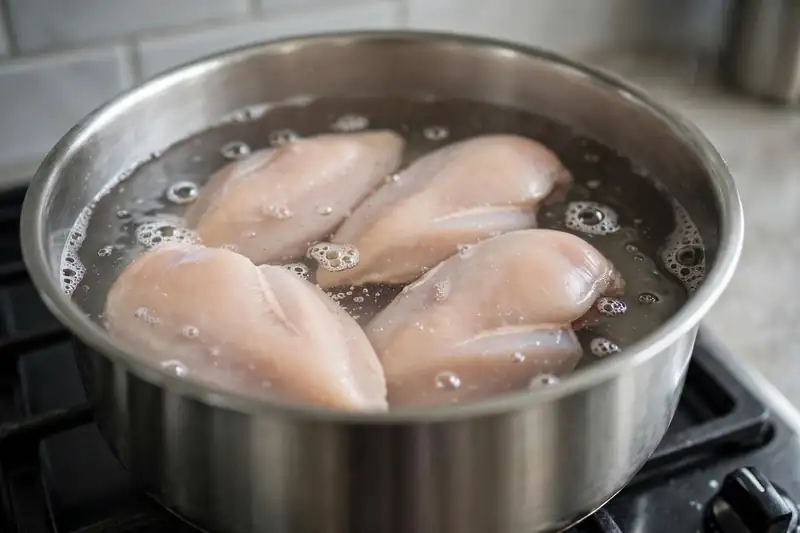
A few details make it foolproof. Starting with cold water heats the meat evenly; dropping chicken into a rolling boil can cook the outside while the center lags. Keep the simmer gentle rather than violent, which keeps the meat tender instead of rubbery. Do not crowd the pot; cook in batches if needed so every piece cooks through. Skim off any foam that rises, though it is harmless. Resist the urge to add anything “for flavor.” The dog does not need it, and the simplicity is the point. When the chicken is done, lift it out with tongs and let it rest on a clean plate before shredding.
How to tell it is done: the 165 rule
Chicken is done when the thickest part reaches 165 degrees Fahrenheit inside, with no pink remaining in the center. A cheap instant-read thermometer removes all guesswork and is the safest way to check. Undercooked chicken can carry salmonella and campylobacter, which sicken dogs and the people handling their food.
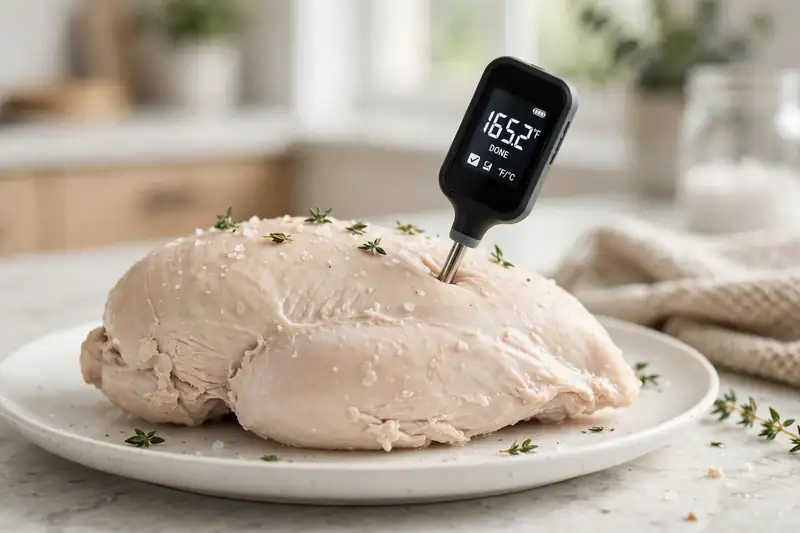
Cutting into the thickest piece to check for pink is a decent backup, but the thermometer is better. Thin breasts may finish in 12 to 15 minutes; thick ones can need 20 to 25. If you batch-cook and freeze, the same rule applies when reheating: heat to steaming throughout. Do not taste-test doneness and call it good; dogs deserve the same food safety standards as the family. And remember that “boiled” here means fully cooked through, not the barely-poached texture some recipes favor for humans. When in doubt, give it five more minutes.
Shredding and serving
Let the chicken cool to room temperature, then shred it with two forks or chop it into small, bite-size pieces. Fine shreds suit small dogs, seniors, and gulping eaters, since smaller pieces are easier to digest and less of a choking risk. Serve plain, or mixed with plain white rice for the classic bland diet.

Shredding along the grain gives the fine strands dogs find easiest to eat. For tiny dogs or puppies, go finer than you think necessary; enthusiastic eaters inhale food, and small pieces are the safer bet. Remove any gristle or tough bits as you shred. Serve at room temperature, not fridge-cold, which can put off a queasy dog, and never hot. If you are mixing with rice for a bland diet, use roughly one part chicken to two parts rice. For training treats, dice the chicken into pea-sized bits and keep them in a pouch for the walk.
Portions by dog size
As an occasional extra, keep chicken within the treat rule: all extras combined under 10 percent of daily calories. For bland-diet recovery, vets often suggest starting with two tablespoons of the chicken-and-rice mix per ten pounds of body weight per meal, split across four to six small meals. Adjust to your dog’s size and your vet’s advice.

A 10-pound dog needs only a couple of tablespoons per recovery meal; a 60-pound dog might take a cup of the mix. These are starting points, not prescriptions. Puppies, seniors, and dogs with conditions like pancreatitis or kidney disease follow different rules, so run the plan past your vet. For healthy dogs getting chicken as a topper or treat, think garnish, not main course. A palmful over kibble delights without unbalancing the diet. Watch the waistline over weeks; steady extras show up on the scale before they show up in the mirror.
Storing leftovers safely
Refrigerate cooked chicken within two hours and use it within three to four days. For longer storage, freeze portions in sealed bags or containers for two to six months. Label everything with the date. Thaw frozen portions in the refrigerator overnight, never on the counter, and reheat to steaming before serving if the dog prefers it warm.

Batch cooking saves time, but only if storage is disciplined. Divide the shredded chicken into meal-sized portions before freezing so you thaw only what you need. Squeeze air from freezer bags to prevent freezer burn. When in doubt, throw it out: chicken that smells off, feels slimy, or has sat too long is not worth the risk. Keep the dog’s chicken separate from the family’s seasoned leftovers and label it clearly, because a well-meaning helper can easily grab the wrong container. A simple piece of tape with “dog chicken” and the date prevents mix-ups.
The broth question
The water you boiled the chicken in is now a light broth, fine to use as long as nothing was added to the pot. Strain it, skim or chill off the fat, and use it to moisten kibble or entice a picky eater. Discard the cooking water if the chicken was not plain, and never serve the broth hot.
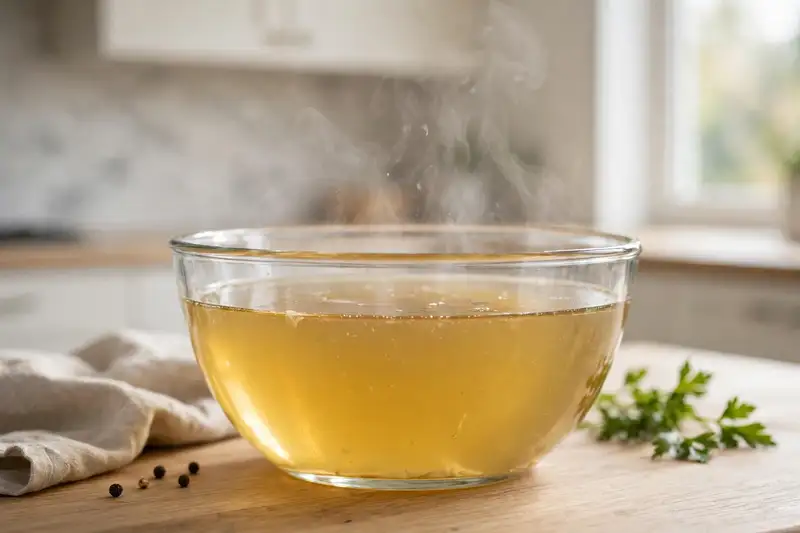
Fat is the thing to manage. Boiling releases fat into the water, and for a recovering stomach that fat is counterproductive. Chill the broth and lift off the solidified fat, or skim carefully while warm. What remains is a gentle, savory liquid most dogs love. Do not confuse this plain cooking liquid with store-bought broth, which usually contains onion, garlic, and far too much salt. And the bones, if you ever simmer bone-in pieces for yourself, stay out of the dog’s bowl entirely. Strain every time, without exception.
When boiled chicken is not the answer
Skip the chicken-and-rice routine and call the vet if your dog has bloody diarrhea or vomit, refuses water, or is lethargic or in pain. Very young puppies with persistent symptoms need a vet too. Dogs with chicken allergies need a different protein, and dogs with pancreatitis, kidney disease, or other chronic conditions need a vet-approved plan, not a home recipe.

Boiled chicken is first aid, not a diagnosis. Two to three days of bland feeding should show improvement; if symptoms persist beyond 48 hours, worsen, or keep recurring, something deeper is going on. Chicken allergy is more common than owners expect, and feeding more chicken to an allergic dog prolongs the misery. Watch for itching, ear infections, or digestive signs that never quite clear. And remember the nutritional gap: chicken and rice lack many essential nutrients, so it is a bridge of a few days, never a lifestyle. When the bridge has served its purpose, transition back to complete food gradually.
Plain chicken, plain water, full cooking, careful portions: that is the whole method, and it is worth doing right every time. Get these basics right and it stays one of the simplest, safest foods you can make for your dog. For the bigger question of chicken in your dog’s diet, see our guide to whether dogs can eat chicken. For making the most of the pot, our bone broth guide covers safe simmering. And for everything else that belongs, or does not belong, in the bowl, see what human food dogs can eat.
Frequently Asked Questions
How long do you boil chicken for dogs?
Simmer boneless, skinless breasts for 15 to 20 minutes, until the thickest part reaches 165 degrees Fahrenheit with no pink inside. Thicker pieces may need a few minutes more.
Can I add salt or seasoning when boiling chicken for dogs?
No. Cook it in plain water only. Salt, oil, butter, garlic, and onion can upset a dog’s stomach, and garlic and onion are toxic to dogs.
Is boiled chicken good for dogs with diarrhea?
Yes, as part of the classic bland diet with plain white rice, roughly one part chicken to two parts rice, fed in small frequent meals for a few days. See your vet if symptoms last beyond 48 hours.
Can dogs eat boiled chicken every day?
Not as the whole diet. Plain boiled chicken lacks many essential nutrients dogs need, so it works as an occasional extra or short-term recovery food alongside complete nutrition.
Should I use chicken breast or thighs for my dog?
Breast is the better pick: leaner, with roughly half the fat of thigh meat. That matters most for upset stomachs and weight control.
How do I store boiled chicken for my dog?
Refrigerate within two hours and use within three to four days, or freeze portions for two to six months. Thaw in the fridge, and label the container so nobody confuses it with seasoned leftovers.
Can puppies eat boiled chicken?
Yes, in small, finely shredded pieces, as an occasional extra or part of a vet-approved bland diet. Keep portions tiny and make sure it is fully cooked to 165 degrees inside.
This article is general information only and is not a substitute for veterinary advice. If your dog has persistent vomiting, diarrhea, or other concerning symptoms, consult your veterinarian.

1 thought on “How to boil chicken for dogs: the plain, safe method”