
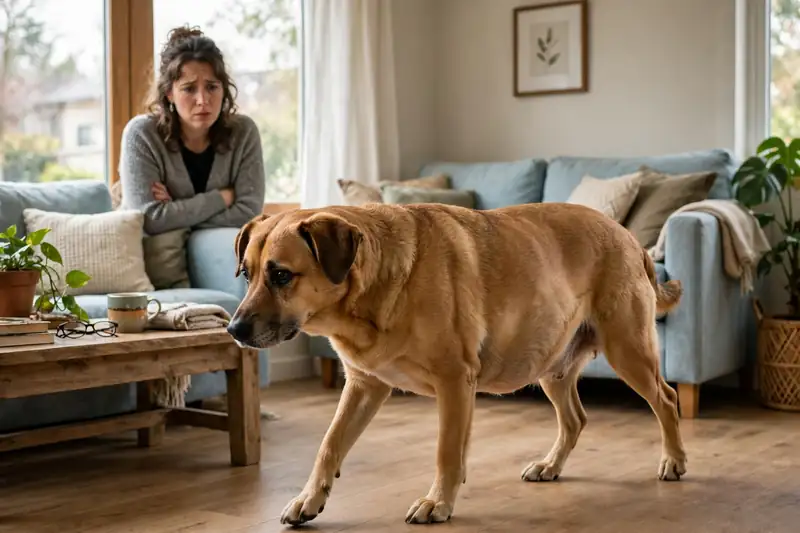
Bloat is one of the most frightening words a dog owner can hear, and for good reason. It can turn a healthy dog into a critical patient within an hour or two. The signs of bloat in dogs start suddenly and move fast: a swelling belly, retching that brings up nothing, restlessness, drooling, and pale gums. There is no safe wait-and-see approach and no home remedy. This guide covers every sign in plain language, what to do the moment you spot them, and how to lower the odds it ever happens.
What is bloat in dogs?
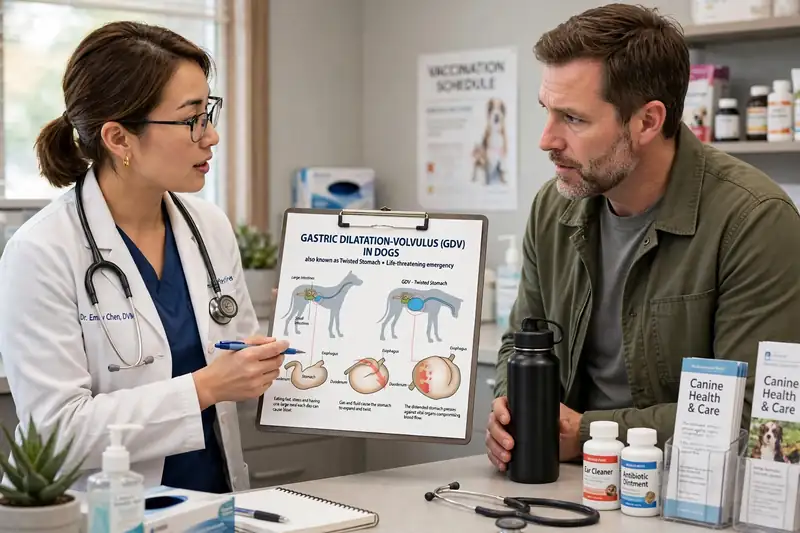
Bloat, medically called gastric dilatation-volvulus or GDV, happens when a dog’s stomach fills with gas, food, or fluid and then twists on itself. The twist traps everything inside and cuts off blood flow to the stomach and nearby organs. Without emergency surgery, the dog goes into shock and dies, often within hours.
The stomach can rotate partway or fully, anywhere from a quarter turn to a complete flip. As it swells, it presses on the diaphragm, which makes breathing hard, and squeezes the large veins in the abdomen, which tanks blood pressure. The spleen and pancreas can be dragged along in the twist. VCA Animal Hospitals describes it plainly: this is a life-threatening emergency that needs urgent surgery to correct. Even in mild cases, dogs die without treatment. Understanding the mechanics matters because it explains why the clock starts ticking the moment symptoms appear and why nothing you do at home can untwist a stomach.
The first signs of bloat in dogs
The earliest signs of bloat in dogs are easy to miss. The dog seems uneasy, paces, cannot get comfortable, and may look at its own belly or whine when the abdomen is touched. Symptoms usually start suddenly, often one to two hours after eating, and get worse fast. If your dog is acting strangely after a meal, take it seriously.
Most owners first notice a change in behavior rather than a dramatic symptom. The dog that always naps after dinner is suddenly up and moving. It tries to lie down, stands back up, circles, and settles only to rise again. Some dogs become clingy and follow their owner from room to room. Others hide. A dog that groans or snaps when you touch its belly is telling you something hurts. These early behavioral changes are the window when fast action makes the biggest difference. Do not wait for the belly to balloon before you call for help. In some dogs the abdomen never looks dramatically swollen, and those are the cases owners miss.
Unproductive retching: the classic red flag
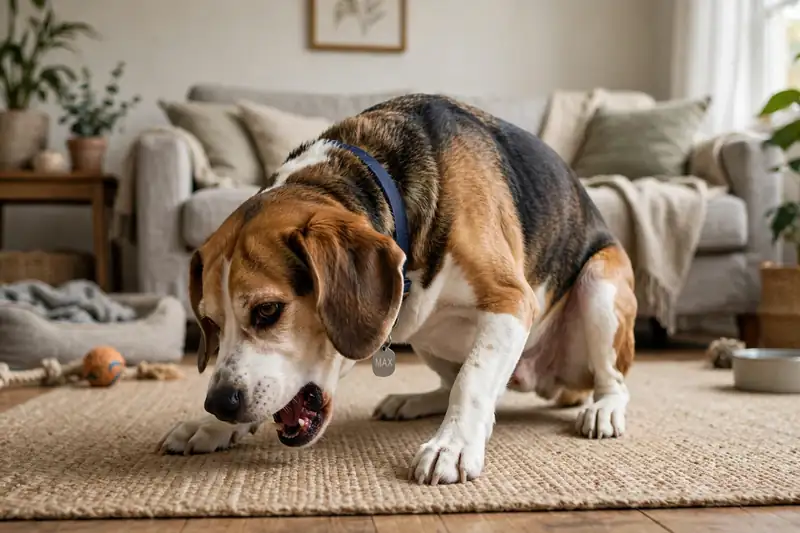
The most famous sign of bloat is trying to vomit without producing anything. The dog retches, gags, or dry heaves repeatedly, and nothing comes up except maybe a little foam or mucus. This happens because the twisted stomach has sealed both its entrance and exit. If you see repeated dry heaving, treat it as an emergency.
Watch closely and you will notice the effort is real but fruitless. The dog stretches its neck, heaves its sides, and may repeat the attempt every few minutes. Some dogs also try to belch and cannot. Do not try to help by giving food, water, or home remedies to settle the stomach. Nothing swallowed can pass through a twisted stomach, and adding volume to the situation helps nothing. Do not attempt to make the dog vomit either. The only useful action at this point is calling your veterinarian or the nearest emergency clinic and getting the dog moving toward the car.
Swollen, tight belly: what it feels like
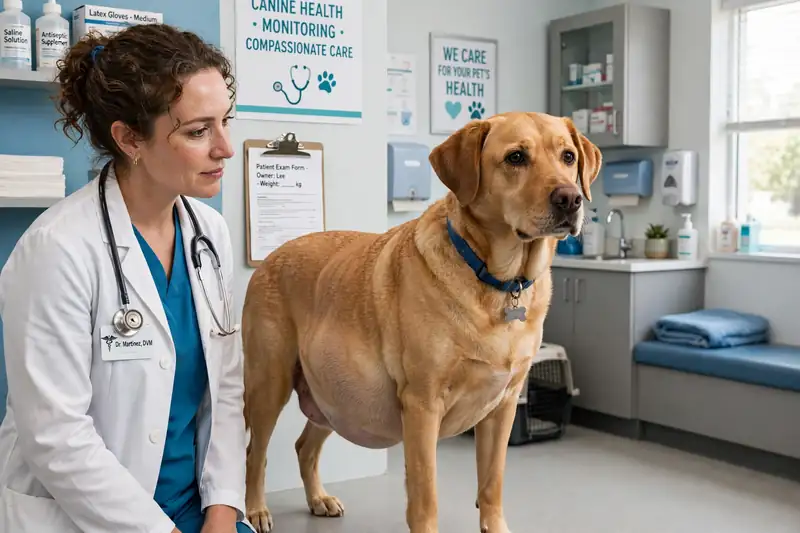
As gas builds, the abdomen swells and feels tight, like a drum. The swelling is often most obvious on the left side, just behind the last rib. Gently tapping that area may produce a hollow, drum-like sound. In deep-chested dogs the change can be subtle at first, so compare with how your dog’s belly normally looks and feels.
Not every bloat case shows dramatic swelling, so do not rule it out because the belly looks almost normal. In early or partial cases the distension can be mild, and in heavy-coated dogs it can be hard to see at all. What you feel matters more than what you see: a normally soft belly that has become hard, tense, or painful to the touch is a warning. Pain on palpation is common, and some dogs hunch their backs or assume a prayer position, front end down and rear end up, trying to relieve the pressure. If your dog will not let you touch its belly at all, that refusal is itself information.
Restlessness and pacing
A dog with bloat cannot find a comfortable position. It paces, circles, stands, lies down, gets up again, and repeats the cycle. This restlessness often pairs with anxiety, whining, or panting. A normally calm dog that suddenly cannot settle, especially after eating, deserves immediate attention and a phone call to the vet.

The pacing has a frantic, purposeless quality that is different from a dog that needs to go outside. The dog may walk in loops, shift its weight, sit briefly, then rise. It might keep looking back at its flank or licking its lips. Some dogs become unusually clingy; others withdraw. Pay attention to timing. Bloat symptoms often appear in the evening, one to three hours after the day’s biggest meal, when regular vet clinics are closed. That is exactly why every dog owner should know where the nearest 24-hour emergency clinic is before the crisis arrives.
Drooling, panting, and breathing trouble
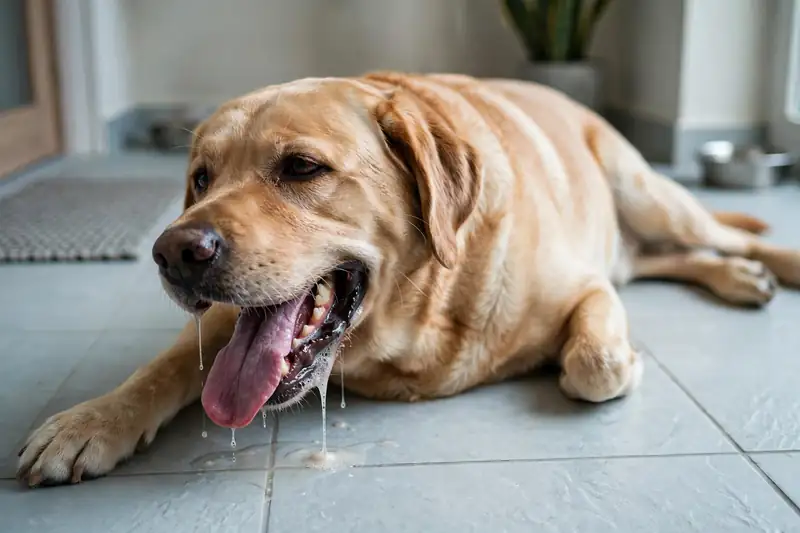
Heavy drooling and rapid, shallow breathing are common as bloat progresses. Saliva may drip in strings because the dog cannot swallow normally. The swelling stomach presses on the diaphragm, so each breath takes more work. A dog that pants while resting, drools excessively, or seems to struggle for air after a meal is in trouble.

Panting from pain looks different from panting after a run. The breaths come fast and shallow, the dog’s sides work hard, and there is no exercise or heat to explain it. Drooling may be profuse enough to soak the dog’s chest or the floor. You might also notice the dog stretching its neck forward to open the airway, or standing with its elbows turned out. These are respiratory distress signs, and they mean the distended stomach is already crowding the lungs. At this stage the dog’s condition can deteriorate in minutes. Keep the dog as calm as possible, avoid any handling that adds stress, and drive to emergency care without delay.
Pale gums and signs of shock
As circulation fails, the gums turn pale, white, or bluish, and the heart races while the pulse weakens. The dog may feel cold, especially the ears and paws, and grow weak or collapse. These are shock signs, and they mean the situation is critical. If your dog is collapsing or cannot stand, this is a race against time.
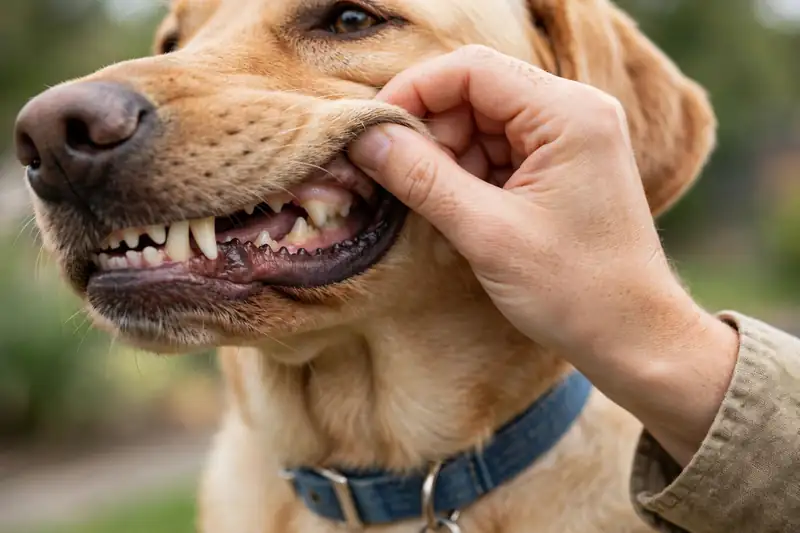
Checking gums is a skill worth practicing on a healthy dog so you know what normal looks like. Healthy gums are a bubblegum pink; in bloat they fade toward white or take on a gray or blue tint. Press a fingertip against the gum and release: color should return within two seconds. A longer delay signals poor circulation. A rapid heartbeat with a weak, thready pulse is another shock marker, though feeling a pulse in a panicking dog is not easy. Do not spend precious minutes running checks at home. The checks exist so you can describe what you see when you call the clinic. The treatment, IV fluids, stomach decompression, and surgery, happens at the hospital.
Breeds at highest risk
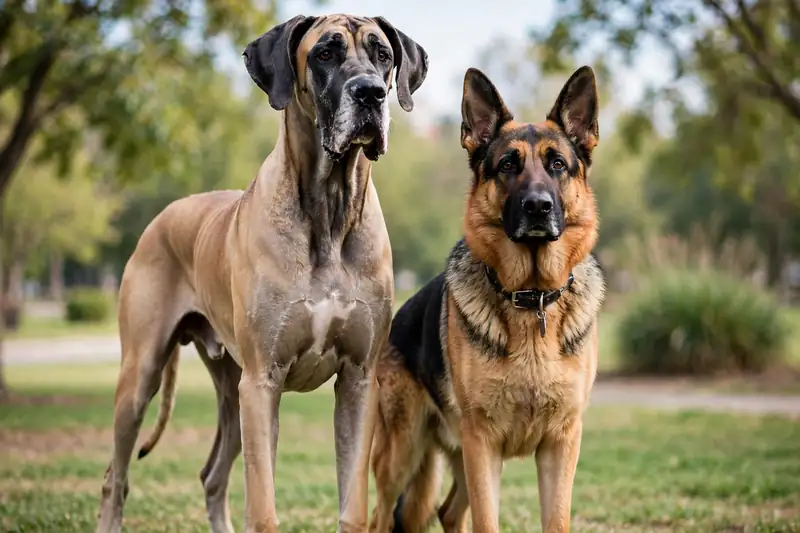
Bloat can strike any dog, but large, deep-chested breeds face the highest risk. Great Danes top every risk list, followed by German Shepherds, Standard Poodles, Boxers, Dobermans, Irish Setters, and Weimaraners. Older dogs, underweight dogs, and dogs with a family history of bloat are also more vulnerable. If you own a high-risk breed, learn the signs before you need them.
Deep chests give the stomach more room to swing, which is part of why these breeds suffer most. Males, older dogs, and dogs that eat one large meal a day show up more often in case statistics. Dogs that eat quickly or are anxious at mealtimes are also flagged as higher risk, though the exact cause of bloat remains unknown and researchers continue to debate which factors matter most. The AKC Canine Health Foundation notes several suspected contributors without pinning the condition on any single one. If your dog belongs to a high-risk breed, discuss preventive options with your veterinarian at a routine visit, not at midnight in an emergency.
What to do the moment you suspect bloat
Call your veterinarian or an emergency clinic immediately and say you suspect bloat. Keep the dog calm and still, offer no food or water, and do not try home remedies or attempt to make the dog vomit. Drive to the clinic right away. Stomach damage grows with every minute, and survival tracks closely with treatment speed.
Know your plan before the emergency. Save the number of your nearest 24-hour emergency animal hospital in your phone, and know the drive time. When you call, describe the symptoms: retching without vomiting, swollen belly, restlessness, pale gums. The clinic will tell you to come straight in. At the hospital, the vet will stabilize the dog with IV fluids, decompress the stomach with a tube or needle to release trapped gas, confirm the twist with an X-ray, and then operate to untwist the stomach. Most surgeons also perform a gastropexy, tacking the stomach to the abdominal wall so it cannot twist again. Dogs that reach surgery quickly have a real chance; dogs that arrive late often do not.
How to lower your dog’s bloat risk
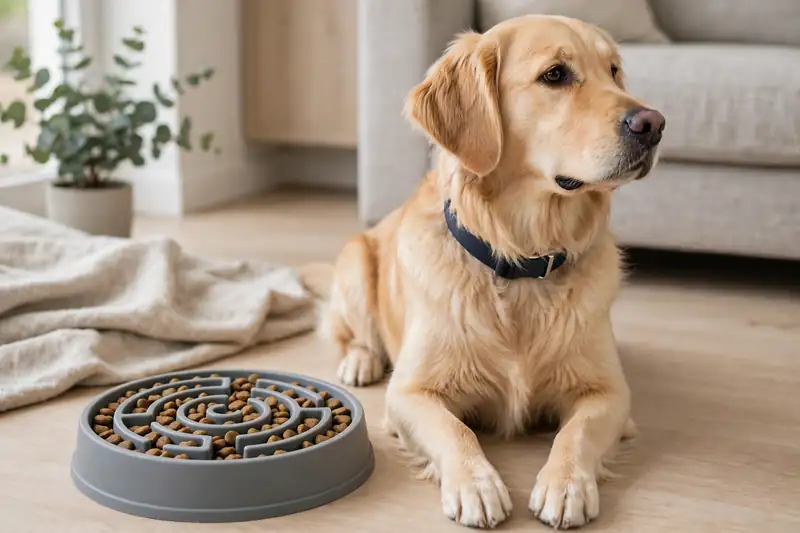
No prevention method is guaranteed, but several habits lower the risk. Feed two or three smaller meals a day instead of one large one, use a slow feeder for fast eaters, and avoid hard exercise for an hour before and after meals. For high-risk breeds, ask your vet about prophylactic gastropexy during a spay or neuter.

Keep mealtimes calm. A dog that gulps food while competing with another pet swallows more air, so feed dogs separately if there is tension at the bowl. Elevated bowls were once recommended and are now debated, so ask your own vet rather than following old internet advice. Some sources suggest avoiding large volumes of water right after eating, but do not restrict normal drinking. The strongest protection available is the preventive gastropexy, which does not stop the stomach from filling with gas but stops it from twisting, and that twist is what kills. It is worth a serious conversation for any Great Dane or similarly high-risk breed.
Bloat is the rare emergency where hesitation is the most dangerous choice. Learn the signs, have your emergency clinic’s number saved, and act the moment something looks wrong. For everyday feeding questions that support a calm, healthy gut, see our wider guide to what human food dogs can eat. And because recovery from any emergency leans on proper hydration, our guide to electrolytes for dogs covers what vets use when fluids matter.
Frequently Asked Questions
Can bloat go away on its own in dogs?
No. Once the stomach twists, it cannot untwist itself, and gas keeps building. Without veterinary treatment the dog goes into shock and dies, usually within hours. Even simple bloat without a twist needs professional care, because it can progress to a twist at any moment.
How fast can bloat kill a dog?
It can be fatal within one to two hours of the first symptoms in severe cases. The AKC notes that without treatment, a dog will likely go into shock within an hour or two. That timeline is exactly why bloat is always treated as a rush-to-the-clinic emergency.
Can small dogs get bloat?
Yes. Any dog can bloat, though it is far more common in large, deep-chested breeds. Small dogs with anxious eating habits or a family history of bloat have been affected too. No owner should dismiss the classic signs because their dog is small.
Is bloat the same as a gassy stomach?
Not exactly. Mild gas causes discomfort and usually passes. Bloat, or GDV, involves a distended stomach that often twists, trapping gas and cutting off blood flow. The distinguishing signs are retching without vomiting, a tight swollen belly, and rapid deterioration. When in doubt, treat it as bloat.
Should I try to make my dog vomit if I suspect bloat?
No. Inducing vomiting cannot untwist a stomach, and with a sealed, twisted stomach nothing can come up anyway. It wastes time and adds stress. The only correct move is an immediate call to your vet or emergency clinic.
What does the vet do to treat bloat?
The vet stabilizes the dog with IV fluids and emergency medications, releases trapped gas with a stomach tube or needle, confirms the twist with an X-ray, and performs surgery to untwist the stomach. Most surgeons also do a gastropexy, tacking the stomach to the body wall to prevent recurrence.
Can bloat come back after treatment?
It can, unless a gastropexy was performed. Dogs treated for GDV without gastropexy have a high recurrence rate. That is why surgeons routinely tack the stomach during the emergency operation, and why some owners of high-risk breeds choose a preventive gastropexy.
This article is general information only and is not a substitute for veterinary advice. Bloat is a life-threatening emergency. If you suspect your dog is bloating, go to a veterinarian or emergency clinic immediately.

8 thoughts on “Signs of bloat in dogs: recognize this emergency in minutes”