

Yes, dogs can eat turkey, with a qualification that does most of the work: only plain, fully cooked meat, with no skin, no bones, and no seasoning. Turkey meat itself is a lean, protein-rich food, it is a common ingredient in commercial dog foods for good reason. But the turkey on most tables, especially at Thanksgiving, arrives loaded with butter, salt, garlic, onion, and fatty skin, and that version is genuinely dangerous. This guide draws the line between the bird that is fine and the feast that is not.
What parts of turkey are safe

Keep it simple, meat only, prepared plain:
- Breast meat: the leanest, lowest-fat option and the best choice for most dogs. Skinless, boneless, unseasoned.
- Thigh and leg meat: safe but richer and higher in fat, offer smaller amounts, less often.
- Ground turkey: fine as long as it is plain, fully cooked, with no additives or seasoning.
- Giblets (heart, gizzard, liver): safe occasionally when fully cooked through, which kills harmful bacteria like salmonella. Rich, so keep portions small.
The common thread: fully cooked, no skin, no bones, nothing added. If you would not describe it as “plain turkey meat,” it needs a second look before the dog gets any.
The skin problem
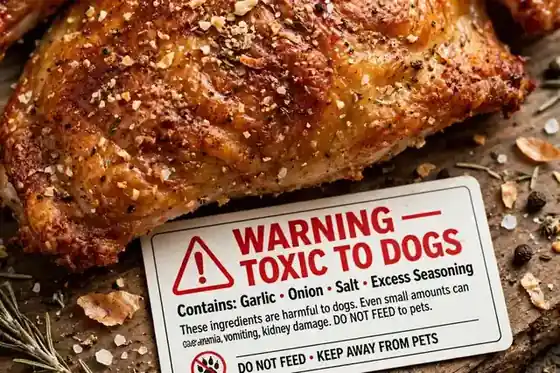
Turkey skin is where most trouble starts. The AKC’s chief veterinarian Dr. Klein advises owners to skip turkey skin entirely, and the reasons stack up:
- Fat load: skin is concentrated fat, often further basted in butter or oil during cooking. A few bites of skin can deliver a day’s worth of fat in minutes.
- Pancreatitis: that fat load can trigger pancreatitis, a painful, potentially serious inflammation of the pancreas. The AKC specifically flags fatty skin plus buttery cooking as a pancreatitis recipe.
- Seasoning vehicle: the skin carries most of the salt, pepper, herbs, and butter rubbed on before roasting.
Dogs will beg hardest for the skin. It is also the part most likely to send them to the emergency vet. No skin, no exceptions, trim it off before any meat goes to the dog, because dogs are expert at eating around your intentions.
Bones: cooked turkey bones are never safe

Cooked turkey bones splinter. When poultry bones are cooked, they become dry and brittle, breaking into sharp shards that can choke a dog, lodge in the throat, block the intestines, or perforate the gut wall. This is not a theoretical risk, it is one of the most common holiday emergencies vets see.
The AKC’s guidance is unambiguous: do not feed turkey bones, and call your vet right away if your dog swallows one. That includes the leg bones dogs find irresistible, the carcass after carving, and “just the knuckle end.” Raw turkey bones are a separate debate with their own risks (bacterial contamination, still-possible choking), but cooked bones are a settled no.
If your dog grabs a cooked bone: stay calm, do not chase (that triggers gulping), try to trade for something higher-value, and watch closely for choking, gagging, drooling, abdominal pain, or bloody stool over the next 48 hours. Call your vet for guidance, do not try to induce vomiting for sharp bones without professional direction.
Seasoning, stuffing, and the holiday table

The turkey is only the centerpiece of the danger. Around it sits a minefield the AKC’s Thanksgiving guide maps in detail:
- Garlic and onion: often in the bird’s cavity, the stuffing, and the gravy. Both are toxic to dogs, onion more so, damaging red blood cells. Even the seasoned drippings are unsafe.
- Stuffing: a concentrated package of onion, garlic, butter, salt, and herbs. Never share it.
- Gravy: fat, salt, drippings, often onion, never.
- Mashed potatoes (the human kind): butter, milk, salt, the potato is the least of the problems.
- Desserts: chocolate is toxic; xylitol in sugar-free items is lethally toxic; rich pastries bring pancreatitis-grade fat.
The practical holiday protocol: before the meal, set aside a small plate of plain turkey breast meat (cooked separately or carved before seasoning touches it), plus a few plain green beans or plain cooked sweet potato if you like. Feed that as the dog’s “Thanksgiving dinner” and keep the dog out of the kitchen during cooking and clearing, most holiday poisonings happen via dropped food and trash raids, not deliberate feeding.
Deli turkey and processed turkey: a separate category
The sliced turkey from the deli counter is a different product from roast turkey breast, and the rules tighten:
- High sodium: deli meats are salt-heavy; regular feeding strains kidneys and blood pressure, especially in small dogs.
- Preservatives and additives: nitrates, flavorings, and “smoke flavor” add nothing good.
- Turkey hot dogs and sausages: the same, worse, plus high fat.
An occasional pea-sized piece as a high-value training reward will not harm a healthy dog, many trainers use exactly this, but deli turkey should never be a routine treat. If you want a convenient training meat, plain cooked chicken breast, prepared at home in a batch and frozen in portions, beats deli slices on every axis: cheaper, lower sodium, no additives.
Nutritional benefits, honestly stated
Plain turkey meat is genuinely good food: lean protein for muscle maintenance, riboflavin and phosphorus, B vitamins including niacin and B6, plus selenium and zinc in meaningful amounts. It is highly digestible and less allergenic than chicken for some dogs (though turkey allergies exist too).
But the honest frame applies: these nutrients arrive inside a treat, and a complete dog food already covers them. Turkey’s real advantages are palatability (most dogs love it), digestibility (gentle on most stomachs), and leanness (breast meat is one of the leaner meats). It is an excellent occasional protein, not a dietary foundation.
How much turkey is safe

The 10% treat rule, as always. Turkey is calorie-moderate as meats go (breast meat runs roughly 30-35 calories per ounce), but portions still need honesty:
- Small dogs: a tablespoon or two of shredded breast meat.
- Medium dogs: a small handful.
- Large dogs: up to half a cup as an occasional topper.
A few times a week is plenty as a treat; as a bland-diet component (with rice, under vet direction), follow the vet’s protocol. If turkey becomes a regular mixer, say 10-20% of the bowl, check with your vet, since unbalanced additions dilute the complete nutrition in the main food. And around the holidays specifically: the excitement of the day is not a reason to double the portion. Rich-day stomachs are upset-day stomachs.
Ground turkey for dogs
Ground turkey deserves its own note because it is the form most owners actually buy. The rules:
- Buy plain: no pre-seasoned, no “taco seasoned,” no added salt solutions. Check the label, some ground turkey is injected with sodium solution (“enhanced”), which you do not want.
- Leaner is better: 93/7 or 99% lean grinds beat 85/15 for dogs; less fat to drain, less pancreatitis risk.
- Cook fully: brown it plain in a dry pan, breaking it up, until no pink remains (165°F/74°C). Drain any rendered fat.
- No onion or garlic in the pan, ever. Cook the dog’s portion before you season the family’s.
Ground turkey is excellent for bland diets, pill-hiding meatballs (plain, baked), and high-value training bits. It freezes well in portioned bags, cook a batch, freeze in weekly portions, thaw as needed. For cost, watch sales; ground turkey is often cheaper than chicken breast per pound.
Raw turkey: the same rules as raw chicken
Briefly, because it comes up: the same bacterial logic that applies to raw chicken applies to raw turkey. The AKC, AVMA, and FDA discourage raw meat feeding, salmonella, campylobacter, E. coli, and listeria do not spare turkeys. the same principle behind our shrimp guide applies here in spirit: cook animal protein plain and fully, and skip the raw debate. (For the detailed bacterial breakdown, see a raw-feeding discussion with your veterinary nutritionist, not an internet recipe.)
Turkey in commercial dog food
Turkey is everywhere in commercial diets, kibbles, canned foods, treats, toppers, which tells you something about its safety record. Manufacturers favor it because it is lean, digestible, palatable, and less allergenic than chicken for some dogs. “Turkey meal” and “turkey by-product meal” on labels are rendered, concentrated protein sources; they are not the same as fresh turkey meat, but they are legitimate, regulated ingredients, not the horror stories some marketing implies.
What this means for you: if your dog already eats a turkey-based kibble, treat-sized fresh turkey is still fine (variety within the 10% rule), but watch the total, a turkey-kibble dog getting turkey toppers is not getting “variety,” just more of the same. And if your dog has a suspected poultry allergy, remember that turkey and chicken cross-react in some dogs, an elimination diet needs to remove both, under vet guidance.
Dogs who should be careful
Turkey suits most healthy dogs, but check with the vet first for:
- Dogs with pancreatitis history or fat sensitivity: even lean meat needs approval; dark meat is off the table.
- Dogs with poultry allergies: less common than chicken allergy, but it exists, watch for itching, ear infections, or GI signs.
- Dogs on low-sodium diets (heart or kidney disease): plain home-cooked turkey is far better than deli, but portions still need vet sign-off.
- Diabetic dogs: plain turkey is actually a reasonable low-carb treat, but confirm with the vet managing the diet.
- Dogs on prescription diets: therapeutic diets leave no room for unapproved extras.
Puppies can have tiny amounts of plain cooked turkey breast, but their growth formula stays the priority.
The honest summary: turkey is one of the best meats you can share, lean, digestible, protein-rich, and loved by nearly every dog, as long as it is plain meat and nothing else. The skin, the bones, the seasoning, and the holiday spread are where the danger lives, and every one of them is avoidable. Carve the dog’s portion first, keep it plain, and Thanksgiving can include everyone safely.
For the same plain-only, small-portion thinking across the foods dogs meet most often, see our wider guide to what human food dogs can eat. For another lean protein prepared the safe way, see our shrimp guide.
Frequently Asked Questions
Can dogs eat turkey skin?
No. The skin is concentrated fat, usually basted in butter or oil and covered in seasoning, a pancreatitis trigger the AKC specifically warns against. Trim all skin before sharing any turkey.
Can dogs eat turkey bones?
Never cooked bones, they splinter into sharp shards that can choke, block, or perforate the gut. If your dog swallows a cooked turkey bone, call your vet right away. Do not induce vomiting for sharp bones without professional direction.
Is deli turkey safe for dogs?
Only as a rare pea-sized training reward. Deli turkey is high in sodium and preservatives; regular feeding is unhealthy. Plain home-cooked turkey breast is better in every way.
Can dogs eat Thanksgiving turkey?
Only the plain parts: skinless, boneless, unseasoned breast meat carved before seasoning, plus plain sides like green beans. Keep the dog away from stuffing, gravy, garlic, onion, desserts, and the trash.
How much turkey can I give my dog?
Inside the 10% treat rule: a tablespoon or two (small dogs), a small handful (medium), up to half a cup (large) as an occasional topper. Holiday excitement is not a reason to double it.
Are dogs allergic to turkey?
It is possible but less common than chicken allergy. Watch for itchy skin, ear infections, or digestive upset after turkey meals, and ask your vet about an elimination diet if you suspect a problem.
What should I do if my dog ate turkey bones?
Stay calm and do not chase (it triggers gulping). Try trading for high-value food. Watch 48 hours for choking, gagging, drooling, abdominal pain, lethargy, or bloody stool, and call your vet promptly for guidance.
Can dogs eat turkey necks?
Not recommended as a casual treat. Raw turkey necks carry the bacterial risks of all raw poultry plus a real choking hazard, they are large, and enthusiastic dogs try to swallow them whole. Cooked necks are worse (splintering bones). There are safer chews; skip the neck.
This article is general information only and is not a substitute for veterinary advice. If your dog has a health condition, is on a prescription diet, or you are unsure about any food, check with your veterinarian first.


2 thoughts on “Can Dogs Eat Turkey? Safe Parts, Portions & Holiday Rules”