
Can Dogs Eat Coleslaw? Ingredients, Risks and Safe Swaps

Dogs can eat the cabbage and carrot base of coleslaw, but most coleslaw served at picnics and delis is a poor choice because the dressing adds fat and salt while onion and garlic add real poison risk. A spoonful of undressed shredded cabbage is fine. A spoonful of store bought coleslaw is a gamble, since the label is the only way to know what went into the dressing. The rest of this guide splits the bowl into its safe parts and its risky parts. Most owners only notice the dressing after the dog has already eaten a spoonful, and by then the only useful move is to check the label and watch the dog.
Can dogs eat coleslaw?
Dogs can eat coleslaw only when the mix holds plain cabbage and carrots with no dressing, onion, garlic, salt, or sugar. Most coleslaw fails that test, since deli and homemade recipes add mayonnaise and vinegar. Sugar and salt follow, and onion or garlic often joins them.

Plain cabbage and carrots are safe for dogs in moderation, but the dressing turns a safe vegetable into a fatty, salty side dish. Skip the dressed version and offer plain vegetables instead. Plain wins.
What is in coleslaw?
Coleslaw is a shredded salad built on raw cabbage, usually green or red, with shredded carrots mixed in. The dressing is what turns it into coleslaw. The dressing is usually mayonnaise based, with vinegar for tang and sugar plus salt for flavor.

Some recipes add onion, garlic, celery seed, or mustard. Deli versions may add preservatives and flavorings. Vinegar based slaw skips the mayonnaise, but the sharp, sweet, salty mix stays.
The mix changes with every cook, which is why no single verdict fits all coleslaw. A plain cabbage and carrot mix with no dressing is a safe dog snack. A deli tub of creamy coleslaw is a different food, with fat, salt, and hidden seasonings a dog does not need. A deli tub and a homemade bowl can look the same in the fridge, yet one may hold onion powder and preservatives while the other holds nothing but cabbage, carrots, and a little vinegar.
The ingredient list decides the answer, not the name on the tub. When the list is unknown, the safe move is to skip it. The dressing decides.
Cabbage and carrots: the safe base
Cabbage is safe for dogs in moderation, and the AKC says it is a low calorie, high fiber food rich in vitamins C and K, magnesium, and beta-carotene. Red and green cabbage are both fine, and other types like Savoy and Napa cabbage are safe too. The base is safe.

Cabbage fiber supports digestion, and the vitamins support immune health and blood clotting. The main drawback is gas, since cabbage produces a lot of it, and dogs prone to bloat should get very little.
Cabbage also holds thiocyanate, a compound that can disturb thyroid function when a dog eats large amounts over a long time. Cooking cuts the compound down, which is one more reason steamed cabbage suits dogs better than raw. Dogs on thyroid medication should check with a vet before getting cabbage regularly, since the interaction can disturb hormone balance.
Carrots are the second safe part of the mix, and the AKC says dogs can eat them as a healthy, low calorie snack. Carrots carry vitamin A, potassium, and fiber, and their crunch helps clean teeth. Raw and cooked carrots are both fine, but whole carrots and carrot sticks should be cut into bite size chunks to prevent choking. Carrots hold natural sugar, so portions should stay small for overweight and diabetic dogs.
Mayonnaise and dressing: the fat problem
Mayonnaise holds no poison for dogs, yet it is a poor food for them. A spoonful of coleslaw dressing can add a large share of fat to a small dog meal, and regular fatty food raises the risk of weight gain and pancreatitis. Mayo is the risk.

Mayonnaise is mostly oil and egg, so it is high in fat and calories with almost no nutrients a dog needs. Pancreatitis is a painful inflammation of the pancreas, and it can turn into a veterinary emergency.
Creamy dressing hides how much fat a dog actually eats, since the fat coats the vegetables and the dog swallows it without noticing. Vinegar based dressing avoids the mayonnaise fat, but it brings its own problems, which are vinegar, sugar, and salt. Ranch style dressing is worse than plain mayonnaise, since it adds onion and garlic powder on top of the fat. The dressing is the part that turns a safe vegetable into a risky side dish, and leaving it off solves most of the problem.
Onion and garlic in coleslaw: the toxic problem
Onion and garlic are the most serious risk in coleslaw, and they hide in places owners do not expect. Powdered forms are more concentrated than fresh forms, so a spoonful of seasoned dressing can carry more allium than a bite of raw onion.

Some coleslaw recipes add chopped onion for crunch, and many add onion powder or garlic powder to the dressing. VCA notes that all forms are poisonous to dogs, including raw, cooked, dried, powdered, and liquid preparations.
Onion and garlic damage red blood cells, and the damage can show up days after the dog eats them. The Merck Veterinary Manual puts garlic at three to five times more toxic than onion, and reports signs in dogs after 15 to 30 grams of raw onion per kilogram of body weight. Signs include weakness, pale gums, fast breathing, and red colored urine. A dog that eats coleslaw with onion or garlic should be watched closely for several days, and a vet call is the right move when any sign shows up.
Salt, sugar, and vinegar in store bought coleslaw
Salt is a quiet problem in deli coleslaw, since a single serving can carry a large share of a small dog daily sodium need. Dogs with heart or kidney trouble should skip salty foods entirely, and coleslaw from a deli tub is one of the saltier sides on the table. Skip the tub.

Excess salt can cause vomiting, diarrhea, thirst, and in severe cases tremors and seizures. Homemade coleslaw is not automatically better, since home cooks often add salt freely to the dressing.
Sugar is the second hidden load, since cooks sweeten most coleslaw dressing. Sugar adds calories a dog does not need and feeds dental problems over time. Vinegar is not toxic, but it can irritate a dog stomach and cause discomfort, especially in dogs with sensitive guts. Salt hides everywhere.
Store bought coleslaw may also hold preservatives and artificial flavorings that add nothing for a dog. The label is the only way to know, and a label with onion powder, garlic powder, or a long preservative list means the tub stays closed. Sugar adds up fast.
Deli counters deserve a direct question, not a guess. Ask the staff for the ingredient list before buying coleslaw from a deli, and skip the tub when the list is not available. Restaurant coleslaw is harder to check, since the kitchen may not share the recipe, and that uncertainty is a reason to keep the dog bowl plain. A tub with a short label and no onion or garlic is still a fatty, salty food, so it should stay a human side dish.
What to do if a dog eats coleslaw
A dog that eats a small spoonful of plain coleslaw with no onion or garlic will usually be fine, and the most likely result is gas or a loose stool. Watch the dog for a day and keep water available. Check the label first.

A dog that eats coleslaw with onion or garlic needs closer watching, since red blood cell damage can take days to show. Note the time, the amount, and the brand or recipe, and keep the packaging for the vet.
Call a vet right away when the dog shows vomiting, diarrhea, weakness, pale gums, fast breathing, or red colored urine. Call faster when the dog is small, since a small dog faces a higher dose from the same spoonful. Do not induce vomiting at home unless a vet tells you to, since the wrong method can cause choking or lung damage. A vet may run blood work to check red blood cell counts, and early care gives the vet more options than waiting for symptoms.
Blood work timing matters with onion and garlic, since red blood cell damage builds over days rather than hours. A vet may check blood counts at the visit and again a few days later, since the first test can look normal while damage is still building. Keep notes on what the dog ate and when, and report any new sign at once. A dog that looks fine on day one can still need care on day three.
A dog friendly version of coleslaw
A dog friendly version of coleslaw is plain shredded cabbage and carrots with no dressing at all. Shred green or red cabbage fine, add shredded carrot, and toss the mix without salt, sugar, vinegar, or seasoning. Dice the pieces small to prevent choking, and wash the vegetables first to remove dirt and pesticides.

Cooked cabbage is easier on the stomach than raw cabbage, so lightly steamed cabbage suits dogs that get gassy from raw vegetables.
A spoonful of plain low fat Greek yogurt can stand in for dressing when a dog needs a creamy texture, though plain vegetables are the safer choice. Never add mayonnaise, vinegar, sugar, salt, onion, or garlic to the dog version. Serve a small amount as an occasional treat, not as a meal, and keep the total under 10 percent of daily calories. The dog version takes two minutes to make, and it keeps the crunch dogs like without the dressing dogs do not need.
Better crunchy vegetables for dogs
Broccoli is a strong swap for coleslaw, since it gives a dog crunch and fiber with very few calories. Broccoli florets hold vitamin C and fiber, and cooked broccoli is easier on the stomach than raw. Tough stalks can block the throat, so cut florets small and skip the thick stems.
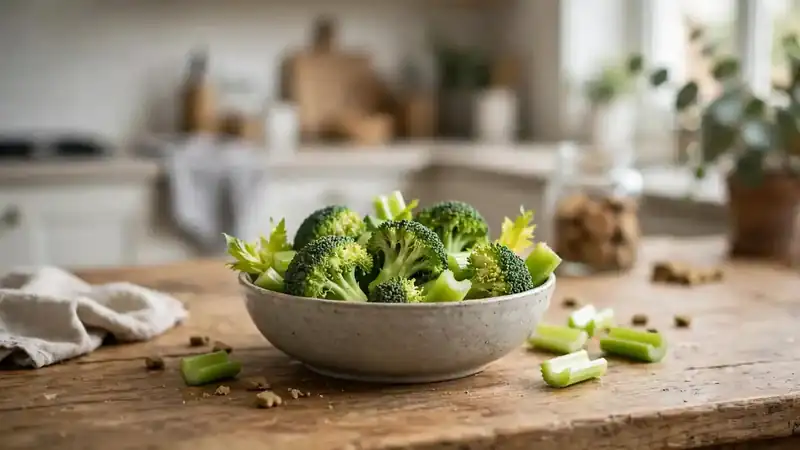
Celery is another good swap, since it is mostly water and fiber, low in calories, and freshens breath as the dog chews.
Cucumber slices give a dog crunch and hydration with almost no calories, which suits overweight dogs. Green beans give bulk without calories and work well as a training reward. All of these vegetables share one trait that dressed coleslaw lacks, which is a clean ingredient list with nothing hidden. Plain vegetables beat dressed vegetables every time, and a dog that likes crunch will take any of them.
Green beans deserve a closer look, since they come in several forms and not all of them suit dogs. Fresh or frozen green beans, chopped and steamed or raw, are fine in small amounts. Canned green beans should be the no salt kind, since canned beans often carry added sodium.
Frozen beans also work as a cool summer treat, and they give a teething puppy something safe to chew. Crunch beats cream.
Frequently asked questions about coleslaw and dogs
Coleslaw questions usually come down to the same few worries, which are the dressing question, the onion question, and the what to do question. The answers below cover those three plus the mayonnaise question, the homemade question, and the puppy question. The same rule runs through all of them: plain cabbage and carrots are fine.

Is coleslaw bad for dogs?
Coleslaw is bad for dogs when it holds dressing, onion, garlic, salt, or sugar, which most coleslaw does. Plain cabbage and carrots without dressing are safe in moderation. The dressing adds fat and salt, and onion and garlic add poison risk, so most coleslaw should stay out of the dog bowl.
Can dogs eat mayonnaise?
Dogs can eat mayonnaise in tiny amounts without poisoning, but it is a poor food for them. Mayonnaise is high in fat and calories with almost no nutrients, and regular fatty food raises the risk of weight gain and pancreatitis. A thin smear is the outer limit, and plain foods beat mayonnaise every time.
Can dogs eat homemade coleslaw?
Dogs can eat homemade coleslaw only when it holds plain cabbage and carrots with no dressing, onion, garlic, salt, or sugar. Most homemade recipes add mayonnaise, vinegar, sugar, and salt, and many add onion or garlic. A dog friendly version uses plain shredded cabbage and carrots only.
What happens if my dog eats coleslaw with onion?
A dog that eats coleslaw with onion should be watched closely for several days, since onion damages red blood cells and signs can show up late. Watch for weakness, pale gums, fast breathing, vomiting, and red colored urine. Call a vet when any sign appears, and call sooner for small dogs.
Can puppies eat coleslaw?
Puppies should not eat coleslaw. Their digestive systems are still developing, and the dressing, salt, and seasonings are harder on a puppy gut than on an adult dog. Puppies also face a higher choking risk from shredded vegetables. Stick to puppy food and vet approved treats until the dog is grown.
Can dogs eat KFC coleslaw?
Dogs should not eat KFC coleslaw or any fast food coleslaw. Fast food coleslaw is high in fat, sugar, and salt, and the full ingredient list is not always clear. Deli and restaurant coleslaw carry the same problem. Plain cabbage and carrots at home are the safer choice.
Plain cabbage and carrots are the part of coleslaw dogs can enjoy, and the dressing is the part they should skip. Onion and garlic turn a side dish into a poison risk, while mayonnaise, salt, and sugar add fat and calories a dog does not need. A two minute mix of plain shredded cabbage and carrots gives a dog the crunch without the risk. Keep the deli tub closed, and let the dog bowl stay plain. Skip it.


