The question sounds practical: can I feed my dog raw meat from the supermarket? The tray is right there, the price is fine, and raw feeding looks natural. **Do not feed your dog raw meat from the supermarket.** Grocery meat is produced, inspected, and labeled on one assumption: you will cook it before anyone eats it. Skip the cooking and your dog gets the bacteria the system expects heat to kill, plus sodium from enhanced meats and an incomplete diet if it becomes a habit. PetMD’s guide to raw meat for dogs lands in the same place: raw carries real risks, and supermarket trays add their own. This guide covers the supermarket-specific risks: why the regulations assume cooking, the ground meat problem, enhanced sodium solutions, sell-by dates and the cold chain, and the safe ways to use grocery meat.

Can I feed my dog raw meat from the supermarket?
**No. Supermarket meat is not safe to feed raw.** It can carry Salmonella, E. coli, Campylobacter, and Listeria at levels the food safety system tolerates because cooking kills them. The safe minimum internal temperatures exist for this reason: 160 degrees Fahrenheit for ground beef and 165 for all poultry. A dog that eats the meat raw skips the only safety step the product was designed around.
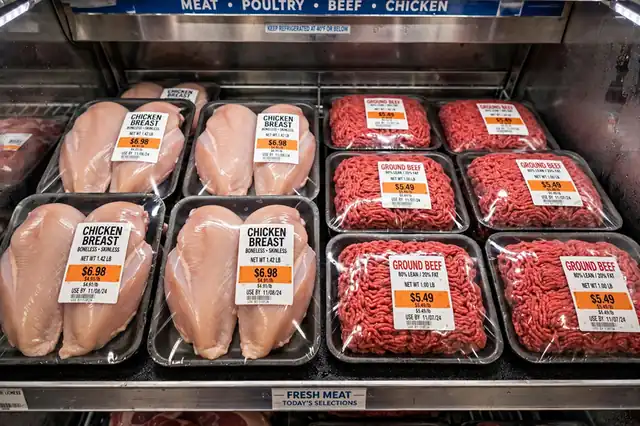
This is not the same question as raw meat for dogs in general, which covers raw feeding as a philosophy. The supermarket question is narrower and more practical: the specific tray, the specific label, the drive home. The FDA’s safe food handling guidance treats raw meat as a product that must be cooked, chilled fast, and kept away from ready-to-eat food. None of that changes because the eater has four legs. If you want to use grocery meat for your dog, cook it plain and serve it as a treat. The rest of this article explains exactly why.
Supermarket meat assumes you will cook it
**Every food safety rule for grocery meat assumes a cooking step that raw feeding skips.** Regulators permit certain bacteria levels on raw retail meat because the law requires cooking instructions on the label and sets kill temperatures. Ground beef must reach 160 degrees Fahrenheit. Poultry must reach 165. Those numbers are the system’s safety net, and feeding the meat raw removes the net entirely.

The FDA’s own testing shows what lives on raw product. In a two-year screening of over a thousand pet food samples, the agency found Salmonella in 15 of 196 raw pet food samples and Listeria in 32, a contamination rate far above any other pet food type. Retail grocery meat faces the same biology. ASPCA’s list of people foods to avoid includes raw and undercooked meat for this reason. A dog’s stomach acid is stronger than a person’s, and many dogs eat raw meat without visible illness. That tolerance is real but partial: it reduces the odds of symptoms, not the odds of exposure, and it does nothing for the people sharing the house, which matters more than most raw feeding guides admit.
Ground meat is the riskiest tray in the case
**Ground beef, ground turkey, and ground chicken carry more bacteria than whole cuts, because grinding mixes surface bacteria through the entire batch.** A steak carries its bacteria on the outside, where heat hits first. A pound of ground beef carries it everywhere, which is why the safe temperature for ground beef runs higher than for a steak. Feeding ground meat raw gives the dog the most contaminated product in the case in its most vulnerable form.

Grinding also blends meat from many animals. One tray of ground beef can contain trim from dozens of cattle, so one contaminated carcass spreads through the whole batch. Whole cuts trace to fewer animals. If a recipe or a raw feeding plan calls for ground meat from the store, that is the exact product to cook, never serve raw. Ground beef is a fine dog treat once it is cooked plain and drained. Raw, it is the loudest no in the meat case.
Enhanced meats and the sodium problem
**Many supermarket pork and poultry cuts are injected with salt water solutions, and the label says so in small print.** Look for phrases like “enhanced with up to 12 percent solution” or “contains sodium phosphate.” The solution keeps the meat juicy and heavy, which helps the store’s margins. A dog that eats enhanced meat raw gets a sodium dose its kidneys did not plan for, on top of the bacteria.

Excess sodium can cause intense thirst, and in large amounts it risks hypernatremia, a dangerous blood sodium spike with tremors and seizures. Small dogs hit the danger zone faster. The fix is label reading: choose cuts with no enhancement statement for the dog’s portion, and cook them plain. Enhanced or not, skip anything marinated, seasoned, or “flavor enhanced” with garlic or onion, both of which damage a dog’s red blood cells. Plain meat, plain cooking, nothing added.
Sell-by dates, markdown stickers, and the cold chain
**Meat near its sell-by date or wearing a markdown sticker is closer to spoilage, and the trip home is where bacteria multiply.** Bacterial growth doubles roughly every 20 minutes at room temperature. A tray that sits in a warm car for an hour arrives home with a far larger bacterial load than the label implies. The FDA’s two-hour rule applies: refrigerate meat within two hours of purchase, one hour if the air is hot.
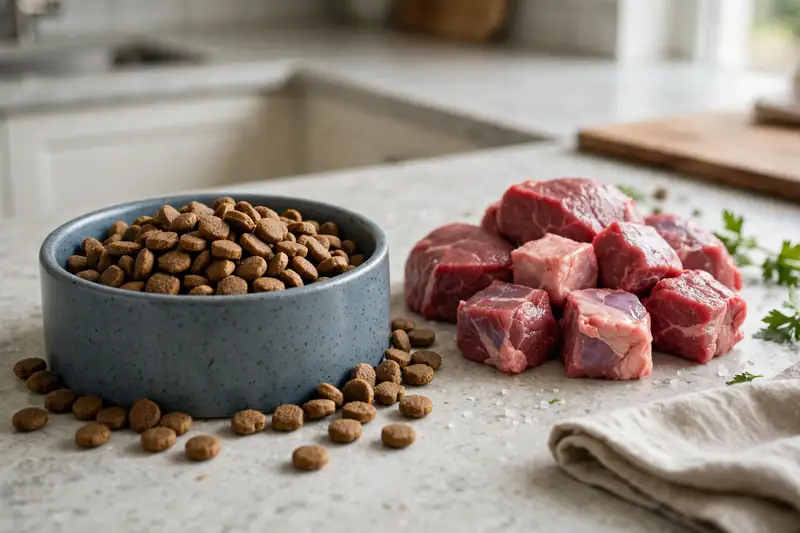
Sell-by and use-by dates mean different things. A sell-by date tells the store when to pull the tray; the meat stays good for a day or two past it if kept cold. A use-by date is the actual safety deadline. Markdown stickers almost always signal a near sell-by date. That meat is fine for tonight’s cooked dinner and a poor choice for any raw experiment. Buy the freshest tray with the latest date, bag it separately from produce, and get it into the fridge first when you unload. The cold chain from store to bowl is a safety step most raw feeding discussions never mention.
What raw supermarket meat misses nutritionally
**Supermarket trays are almost entirely muscle meat, and muscle meat alone is not a complete diet.** Dogs need calcium, and muscle meat has almost none while carrying plenty of phosphorus. A dog fed only grocery muscle meat develops a calcium phosphorus imbalance that weakens bones and teeth over weeks and months. Raw feeding done properly includes raw bone and organs in measured ratios, which a tray of chicken breasts cannot provide.

Puppies pay the highest price for an unbalanced raw diet. Growing bones need exact calcium levels, and a deficiency during growth can deform legs permanently. Adult dogs tolerate imbalance longer, which makes the damage sneakier. Commercial complete raw diets exist precisely because homemade ratios are hard to get right; they are formulated to nutritional standards and frozen for safety. A grocery tray is an ingredient, not a diet. Treat it as one.
The people in your house are at risk too
**Dogs can shed Salmonella in their stool while looking completely healthy, which puts kids and immunocompromised people at risk.** This is the complicating fact the raw feeding debate underplays. The dog eats the raw tray, feels fine, and spreads bacteria across the bowl, the floor, its face, and anyone it licks. The FDA and the CDC both warn that handling raw pet food or contact with a pet that just ate it can sicken people, naming young children, pregnant women, older adults, and anyone with a weak immune system as the highest risk group.

A household with a toddler who hugs the dog and a raw-fed dog is a risky combination no matter how healthy the dog looks. Bowls need hot soapy washing after every raw meal, hands need washing after handling, and the dog’s face needs keeping away from children’s faces. Cooking the meat eliminates this entire problem. The convenience of the grocery tray is not worth a child’s stomach infection.
Freezing does not make raw meat safe
**Freezing pauses bacterial growth but does not kill Salmonella, Listeria, or E. coli.** Both organisms survive freezing and resume activity once the meat thaws, which is why frozen products still test positive in FDA sampling. A tray that goes from the store freezer to the home freezer to the dog’s bowl raw carries the same pathogens it started with.

Freezing does kill some parasites in pork with long enough exposure, but bacteria are the main threat in grocery meat and freezing leaves them intact. Thawing adds its own risk: meat thawed on the counter spends hours in the bacterial danger zone. Thaw in the fridge, cook promptly, and never refreeze thawed raw meat for the dog. The freezer is storage, not sanitation.
If you buy supermarket meat anyway: the safe ways to serve it
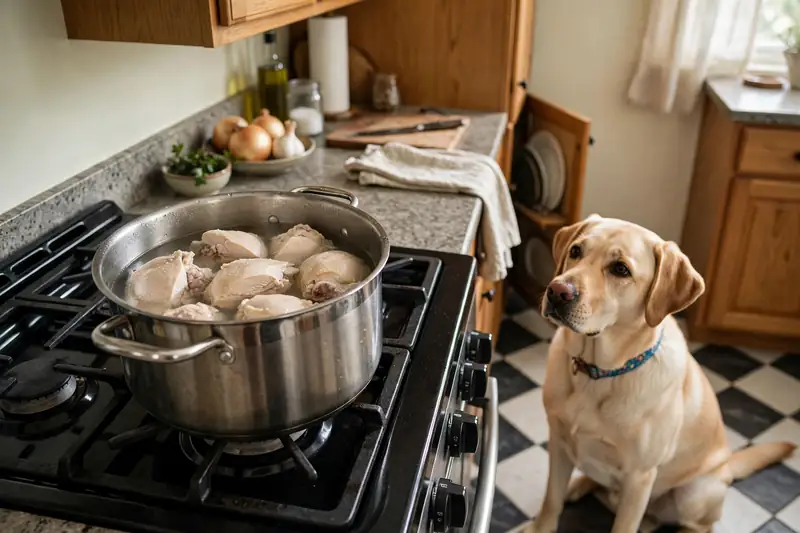
**Cook grocery meat plain and serve it as a treat, or buy a commercial complete raw diet instead.** Boiling is the simplest method: cover the meat with water, boil until cooked through, drain, and cool. How to boil chicken for dogs walks through the exact steps. No oil, no salt, no garlic, no onion, no seasoning of any kind. Baking and steaming work the same way.

Cooked grocery meat fits inside the treat budget: VCA’s feeding guidelines keep all treats under 10 percent of daily calories. If you are committed to raw feeding as a full diet, skip the grocery trays and buy a commercial complete raw diet formulated to nutritional standards, then follow strict handling hygiene. That route costs more and demands discipline, but it removes the two biggest problems with the supermarket tray: the bacteria the system expected you to cook away, and the missing nutrients. The list of human foods dogs can eat is a useful check for anything else from the grocery run.
When to call the vet
**Call the vet if your dog eats raw supermarket meat and develops vomiting, diarrhea, fever, lethargy, or bloody stool.** Many dogs show nothing, but symptoms can appear 1 to 3 days after exposure. Puppies, seniors, and dogs with weak immune systems deserve a call even with mild signs, since they dehydrate faster.
Tell the vet what the dog ate and when: the cut, whether it was ground, and how long ago. Save the packaging if you still have it, since the label helps the vet assess sodium and additives. For mild stomach upset, a bland diet for a day or two often settles things. Keep your vet’s number saved in your phone before you need it.
Frequently asked questions about supermarket raw meat for dogs
Owners usually ask about chicken, ground beef, pork, and steak from the store. The answers below cover the questions that come up most often.
Can dogs eat raw chicken from the supermarket?
Raw grocery chicken is one of the highest-risk raw meats, with frequent Campylobacter and Salmonella contamination. Cook it plain by boiling, baking, or steaming, and it becomes a fine treat. Raw chicken carries the same warning in detail.
Can dogs eat raw ground beef from the store?
Ground beef is the riskiest choice of all. Grinding spreads surface bacteria through the whole batch, and one tray can blend trim from many animals. Cook it to 160 degrees Fahrenheit, drain the fat, and serve plain.
Can dogs eat raw pork from the supermarket?
Raw pork carries bacterial risks like any grocery meat, plus a parasite risk that cooking reliably eliminates. Choose unenhanced cuts, cook them fully with no seasoning, and skip anything marinated.
Is raw steak from the grocery store safe for dogs?
A whole steak is less contaminated than ground beef, since bacteria sit on the surface, but raw is still raw. Sear or cook it through, cut it plain, and keep the portion at treat size.
Can I feed my dog raw meat from the butcher counter instead?
The butcher counter has the same biology as the tray case. Freshly ground or cut meat from a butcher is still raw meat that the safety system expects you to cook. The same rules apply: cook it plain or skip it.
My dog ate raw supermarket meat. What should I do?
Watch for vomiting, diarrhea, fever, or lethargy over the next 1 to 3 days. Most healthy adult dogs show nothing, but call your vet if symptoms appear or if the dog is a puppy, a senior, or immunocompromised. Wash the bowl with hot soapy water and wash your hands.
Raw supermarket meat earns a clear no when raw and a clear yes when cooked plain. The tray is convenient, but convenience never included a safety step for the dog. Cook it, portion it as a treat, and the grocery run stays a safe one.
Disclaimer: This article is for general information only and is not veterinary advice. Every dog is different, and dogs with health conditions, puppies, and nursing dogs may need different guidance. If you are unsure, or if your dog shows symptoms after eating raw meat, contact your veterinarian.