The name gives it away if you know the history. “Leek” comes from the Old English word “laec,” which simply meant onion, and botanists still file the leek in the onion genus as Allium ampeloprasum. Everything that makes onions dangerous to dogs comes along for the ride. Leeks carry the same sulfur compounds that damage canine red blood cells, and neither cooking, drying, nor chopping them small changes that fact.

Can dogs eat leeks? The direct answer
No, dogs cannot eat leeks in any form. Raw, cooked, dried, or powdered, leeks damage a dog’s red blood cells and can cause a dangerous anemia that shows up days after the meal. The ASPCA lists leeks as toxic to dogs, and the Pet Poison Helpline groups them with onions and garlic as allium poisons.

The allium family: leeks are onions by another name
Leeks belong to the Allium genus alongside onions, garlic, chives, shallots, and scallions. Every member of this family is toxic to dogs. Onions are toxic to dogs in all forms, and leeks share the same toxic chemistry. The VCA’s guide to allium toxicity in dogs names leeks explicitly among the plants that poison dogs.

Within the family, toxicity varies by concentration. Garlic is the most toxic allium gram for gram, with onions close behind. Leeks sit lower on the concentration scale, which tempts some owners to call them “mild.” Mild is the wrong word. Lower concentration means a dog needs to eat more leeks than garlic to reach a dangerous dose, not that leeks are safe. The mechanism is identical, and the outcome at a high enough dose is identical too.
Wild leeks deserve a mention for hikers. Ramps, the wild leek popular with foragers, grow along woodland trails in spring, and their leaves smell strongly of onion. Dogs that graze on trailside greens can eat them without anyone noticing. The same allium rules apply in the woods as in the kitchen. Keep dogs from foraging on hikes, and learn what ramps look like if you walk trails where they grow.
How leeks harm a dog’s blood
Leeks contain sulfur compounds, including N-propyl disulfide, that oxidize the hemoglobin inside a dog’s red blood cells. The damaged hemoglobin clumps into deposits called Heinz bodies, which make the cells fragile. The spleen destroys the damaged cells faster than the bone marrow replaces them. The result is hemolytic anemia: too few healthy red blood cells to carry oxygen.

The timeline is what makes allium poisoning treacherous. Heinz bodies can form within a day of eating, but the visible anemia often takes three to five days to appear. A dog can eat leeks on Thanksgiving and look perfectly normal until the weekend, then turn lethargic with pale gums and dark urine. Owners who connect the symptoms to the meal late lose treatment time. This delayed pattern is the single most important fact in the article, because it is the reason vets say to call now rather than watch and wait.
The damage is oxidative, which means the sulfur compounds attack the hemoglobin from the inside, changing its shape until the cell membrane weakens and the spleen flags the cell for destruction. Healthy bone marrow replaces red blood cells constantly, but it cannot keep up when a large dose destroys them faster than new ones mature. That gap between destruction and replacement is the anemia. Small dogs feel it first, because they have fewer cells to lose.
Some breeds react more strongly than others. Akitas, Shiba Inus, and other Japanese breeds carry a genetic trait that makes their red blood cells more vulnerable to oxidative damage, which means a smaller allium dose can trigger a bigger crisis in these dogs. Dogs with existing liver or kidney disease face a similar disadvantage, because their bodies clear toxins more slowly and their bone marrow may already be under strain. For these high-risk dogs, even a modest leek exposure deserves an immediate vet call rather than a wait-and-see approach.
Cooked, dried, or powdered: still toxic
Cooking does not make leeks safe. Boiling, roasting, frying, and slow-cooking all leave the sulfur compounds intact. Drying concentrates them, and powdered leek in a seasoning blend is the most concentrated form of all. Cooking neutralizes many plant toxins, but allium toxins are the exception: raw, cooked, dried, and powdered onion, garlic, and leeks are all dangerous.

Potato leek soup is the classic trap. The potatoes are safe, the cream is merely rich, and the leeks are the poison simmered right in. A dog that laps up spilled soup gets a meaningful allium dose in a food that smells completely harmless. The same goes for quiches, savory tarts, and any “creamy vegetable” dish where leeks melt into the background. If leeks went into the pot, the pot is off limits.
Freezing changes nothing either. A bag of frozen leeks from the grocery store carries the same compounds as the fresh bunch, and freeze-dried leek flakes in seasoning blends are simply the concentrated version. There is no preparation method that makes leeks safe, which is why the rule is about the plant, not the cooking.
How much leek is dangerous
Toxicity thresholds for onion run from half a percent of body weight up to 15 to 30 grams per kilogram. For a 30-pound dog, that is two and a half ounces. Leeks carry a lower concentration of the toxic compounds than onions, so the dangerous amount is higher, but nobody has published a leek-specific number, and dogs vary.

Small dogs reach dangerous doses with far less. Certain breeds, including Akitas and Shiba Inus, show increased sensitivity to allium ingestion, as do dogs with existing liver or kidney disease. Read how much allium it takes to harm a dog for the full weight-based math. The practical rule stays simple: any more than a trace is worth a vet call, because the dose is almost never measured when a dog steals food. Powdered forms deserve special mention here, because a teaspoon of leek or onion powder concentrates the allium load of a much larger fresh amount into a spoonful a dog can swallow in one lap.
Where leeks hide in holiday cooking
Leeks rarely appear on their own. They hide inside dishes where owners forget to check. Stuffing and dressing recipes call for leeks alongside onion. Casseroles, gratins, and savory bread puddings use them as a base flavor. Boxed stock and broth list them in the fine print. Even “vegetable” side dishes at restaurants are often built on a leek foundation.

The Thanksgiving table is peak leek season, which is why this article sits in the holiday batch. Before sharing any side dish, run the ingredient check: leeks, onion, garlic, chives, shallots, or scallions anywhere in the recipe means none for the dog. When someone else cooked and the recipe is unknown, the answer is none by default. The ASPCA’s list of people foods to avoid is the quick reference to keep on your phone.
Restaurants are a blind spot. Professional kitchens build flavor on allium bases, and a “vegetable side” can carry more leek and onion than the menu suggests. Dogs that beg at restaurants or eat dropped food under tables get mystery doses. Some baby foods also list onion powder, which matters for owners who share spoonfuls with small dogs. When you cannot verify the ingredients, the dog gets its own food, not yours.
Signs of leek poisoning and when they appear
Early signs, within the first day, look like ordinary stomach upset: vomiting, diarrhea, reduced appetite, and belly discomfort. The anemia signs arrive later, usually two to five days after eating: weakness, lethargy, pale or yellowish gums, rapid breathing, and dark or reddish urine. Collapse can follow in severe cases.
The two-phase pattern explains why owners get fooled. Phase one looks like any dietary indiscretion and often resolves on its own, which convinces people the danger has passed and the dog is fine. Phase two is the real poisoning, arriving silently days later when nobody is watching anymore, which is exactly why the calendar matters more than the dog’s current mood.

There is no antidote for allium poisoning. Treatment is supportive: the vet may induce vomiting if the ingestion was recent, give activated charcoal, provide IV fluids and oxygen support, and transfuse blood in severe anemia. The earlier treatment starts, the better the outcome, which is why the delayed symptoms make early calling so important. A dog that ate leeks three days ago and seems “a bit tired” today needs bloodwork, not rest.
Bloodwork tells the story the eyes cannot. The vet checks the red blood cell count and looks for Heinz bodies under the microscope, which confirm oxidative damage. A falling count over repeated tests shows the anemia is still developing, which guides how aggressive treatment needs to be. This is also why the vet wants to know the ingestion date: the numbers mean different things on day one versus day four. Bring every detail you have, including the recipe if leeks came inside a cooked dish.
My dog ate leeks: what to do right now
Call your vet immediately, even if the dog seems fine. Allium poisoning is the textbook case for calling before symptoms, because the worst damage is days away and early treatment prevents it. Report the dog’s weight, the amount eaten, whether the leeks were raw or cooked, and the time of ingestion. Write it down; panicked owners forget details.

If the vet advises it and the ingestion was within the last hour or two, they may induce vomiting at the clinic. Do not do this at home without direction. Then comes the watch period: monitor appetite, energy, gum color, and urine color for at least five days. Pale gums, unusual tiredness, or dark urine at any point in that window mean the vet needs to see the dog that day. Save the recipe or packaging so the vet knows exactly what else was in the dish.
Learn what healthy gums look like before you need the comparison. Press a finger gently against the gum; the color should blanch white and return to pink within two seconds. Pale, yellowish, or slow-to-refill gums are warning signs worth a same-day call. Check the urine too, since dark or reddish urine signals red blood cells breaking down. These two checks take thirty seconds and give the vet far better information than “he seems tired.”
Safe vegetable swaps for leek lovers
Dogs do not need leeks, and plenty of vegetables scratch the same itch. Celery gives the same savory crunch in soups and stuffing-style dishes. Carrots bring sweetness and beta-carotene. Green beans work as a cooked vegetable side. Plain cooked potatoes without leeks, butter, or seasoning make a fine holiday share.

The swap strategy is the same one that works across the holiday table: set the dog’s portion aside before seasoning. Plain vegetables, cooked without onion, garlic, leeks, butter, or salt, are safe in small amounts. Once the dish is built for human taste, it stays a human dish. For the full safe list, keep the human foods that are safe for dogs page bookmarked through the season.
Frequently asked questions about leeks and dogs
Owners ask about cooked leeks, soup, wild ramps, and garden plants more than anything else. The answers below cover the leek questions that come up most, from the kitchen to the vegetable patch, and the delayed symptoms owners should watch for.
Are cooked leeks safe for dogs?
No. Cooking does not destroy the toxic sulfur compounds in leeks. Boiled, roasted, or fried leeks are just as dangerous as raw.
Can dogs eat leek greens or just the white part?
Neither. All parts of the leek plant are toxic to dogs, including the green tops and the white stalk.
My dog licked potato leek soup. Should I worry?
A single lick is a tiny dose and most likely harmless, but soup delivers leeks efficiently, so watch the dog. If it was more than a lick, call your vet because of the delayed anemia risk.
How long after eating leeks do symptoms appear?
Stomach upset can start within a day, but anemia signs like pale gums and lethargy often take two to five days. Monitor for at least five days after any ingestion.
Are leeks growing in my garden dangerous?
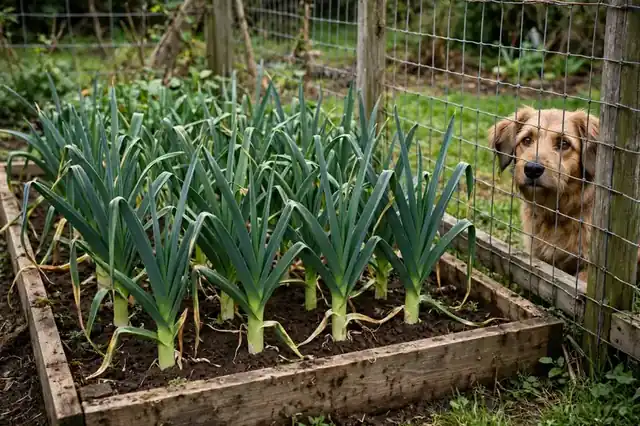
Yes. Dogs that dig or chew garden plants can eat leek leaves or bulbs. Fence off the vegetable patch or supervise garden time, especially with curious puppies. This goes for the whole allium bed: onions, garlic, and shallots growing nearby carry the same risk.
Is leek powder in seasoning safe?
No. Dried and powdered forms concentrate the toxic compounds. Check seasoning blends and stock powders for leek, onion, or garlic powder.
Which is more toxic: leeks, onions, or garlic?
Garlic is the most toxic per gram, followed by onions, with leeks lower in concentration. All three can poison a dog at a high enough dose, so the ranking changes nothing about the rule.
Leeks are the quiet member of the onion family, and quiet is what makes them dangerous. They slip into soups, stuffings, and side dishes without announcing themselves, and their worst damage arrives days after the meal. Treat every allium the same: none for the dog, in any form, ever. The vegetables on the safe list are long enough that no dog will miss the leek.
Disclaimer: This article is for general information only and is not veterinary advice. If your dog eats leeks, call your veterinarian promptly, even if no symptoms have appeared yet.