
Cranberries show up everywhere once fall arrives. Sauce on the holiday table, dried berries in trail mix, juice in the fridge. And dogs notice. The answer is reassuring for plain fresh cranberries: yes, dogs can eat them in small amounts. Cranberries are not toxic to dogs, they are low in calories, and the tart taste usually stops a dog from eating many. The forms most people buy are the problem. Dried cranberries carry added sugar, cranberry juice cocktail is mostly sweetened water, and canned sauce is dessert. The sections below sort out which forms are safe, how much to serve by dog size, and what the science says about the urinary health claim.

Can dogs eat cranberries? The short answer
Yes, dogs can eat plain fresh cranberries in small amounts. Cranberries are not toxic to dogs and add a little fiber and antioxidants to a treat. The sour taste usually limits how many a dog will eat. Sweetened dried berries, juice, and sauce are different foods entirely, and those are the ones to watch.
The ASPCA lists cranberry as non-toxic to dogs, and the AKC guide to human foods dogs can and cannot eat includes cranberries among the fruits that are fine in small portions. A cup of fresh cranberries holds only about 50 calories, so a few berries barely register in a dog’s daily budget. The tartness does most of the portion control for you, since many dogs try one berry, make a face, and walk away. Some dogs genuinely like the taste, though, so you still need a serving limit. Cranberries work as an occasional treat, not a dietary staple. If your dog raids the fruit bowl regularly, the list of human foods dogs can eat is the quick reference for what else is safe to share.
How to serve cranberries safely
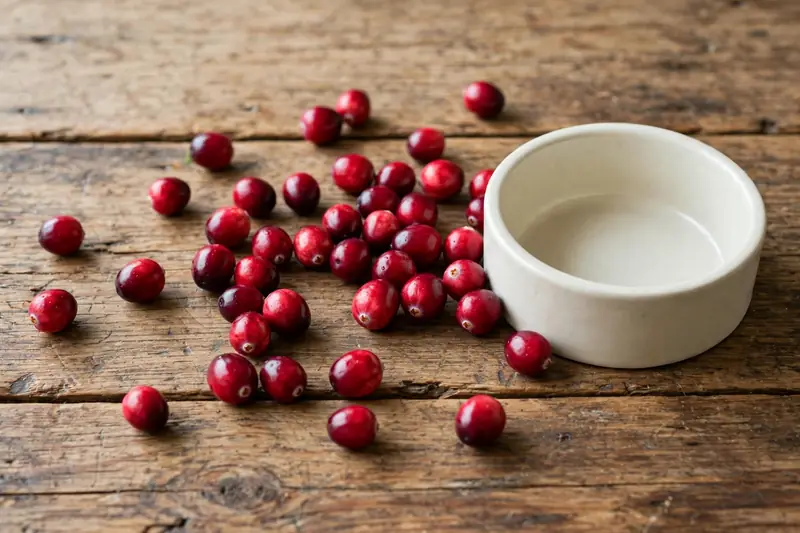
Wash fresh cranberries, then chop or halve them for small dogs and feed only a few at a time as an occasional treat. Frozen cranberries work too and make a cooling snack on a hot day. Skip any berries that are soft, moldy, or mixed into trail mix with raisins, chocolate, or nuts.
Washing matters because cranberries are grown in bogs and sprayed like other commercial fruit. Whole cranberries are firm and round, which makes them a mild choking hazard for tiny dogs and enthusiastic gulpers. Halving or chopping them takes seconds and removes the risk. Frozen berries are fine straight from the freezer for larger dogs, and many owners use them as a slow, crunchy enrichment treat in summer.
Moldy berries deserve a firm no. Spoiled fruit can carry mycotoxins, the same reason moldy food in general is kept away from dogs. Trail mix is the bigger trap. Dried cranberries in trail mix often sit next to raisins, chocolate chips, and macadamia nuts, and all three of those are dangerous for dogs. Raisins and grapes can cause kidney failure in dogs, as the grape safety guide explains. If your dog gets into trail mix, identify everything in the mix before deciding how worried to be.

How much cranberry is safe by dog size
Keep cranberries within the 10 percent treat rule. A small dog gets one to two teaspoons of chopped berries, a medium dog about a tablespoon, and a large dog up to two tablespoons, a few times a week. Offer a smaller test portion first and watch your dog’s stomach for a full day.
The 10 percent rule means treats should stay under a tenth of daily calories, because every treat calorie replaces a calorie of balanced dog food. Cranberries are light, so the amounts below look small but fit easily inside that budget.
| Dog size | Safe amount of fresh cranberries | Frequency |
|---|---|---|
| Small (under 20 lbs) | 1 to 2 teaspoons, chopped | A few times a week |
| Medium (20 to 50 lbs) | About 1 tablespoon | A few times a week |
| Large (over 50 lbs) | Up to 2 tablespoons | A few times a week |
The first time, give half the amount in the table. Cranberries are acidic, and some dogs get loose stool from a new fruit even in small amounts. Wait a full day before serving more. If the stool stays normal, the table amounts are fine going forward. If your dog gets gassy or loose, cut the portion in half or drop cranberries from the rotation. Dogs vary more than charts do.

Fresh vs dried vs juice vs sauce
Fresh cranberries are the only form worth feeding. Dried cranberries usually contain added sugar, juice cocktail is mostly sweetened water with little real fruit, and canned sauce is dessert-level sugar. The sugar is the real problem in all three, and some sugar-free dried berries hide xylitol.
Fresh cranberries are tart because they are naturally low in sugar, which is exactly why they work as a dog treat. Processing changes the math completely.
| Form | What it really is | Verdict for dogs |
|---|---|---|
| Fresh cranberries | Whole berries, no additives | Safe in small amounts |
| Dried cranberries | Usually 25 to 30 percent added sugar by weight | Skip; too much sugar |
| Cranberry juice cocktail | About a quarter real juice, rest sweetened water | Skip; no real benefit |
| Canned cranberry sauce | Jellied or whole-berry, very high sugar | Skip; dessert, not dog food |
| 100 percent unsweetened juice | Real juice, very tart and acidic | Not useful; offer water instead |
Dried cranberries need the closest look because they look the most like a healthy snack. Manufacturers add sugar to dried cranberries because unsweetened dried cranberries are almost too sour for people to eat. A small bag can hold as much sugar as a candy bar. Always read the ingredient list on dried fruit before sharing. If your dog enjoys berries in general, blueberries are the easier choice: sweeter, simpler, and sold fresh without added sugar.
Cranberry juice cocktail earns its place on the avoid list because owners assume juice equals fruit. Most cranberry juice cocktail is about one-quarter juice and three-quarters water and sweeteners. Canned cranberry sauce, jellied or whole-berry, is a holiday dessert with a fruit name, and a single serving can hold more sugar than a dog should get in a day.
Xylitol is the serious one. This sugar alcohol shows up in sugar-free dried cranberries, sugar-free cranberry juice, and some cranberry gummies. In dogs, xylitol triggers a rapid insulin release that drops blood sugar fast, and larger amounts can damage the liver. A dog that eats a xylitol-sweetened product needs a vet call right away, not a wait-and-see approach. Cranberry supplements and chews marketed for dogs sit in a gray zone: their doses are not established for dogs, and the products are not regulated like medicines. Ask your vet before using one rather than guessing at a dose.

The urinary health myth
Cranberry does not treat urinary tract infections in dogs, and there is no strong evidence it prevents them. The idea comes from human studies of compounds that may stop bacteria from sticking to the bladder wall. A dog with UTI signs needs a vet visit, and usually antibiotics, not cranberry.
The compound behind the story is a group of plant chemicals called proanthocyanidins. In laboratory and some human studies, these compounds appear to make it harder for certain bacteria to cling to the urinary tract lining. Human trial results are mixed, and the dog research is far thinner: a few small studies, no agreed dose, no proof of prevention. Cranberries also make urine slightly more acidic, which some owners mistake for a treatment effect. Acidity alone does not clear an infection.
This matters because UTIs are painful and can climb to the kidneys if ignored. The signs are frequent urination, straining, blood in the urine, cloudy or strong-smelling urine, and accidents in a house-trained dog. The AKC’s guide to cranberries for dogs describes how vets diagnose them with a urine test and treat them, usually with antibiotics. Cranberry as a food treat is fine for a healthy dog. Cranberry as medicine for a sick dog is not.

Real benefits of cranberries for dogs
Cranberries offer antioxidants, a little fiber, and small amounts of vitamin C and manganese. The practical benefit is modest: a low-calorie, tart treat that adds variety. Dogs make their own vitamin C, so that part of the label is not a reason to feed them.
The antioxidant content is the most genuine plus. Cranberries carry anthocyanins and quercetin, the same plant compounds that give them their deep red color. Antioxidants help the body handle everyday oxidative stress, and getting some from whole foods beats getting none. The fiber contribution is small but real: about 2 grams per half cup of fresh berries, which supports normal digestion. The fiber guide for dogs explains how fiber fits into a dog’s diet and which sources work best.
Two label claims deserve a reality check. Vitamin C looks impressive on cranberry packaging, but dogs synthesize their own vitamin C in the liver, so dietary vitamin C is not essential for them the way it is for people. Veterinary references such as the Merck Veterinary Manual note this difference between dogs and people. Manganese is a genuine trace mineral need, and cranberries contain some, but the amounts in a few berries are tiny next to what balanced dog food provides. None of this makes cranberries a health food, but they are a reasonable occasional treat.

Risks and side effects to watch for
Too many cranberries at once can cause vomiting, diarrhea, or gas. Cranberries also contain oxalates, so dogs prone to calcium oxalate bladder stones should only get them if their vet agrees. Sweetened forms add empty calories that work against weight control.
The stomach upset is the common one and it is dose-dependent. A handful of berries is fine for most dogs; a whole bag raided from the pantry is not. Cranberries are acidic and fibrous, and a large amount at once can irritate the gut. Vomiting or diarrhea that clears within a day usually just needs a bland meal and water. Anything lasting longer than 24 hours, or paired with lethargy or belly pain, looks like gastroenteritis and earns a vet call.
Oxalates need attention for a smaller group of dogs. Cranberries contain oxalic acid, which can contribute to calcium oxalate stone formation in dogs already prone to them. If your dog has a history of bladder stones, check with your vet before adding cranberries to the treat rotation. Dogs with kidney disease should also get the vet’s approval first, since their diets are carefully balanced for minerals. Diabetic dogs should stick to fresh berries only and skip anything sweetened, since the sugar in processed forms complicates blood sugar control.

Feeding cranberries to puppies and senior dogs
Healthy puppies over four months old can try one or two chopped cranberries as a rare treat. Senior dogs can follow the adult portions in smaller amounts. Skip cranberries for any dog with a history of urinary stones or kidney trouble unless the vet approves.
Puppies digest new foods less reliably than adult dogs, so the test portion rule matters more for them. One or two chopped berries, then a full day of watching, is the right start. Many puppies reject cranberries on tartness alone, which is a fine outcome. Keep cranberries rare for puppies rather than making them a training staple; tiny puppy treats give the same reward with portions built for small stomachs.
Senior dogs follow the adult rules with the amounts trimmed down. Older dogs burn fewer calories, so the 10 percent treat budget shrinks with them, and two tablespoons becomes a bigger share of the day for a senior than for a young adult. Seniors on prescription diets for urinary, kidney, or liver conditions need the vet’s word first, since those diets control minerals and protein precisely and a new treat can work against the formulation. For a healthy senior on regular adult food, a few chopped berries a couple of times a week need no special fuss.

When to call the vet
Call your vet if your dog eats sweetened cranberry products in quantity, anything containing xylitol, raisins, or chocolate, or vomits or has diarrhea for more than 24 hours. Straining to urinate, blood in the urine, or repeated indoor accidents need a same-day vet visit.
Xylitol ingestion is the true emergency on this list. If the package lists xylitol, birch sugar, or wood sugar in the ingredients, call your vet immediately and have the package in hand, since the amount eaten guides the treatment. Do not try to make your dog vomit unless the vet tells you to. Raisins and chocolate from a raided trail mix are the next tier: both have their own toxicity thresholds, and the vet needs to know exactly what and how much was eaten.
Plain cranberries rarely cause emergencies, but volume matters. A small dog that eats a full bag of fresh berries may vomit repeatedly just from the acid and fiber load. Watch for dehydration signs like dry gums and lethargy, and call if vomiting continues. For urinary signs, skip the home remedies entirely. Straining, blood, or new accidents point to an infection or stones, and both need diagnosis, not cranberry. For after-hours worries, the ASPCA Animal Poison Control line is the resource most vets recommend.

Frequently asked questions about dogs and cranberries
Most owners ask whether cranberries are toxic, which forms are safe, and whether the urinary health claims hold up. The answers below cover the questions that come up most often. Your vet’s guidance wins for any dog with a medical condition.

Are cranberries toxic to dogs?
No. Cranberries are not toxic to dogs, and the ASPCA lists them as non-toxic. The danger comes from what rides along with them: xylitol in sugar-free products, raisins or chocolate in trail mix, and the sheer sugar in juice and sauce. Plain fresh berries are the safe form.
Can dogs eat dried cranberries?
Only plain unsweetened dried cranberries, and only a few. Most dried cranberries sold in stores contain added sugar, and some sugar-free versions use xylitol, which is toxic to dogs. Read the ingredient list every time. Fresh berries are simpler and safer.
Can dogs drink cranberry juice?
Cranberry juice cocktail is not a good idea. It is mostly sweetened water with little real fruit, and the sugar adds empty calories. Unsweetened 100 percent juice is very tart and acidic with no proven benefit for dogs.
Do cranberries help dogs with UTIs?
There is no strong evidence that cranberries treat or prevent urinary tract infections in dogs. The claim comes from limited human research. A dog showing UTI signs needs a vet diagnosis and usually antibiotics. Feeding cranberry instead of getting treatment lets an infection get worse.
How many cranberries can my dog eat per day?
Think in weekly treats, not daily servings. Small dogs get one to two teaspoons of chopped berries, medium dogs about a tablespoon, large dogs up to two tablespoons, a few times a week. Start with less the first time and watch your dog’s stomach for a day.
Can puppies eat cranberries?
Healthy puppies over four months old can try one or two chopped cranberries as a rare treat. Introduce them slowly like any new food and watch for loose stool. If your puppy dislikes the tart taste, there is no reason to push it.
Are cranberry supplements safe for dogs?
There is no established safe dose of cranberry supplements for dogs, and the products are not regulated like medicines. Some contain added ingredients that are not dog-safe. Talk to your vet before using any cranberry supplement rather than guessing at a dose.
Cranberries earn their yes when they are fresh, plain, chopped for small dogs, and kept at treat size a few times a week. Dogs prone to oxalate stones, dogs with kidney disease, and dogs with sensitive stomachs should skip them. Everything sweetened, juiced, or sauced belongs to people, not dogs.


