
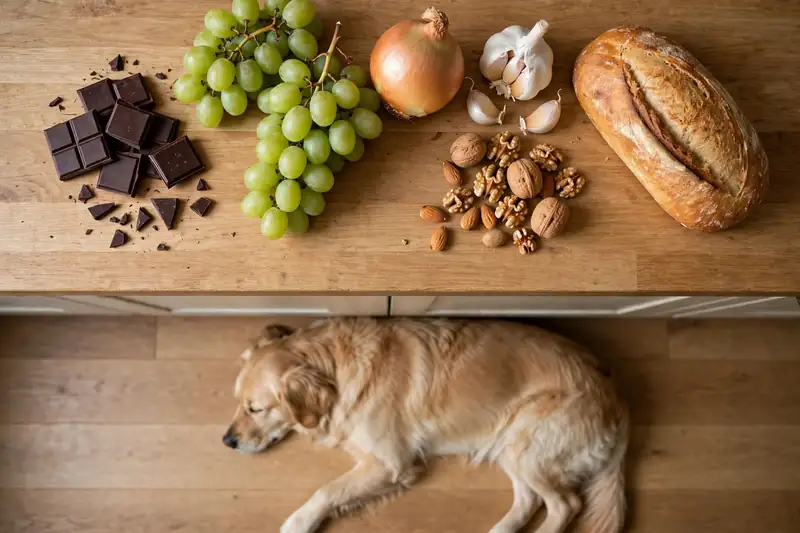
Most dogs will eat almost anything that hits the floor. That is the problem, because some of the most ordinary foods in a kitchen can poison a dog. Chocolate, grapes, onions, xylitol sweetener, macadamia nuts, coffee, alcohol, cooked bones, raw bread dough, avocado pits, and heavily salted snacks all carry real danger. The trouble is that dogs process many of these foods differently than people do. A snack that does nothing to you can shut down a dog’s kidneys, drop its blood sugar to lethal levels, or shred its red blood cells. This guide lists the 14 foods and ingredients that matter most, explains exactly why each one is dangerous, lays out the symptoms to watch for, and tells you what to do if your dog eats one. Bookmark it. One day it may save your dog’s life.

Foods toxic to dogs: the complete list
The short answer is that 14 foods account for almost every food-poisoning case vets see: chocolate, cocoa, xylitol, grapes, raisins, onions, garlic, macadamia nuts, alcohol, coffee, cooked bones, raw yeast dough, avocado pits, and salty snacks. Some kill quickly in small amounts, like xylitol and grapes. Others are dangerous over time, like onions and garlic.
Not every item on this list is equally dangerous, and knowing the tiers helps you react with the right urgency. At the top sit xylitol and grapes: both can turn lethal from amounts a dog might grab in seconds. Chocolate and alcohol sit just below, where the dose and the size of the dog decide the outcome. Onions and garlic work slowly, damaging red blood cells over days, which makes them easy to underestimate. Cooked bones and raw dough cause physical damage: splinters, blockages, and stomach expansion. The rest of this guide walks through each one in plain language.
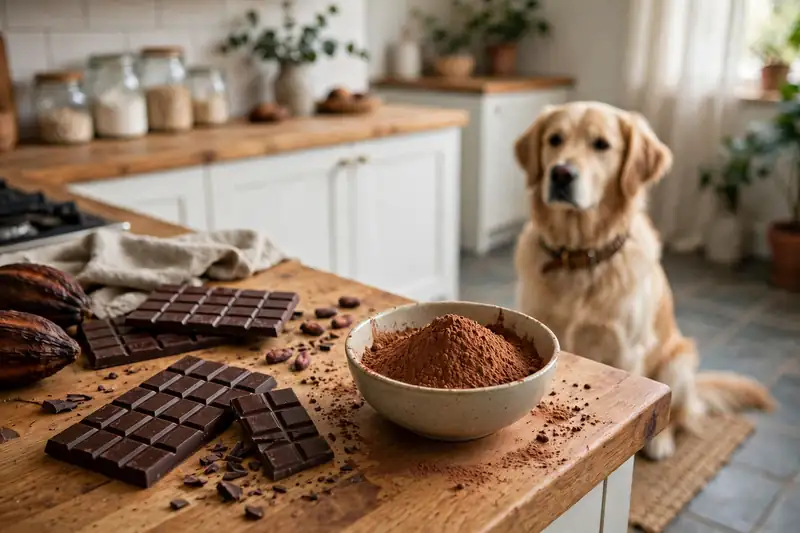
Chocolate: why theobromine is so dangerous for dogs
Chocolate contains theobromine, a stimulant dogs break down far more slowly than people do. While the stimulant sits in a dog’s system, it overdrives the heart and nervous system. Dark chocolate and cocoa powder hold the most theobromine, milk chocolate far less, and white chocolate barely any at all.
The rule of thumb vets use is simple: darker means deadlier. A single square of baking chocolate can seriously poison a small dog, while the same dog might tolerate a few bites of milk chocolate with nothing worse than an upset stomach. Cocoa powder is the sneakiest form, because a small amount of powder carries a large dose of theobromine. Cocoa mulch in gardens is worth knowing about too, since dogs eat it and it contains the same compound.
Chocolate poisoning signs usually show up within 6 to 12 hours: restlessness, vomiting, diarrhea, rapid breathing, muscle twitching, and in bad cases seizures or heart failure. The dose math depends on the dog’s weight and the type of chocolate, which is why a vet visit is the right move even when you are unsure. If the chocolate involved was a white chocolate bar, the theobromine risk is low but the fat and sugar can still upset a sensitive stomach. Our guide on white chocolate breaks down that specific case.
The VCA Hospitals guide to chocolate poisoning in dogs has the full breakdown of toxic doses by chocolate type and dog weight, and it is worth reading before an emergency ever happens.
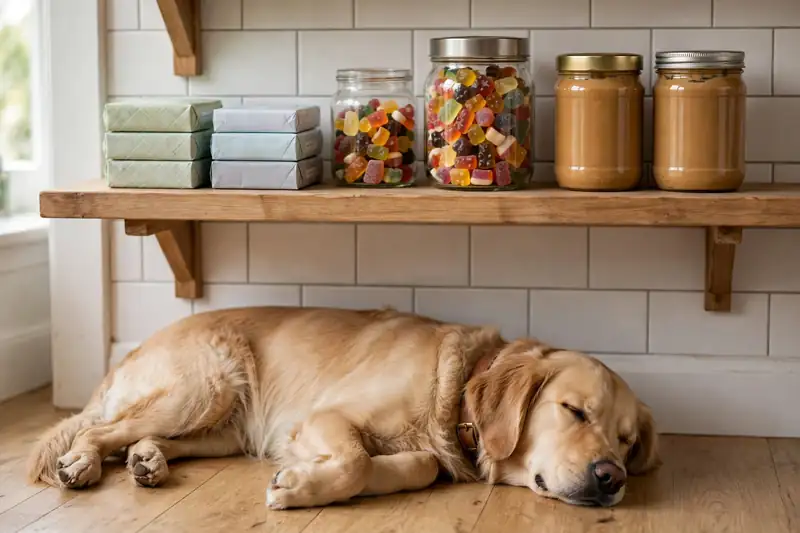
Xylitol: the sweetener that can kill a dog fast
Xylitol is a sugar alcohol used in sugar-free gum, candy, mints, some peanut butters, toothpaste, and baked goods. In dogs it triggers a massive insulin release, which crashes blood sugar within 10 to 60 minutes. In larger doses it destroys liver cells, and liver failure can follow within days.
Speed is what makes xylitol the most dangerous item on this list. A single piece of xylitol gum can poison a small dog. The first signs are vomiting and weakness, then collapse, tremors, and seizures as blood sugar bottoms out. Liver failure shows up later: yellowing gums, dark urine, and bleeding problems. Every minute matters here, and home remedies are not enough. This is a straight-to-the-emergency-vet situation, no waiting to see how it goes.
Check labels before your dog gets a taste of anything sugar-free. Xylitol hides under other names too, including birch sugar and E967. Peanut butter deserves a special check, since some brands market xylitol-sweetened versions as low sugar. The Merck Veterinary Manual covers food hazards including xylitol toxicity in clinical detail.
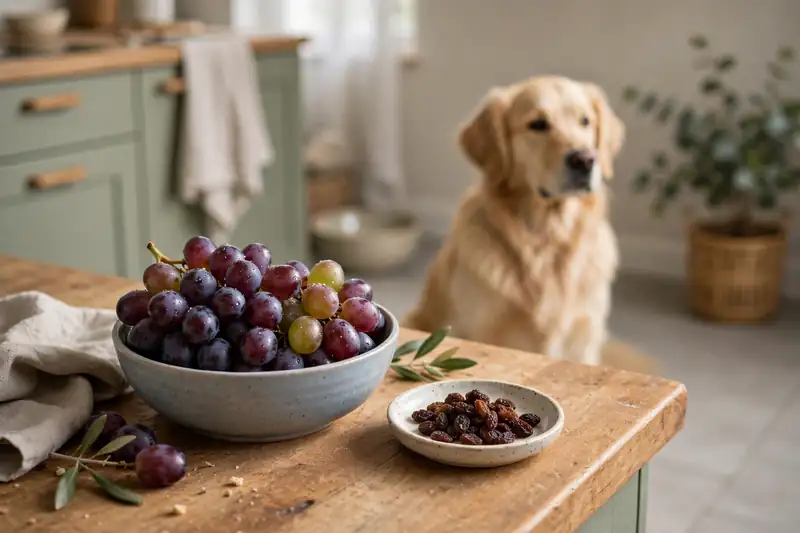
Grapes and raisins: small fruit, kidney failure risk
Grapes and raisins can cause sudden kidney failure in dogs, and vets still do not know exactly which compound is responsible. What they know is that there is no safe amount. One dog might eat a bunch and seem fine while another goes into kidney failure from a handful.
That unpredictability is the scary part. There is no dose threshold to lean on, no breed that is immune, and cooking or drying does not reduce the danger. Raisins are simply concentrated grapes, so they carry the same risk in a smaller package. Sultanas and currants count too.
Symptoms often start with vomiting and lethargy within a few hours, then progress to loss of appetite, belly pain, and little or no urination as the kidneys shut down. Kidney damage can show up one to three days after the grapes were eaten, which is why waiting to see symptoms is the wrong strategy. If your dog ate any grapes at all, call your vet right away. For the full breakdown of this specific fruit, read our guide on grapes.
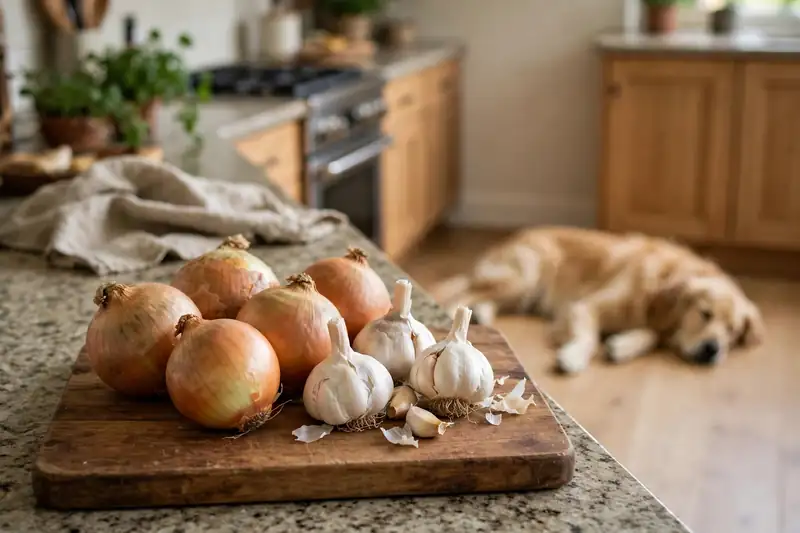
Onions and garlic: the allium problem
Onions, garlic, leeks, chives, and shallots all contain compounds that destroy a dog’s red blood cells. The damage builds over days, so a dog that ate onion on Monday can look fine until Thursday, then show up weak, pale, and short of breath.
This slow timeline is why allium poisoning gets missed. Owners do not connect the collapse to the food from days ago. All forms are dangerous: raw, cooked, powdered, and dehydrated. Onion powder in baby food, seasoning blends, and gravy counts just as much as a raw onion slice. Garlic is more concentrated than onion, so smaller amounts do more damage.
The amount that causes trouble is lower than most people expect. Roughly 15 to 30 grams of onion per kilogram of body weight can cause visible damage, which works out to about one medium onion for a 40-pound dog, and less for small dogs. Signs include weakness, pale or bluish gums, rapid breathing, dark or reddish urine, and collapse. Treatment is supportive care at the vet, and recovery can take weeks because red blood cells need time to rebuild. Garlic earns its own deep dive in our article on garlic, and the dosing math for onions is in our guide on how much onion is toxic to dogs.
Macadamia nuts: weakness, vomiting, and tremors
Macadamia nuts are the one nut with proven toxicity in dogs. The exact toxin is still unidentified, but the pattern is consistent: weakness in the back legs, vomiting, tremors, fever, and belly pain, usually starting within 12 hours of eating them.
A handful can be enough. Dogs typically recover with supportive care within 24 to 48 hours, which makes macadamia poisoning less deadly than the items above, but it is still a vet visit. The nuts often come inside cookies and chocolates, which stacks a second poison on top of the first. Other nuts like walnuts and pecans are not technically toxic in the same way, but they are fatty enough to trigger pancreatitis, so keep all nuts out of reach.

Alcohol and coffee: poisons for the nervous system
Alcohol depresses a dog’s nervous system the same way it does a person’s, except the dog’s body is smaller and handles it worse. Beer, wine, liquor, and even fermented foods can cause vomiting, disorientation, collapse, coma, and death in severe cases. Dogs also absorb alcohol through the skin, so spilled drinks on paws are worth wiping off.
Coffee and caffeine work in the opposite direction: they overstimulate. Coffee grounds, tea, energy drinks, and caffeine pills can cause restlessness, rapid heart rate, tremors, and seizures. Used coffee grounds from the trash are a classic source, because dogs find them interesting and owners assume the grounds are spent and harmless. They are not.
Both are emergencies in larger amounts. A dog that lapped spilled wine will likely be fine but should be watched. A dog that ate a bag of coffee grounds needs the vet now. The ASPCA list of people foods to avoid feeding your pets covers both of these alongside the other items in this guide.

Cooked bones, raw dough, avocado, and salty snacks
These four cause trouble through physics and chemistry rather than classic poisoning. Cooked bones splinter. Raw dough expands. Avocado pits block. Salt in bulk poisons.
Cooked bones, especially poultry bones, break into sharp shards that can cut the mouth and throat or puncture the gut. Never feed cooked bones of any kind. Raw bones are a separate debate among vets, but cooked ones are unanimously out. Our guide to chicken bones covers exactly what to do if your dog already grabbed one.
Raw yeast dough keeps rising in the warm stomach, which can bloat the belly painfully and, in large dogs, twist it. Fermenting yeast also produces alcohol, so the dog gets drunk on top of bloated. Already baked bread is a different story from raw dough.
Avocado flesh is the mild part. The real danger is the pit, which is a perfect choking and blockage size, and the leaves and bark, which carry a toxin called persin. Guacamole adds onion and garlic to the mix. The details are in our avocado guide.
Salt in normal amounts is fine, but a large salty snack binge can cause salt poisoning: extreme thirst, vomiting, tremors, and seizures. Homemade play dough and rock salt are the usual culprits rather than table food.

Signs of poisoning and what to do right now
The short answer is that poisoning signs vary by food but follow a pattern: stomach trouble first, then whole-body signs. Vomiting and diarrhea come first in most cases. After that, watch for lethargy, weakness, loss of appetite, tremors, seizures, pale gums, trouble breathing, collapse, or little to no urination.
Time matters more than certainty. Do not wait to see if symptoms appear, because the most dangerous poisons do their damage before you notice anything. Call your vet or the ASPCA Animal Poison Control Center at (888) 426-4435 the moment you realize your dog ate something from this list. Have the packaging ready, estimate how much was eaten and when, and know your dog’s weight. That information decides the treatment plan.
Do not make your dog vomit unless a vet tells you to. Vomiting helps with some poisons and makes others worse, and it can cause choking or aspiration. The AKC guide to human foods dogs can and cannot eat is a solid reference for what is safe in the first place. If a vet does advise vomiting, our guide on how to induce vomiting in dogs walks through the safe method. Never use salt water to induce vomiting. It does not work reliably and salt itself is toxic in quantity.

How to keep your dog safe from toxic foods
Prevention beats emergency care every time, and it comes down to habits rather than one big change. Keep this short answer in mind: store risky foods out of reach, train a reliable leave it, and know the emergency numbers by heart. Those three habits cover almost every scenario in this guide.
Start with storage. Counter surfing is how most poisonings happen. Chocolate, grapes, onions, and xylitol products belong in closed cabinets, not on counters or low tables. Trash cans need lids or need to live behind a closed door, since coffee grounds, food wrappers, and bones all sit in the trash. During holidays, put the candy bowl where no dog can reach it, and warn guests not to share plates.
Train “leave it” until it is automatic. A dog that drops food on command gives you a safety net for every walk, park visit, and dropped grocery. Practice with boring food first and build up. It takes weeks, but it is the single most useful command for a dog that eats first and thinks later.
Keep two numbers on your fridge: your vet’s number and the ASPCA Poison Control number, (888) 426-4435. The hotline charges a consultation fee, but it is staffed around the clock and it is the fastest way to get a poison-specific plan. When in doubt about any human food, check the master list on what human food dogs can eat before sharing a bite.

Frequently asked questions
What is the most dangerous food for dogs?
Xylitol is the fastest killer on this list because a tiny amount can crash blood sugar within an hour, and larger doses destroy the liver. Grapes rank next for unpredictability, since there is no known safe amount and some dogs develop kidney failure from a handful. Chocolate is the most common poisoning vets treat, but its danger depends on the type and the dose.
My dog ate one grape. Should I panic?
Do not panic, but do call your vet right away. There is no safe number of grapes because sensitivity varies so much between dogs. Your vet will likely advise bringing the dog in for decontamination and monitoring. The cost of an unnecessary visit is far lower than the cost of missed kidney failure.
Can a small amount of onion really hurt my dog?
Yes. The damage from onions and garlic builds up over days as red blood cells break down, so small amounts eaten repeatedly are just as dangerous as one big dose. Onion powder in sauces and seasoning counts too. A dog that raids seasoned leftovers several days in a row can end up anemic.
How long does it take for poisoning symptoms to appear?
It depends on the food. Xylitol can cause collapse within 10 to 60 minutes. Chocolate signs usually show in 6 to 12 hours. Onion damage may not show for 2 to 4 days. Grape-related kidney failure can appear 1 to 3 days later. That delay is exactly why you should call the vet immediately instead of waiting for symptoms.
Should I make my dog vomit at home?
Only if your vet tells you to. Vomiting helps with some poisons and worsens others, and doing it wrong can cause choking or aspiration pneumonia. Call your vet or poison control first, have the packaging and your dog’s weight ready, and follow their instructions exactly.
Is white chocolate really less dangerous than dark?
For theobromine poisoning, yes. White chocolate contains almost no theobromine, so it will not cause chocolate poisoning. It can still cause vomiting or diarrhea from the fat and sugar, and a large amount can upset a sensitive stomach. Milk chocolate sits in the middle, and dark chocolate and cocoa powder are the most dangerous.
Are apple seeds or cherry pits toxic to dogs?
Apple seeds and cherry pits contain amygdalin, which converts to cyanide when chewed. A dog would need to chew a lot of seeds to be poisoned, since swallowing them whole passes them through mostly intact. The pits are also a choking and blockage risk. Keep both out of reach, but do not panic over one swallowed pit.
What is the poison hotline number for dogs?
The ASPCA Animal Poison Control Center is (888) 426-4435, open 24 hours. There is a consultation fee. Have the product packaging, the amount eaten, the time it happened, and your dog’s weight ready when you call.



2 thoughts on “Foods Toxic to Dogs: The Complete List and What to Do”