

Can dogs eat cherries? Yes, but only the flesh, only pitted, and only a few. The soft red flesh of a fresh cherry is not toxic to dogs. The danger sits in the pit, the stem, and the leaves, which contain compounds that release cyanide when chewed. Whole cherries also pose a choking and intestinal blockage risk, especially for small dogs. So the rule is simple: pit them, keep portions small, and never let your dog crunch the pits. Here is the full breakdown, including how many are safe by dog size and what to do if your dog already ate whole cherries.
Can Dogs Eat Cherries? The Short Answer
Yes, dogs can eat the flesh of fresh cherries in small amounts. The soft red flesh is not toxic and most dogs enjoy the taste. But the pits, stems, and leaves contain cyanide-producing compounds, so cherries must always be pitted first. Never let your dog chew whole cherries, and keep the 10 percent treat rule in mind.

This is one of those foods where the verdict depends entirely on preparation. Hand a dog a bowl of pitted cherry flesh and you have given a harmless snack. Let the same dog raid a cherry tree or a bowl of whole cherries and you have a potential emergency. Most owners asking this question fall into one of two camps: they want to share a few cherries as a treat, or their dog already ate some and they need to know whether to panic. Both are covered here.
The 10 percent treat rule is worth stating plainly: treats of any kind, cherries included, should make up no more than 10 percent of your dog’s daily calories. Cherries are sugary as fruit goes, and a dog’s balanced food already covers its nutrition. Think of cherries as a sometimes-snack, the way you would think of any fruit from your own plate. For a broader list of what is genuinely fine to share, see our guide to what human food dogs can eat.
Which Parts of a Cherry Are Dangerous?
The pit is the main danger: it contains amygdalin, a compound that releases cyanide when crushed or chewed. Stems and leaves carry the same compounds in smaller amounts. Whole pits also pose a choking hazard and can block the intestines, especially in small dogs. One swallowed pit usually passes, but chewed pits are the real cyanide risk.

Amygdalin belongs to a group called cyanogenic glycosides, and cherries are not the only fruit that has them. Peach pits, plum pits, and apple seeds work the same way. The chemistry is straightforward: when the pit is crushed by teeth, enzymes convert amygdalin into hydrogen cyanide, which blocks the body’s cells from using oxygen. A whole pit swallowed intact releases very little, because the hard shell protects the kernel inside. A chewed pit is a different matter.
The mechanical danger deserves equal attention. Cherry pits are hard, smooth, and exactly the wrong size: big enough to lodge in a small dog’s throat or intestines, small enough to be swallowed without chewing. A single pit in a large dog usually travels through without incident. Several pits in a small dog can stack up and cause a blockage, which is a surgical emergency. According to the ASPCA Animal Poison Control Center, cherry pits are listed among the plant-based hazards dog owners should keep out of reach.
How Many Cherries Can a Dog Eat?
Keep portions small: one or two pitted cherries for a small dog, three or four for a medium dog, and a handful for a large dog, a few times a week. Treats of any kind should stay under 10 percent of daily calories. Cherries are a sometimes-snack, not a dietary staple, so err on the side of fewer.
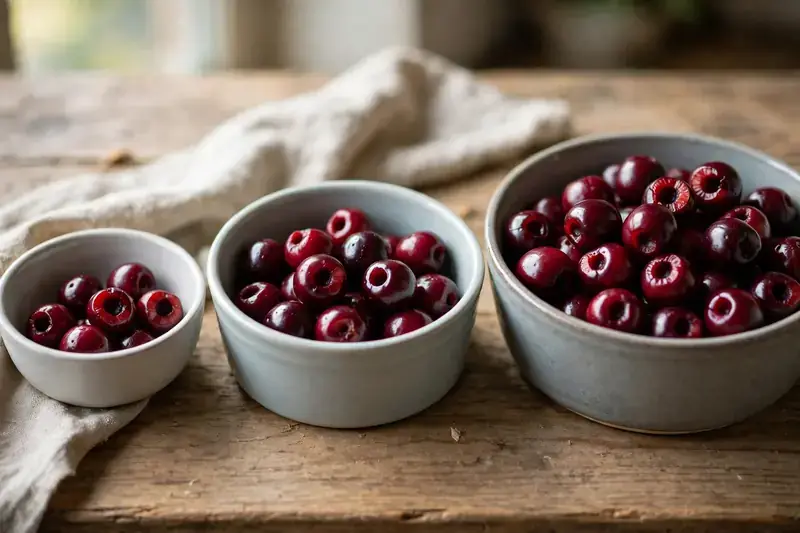
These numbers are conservative on purpose. A large dog could physically handle more cherry flesh without harm, but there is no nutritional reason to push it. Cherries are mostly water and sugar with a modest vitamin payload, so extra cherries buy your dog nothing but extra sugar. Veterinary sources like PetMD give similar size-based guidance: a cherry or two for extra-small dogs, scaling up modestly, always pitted and diced.
Frequency matters as much as portion. A few cherries twice a week is a treat routine. A handful every day starts to displace balanced nutrition and adds up in sugar, which is not kind to teeth or waistlines. If your dog loves fruit and you want a daily option, pick something without pits to remove, like blueberries. And remember that any new food can cause mild stomach upset the first time, so start with one cherry and see how your dog handles it.
What Happens If a Dog Eats Cherry Pits?
It depends on whether the pits were chewed or swallowed whole. A dog that gulps one or two cherries whole will most likely pass the pits with mild or no symptoms. A dog that crunches several pits releases cyanide and risks intestinal blockage. Multiple pits, chewing, or any symptoms mean a vet call, not waiting.

The most common real-world scenario is the fallen-fruit dog: a dog under a cherry tree in summer, hoovering up drops. These dogs usually swallow cherries whole, pits and all, and most of the time the pits pass within a day or two. Watch the stool, watch the appetite, and watch for straining or vomiting. A pit that does not come out within 48 hours, or a dog that stops eating, needs the vet.
The scarier scenario is the deliberate chewer: a dog that crunches pits like treats. Chewing cracks the pit and exposes the kernel, which is where the amygdalin lives. Several chewed pits in a small dog is the combination that can produce real cyanide exposure. If you saw your dog crunching pits, do not try to calculate a safe number. Call your vet or the Pet Poison Helpline and describe exactly what you saw.
Signs of Cyanide Poisoning in Dogs
Cyanide poisoning signs include bright red gums, difficulty breathing, dilated pupils, weakness, and collapse. These can appear within 15 to 20 minutes of chewing enough pits. This is an emergency: get to the vet immediately. Mild stomach upset from the fruit itself looks very different and is far less urgent.

Bright red gums are the sign to memorize, because they are distinctive. Normal dog gums are pink. In cyanide poisoning, the blood stays oxygen-rich because the cells cannot use the oxygen, which turns the gums a vivid cherry red. Combined with labored breathing or sudden weakness, that color means emergency, not observation. Do not wait to see if it gets worse. It can progress to seizures, coma, and death.
It helps to contrast this with ordinary cherry stomach upset, which is far more common and far less scary. A dog that ate too much cherry flesh may vomit once or have soft stool, then bounce back. That is a mild food intolerance, and it resolves on its own. Cyanide poisoning does not resolve on its own. When in doubt about which one you are seeing, treat it as the emergency. A vet would always rather see a dog with mild upset than hear about one too late.
Are Maraschino Cherries Safe for Dogs?
No, maraschino cherries are not safe for dogs. They are soaked in sugary syrup with artificial coloring and sometimes sweeteners, and they offer none of the modest nutrition of fresh cherries. The sugar load alone can upset a dog’s stomach. Stick to fresh, plain, pitted cherries, or skip cherries entirely.

Maraschino cherries are a processed candy that happens to be cherry-shaped. The brining and sweetening process strips out most of what made the fresh fruit modestly nutritious, and replaces it with corn syrup, artificial dye, and sometimes almond extract flavoring. Some varieties use sweeteners you do not want near a dog at all. There is no version of this product worth sharing.
This also covers cherry pie filling, cherry jam, and cherry-flavored desserts. The filling is mostly sugar with very little fruit, and baked goods add butter, more sugar, and sometimes xylitol in sugar-free versions. If your dog steals a bite of cherry pie, the worry is the rich pastry and sugar, not the cherry flavor. Keep all of it out of reach and offer fresh fruit instead if you want to share.
Health Benefits of Cherries for Dogs
Cherries offer modest benefits: vitamin C, vitamin A, fiber, and antioxidants called anthocyanins that give them their red color. But dogs make their own vitamin C and get complete nutrition from balanced dog food, so cherries are a fun extra, not a health strategy. Never feed cherries for nutrition; feed them only as an occasional treat.
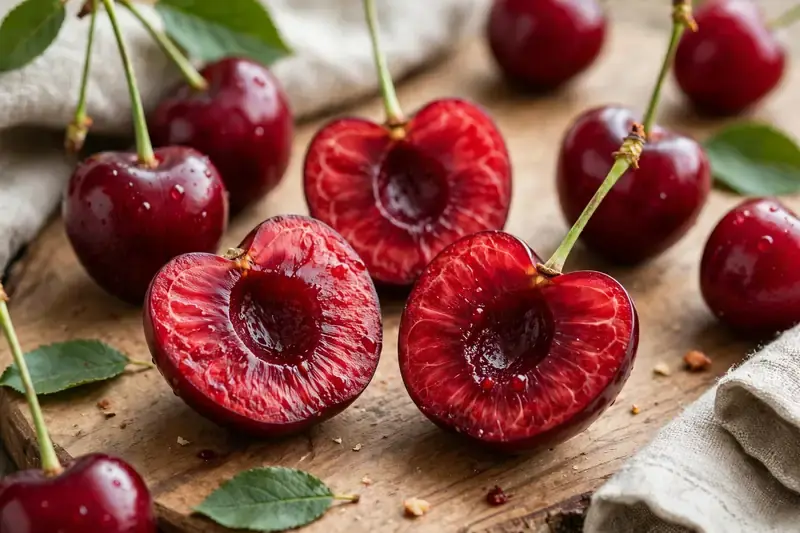
Honesty matters more than hype here. Some blogs dress cherries up as a superfood for dogs, but the science does not support that framing. Dogs synthesize their own vitamin C, so the vitamin C in cherries is redundant. The fiber and antioxidants are real but tiny in the portions a dog should eat. A dog eating two cherries gets a pleasant snack, not a health intervention.
That is not a reason to avoid cherries. Sharing food with your dog is one of the small joys of owning one, and a few pitted cherries are a perfectly fine way to do it. Just keep expectations honest. If you want fruits that earn their place as regular treats, blueberries and watermelon deliver more nutrition with less prep work. The AKC lists several fruits it considers safe for dogs, and cherries make the list only with the pitting caveat attached.
How to Serve Cherries Safely
Wash fresh cherries, remove every stem, cut them open, and take out the pit. Dice the flesh into small pieces for small dogs to prevent choking. Serve plain, with nothing added, and count them toward the daily treat allowance. Frozen pitted cherries work too; let them thaw slightly so they are not a choking hazard.

The pitting step is where most people get lazy, and it is the step that matters. A cherry pitter makes fast work of a bowlful, but a paring knife works fine: halve the cherry, flick out the pit with the tip, and check that no fragment remains. Cherry pit fragments are sharp, so do a quick visual check of each piece. This takes a minute for a handful of cherries, which is a fair trade for removing the cyanide risk entirely.
Dried cherries need a mention. They are sometimes sold pitted, which removes the cyanide concern, but they are concentrated sugar, often with added sweeteners or preservatives. A couple of plain dried cherries are not dangerous, but they are not a good treat either. Fresh is better in every way. And whatever form you serve, introduce cherries gradually the first time, the way you would any new food.
Safer Fruit Alternatives
If you want a safer fruit habit, blueberries are the easy winner: no pits, bite-sized, and well tolerated. Pitted apple slices, watermelon without seeds or rind, and banana pieces are all safer everyday choices. These give you the fun of sharing fruit without the pitting work or the cyanide worry that comes with cherries.

Blueberries earn their reputation. They need no prep, most dogs love them, and they are low in sugar compared with many fruits. Frozen blueberries make a good summer treat and double as a slow-feeder when scattered. Apple slices are another easy win, as long as you remove the core and seeds, which contain the same cyanide compounds as cherry pits in smaller amounts.
Watermelon is the summer classic: hydrating, low-calorie, and easy to serve seedless. Skip the rind, which is tough to digest. Banana works in small pieces but is sugary, so keep it occasional. Plain cooked pumpkin is not a fruit treat in the same sense, but it is one of the most useful foods in a dog owner’s kitchen for settling stomachs, so it is worth knowing about too.
What To Do If Your Dog Ate Whole Cherries
Stay calm and figure out how many were eaten and whether the pits were chewed. One or two swallowed whole in a larger dog usually means watchful waiting for vomiting, appetite loss, or straining. Multiple cherries, chewed pits, small dog, or any breathing trouble or red gums means calling the vet right away.

For the watchful-waiting case, know what you are watching for. Vomiting, loss of appetite, abdominal pain, straining to pass stool, or lethargy over the next 24 to 48 hours can signal a blockage forming. A pit that passes usually does so within a day or two. Keep meals light and familiar during the watch period; a simple bland diet is easier on the gut than rich food if the stomach seems unsettled.
Do not induce vomiting at home unless your vet specifically tells you to. Vomiting up hard pits can injure the throat on the way back up, and the timing has to be right to help at all. If the vet wants vomiting induced, they will say so and explain how. Our article on inducing vomiting in dogs explains the procedure, but it is strictly a follow-the-vet’s-orders situation. When in doubt, call first and act second.
Frequently Asked Questions
Can dogs eat cherry flesh without the pit?
Yes. The flesh of fresh cherries is not toxic to dogs. Remove the pit, stems, and any leaves first, wash the fruit, and serve a few pieces plain. Keep portions small: one or two cherries for a small dog, a few more for a large dog. The flesh is a safe occasional treat once the dangerous parts are gone.
My dog swallowed a cherry pit whole. Should I worry?
One swallowed pit in a medium or large dog usually passes on its own within a day or two. Watch for vomiting, appetite loss, straining, or lethargy over the next 48 hours, which can signal a blockage. Small dogs face more risk from even one pit. Call your vet if any symptoms appear or if your dog ate several pits.
How many cherry pits does it take to poison a dog?
There is no fixed number, because it depends on whether the pits were chewed, the dog’s size, and the cherry variety. Cyanide releases only when pits are crushed by chewing. A dog that crunches several pits is at real risk, while a dog that swallows a couple whole faces mainly a blockage risk. Never try to calculate a safe number; call your vet if pits were chewed.
What are the signs of cyanide poisoning in dogs?
Bright red gums, difficulty breathing, dilated pupils, weakness, drooling, and collapse, sometimes progressing to seizures. Signs can appear within 15 to 20 minutes of chewing enough pits. This is an emergency that needs immediate veterinary care. Do not wait to see if symptoms improve on their own.
Can dogs eat dried cherries?
Plain dried cherries without pits are not toxic, but they are concentrated sugar and often contain added sweeteners or preservatives. They offer no advantage over fresh cherries and are worse for teeth and weight. A couple will not harm a dog, but fresh pitted cherries are the better choice, or skip cherries for a simpler treat like blueberries.
Are cherry stems and leaves poisonous to dogs?
Yes, stems and leaves contain the same cyanide-producing compounds as the pits, though in smaller amounts. Dogs rarely eat enough leaves to be poisoned, but cherry tree prunings and fallen stems should be kept away from curious chewers. If your dog eats a large amount of cherry leaves or stems, call your vet.
What fruits are safer than cherries for dogs?
Blueberries, seedless watermelon, pitted apple slices, and banana pieces are all easier and safer everyday fruit treats. They need less prep and carry no cyanide risk. For settling an upset stomach rather than treating, plain pumpkin is the classic choice; see our guide to pumpkin for dogs for how to serve it.


3 thoughts on “Can Dogs Eat Cherries? The Flesh Is Fine, the Pits Are Not”