
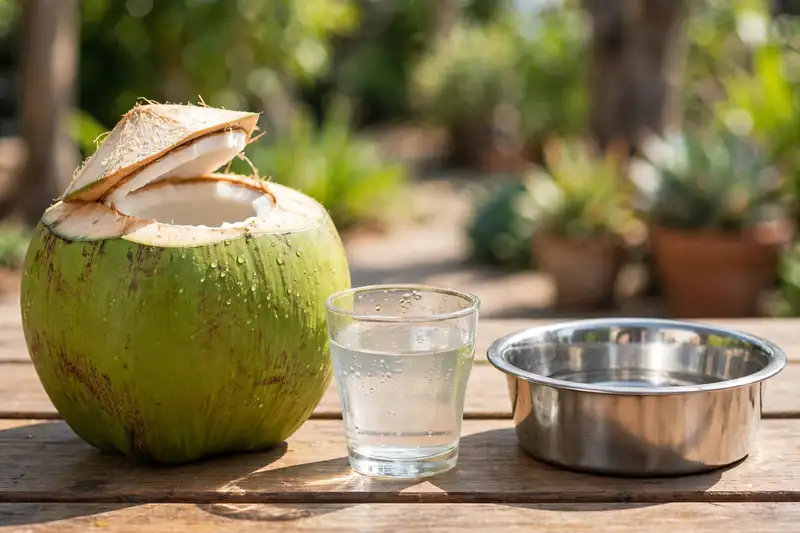
Coconut water has a health halo that followed it from yoga studios to dog bowls. It is natural, full of electrolytes, and dogs seem to like the taste. The reality is more measured. Plain coconut water is not toxic to dogs, and a small serving is fine as an occasional treat. But it is high in potassium and natural sugars, it is no substitute for plain water, and some dogs should avoid it entirely. This guide covers safe portions, the label traps, and the dogs who should skip it.
The short answer on coconut water for dogs
Dogs can drink small amounts of plain, unsweetened coconut water as an occasional treat. It is not toxic, but it is high in potassium and contains natural sugars, so it should never replace plain water. Dogs with heart or kidney disease should avoid it unless the vet approves.
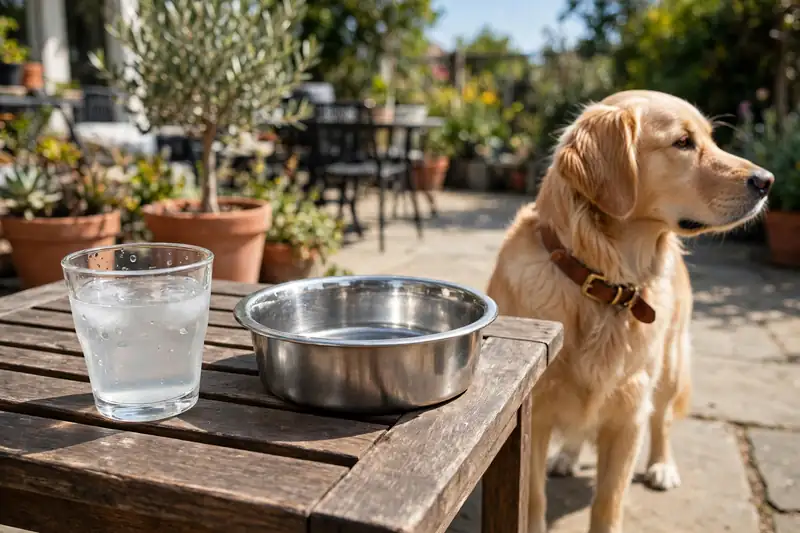
A few laps from a small bowl is the use case. Think of coconut water the way you think of fruit juice for kids: not poison, not health food, fine in small doses. The potassium is the nutrient that sets the limit. A cup of coconut water carries several hundred milligrams, which is trivial for a healthy dog in a small serving but meaningful for a dog whose kidneys or heart cannot handle the load. The sugars add calories without nutrition. And the biggest misconception is that it hydrates better than water. For a healthy dog, plain water hydrates perfectly. Coconut water is a flavor experience, not a hydration upgrade.
What is actually in coconut water
Coconut water is the clear liquid inside young coconuts. It contains potassium, sodium, magnesium, and calcium in modest amounts, plus natural sugars and a few calories. A cup has around 45 to 60 calories and roughly 600 milligrams of potassium. It is fat-free and contains no caffeine or theobromine.

The electrolyte profile is what made it famous. Potassium leads by a wide margin, with sodium far behind. That ratio is the opposite of what a dehydrated body most needs, which is why sports medicine never fully embraced it for serious rehydration. The sugar content, around 6 grams per half cup, is natural but still sugar. Dogs do not need it. Compared to soda or sports drinks, coconut water is clearly the cleaner choice. Compared to water, it is an unnecessary extra. Fresh coconut water from a young coconut and packaged coconut water differ mainly in processing and additives, which is why the label check in a later section matters. Nutritionally, neither version earns a place in a dog’s daily routine.
The potassium concern
Potassium is the main reason coconut water has limits. Healthy dogs handle normal amounts easily, but dogs with kidney disease cannot excrete excess potassium properly, and high levels can disturb heart rhythm. Dogs with heart disease on potassium-affecting medications face similar risks. PetMD specifically flags coconut water’s potassium for dogs with heart or kidney problems.

Hyperkalemia, the clinical term for excess blood potassium, is dangerous precisely because it affects the heart. In a healthy dog, the kidneys clear extra potassium without drama, which is why a small serving is fine. In a dog with chronic kidney disease, that clearance is impaired, and potassium accumulates. Certain heart medications, including ACE inhibitors and potassium-sparing diuretics, also raise potassium levels, so adding coconut water on top compounds the effect. Addison’s disease is another caution flag, since it disrupts electrolyte balance already. None of these dogs should get coconut water without explicit veterinary approval. For everyone else, the potassium in a small serving is a non-issue. The rule is simple: healthy dog, small amount, fine; heart, kidney, or Addison’s dog, ask the vet first.
Coconut water vs. plain water
Plain water wins for everyday hydration, every time. It has no calories, no sugar, no potassium load, and no cost. Coconut water is a treat with a hydration side effect, not a hydration tool. No dog needs it, and switching a dog’s main drink to coconut water would be a nutritional mistake.

Marketing suggests coconut water is “nature’s sports drink,” and owners extrapolate that to dogs. But dogs are not tiny athletes losing electrolytes through sweat. They cool themselves by panting, and their electrolyte needs are fully met by a balanced diet and fresh water. The situations where extra electrolytes genuinely help, prolonged vomiting or diarrhea, call for veterinary electrolyte solutions formulated for the purpose, not coconut water. Keep the hierarchy clear in your head: water first, always; vet-approved electrolyte products for illness recovery; coconut water as an occasional flavor treat somewhere below both. A dog that prefers coconut water to plain water has a preference problem to manage, not a hydration upgrade to celebrate. Always keep fresh plain water available, even on coconut water treat days.
Label dangers in packaged coconut water
Many packaged coconut waters contain added sugars, fruit juice blends, or sweeteners, and some use xylitol, which is toxic to dogs. Flavored varieties are the worst offenders. Only plain, unsweetened coconut water with a short ingredient list is acceptable, and even then, only in small amounts.
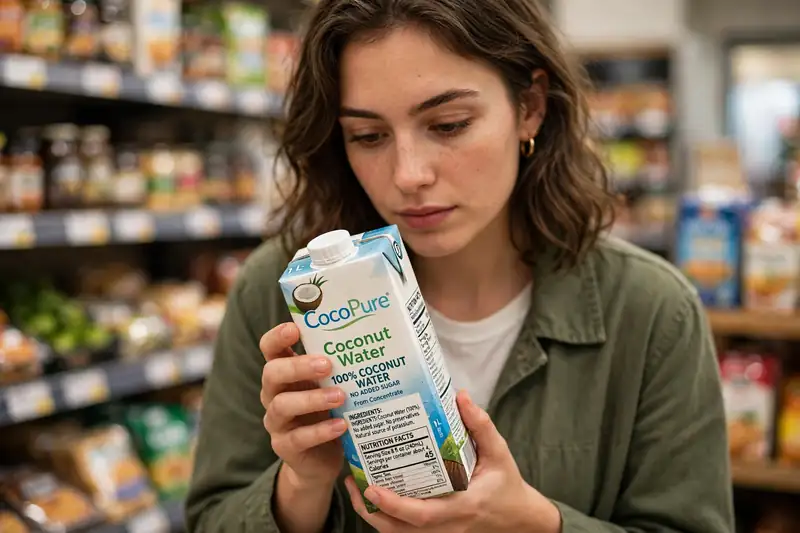
The label check follows the same rule as every dog treat: read the whole ingredient list. “Natural flavors” can hide a lot. Added cane sugar turns an occasional treat into a sugar delivery system. Fruit juice blends add more sugar and sometimes grape juice, and grapes are toxic to dogs. Xylitol is the emergency ingredient. PetMD specifically warns that some coconut drinks contain xylitol, and even small amounts can cause a dangerous blood sugar crash and liver failure in dogs. Chocolate-flavored coconut waters exist and are an obvious no. Pineapple or mango flavors are usually just sugar and flavoring. The safe purchase is boring: ingredients should read “coconut water” and nothing else. If the brand adds vitamin C as a preservative, that is generally fine, but anything beyond that deserves skepticism. When in doubt, crack a fresh young coconut or skip it.
Safe portions by dog size
Keep servings small and infrequent. Small dogs under 20 pounds get an ounce or two, a few laps. Medium dogs from 20 to 50 pounds get two to four ounces. Large dogs over 50 pounds get up to half a cup. Offer it no more than a few times a week, always alongside fresh plain water.

These portions keep the potassium and sugar trivial. An ounce or two is a taste, not a drink, and that is the point. Serve it in a separate small bowl rather than mixing it into the water bowl, so the dog’s main water stays plain and you can see exactly how much was taken. Watch the first serving for soft stools or stomach upset over the next day. Some dogs react to the sugars with mild digestive grumbling. Frequency matters as much as amount. A few ounces three times a week is a different proposition than a daily bowl, because the sugars and potassium accumulate in the diet. Puppies do not need it at all; their nutrition should come from puppy food and water. And never use coconut water to encourage a dog to drink when it is refusing water. A dog that will not drink needs a vet, not a flavored workaround.
Coconut flesh, milk, and oil compared
Plain coconut flesh in small amounts is generally safe but fatty. Coconut milk is richer and more calorie-dense, so portions shrink further. Coconut oil is pure fat for tiny drizzles. Coconut water is the lightest option of the group, fat-free but sugary. None of them are dietary essentials.

Rank the coconut family by risk and water comes out gentlest. The flesh is the most fun for dogs to chew but carries saturated fat that can upset stomachs in quantity. Coconut milk, especially the canned kind, is calorie-dense and often contains guar gum and other additives; the light versions are still richer than the water. Coconut oil is a fat supplement in the same category as avocado oil: fine in teaspoon drizzles, pointless in larger amounts. Shredded or flaked coconut from the baking aisle often contains added sugar and should be skipped. The husk and shell are not food; they are obstruction hazards for enthusiastic chewers. If your dog loves coconut flavor, the water in small amounts is the lowest-risk way to indulge the preference. But no coconut product fixes anything. They are all extras for healthy dogs.
Dehydration and heat: what actually helps
On hot days, the best help is shade, rest, and plenty of plain water, not coconut water. For genuinely dehydrated dogs, with dry gums, sunken eyes, or lethargy, the answer is a veterinarian, not a tropical drink. Vet-formulated electrolyte solutions exist for recovery situations and outperform coconut water.

Heat safety starts before the outing. Walk in the cool hours, bring water and a collapsible bowl, watch for heavy panting and bright red gums, and know that flat-faced breeds overheat fastest. If a dog is mildly overheated, cool water, shade, and rest are the treatment. Coconut water adds nothing to that protocol. True dehydration is a medical situation. A dehydrated dog needs its fluid and electrolyte deficits corrected precisely, and guessing with coconut water risks getting the sodium-potassium balance wrong. Your vet may recommend an oral electrolyte solution or give subcutaneous or IV fluids depending on severity. After recovery, plain water and normal food resume. Save the coconut water for a healthy dog on a normal day, offered as a treat because it is fun, not because it heals.
Dogs who should skip coconut water
Dogs with kidney disease, heart disease, or Addison’s disease should avoid coconut water unless the vet explicitly approves it, due to the potassium load. Diabetic dogs do not need the sugars. Dogs on potassium-affecting medications should skip it. Puppies and dogs on prescription diets gain nothing from it.

Kidney disease is the clearest no. Damaged kidneys cannot clear potassium reliably, and the consequences involve the heart. Heart disease patients on ACE inhibitors, spironolactone, or similar drugs are already managing potassium carefully; coconut water disrupts that balance. Addison’s dogs have fragile electrolyte regulation by definition. Diabetic dogs do not need extra sugar working against their glucose control. Dogs on prescription kidney or cardiac diets eat precisely formulated food, and extras undermine the formulation. None of these dogs is missing out on something essential. Coconut water provides nothing a complete diet and fresh water do not already cover. The treat slot for these dogs is better filled with something their vet approves, or with attention and play, which have no potassium at all.
What to do if your dog drank too much
A healthy dog that laps up a large bowl of plain coconut water will most likely be fine, possibly with soft stools. Offer plain water, feed the next meal light, and monitor. Call the vet if the dog has heart or kidney disease, shows vomiting, lethargy, or weakness, or ate a flavored product that might contain xylitol.

Most overindulgence stories end uneventfully. The sugars may loosen the stool for a day, and then life goes on. The exceptions are the ones to act on. Xylitol in a flavored product is an emergency regardless of amount; call the vet or poison control immediately and bring the packaging. A heart or kidney patient that drank a large amount needs veterinary guidance because of the potassium load. Repeated vomiting, weakness, or collapse after any large ingestion warrants prompt care. For the everyday case, the recovery plan is simple: fresh water available, a bland next meal, no more coconut water for a while, and observation. Dogs are resilient, and one coconut water incident in a healthy dog is a story, not a crisis. Learn the portion lesson and move on.
Coconut water is a fine occasional treat for healthy dogs and nothing more. Keep servings small, buy only plain unsweetened products, never let it replace water, and keep it away from dogs with heart, kidney, or electrolyte disorders. The health halo is marketing. The reality is a tasty extra with limits.
For the broader coconut picture, read can dogs eat coconut. Our electrolytes for dogs guide covers real rehydration, and the everyday safe list lives at what human food dogs can eat.
Frequently Asked Questions
Is coconut water good for dogs?
It is not harmful in small amounts, but it is not particularly beneficial either. Plain water hydrates better, and a balanced diet covers electrolytes. Treat coconut water as an occasional flavor treat, not a health drink.
How much coconut water can my dog have?
A few ounces at most: one to two ounces for small dogs, two to four for medium dogs, up to half a cup for large dogs, a few times a week. Always keep fresh plain water available alongside it.
Can coconut water replace water for dogs?
No. It should never replace plain water. It contains sugars and potassium that make it unsuitable as a main drink, and dogs do not need its electrolytes when eating a balanced diet.
Is coconut water safe for puppies?
Puppies do not need it. Their nutrition should come from quality puppy food and fresh water. There is no benefit and no reason to introduce sugary extras during growth.
What coconut water is safe for dogs?
Only plain, unsweetened coconut water with “coconut water” as the sole ingredient. Avoid flavored varieties, added sugars, and any product containing xylitol, which is toxic to dogs.
Can dogs with kidney disease drink coconut water?
They should avoid it unless the vet approves. Failing kidneys cannot clear excess potassium, which can disturb heart rhythm. The same caution applies to dogs with heart disease or Addison’s disease.
My dog drank a lot of coconut water. Should I worry?
A healthy dog will likely be fine, possibly with soft stools. Offer water and monitor. Call the vet if the dog has heart or kidney disease, vomits repeatedly, seems weak, or the product was flavored and might contain xylitol.
This article is general information only and is not a substitute for veterinary advice. If your dog has a health condition, is on a prescription diet, or you are unsure about any food, check with your veterinarian first.



2 thoughts on “Can Dogs Drink Coconut Water? A Small Treat, Not a Replacement”