

Avocado oil sits in a confusing spot for dog owners. Avocados have a scary reputation, avocado oil has a health-halo reputation, and the truth is narrower than either. The oil pressed from avocado flesh is not considered toxic to dogs, and the concerning compound, persin, concentrates in the leaves, skin, pit, and unripe fruit rather than the oil. But avocado oil is pure fat, and that brings its own limits. This guide covers safe portions, the real risks, and when to skip it.
The short answer on avocado oil for dogs
Small amounts of plain avocado oil are generally considered safe for dogs, but it should be an occasional extra, not a dietary staple. The oil contains minimal persin, the compound that makes other avocado parts concerning. The main risk is the fat content, which can cause stomach upset or pancreatitis in sensitive dogs.
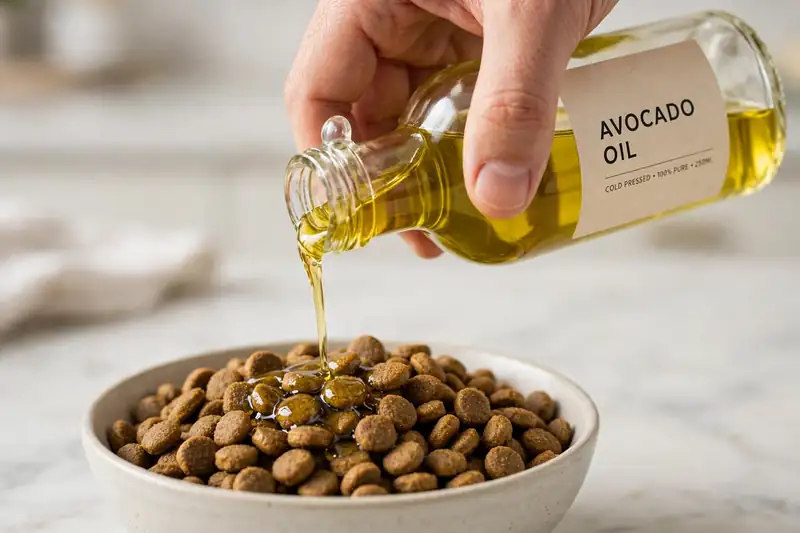
Think teaspoon, not tablespoon, and occasional, not daily. A drizzle over food now and then is the use case. Dogs do not need avocado oil, and nothing about it is essential. The reason for caution is simple arithmetic. Oil is the most calorie-dense food in the kitchen, and a dog’s treat budget is small. One tablespoon of avocado oil carries around 120 calories, which is a significant chunk of a small dog’s day. The persin question gets the headlines, but the fat is what actually sends dogs to the vet. Keep portions tiny, watch for digestive upset the first time, and skip it entirely for dogs with fat-related health issues.
What is actually in avocado oil
Avocado oil is mostly monounsaturated fat, particularly oleic acid, with smaller amounts of polyunsaturated and saturated fats. It contains vitamin E, some potassium, and plant compounds like lutein. Refined versions are neutral in flavor; unrefined versions taste grassy. Nutritionally, it resembles olive oil more than it resembles whole avocado.

The pressing process matters. Oil comes from the flesh, not from the pit, skin, or leaves where persin concentrates. That separation is why the oil gets a cleaner safety profile than the whole fruit. Vitamin E is the most relevant micronutrient, an antioxidant that supports skin and immune function, though the amount in a teaspoon drizzle is modest. The fatty acid profile is genuinely good as fats go. Oleic acid is the same monounsaturated fat that makes olive oil a staple of human diets. But “good fat” does not mean “unlimited fat.” Calories do not care about the fatty acid profile. And dogs already get complete fat nutrition from a balanced dog food, so the oil is always an extra, never a fix for a deficiency.
The persin question, answered plainly
Persin is a toxin in avocado leaves, bark, skin, pits, and unripe fruit, and the reason whole avocados worry vets. Avocado oil, pressed from ripe flesh, contains only trace amounts. The AKC notes ripe flesh is the least concerning part, and dog poisoning cases typically involve leaves or pits, not oil.

Persin sensitivity varies wildly by species. Birds, rabbits, and horses are highly sensitive. Dogs are far less so, and documented persin poisoning in dogs is rare, usually involving a dog that ate a pile of leaves or several pits. The pit brings a second, more practical danger: it is a choking and intestinal blockage hazard, and that risk is far more likely to hurt a dog than persin ever will. Unripe fruit carries more persin than ripe, which is another point for the oil, since commercial oil comes from ripe fruit. None of this makes avocado products health food for dogs. It just puts the fear in proportion. The oil is not the dangerous part of the plant. The leaves, the pit, and guacamole with its onion, garlic, and salt are where the real hazards live.
Safe portions by dog size
Keep it to a teaspoon scale. Small dogs under 20 pounds get a quarter to half a teaspoon occasionally. Medium dogs from 20 to 50 pounds get half to one teaspoon. Large dogs over 50 pounds get one teaspoon, two at most, a few times a week. Never pour freely, and count every drop in the daily treat budget.

These amounts look stingy, and they are meant to. At roughly 40 calories per teaspoon, even small servings add up fast in a small dog’s day. Start with the smallest amount for your dog’s size and watch for soft stools over the next 24 hours. If digestion stays normal, that amount is the dog’s portion. There is no reason to increase from there. Frequency matters as much as amount. A teaspoon three times a week is a different risk profile than a teaspoon every day, because fat effects accumulate. Dogs already eating a rich diet, table scraps, fatty treats, have less room for oil than dogs on lean kibble. When in doubt, use less. The dog gets no benefit from a bigger drizzle, only more calories and more risk.
Claimed benefits vs. what is proven
Avocado oil is credited with shinier coats, healthier skin, and better nutrient absorption. The coat claims have some logic, since essential fatty acids support skin health, but no studies prove avocado oil specifically improves a dog’s coat. Any benefit is modest, indirect, and equally available from better-studied fats like fish oil.

Marketing has done heavy lifting here. “Superfood” language migrated from human wellness culture to pet products without the evidence coming along. A dog with a dull coat usually needs a diet review, parasite check, or vet visit, not a boutique oil. If the diet is already complete and balanced, the coat has what it needs. The vitamin E in avocado oil is real but tiny at treat portions. Lutein and other plant compounds sound impressive on a label and do little at a teaspoon dose. None of this means the oil is harmful in small amounts. It means the benefits are oversold. An owner who enjoys drizzling a little over food is not doing harm. An owner buying it as a cure for skin problems is spending money on the wrong solution.
Fat is the real risk
The main danger of avocado oil is not persin but fat. Too much can cause vomiting and diarrhea, and in susceptible dogs it can trigger pancreatitis, a painful inflammation of the pancreas that requires veterinary treatment. Dogs that get frequent fatty extras are also quietly gaining weight, which shortens lives.

Pancreatitis deserves respect. It brings repeated vomiting, abdominal pain, lethargy, and loss of appetite, and severe cases need hospitalization. Certain breeds, miniature schnauzers, Yorkshire terriers, and poodles among them, are predisposed. A dog does not need to drink the bottle to get in trouble. A few unmeasured pours over several days can be enough for a sensitive dog. The weight angle is slower but just as real. Liquid calories do not trigger fullness the way solid food does, so oiled-up meals quietly push daily intake over the line. An overweight dog’s joints, heart, and lifespan all pay for it. This is why the portion guidance is so strict. The oil is not poison, but it is concentrated energy, and energy without a job becomes fat.
Avocado flesh, oil, pit, and guacamole compared
Plain ripe avocado flesh in small amounts is considered low-risk by the AKC, though the high fat still limits it. The oil is similarly low-risk in tiny amounts. The pit is a choking and blockage hazard. Guacamole is the worst option, since it typically contains onion, garlic, and excess salt alongside the avocado.

Rank them by risk and the picture is clear. Guacamole sits at the top of the danger list, not because of the avocado but because of everything mixed into it. Onion and garlic damage canine red blood cells, and the salt load is unhealthy. The pit comes next, purely as a physical hazard. A pit swallowed whole can lodge in the esophagus or intestines, and pit fragments have sharp edges. Whole flesh is in the middle: the persin content of ripe flesh is low, but the fat content is high, so a few small pieces are the limit. The oil is the most concentrated fat of all, which is why its portions are the smallest despite the clean persin profile. If a dog steals a bite of your avocado toast, the flesh is not an emergency. If it steals the pit, watch closely and call the vet.
Signs of trouble after avocado oil
Watch for vomiting, diarrhea, loss of appetite, and abdominal discomfort in the day after a larger-than-usual serving. Signs of pancreatitis, repeated vomiting, a hunched posture, reluctance to move, and lethargy, warrant a prompt vet visit. Most small overindulgences resolve with a light diet and rest.

Mild cases follow a predictable course. The dog vomits once or twice or produces soft stools, then recovers within a day on bland food and water. Withhold the next fatty treat, keep meals small and plain, and monitor. The line into vet territory is drawn by repetition and pain. Vomiting that continues, a dog that will not eat, a belly that is tender to the touch, or visible lethargy all say the pancreas may be involved. Do not try to treat suspected pancreatitis at home. It needs professional diagnosis, often bloodwork and imaging, and sometimes IV fluids and anti-nausea medication. Note what and how much the dog had before you call, since the vet will ask. And learn from the incident. A dog that reacted badly to a teaspoon should not get a second chance with a tablespoon.
Dogs who should skip it entirely
Dogs with pancreatitis or any history of it should get no avocado oil at all. Overweight dogs and those on weight-loss plans do not need liquid calories. Dogs with poultry-free prescription needs are unaffected, but dogs on low-fat prescription diets should not get fat extras. Dogs with chronic digestive sensitivity are poor candidates too.

A pancreatitis history is an absolute no. The pancreas does not forgive repeated insults, and each episode can be worse than the last. For overweight dogs, the math is unforgiving. A daily teaspoon adds nearly 300 calories a week, enough to stall or reverse a weight-loss plan. Dogs on prescription low-fat diets eat carefully calibrated food, and oil drizzles undermine the calibration. Senior dogs with sluggish digestion and dogs with inflammatory bowel disease should also skip it unless the vet says otherwise. None of these dogs misses anything essential. The nutrients in a teaspoon of avocado oil are rounding errors in a complete diet. A blueberry or a piece of plain cooked chicken delivers the treat moment with none of the baggage.
Better fat sources for dogs
If you want to supplement fats for coat or skin, fish oil is the better-studied choice, with omega-3s that have actual evidence behind them. Coconut oil is another option owners use, in the same tiny portions. But the best first step is checking the current food: complete diets already contain balanced fats, and most dogs need no supplement at all.
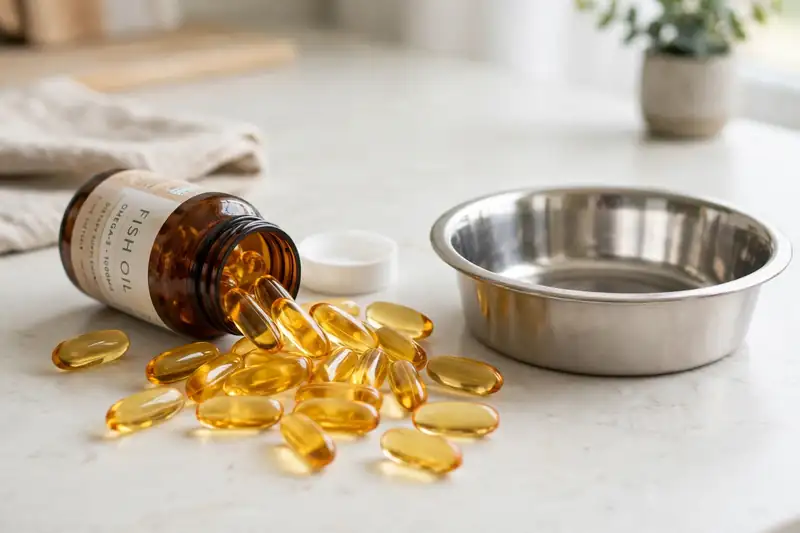
Fish oil’s advantage is evidence. EPA and DHA have documented effects on skin, coat, joints, and inflammation, and veterinary dosing guidance exists. That does not make it a free-for-all either; too much fish oil causes the same digestive upset as any fat, and it can affect clotting at high doses. Coconut oil sits in the same category as avocado oil: fine in tiny amounts, oversold in marketing. Whatever you choose, buy products made for pets or plain human-grade versions with no flavorings, and introduce them gradually. And revisit the base diet first. A dog eating a quality complete food is already getting the fats it needs in the right ratios. Supplements make sense for specific, vet-identified gaps, not as a general upgrade. When the food is right, the shiniest coat comes from the bowl, not the bottle.
Avocado oil is not the villain of the avocado family, but it is not a health tonic either. In teaspoon portions, occasionally, it is a safe extra for healthy dogs. The fat content sets every limit, and dogs with weight, pancreas, or digestive issues should skip it. When in doubt, the plain foods your dog already eats do the job better.
For a closer oil comparison, see our guide to olive oil for dogs. Coconut lovers should read can dogs eat coconut, and for the everyday safe list keep what human food dogs can eat handy.
Frequently Asked Questions
Is avocado oil toxic to dogs?
No, avocado oil is not considered toxic to dogs. It is pressed from ripe flesh, where persin levels are minimal. The main concern is the high fat content, which can cause digestive upset or pancreatitis in large amounts or sensitive dogs.
How much avocado oil can I give my dog?
Very little. A quarter to half a teaspoon for small dogs, half to one teaspoon for medium dogs, and one to two teaspoons at most for large dogs, occasionally. Count it in the daily treat budget and never pour freely.
Can dogs have avocado flesh?
Small amounts of plain ripe flesh are considered low-risk by the AKC, though the fat content still limits portions. Never feed the pit, which is a choking and blockage hazard, and never feed guacamole, which contains onion, garlic, and salt.
Does avocado oil help a dog’s coat?
There is no solid evidence that avocado oil specifically improves coats. Essential fatty acids support skin health generally, but fish oil has far better evidence. A dull coat usually signals a diet, parasite, or health issue worth a vet visit.
What happens if my dog drinks avocado oil?
A small lap will likely cause nothing or mild stomach upset. A large amount can cause vomiting, diarrhea, and in susceptible dogs, pancreatitis. Withhold fatty foods, offer water, and call your vet if vomiting repeats or the dog seems painful or lethargic.
Is avocado oil better than olive oil for dogs?
Neither has a meaningful edge for dogs. Both are monounsaturated fats with similar calorie counts and similar portion limits. Choose whichever you have, use tiny amounts, or skip both in favor of a complete diet.
Can puppies have avocado oil?
There is no reason to give puppies avocado oil. Growing dogs need precisely balanced nutrition, and extra fat only unbalances it. Stick to a quality puppy food and vet-approved treats.
This article is general information only and is not a substitute for veterinary advice. If your dog has a health condition, is on a prescription diet, or you are unsure about any food, check with your veterinarian first.


1 thought on “Can Dogs Have Avocado Oil? Safe Only in Small Amounts”