Raw dog food carries a documented risk of Salmonella and Listeria contamination, and both the FDA and the AVMA advise against feeding raw or undercooked animal protein to dogs. A two-year FDA study found Salmonella in 7.7 percent of raw pet food samples and Listeria in 16.3 percent, while none of the dry food samples tested positive for either. Raw feeding has passionate supporters who point to shinier coats and cleaner teeth, but no properly documented evidence shows health benefits that cancel out the risks. This article lays out what the regulators say, what the bacteria do, how to handle raw food safely if you feed it anyway, and which cooked options give a dog the same fresh food without the same danger.

What raw dog food actually means
Raw dog food means uncooked animal protein served as the main diet, usually as a commercial frozen product or a homemade mix. The typical bowl holds raw muscle meat and raw meaty bones, plus organ meat. Some mixes add raw egg, vegetables, fruit, or yogurt.
Two styles dominate: the BARF model, which stands for Biologically Appropriate Raw Food, and the prey model, which aims to mimic a whole animal carcass with meat, bone, and organs in rough proportion.
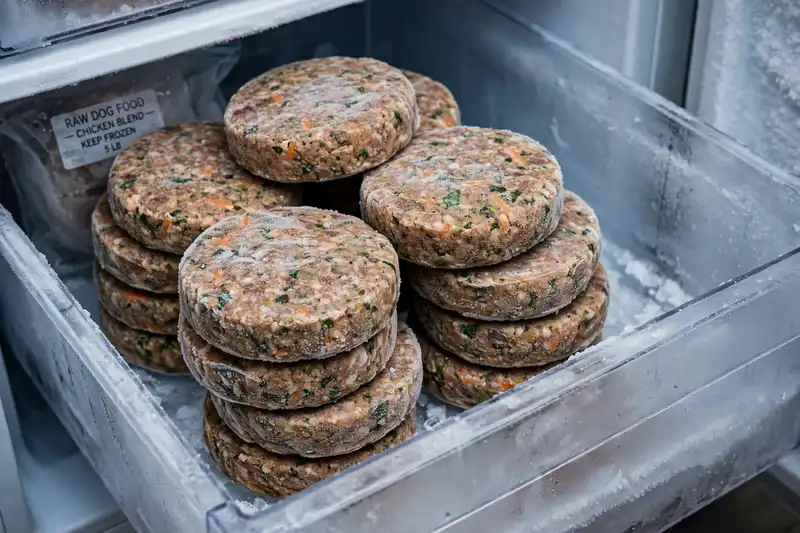
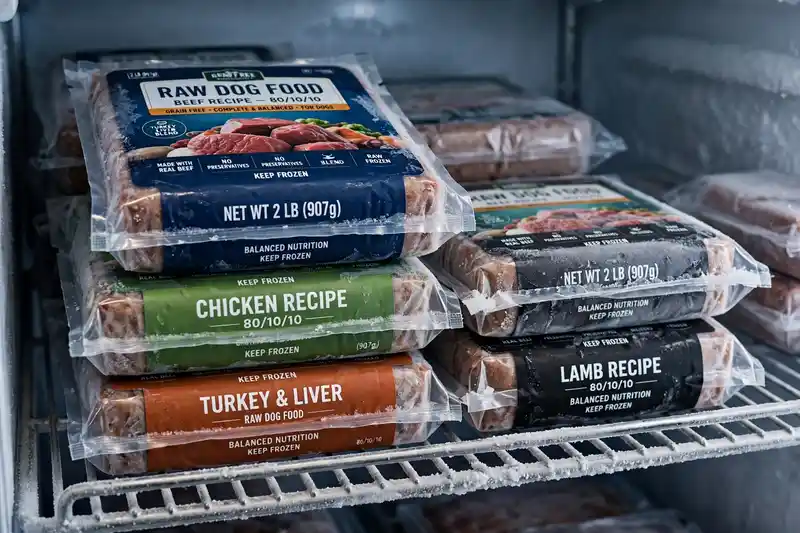
Commercial raw food usually arrives frozen in patties, nuggets, or chubs, and the label may say complete and balanced, which means it claims to meet the AAFCO nutrient standard. Homemade raw is mixed at home from butcher meat, bones, and organs, and it rarely meets that standard unless a vet nutritionist designs it. Freeze-dried raw is a third style, and it carries the same bacterial risk as other raw food, because freeze-drying does not kill bacteria. Freezing does not kill them either. Bacteria survive freezing and wake up when the food thaws.
The appeal is easy to understand. Owners want to feed something that looks like real food, not brown pellets from a bag. The ingredients look fresh, and freshness is real. The problem is the pathogens in raw meat and the nutritional gaps when a homemade mix misses a mineral or a vitamin for months.
What the FDA and AVMA actually say
The FDA states that it does not believe feeding raw pet food to animals is consistent with protecting the public from significant health risks, and its Center for Veterinary Medicine says it is concerned about the public health risk of raw pet food diets.
That is the agency that regulates pet food speaking plainly, and the position has not softened with time. The FDA posts recalls for raw products regularly, and those recalls are the clearest evidence that the risk is not theoretical.
The AVMA takes a parallel line. Its policy discourages feeding dogs and cats any raw or undercooked animal-source protein that has not first gone through a process to eliminate pathogens. The proteins of concern are beef, pork, poultry, fish, other meat from domesticated or wild animals, milk, and eggs. The AVMA supports diets processed with methods that reduce or eliminate the risk, including cooking, pasteurization, or another scientifically validated method such as high-pressure processing.
Both positions target the same thing: untreated raw protein with no kill step. Neither agency says fresh meat is unusable. Both say the meat should be treated before it is fed. The FDA facts on raw pet food diets explain the agency’s reasoning, and the VCA guide to raw food diets covers the same ground from a vet clinic perspective. The FDA pet food page gathers the agency’s safety resources for owners who want to read more.
The bacteria in raw meat and what they do
Raw meat carries Salmonella, Listeria monocytogenes, E. coli, Campylobacter, and Clostridium, and the FDA study numbers show how common they are. In that study, which ran from October 2010 through July 2012 and screened over 1,000 pet food samples, 15 of 196 raw pet food samples tested positive for Salmonella and 32 tested positive for Listeria.
Among 120 dry dog food samples, none tested positive for either. A later systematic review found Salmonella contamination rates from 6 percent to 80 percent across different raw products and countries.
Dogs often carry these bacteria without looking sick. A raw-fed dog can shed Salmonella in its feces while seeming perfectly healthy, and studies report shedding rates up to a third of raw-fed dogs. That shedding is the hidden risk: the dog looks fine, the yard and the house carry the bacteria, and a child or an elderly person picks it up through hands and faces, and through toys left on the floor. Gastroenteritis is the illness that follows when a dog does get sick, with vomiting and diarrhea that can turn bloody, and bloody diarrhea is the sign that always earns a prompt vet visit.
Listeria is the quieter danger. It grows at fridge temperatures, it survives freezing, and it hits pregnant women, newborns and the elderly, plus immunocompromised people hardest. A raw-fed household with a pregnant family member carries a risk that a kibble-fed household does not. The bacteria do not care how clean the kitchen looks or how expensive the meat was.

Bones, teeth, and blocked guts
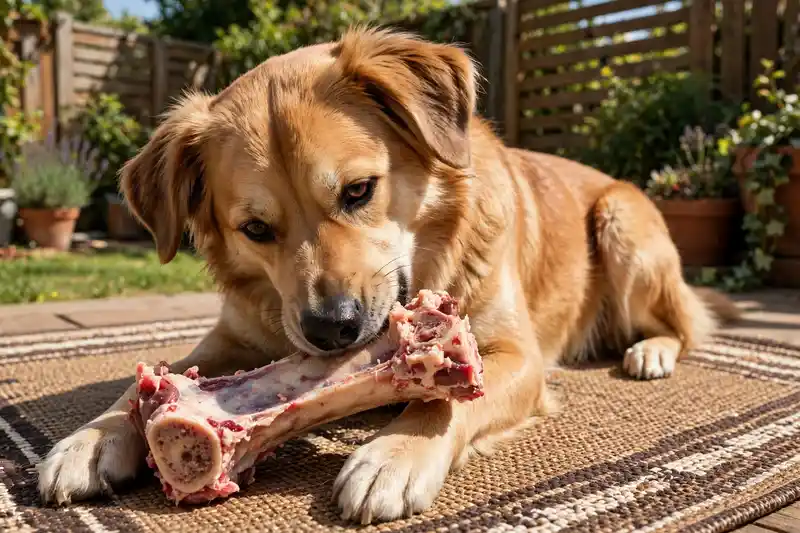
Raw bones are sold as a core part of the raw diet, and they bring their own risks. A dog can crack a tooth on a weight-bearing bone, choke on a piece that breaks off, or suffer a gut blockage or a perforation when a sharp fragment travels through the intestines.
Cooked bones are worse, because cooking makes them brittle and more likely to splinter. Raw bones still carry risk, only less of it.
Vets see the results regularly: slab fractures of the big chewing teeth, bones lodged in the throat or stomach, and intestinal blockages that need surgery. A dog that gulps food is at higher risk than a careful chewer, and a small dog faces a bigger risk from a bone sized for a large one. Can dogs eat bones covers the bone question in detail, and chicken bones for dogs explains why poultry bones are the riskiest of all.
Ground bone in commercial raw food is a different case, since the pieces are small, but whole bones fed at home deserve caution. The raw feeding guides that promise dental benefits from bones rarely mention the tooth fractures, and a broken canine tooth costs far more than any dental saving. A safer way to clean teeth is brushing, dental chews made for dogs, and the vet’s dental cleaning when needed.
The nutrition gaps in homemade raw
A raw diet can look complete and still miss the nutrients a dog needs. The common gaps are calcium, zinc, iodine, vitamin D and vitamin E, plus the right balance of omega-3 and omega-6 fats. Meat alone is low in calcium, and a diet of meat without bone or a calcium supplement leaves a dog short.
Puppies pay the highest price for that gap, because a calcium shortage during growth can deform bones permanently.
Homemade raw diets are the worst offenders. Studies of homemade recipes, both raw and cooked, find that most are nutritionally incomplete, often missing several essential nutrients at once. A commercial raw diet labeled complete and balanced is at least formulated to the AAFCO standard, though the label is only as good as the company behind it.
A vet nutritionist can design a homemade diet that works, raw or cooked, but that service costs money and the recipe must be followed exactly. Swapping one meat for another, skipping the supplement, or eyeballing the bone content breaks the balance. Dog food recipes on this site cover cooked homemade options, and how to boil chicken for dogs is the simplest safe start for an owner who wants to cook for the dog.

Who should never feed raw
Some households should not feed raw at all, and the list is longer than most owners expect. Any home with a baby, a young child, a pregnant person, an elderly person, or someone with a weakened immune system carries a risk that no handling routine removes.
The bacteria shed in a raw-fed dog’s feces and saliva reach those people through hands, faces, toys, and floors, and the consequences for them are worse than for a healthy adult.
Puppies and senior dogs face higher risk, as do dogs with weakened immune systems, including dogs on chemotherapy or immune-suppressing drugs, and they are more likely to get sick from the bacteria in raw food. Dogs with kidney or liver disease face extra risk too. A therapy dog visiting hospitals or nursing homes should never eat raw, because the dog can carry bacteria to people who cannot afford an infection.
The rule is blunt but honest: when anyone in the house or the dog itself is vulnerable, the raw diet is the wrong choice. Cooked food gives the same fresh ingredients without the same exposure, and the dog loses nothing that matters.

Safe handling if you feed raw anyway
Owners who choose raw despite the warnings can cut the risk, though no routine removes it. Wash hands with soap and water for at least 20 seconds before and after handling raw food, and wash every utensil and bowl the food touched, plus any surface it contacted.
Thaw frozen raw food in the fridge or the microwave, never on the counter or in the sink, and never let it sit at room temperature for hours.
Do not wash raw meat under the tap. The water splashes bacteria onto nearby surfaces, and the meat gains nothing from the rinse. Use separate cutting boards and knives for the dog’s raw food. Store raw food frozen and sealed on the lowest shelf, so drips cannot fall onto other food. Throw away uneaten raw food, and clean the dog’s bowl after every feeding.
Keep the dog from licking faces after a raw meal, and wash the dog’s face and paws when the meal is done. Pick up feces promptly, and wash hands after. Check the recall lists regularly, since raw products are recalled often: the OC Raw dog food recall and the Indiana dog food company recall show how a single lot can carry Salmonella into home freezers. The FDA recall page is the place to check, and the dog food recalls page on this site tracks them too.

High-pressure processing and other safer raw options
High-pressure processing, known as HPP, is the one treatment that makes a raw diet meaningfully safer without cooking it. HPP puts sealed raw food under extreme water pressure, which kills bacteria while leaving the food raw in texture and taste.
Commercial raw diets treated with HPP can achieve a large reduction in Salmonella and Listeria, and the AVMA recognizes scientifically validated pathogen-reduction methods of this kind.
HPP lowers the risk without erasing it, and the handling rules still apply after the package is opened. A brand that uses HPP should say so on its website or packaging. Ask where the meat is sourced, how often the company tests for pathogens, and whether it has had recalls.
Freeze-dried raw deserves a warning of its own. Many owners assume freeze-drying kills bacteria, but it does not. Scientists preserve bacterial cultures by drying them, and Salmonella survives the process. A freeze-dried raw product carries the same risk as a frozen one, and the same handling rules apply. The only raw product with a meaningfully lower risk is one with a validated kill step, and HPP is the main one in use today.
Cooked alternatives that keep the fresh food idea
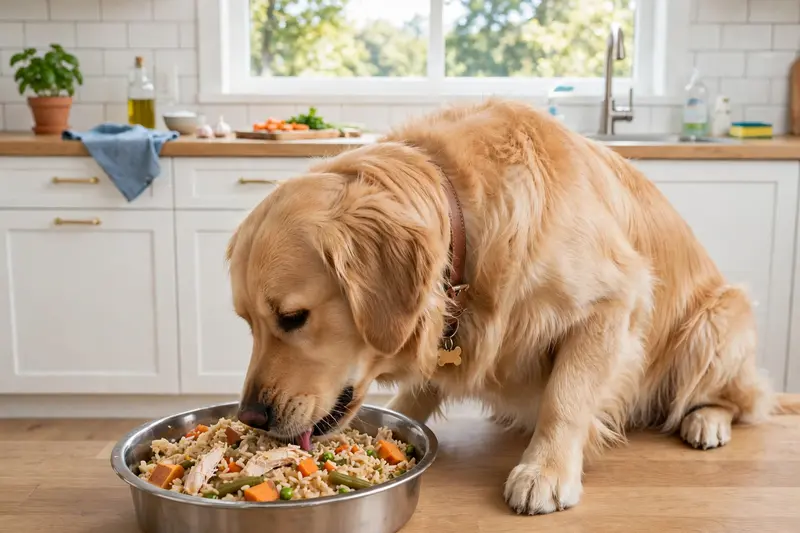
An owner who likes the raw idea usually wants fresh, real food, and cooked food delivers that without the bacterial risk. A lightly cooked commercial diet, a cooked homemade diet designed by a vet nutritionist, or a high-quality kibble topped with fresh cooked food all give the dog real ingredients with the pathogens killed.
Cooked chicken and ground beef are the simplest fresh toppers, and bone broth for dogs adds flavor and moisture without seasoning.
The switch from raw to cooked is easy: cook the same meat the dog already eats, keep the vegetables, and drop the bones. A vet nutritionist can check the recipe for calcium and vitamin gaps, and a commercial cooked diet labeled complete and balanced needs no check at all. Dogs that move from raw to cooked rarely notice the difference, and owners who worried about losing the shiny coat find that the coat comes from good nutrition, not from raw meat.
Cost is the one honest drawback of cooked commercial diets, since they run higher than kibble. A middle path works for many owners: a good kibble base with fresh cooked toppers, which keeps the budget sane and the bowl interesting. The dog gets fresh food every day, and the household avoids the bacterial load that raw feeding brings into the kitchen.

Frequently asked questions about raw dog food
Is raw dog food safe?
Raw dog food carries a documented risk of Salmonella, Listeria, and E. coli, and the FDA and AVMA advise against it. Safe handling and HPP treatment lower the risk but do not remove it. Cooked food is safer for the dog and the household.
Can dogs eat raw chicken?
Raw chicken carries Salmonella and Campylobacter, and the FDA and AVMA advise against feeding it. Raw chicken for dogs covers the specific risks, and cooked chicken is the safe version.
Can dogs eat raw meat in general?
Raw meat of any kind can carry pathogens, including beef, pork and poultry, plus fish. Raw meat for dogs explains the risks by meat type, and the advice is the same: cook it first.
Does freezing kill bacteria in raw dog food?
Freezing preserves bacteria, and they become active again when the food thaws. Freeze-drying does not kill them either. Only cooking, pasteurization, or a validated method like HPP reduces them.
What about raw eggs?
Raw eggs carry Salmonella, and raw egg white contains avidin, which blocks biotin absorption over time. Raw eggs for dogs covers the details. Cooked eggs are safe and nutritious.
My dog has eaten raw for years and never got sick. Is it fine?
A healthy dog can carry Salmonella without symptoms and shed it in feces, so a healthy-looking dog is not proof the food is safe. The risk falls on the household as much as the dog, especially children, pregnant people, and the elderly.
Is commercial raw safer than homemade raw?
Usually yes, because a commercial diet labeled complete and balanced is formulated to a nutrient standard, and some brands use HPP. Homemade raw is often nutritionally incomplete. Both carry bacterial risk, and both need the same handling rules.
Should I switch my dog from raw to cooked?
Talk to your vet, especially if anyone in the house is pregnant, very young, elderly, or immunocompromised. A cooked diet designed by a vet nutritionist, or a commercial cooked diet, gives the dog the same fresh food without the same risk.
Raw dog food promises a natural diet and delivers a real bacterial risk, real nutritional gaps, and a real hazard to the people in the house. The regulators have said so plainly for years, and no properly documented evidence shows benefits that cancel out the risks. Owners who feed raw anyway should buy from transparent companies, favor HPP-treated products, follow every handling rule, and check the recalls. Owners who want fresh food without the risk should cook it: the same meat, the same vegetables, the heat doing the job that raw feeding leaves undone. Raw meat will keep tempting owners who want the best for their dogs, and the best version of that instinct is a cooked bowl, a clean kitchen, and a dog that stays healthy for years.
Disclaimer: This article is for information only and is not a substitute for veterinary advice. Raw diets carry documented bacterial risks. Talk to your veterinarian before starting or continuing a raw diet, especially if anyone in your household is pregnant, very young, elderly, or immunocompromised.