Diatomaceous earth shows up in natural pet care conversations as a chemical-free answer to fleas, and the claims around it run hot in both directions. Food-grade diatomaceous earth is generally safe for dogs when used correctly, while filter-grade diatomaceous earth is toxic and must never go near them. The entire safety question comes down to which bag you bought, because the two grades look identical and could not be more different inside.

Is diatomaceous earth safe for dogs
Yes, with the grade doing all the heavy lifting. Food-grade diatomaceous earth is considered safe for dogs to be around and even to ingest in small amounts. Filter-grade, also called pool-grade, is a different product that can seriously harm your dog’s lungs. Buy the wrong bag and the same white powder becomes a hazard.
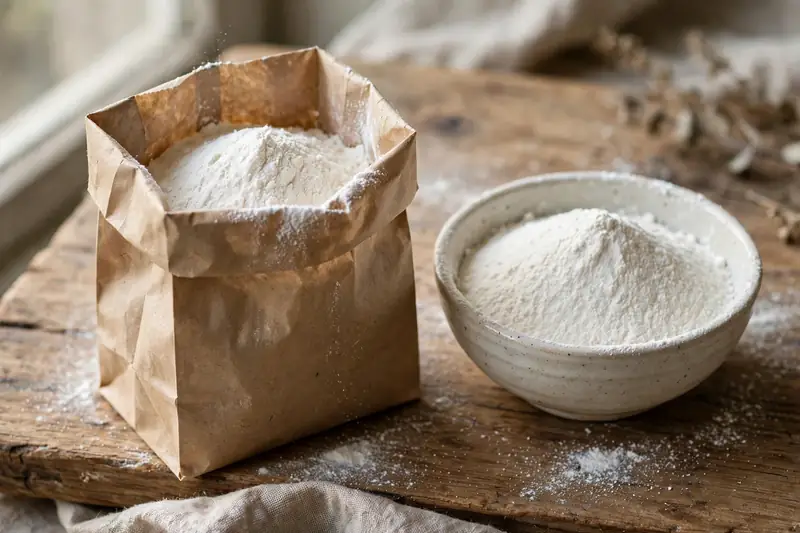
The safety record comes with real cautions even for the right grade: the powder is extremely fine, so breathing in a cloud of it irritates airways, eyes, and skin, and dogs have more sensitive noses than people, which makes dust control the practical heart of using this product. Get food-grade, keep the dust down, and keep your vet in the loop. The label is everything.
Food-grade vs filter-grade: the one distinction that matters
Food-grade diatomaceous earth contains less than 1% crystalline silica and is the form the FDA lists as Generally Recognized as Safe. It is the grade sold for animal feed, food storage, and garden use. Filter-grade goes through a high-heat process called calcination that converts the silica into crystalline form, pushing crystalline silica content as high as 60%.

| Food-grade DE | Filter-grade (pool-grade) DE | |
|---|---|---|
| Crystalline silica | Under 1% | Up to 60% |
| Processing | Not heat-treated | Calcined at high heat |
| Safety around dogs | Generally safe when used correctly | Toxic, especially if inhaled |
| Common uses | Animal feed, gardens, food storage | Pool filters, industrial filtration |
Crystalline silica is the villain here. It is a documented respiratory hazard that scars lung tissue with repeated exposure. That is why the label check is non-negotiable: if the bag does not say food-grade in plain words, do not buy it for any use around your dog. Pool supply stores sell the dangerous grade, garden centers usually sell the safe one, and the bags look frustratingly similar on the shelf.
How diatomaceous earth actually kills fleas
Diatomaceous earth kills fleas mechanically. The powder is made from the fossilized skeletons of diatoms, microscopic algae, and each particle carries sharp edges plus a thirst for oils. When a flea walks through it, the powder sticks to the waxy outer coating of the insect’s exoskeleton and absorbs the oils and fats that keep the flea from drying out.

The flea then dehydrates and dies. The process can start within hours of contact, though most guidance suggests leaving the powder on a treated surface for 48 hours before vacuuming it up. The sharp particles also abrade the exoskeleton directly, which speeds the drying.
Here is the limitation sellers mention quietly: diatomaceous earth does not kill flea eggs. Flea eggs sit protected through the treatment, hatch later, and restart the cycle. That single fact explains why DE works best as one tool after an infestation rather than a standalone prevention plan. The AKC’s guide to diatomaceous earth for fleas walks through the mechanism and its limits plainly.
What vets actually think about it
Veterinarians do not widely recommend diatomaceous earth for flea control. One veterinarian quoted by the AKC put it bluntly: DE is not a parasite prevention method taught in veterinary school, and she has never recommended it to a client. PetMD lands in the same place, noting more studies are needed on its overall effectiveness.

None of that makes food-grade DE dangerous when handled right; it just makes it a second-tier option. PetMD’s overview of diatomaceous earth notes the same gap: vets reach for proven preventatives first because those have measured efficacy, known dosing, and safety data across millions of dogs. DE has none of that infrastructure behind it.
So take the honest middle position. Food-grade DE is a reasonable low-cost supplement to a real flea plan, especially for treating the home environment. It cannot replace veterinary flea prevention, and anyone selling it as one is overselling. Your vet can tell you in two minutes whether your dog’s current prevention is doing its job.
The inhalation risk you should take seriously
Every safety conversation about diatomaceous earth lands on dust, because dust is where the real risk lives. The particles hang in the air, and breathing them irritates the nose, throat, and airways of people and dogs alike. A dog that walks through a fresh dust cloud gets a noseful through the most sensitive sniffer in the house.
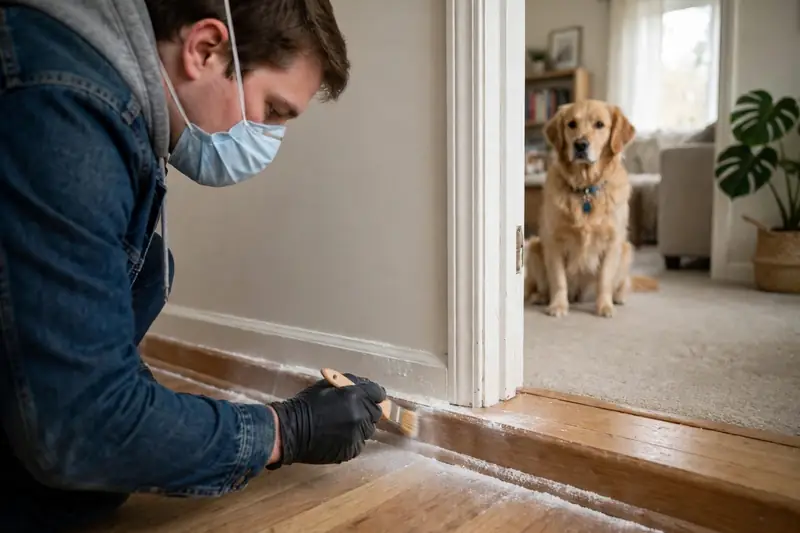
The fix is boring and effective. Apply the powder lightly, never in heaps. Keep your dog out of the room while you apply it and until the dust settles.
Wear a dust mask yourself during application. Avoid the face entirely, yours and the dog’s, and never puff powder near the dog’s nose or eyes.
This caution applies to food-grade DE too. “Nontoxic” describes what happens if swallowed in small amounts. It does not mean lung-friendly.
Anyone with asthma, and any dog with a respiratory condition, should stay clear during application. If your dog coughs or sneezes repeatedly after exposure, move them to fresh air and call your vet if it does not settle quickly.
Should you put it directly on your dog
No, and this is where well-meaning owners go wrong most often. Both the AKC and PetMD advise against applying diatomaceous earth directly to a dog’s skin or bedding. The powder dries skin, irritates eyes, and the dust gets inhaled at close range when it sits in fur. A dog that grooms itself will also lick up whatever you applied.

Light dusting on the coat is the folk method you will see recommended online, and it is exactly what the veterinary sources argue against. The flea-killing happens through contact with treated surfaces, not through coating the animal. Treating the environment (carpets, pet bedding areas, yard edges) captures the benefit without putting powder on the dog.
Dogs with dry, flaky coats get more reliable help from proven coat support such as fish oil for dogs than from any powder. And if the goal is a softer coat from the inside out, a dietary approach like olive oil for dogs in meals beats dusting powder on fur every time.
If fleas are on the dog right now, that is a job for a vet-approved flea treatment, not a powder rub. Flea shampoos, topicals, and oral preventatives act faster and come with dosing your vet can stand behind. Save the DE for the carpets and the cracks in the floorboards.
Using it in your home and yard the safe way
Treat DE as an environmental treatment with a simple routine. Start with food-grade only, confirmed on the label, and move the dog to another room while you work. Apply a light, barely visible layer to carpets, baseboards, and pet sleeping areas, since a little goes a long way.

Leave it down for up to 48 hours, then vacuum thoroughly. Vacuuming matters as much as the application: it removes dead fleas, eggs that survived, and the powder residue so paws and noses stop contacting it. Repeat the cycle for a few weeks to catch newly hatched fleas, since the eggs survive each round.
Outdoors, apply on dry days only. Moisture ruins the desiccant effect, so DE stops working when wet and needs reapplication after rain. Focus on shaded, dry spots where fleas lurk: under decks, along fence lines, around kennels.
Keep the dog inside during application and let the dust settle before letting them back out. And keep the bag sealed and stored where the dog cannot nose into it.
Feeding it to dogs: claims vs evidence
Sellers suggest mixing food-grade DE into dog food, around one teaspoon per 25 pounds of body weight daily, pitched as a natural dewormer. The uncomfortable part: veterinary evidence for DE as a dewormer in dogs is thin. The mechanical action that kills fleas on contact does not translate to gut parasites, and dosing guidance comes from sellers, not studies.

The FDA’s Center for Veterinary Medicine regulates animal food and its additives, which is worth knowing because food-grade DE does appear in animal feed in regulated amounts as an anti-caking agent. That is a long way from a daily spoonful as a health supplement.
If you want to try it, talk to your vet first and start small. Watch for digestive upset, which is the most commonly reported downside of oral use. Puppies, pregnant dogs, and dogs with chronic digestive issues should skip it unless a vet specifically approves. Never let marketing copy override that conversation.
The supplement-aisle thinking behind feeding DE also drives interest in turmeric for dogs and coconut for dogs. The same rule covers all of them: tradition is not dosing data, so run each one past your vet.
Better flea options your vet will recommend
Honesty requires saying the quiet part: modern flea preventatives outperform DE by a wide margin. Oral preventatives and topicals from your vet kill fleas at every life stage they target, with efficacy measured in controlled trials rather than testimonials. They also cover ticks in many formulations, which DE cannot handle.

That does not make DE useless. Think of it as the cleanup crew, not the security system. The vet’s preventative protects the dog.
DE treats the environment where eggs and larvae hide: carpets, bedding, yard edges. Used together, they cover the gap DE leaves (eggs) and the gap preventatives leave (the house itself).
Cost is DE’s genuine advantage. A bag costs a fraction of a year’s preventatives, which is why budget-conscious owners reach for it.
Just do not let the price tag flip the priority. The preventative comes first. The powder is the supporting act, applied carefully, with the dog out of the room.
Owners browsing natural options usually meet the same names: peppermint oil for dogs and apple cider vinegar for dogs. Both have their own safety profiles, and both deserve the same label-checking caution as DE.
When to call the vet about diatomaceous earth
Call your vet if your dog inhales a large powder cloud and keeps coughing, if eye watering does not stop after flushing with clean water, or if the product you used was filter-grade rather than food-grade. That last one is the true emergency here: crystalline silica exposure needs professional assessment, not home watching.

Also call if your dog develops skin irritation, persistent sneezing, or breathing difficulty after you treated the home, or if digestive upset follows oral use. Bring the bag or a photo of the label. The vet needs to see the grade, the ingredients, and any additives, since some DE products blend in other compounds.
For anything that looks like a product reaction rather than a poisoning, the FDA’s guidance on reporting pet product problems explains how owners can file a report. Reports like that are how regulators spot problem products, and they cost you nothing but a few minutes.
Frequently asked questions about diatomaceous earth and dogs
Owners usually ask about eating it, breathing it, and whether it really handles fleas. The answers below cover the repeat questions.
Can dogs eat food-grade diatomaceous earth
In small amounts, yes. Food-grade DE is considered safe for ingestion and even appears in animal feed as an anti-caking agent. Large amounts can cause digestive upset, and the dosing advice online comes from sellers rather than veterinary studies, so check with your vet first.
What if my dog breathes in the dust
Move the dog to fresh air right away. Mild sneezing usually settles on its own. Call your vet if coughing persists, breathing looks labored, or the powder involved was filter-grade. Prevention beats treatment: apply with the dog out of the room.
Does diatomaceous earth kill flea eggs
No. It kills adult fleas and some larvae through dehydration, but eggs survive treatment and hatch later. That is why a single application never ends an infestation, and why vets pair environmental treatment with a real flea preventative.
How long should I leave it on the carpet
About 48 hours, then vacuum thoroughly. Some sources allow up to three days, but two days with a deep vacuum captures the benefit while limiting how long powder sits where paws and noses go. Repeat weekly for a few weeks to catch newly hatched fleas.
Is it safe around puppies and cats
Use extra caution with both. Puppies explore with their mouths and noses at floor level, right where the powder sits. Cats groom constantly and have sensitive airways. Keep young and small animals out of treated rooms until after vacuuming, and ask your vet before any direct use.
Can I use it in the vegetable garden with my dog around
Yes, food-grade DE is a common garden pest control, and it is considered safe around pets when applied correctly. Apply on calm, dry days, keep the dog inside until the dust settles, and reapply after rain since moisture disables it.
Diatomaceous earth earns its place as a helper, not a hero. Buy food-grade, respect the dust, keep it off the dog, and let your vet’s flea prevention do the heavy lifting. Used that way, the white powder is a useful tool. Used carelessly, it is an irritant looking for airways.
Disclaimer: This article is for general information only and is not veterinary advice. Diatomaceous earth products vary, and dogs with respiratory conditions, puppies, and pregnant dogs need individual guidance. If your dog shows symptoms after exposure, contact your veterinarian.