Here is an odd fact from the research: some veterinarians use tiny hot dog pieces as high-value training treats, while the AKC warns owners against hot dogs entirely. Both can be right. A pea-size bit of plain frank as an occasional training reward is a different universe from sharing half a loaded hot dog at a barbecue. The amount and the frequency decide which story yours becomes.

Can dogs eat hot dogs?
Dogs should not eat hot dogs as a treat or meal. One frank can carry more than 500 milligrams of sodium, over twice what a 33-pound dog needs in a day, plus garlic and onion powder that damage red blood cells.
A tiny plain piece on rare occasions rarely causes harm, but hot dogs earn no regular place in a dog’s diet.
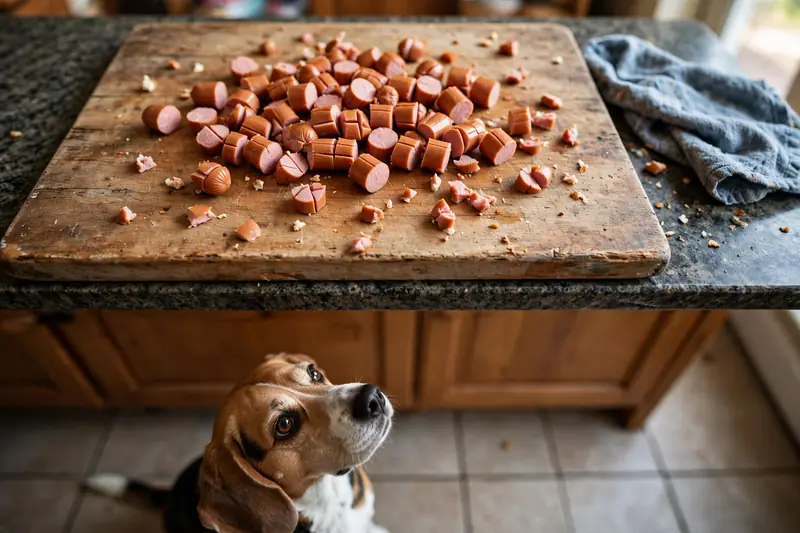
The honest framing is that hot dogs are not poisonous in the way grapes or xylitol are. No single compound in a standard frank will drop a healthy dog in minutes. The damage is cumulative and quiet: too much salt straining kidneys, too much fat irritating the pancreas, and seasonings that chew up red blood cells a little at a time. That slow profile is exactly why owners underestimate them.
If your dog just stole a bite at a cookout, do not panic. A bite of plain frank is a watch-and-wait situation for a healthy adult dog. The dogs that run into trouble are the small ones that eat a whole hot dog, the ones with existing kidney or pancreas problems, and the repeat offenders whose owners share “just a bite” every weekend. The human foods dogs can eat list favors whole, plain foods. A frankfurter is neither.
What is actually inside a hot dog
A standard beef or pork hot dog lists water, mechanically separated meat, corn syrup, salt, sodium phosphate, sodium nitrate, garlic powder, onion powder, paprika, and sometimes monosodium glutamate. Read that list as a dog owner and nearly every line after “water” raises a flag.
This is ultra-processed food engineered for human taste and shelf life, not for canine health.

Mechanically separated meat is exactly what it sounds like: the last bits of meat recovered from bones by machine. It is safe to eat but low in quality, and it tells you nothing about which cuts or how much fat went in. Corn syrup adds sweetness dogs do not need. Sodium phosphate keeps the texture springy. Each additive serves the manufacturer, and the dog absorbs all of them for zero benefit.
The label varies by brand, which is why “hot dog” is not one risk level. Premium all-beef franks skip the mechanically separated meat but keep the salt and preservatives. Turkey and chicken franks cut some fat but often add more sodium and the same garlic and onion seasoning. Plant-based franks dodge the meat issues and land straight into garlic, onion, and heavy spice blends. No version on the shelf was formulated with a dog in mind.
The sodium problem, in numbers
The National Academy of Sciences puts a 33-pound dog’s daily sodium need at about 200 milligrams. The average hot dog contains more than 500 milligrams. Half a frank already blows past the full day’s budget, and a whole one delivers two and a half days of sodium in about sixty seconds of enthusiastic chewing.
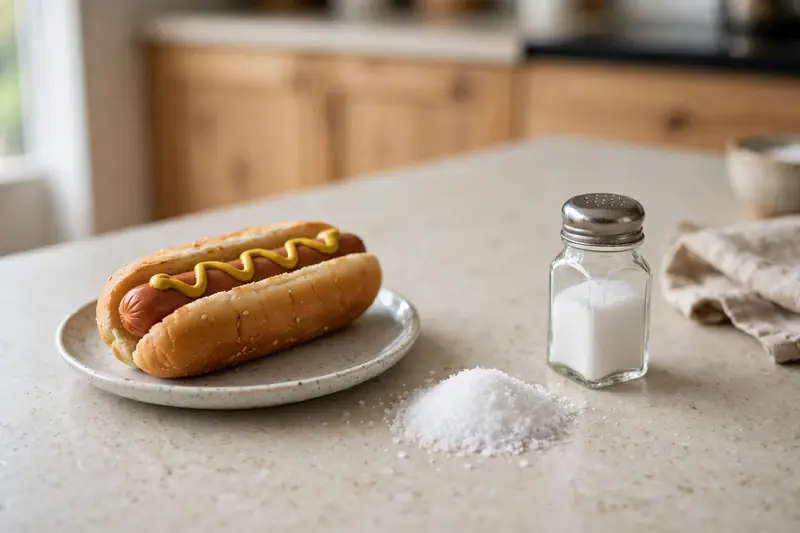
Dogs clear excess sodium through urine when water is freely available, so a single salty snack with a full water bowl often passes without drama. The trouble starts with repetition and with vulnerable dogs. Daily salty extras keep blood pressure elevated over time, and kidneys doing constant overtime wear out faster. Small dogs feel every milligram more because the same frank represents a far larger dose per pound.
Salt poisoning from hot dogs alone is uncommon but not impossible. A 10-pound dog that eats two or three whole franks can approach the lower end of the toxic range, especially without water nearby. The signs mirror any salt overload: extreme thirst, vomiting, diarrhea, then tremors or disorientation in severe cases. Most hot dog incidents never reach that point, which is fortunate, because the seasoning risks below need no large dose to matter.
Garlic powder, onion powder, and red blood cells
Garlic and onion belong to the allium family, and every member is toxic to dogs, including in powdered form. The powders are more concentrated than fresh cloves, so the “just a little seasoning” defense fails faster than most owners expect.
These compounds oxidize hemoglobin and destroy red blood cells, causing Heinz body anemia, where red cells break down faster than the body replaces them. The ASPCA’s list of people foods to avoid covers the full lineup of kitchen seasonings that threaten dogs.
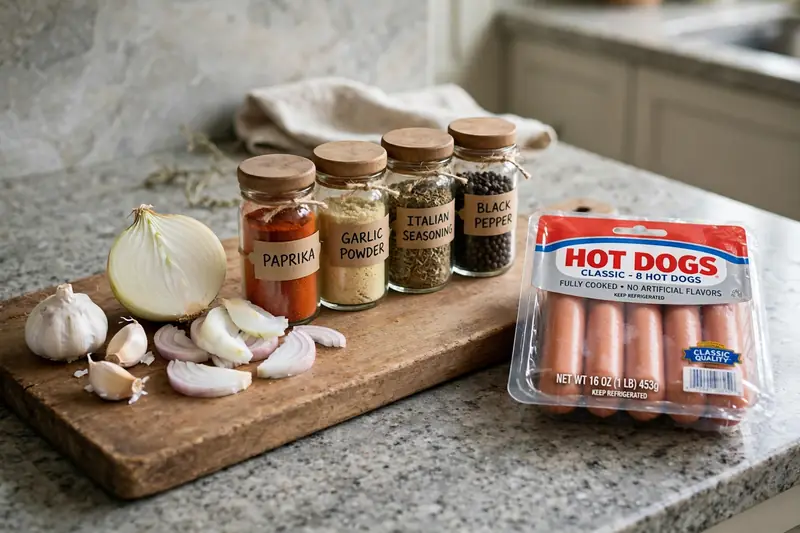
Anemia from a single hot dog is unlikely in a large dog, but the risk stacks with repetition. A dog that gets seasoned table scraps regularly accumulates red blood cell damage between episodes, and the signs creep in quietly: pale gums, unusual tiredness, rapid breathing after mild exercise. Owners blame age or heat. The onion toxicity guide lays out how little it takes for small dogs, and garlic carries the same warning even in the powdered form hiding in processed meat.
This is the strongest argument against the “tiny training treat” habit. A pea-size piece of frank seems harmless, but if that frank contains garlic and onion powder, every repetition adds a small hematologic insult. Trainers who use hot dogs successfully either check labels for allium-free brands or accept a tradeoff they rarely explain. Read your brand’s ingredient list before deciding the habit is safe.
Nitrates, nitrites, and the long-term question
Sodium nitrate and nitrite keep hot dogs pink and inhibit bacterial growth, and they are the most debated ingredients in the frank. In the body, nitrates can convert to nitrosamines, compounds linked to cancer risk in human research. The World Health Organization classifies processed meat as a Group 1 carcinogen for people.
That is the same category as tobacco, and the classification rests on strong evidence for colorectal cancer in humans.
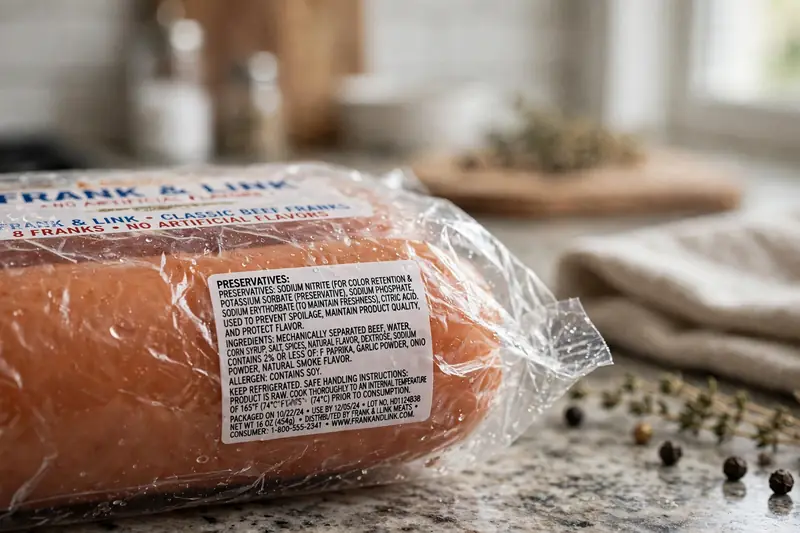
Honesty requires the caveat: that classification rests on human data, and no equivalent long-term study exists in dogs. Canine cancer research has not isolated hot dog consumption as a variable, because controlled decades-long feeding trials in pet dogs do not happen. What can be said is that the mechanism, nitrosamine formation, is basic chemistry that works the same in mammalian stomachs, and that chronic exposure is the concern, not the occasional bite.
“Uncured” or “no added nitrates” labels deserve a skeptical look. Many such products use celery powder, which is naturally rich in nitrates, achieving the same preservative effect under a friendlier label. The nitrate load ends up similar. If nitrates worry you, the fix is not a different hot dog. Choose a different treat instead.
Fat and the pancreatitis connection
A standard frank carries around 10 to 15 grams of fat, much of it saturated. For a dog, that is a concentrated fat bomb, and the pancreas is the organ that pays. High-fat meals are a classic trigger for pancreatitis, a painful inflammation where the pancreas begins digesting itself.
A single fatty indulgence can set off an episode in a susceptible dog.

Pancreatitis announces itself clearly: repeated vomiting, abdominal pain, a hunched posture or the “prayer position” with rear raised and chest low, and complete refusal of food. PetMD’s pancreatitis guide stresses that early vet care is critical, since severe cases need hospitalization with IV fluids and pain control. Dogs that have had one episode remain prone to more, which turns every future fatty scrap into a gamble.
Weight is the slower fat story. Hot dogs deliver roughly 150 calories each, nearly all from fat and refined ingredients. For a 20-pound dog needing around 400 calories a day, one frank is over a third of the daily budget spent on nothing useful. Regular sharing shows up on the ribs within months, and every extra pound strains joints and shortens the healthy years.
If your dog already ate a hot dog
Start by estimating the damage. Note how much the dog ate and whether it had toppings; the brand helps the vet judge the seasoning load. A plain bite needs nothing more than watching. A whole hot dog with the works, onions, relish, mustard, in a small dog deserves a vet call, since the onion and the sodium stack into a real risk.
Note the time, because symptom onset guides the vet’s advice.

Cut shape matters more than owners realize. Never slice hot dogs into round coins for a dog. The coin shape is a near-perfect plug for a canine throat, and round slices are a documented choking hazard. Cut lengthwise into thin strips first, then across into small pieces. This applies to any cylindrical treat, not just franks.
| What happened | Risk | What to do |
|---|---|---|
| One small bite, plain | Low | Watch for mild stomach upset |
| Half or whole frank, plain | Moderate | Watch closely, ensure water, call vet for small dogs |
| Any amount with onion/garlic toppings | Moderate to high | Call vet, note the amount |
| Repeated vomiting or lethargy | High | Vet visit, bring the package |
For mild stomach upset, rest and water do most of the work; a bland diet for a day or two settles the rest. Do not induce vomiting unless the vet directs it. Most single-frank incidents in healthy medium and large dogs resolve with nothing worse than soft stool and a thirsty evening.

Better high-value training treats
Trainers reach for hot dogs because dogs go wild for them: a salty, fatty, aromatic mouthful that disappears in one gulp. Every one of those qualities has a healthier substitute. Small pieces of plain boiled chicken breast deliver the high protein aroma dogs love with a fraction of the fat and sodium.
Freeze-dried meat treats from the pet aisle concentrate the smell without the additives.
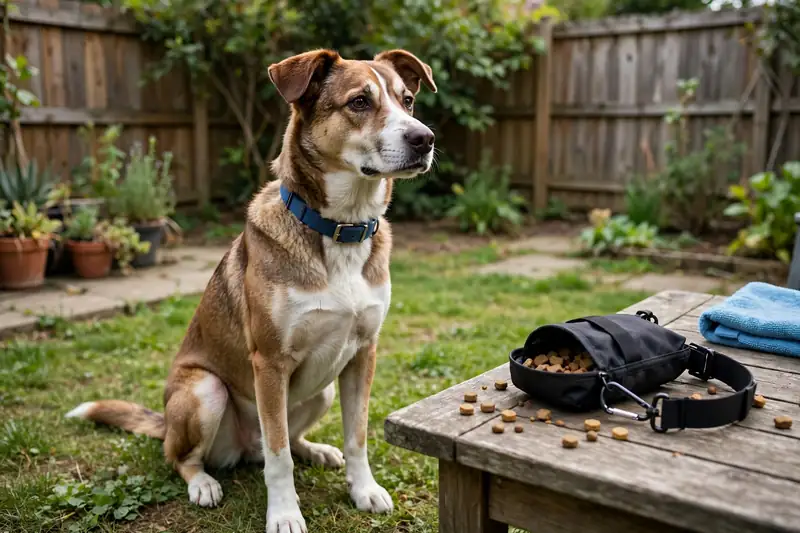
Cheese cubes work for many dogs and portion easily, though dairy-sensitive dogs should skip them. Commercial training treats are engineered for exactly this job. They pack intense smell into a tiny, soft bite with none of the nutritional wreckage. For hiding pills, purpose-made pill pockets beat hot dog chunks, since they seal around the medication without the sodium and seasoning load.
The deeper point is about reward economics. A training treat should be something the dog values, not something that costs health. Rotating among three or four healthy high-value options keeps the dog guessing and excited, which actually improves training focus compared to one predictable frank. Novelty is a feature, and the pantry already holds it.
Puppies and senior dogs
Puppies should skip hot dogs entirely. Their kidneys handle sodium loads less efficiently, their small weight magnifies every milligram, and their developing digestive systems react harder to fat. A puppy that steals a bite will probably be fine with watching, but there is no reason to offer one deliberately when plain chicken does the training job better.

Senior dogs carry the accumulated bill. Aging kidneys filter less efficiently, many seniors take medications that interact with sodium, and a prior pancreatitis episode makes any fatty treat a relapse risk. Older dogs also tend toward extra weight, where 150 empty calories do the most harm. The VCA’s general feeding guidelines keep treats near 10 percent of daily calories, a budget one frank can devour in a minute.
For both age groups, the choking advice doubles in importance. Puppies gulp without chewing, and seniors with dental problems swallow awkwardly. Any cylindrical food gets the lengthwise cut, no exceptions, or better yet, gets replaced by a soft treat that cannot plug a throat.
Frequently asked questions about hot dogs and dogs
Owners ask about training treats and turkey franks, plus what to do after a barbecue theft. The six answers below cover the questions that come up most often, with straight guidance for each one. Start with the training question, since that habit is the most common.
Can dogs eat hot dogs as training treats?
Some trainers do use tiny pieces, but healthier options exist. Plain boiled chicken, freeze-dried meat, or commercial training treats give the same motivation without the sodium, fat, and seasoning. If you insist on franks, check the label for garlic and onion powder first.
Are turkey or chicken hot dogs safer?
Slightly lower in fat, but usually just as high in sodium and still seasoned with garlic or onion powder. The processing and preservatives remain. They are not a safe swap, only a marginally less bad one.
Can dogs eat the hot dog bun?
A small piece of plain bun will not poison a dog, but it adds refined carbs with no benefit. Skip the bun along with the frank, especially for dogs watching their weight or blood sugar.
My dog ate a whole hot dog. What should I do?
Watch for vomiting and diarrhea, plus extreme thirst, over the next several hours. Make sure water is available. Call your vet if your dog is small, if the frank had onion or garlic toppings, or if symptoms go beyond mild stomach upset.
Can dogs eat cocktail wieners or mini franks?
The same rules apply in miniature. They carry the same sodium, fat, and seasonings per bite, and their small round shape is a worse choking hazard. Cut lengthwise or skip them.
Do “uncured” hot dogs make a safe treat?
Not really. Most use celery powder, which supplies nitrates naturally, so the preservative load is similar. The sodium and seasonings do not change either. “Uncured” is a labeling distinction, not a safety upgrade for dogs. The AKC’s hot dog guidance reaches the same verdict: the salt alone is reason enough to pass.
Hot dogs stay a people food. The sodium alone is reason enough; the fat and preservatives only add to the case against them. Keep training rewards in the boiled-chicken family and leave the franks for the humans at the barbecue.
Disclaimer: This article is for general information only and is not veterinary advice. Every dog is different, and dogs with health conditions, puppies, and nursing dogs may need different guidance. If your dog shows symptoms after eating hot dogs, contact your veterinarian promptly.