Dogs can share the Thanksgiving table through a small plate of unseasoned turkey breast, sweet potato, pumpkin, and green beans. The rule that decides everything is simple: set the dog’s portion aside before butter, salt, onions, and sugar go in. Stuffing, gravy, turkey skin, bones, casseroles, pie, raw dough, grapes, chocolate, and anything sugar-free stay off the menu completely. Washington State University’s veterinary hospital notes that the holidays bring thousands of extra vet visits every year for pets sickened by holiday food, so the safest plate your dog gets on Thanksgiving is the one you plan, not the one that falls off the table.

Thanksgiving is the one day of the year when even careful owners get sloppy. Guests slip the dog scraps. Kids drop plates.
What matters is not the food’s name but what was done to it. A plain boiled potato is a different food from mashed potatoes with butter and garlic, and that difference is where dogs get hurt. Below is the full safe list, the danger list, the portion math, and the emergency plan, dish by dish.
The safe list and the danger list
Dogs can safely eat plain cooked turkey breast, plain sweet potato, plain pumpkin puree, plain green beans, plain corn kernels off the cob, and cored apple slices. Dogs must not eat stuffing, gravy, turkey skin or bones, casseroles, buttery mashed potatoes, raw yeast dough, grapes or raisins, chocolate, anything with xylitol, alcohol, or any dish cooked with onion, garlic, leeks, or heavy seasoning.
Memorize that split and the day gets easy. The safe foods share three traits: cooked plain, served in small amounts, and pulled aside before seasoning. The danger foods fail on fat, seasoning, bones, or true toxins.
A dog that eats only from the safe list, in treat-size portions, has a good holiday. A dog that works the room collecting scraps does not. Keep a safe-foods list on your phone for the day, since guests will ask.
Turkey: the main event, with rules
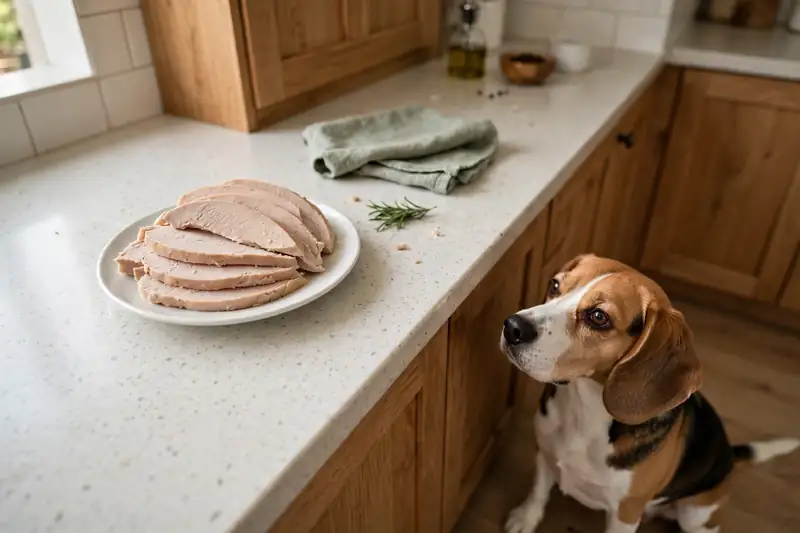
Plain, fully cooked turkey breast with no skin, no bones, and no seasoning is the safest way to share the centerpiece. White meat runs leaner than dark meat, and a few small bites give your dog the protein it loves without the fat load that causes trouble. The AKC’s turkey guidance draws the same line: plain turkey suits dogs, while the Thanksgiving bird, rubbed with butter and herbs, does not.

Pull the dog’s portion aside before the bird gets basted or carved with drippings. Skin has to go, since turkey skin is mostly fat and a classic trigger for pancreatitis.
Bones are non-negotiable. Cooked poultry bones splinter into sharp pieces that can lodge in the throat or tear the digestive tract, and turkey carcasses left in an open trash bag are one of the most common holiday emergencies vets see. Tie the carcass bag shut and take it straight outside.
The safe sides: sweet potato, pumpkin, green beans, and friends
Plain sweet potato, plain canned pumpkin, plain green beans, plain carrots, plain peas, and plain corn kernels cut off the cob all earn a spot on the dog’s plate. Bake or boil the sweet potato with nothing added, and skip the brown sugar, marshmallows, and butter that turn it into a casserole.

Pumpkin must list pumpkin as the only ingredient on the label, never pie filling, which carries sugar and spice. Green beans work steamed, boiled, or raw, chopped small.
These sides are where the “set aside first” habit pays off. Scoop a spoonful of plain sweet potato into the dog’s bowl before the marshmallows land. Pull a few green beans from the steamer before they meet the casserole dish with its cream sauce and fried onions.
Wash and slice the apple before it goes into any pie or salad. Owners who prep the dog’s plate while they cook never have to play detective at the table.
One warning on corn: plain kernels are fine, but the cob can cause an intestinal blockage that needs surgery. Cut the kernels off and throw the cob in the secured trash with the turkey bones.
Cranberries: the berry is fine, the sauce is not
Fresh or plain cooked cranberries are safe for dogs in small amounts, though most dogs find them too tart to bother with. Dried cranberries without added sugar work too, but check the bag, since dried fruit mixes often hide raisins, which are toxic. The AKC’s cranberry guidance adds a useful caution: very large amounts of cranberries may contribute to bladder stones in susceptible dogs, so a small taste beats a bowlful.
Cranberry sauce is a different food from cranberries. Most recipes load it with sugar, and some use grape juice as a sweetener, which puts a toxic ingredient in the dish.
Sugar-free versions are worse, since they may contain xylitol, the sweetener that can send a dog’s blood sugar crashing. Read our full breakdown of cranberry sauce and dogs before the can opener comes out. The short version: a teaspoon of plain sauce is unlikely to hurt, but the canned jelly version belongs nowhere near the dog.
Stuffing never belongs in the dog’s bowl
Stuffing is one of the least safe dishes on the Thanksgiving table for dogs. Most recipes build on onions, garlic, or shallots cooked in butter, and every member of the onion family damages a dog’s red blood cells, whether raw, cooked, or powdered. Some recipes add raisins or sausage drippings, stacking a toxin on top of a fat load. There is no plain version of stuffing to salvage.

The onion family deserves emphasis because it hides everywhere on Thanksgiving. Onion powder sits in seasoning blends, gravy mixes, and pre-made stuffing. Leeks belong to the same family and carry the same risk, and they show up in fancier stuffing recipes.
Garlic gets a folk reputation as harmless in small amounts, but the dose that harms a small dog is smaller than most owners guess, and there is no reason to test it on a holiday. Our full guide on stuffing and dogs walks through every common ingredient and why each one fails the safety test.
Guests are the weak point here. A well-meaning relative who thinks “a little stuffing never hurt any dog” can undo your whole plan in one handful.
Tell the table plainly before dinner that the dog gets its own plate and nothing else. Dogs that beg get the planned treats. Dogs that score stuffing off a dropped plate get watched for vomiting and tiredness over the next day.
Gravy, mashed potatoes, and the fat problem
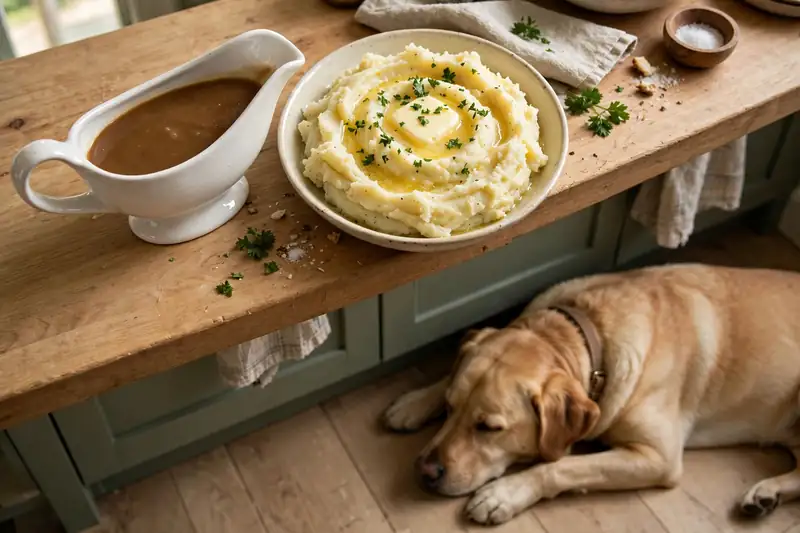
Gravy concentrates everything risky about the meal into one pour: turkey drippings, fat, salt, and usually onion or garlic. Mashed potatoes arrive loaded with butter, milk, salt, and often roasted garlic. Neither belongs in the dog’s bowl. A spoonful of plain boiled potato is harmless, but the mashed version on your table is a different food, and the difference is all fat and seasoning.

Fat is the mechanism behind most Thanksgiving vet visits, not exotic toxins. A sudden load of rich, fatty food can inflame a dog’s pancreas, a condition called pancreatitis that brings vomiting, belly pain, lethargy, and sometimes hospitalization. Dogs that eat plain kibble all year and then get a plate of drippings are the classic cases. Read the full breakdown of gravy and dogs for the ingredient-by-ingredient picture. The practical rule: if a dish glistens, it stays with the humans.
Butter deserves its own mention. A tablespoon carries about 100 calories and 12 grams of fat, a serious load for a 20-pound dog. Sour cream and cheese sauces in casseroles do the same damage in quieter form, so keep every casserole on the human side of the table.
The true dangers: bones, dough, grapes, chocolate, and xylitol
A few Thanksgiving hazards go beyond stomach upset into genuine emergencies. Cooked turkey bones splinter and can choke a dog or tear the digestive tract. Raw yeast dough expands in the warm stomach and produces alcohol as it rises.

Grapes and raisins can trigger sudden kidney failure, and there is no known safe amount. Chocolate and xylitol round out the list, and both demand a fast vet call.
Wine, beer, cocktails, and alcohol-soaked desserts all belong out of reach. Ham deserves a spot here too: its salt and fat load makes it one of the worst things a dog can steal, even though it is not a true toxin.
The trash is the delivery system for most of these. Turkey carcasses, pie tins, corn cobs, and cans go into a bag that a determined dog can nose open in seconds. Take the bag outside to a latched bin the moment dinner ends. Most holiday poisonings the ASPCA’s poison control line hears about start with “he got into the trash,” and the ASPCA’s list of people foods to avoid reads like a Thanksgiving menu with the safe items crossed out.
Why the day after Thanksgiving keeps vets busy
Veterinary hospitals see a spike in sick dogs around Thanksgiving every year, and pancreatitis from fatty table scraps drives much of it. Washington State University’s veterinary teaching hospital reports an uptick in vomiting and diarrhea cases during holiday periods. The day after Thanksgiving ranks among the busiest days of the year for emergency vet visits in the United States.

Pancreatitis deserves respect because it does not always announce itself at the table. Signs like repeated vomiting, a hunched or painful belly, loss of appetite, and deep lethargy can appear hours or even a day or two after the rich meal. Mild cases resolve with veterinary care and a bland diet, but severe cases need hospitalization with IV fluids, and the condition can turn life-threatening. Dogs with a history of pancreatitis face higher risk from even small fatty slips.
One fact changes the priority order: most Thanksgiving dog emergencies are pancreatitis and gut blockages from foods that are merely too rich, too fatty, or physically dangerous, not true poisonings. Owners guard against the exotic toxins and hand over the gravy boat, which is backwards.
Fear the fat first, the bones second, and the true toxins third, and your priorities land in the right order.
Building your dog’s Thanksgiving plate
Build the plate from the safe list and keep every treat, scraps included, within 10 percent of your dog’s daily calories. For a 30-pound dog eating about 800 calories a day, the whole Thanksgiving share should stay under roughly 80 calories: a few bites of turkey breast, a spoonful of plain sweet potato, and a few green beans. The VCA’s feeding guidelines set that 10 percent ceiling for all treats, and the holiday is no exception.

Prep the plate while you cook, not at the table. Set aside the plain portions before seasoning, keep them covered in the fridge, and serve them in the dog’s own bowl at dinner time.
A dog eating its own special meal begs less and steals less. Skip the “one bite of everything” approach. Three or four safe foods in small amounts beat a little of twelve dishes, and your dog cannot tell the difference between a feast and a few good bites.
Leftovers need the same discipline the next day. Plain turkey and plain sides keep in the fridge for three to four days and make fine meal toppers in small amounts.
A dog that survived Thanksgiving dinner can still get sick from Friday’s reheated gravy and pie. When in doubt about a leftover, the dog’s regular food is the answer. Dogs do not need dietary variety, and they certainly do not need a second holiday.
When to call the vet
Call your vet or a poison control line right away if your dog eats grapes, raisins, chocolate, xylitol, raw dough, alcohol, a large amount of fatty food, or cooked bones. Do not wait for symptoms with true toxins, since early treatment changes the outcome. For mild one-time vomiting after a small rich bite, withhold food for a few hours, then offer a bland diet and watch.

Repeated vomiting, a swollen or painful belly, bloody stool, extreme tiredness, drooling that will not stop, or collapse all mean an emergency visit, not home watching. Save your vet’s number and the ASPCA poison control number in your phone before the holiday, since most owners look them up mid-panic. A note on the fridge with both numbers covers every pet in the house and every guest who might need them.
Frequently asked questions about dogs and Thanksgiving food
Can dogs eat Thanksgiving turkey skin?
Skip the skin. Turkey skin is mostly fat and often coated in butter, oil, and seasoning. It is one of the most common triggers for pancreatitis in dogs. Pull it off and throw it in the secured trash before serving any meat.
Can dogs eat ham on Thanksgiving?
Skip it. Ham is very salty and fatty, and glazes add sugar on top. A small stolen bite is unlikely to poison a dog, but it can cause serious stomach upset. Plain turkey is the better share every time.
Can dogs eat pumpkin pie?
Keep the pie for the humans. Pumpkin pie filling carries sugar, spices like nutmeg, and sometimes xylitol in sugar-free recipes. Plain canned pumpkin is the safe alternative. Read the full guide on pumpkin pie and dogs for the ingredient breakdown.
Can my dog have eggnog or other holiday drinks?
Pass on the holiday drinks. Eggnog packs dairy, sugar, and alcohol, three strikes at once. Most adult dogs digest dairy poorly, and alcohol is toxic. Water is the right holiday drink, and a few plain treats make a better toast.
Is candy corn safe for dogs?
Keep the candy bowl away. Candy corn is pure sugar, and sugar-free versions may contain xylitol. Keep all Halloween-to-Thanksgiving candy out of reach, since the fall candy season is one long temptation for dogs.
My dog ate stuffing off the floor. What should I do?
A single small bite of onion-free stuffing usually means watching for stomach upset. Stuffing with onion, garlic, or raisins, or a large amount of any stuffing, warrants a call to your vet. Note the time and amount before you call.
How much turkey can my dog have?
Keep the total Thanksgiving share within 10 percent of daily calories. For most dogs that means a few small bites of plain breast meat, not a plateful. A large dog can handle a few ounces; a small dog should get a tablespoon or two at most.
Your dog’s Thanksgiving works when you plan it like any other part of the holiday. Set the plain portions aside while you cook, serve them in the dog’s own bowl, secure the trash before dessert, and keep the vet’s number on the fridge. The dog gets its feast, you get your dinner, and nobody spends Friday at the emergency clinic.
Disclaimer: This article is for general information only and is not veterinary advice. Every dog is different, and dogs with health conditions such as pancreatitis, diabetes, or kidney disease may need different guidance. If your dog eats something questionable or shows symptoms, contact your veterinarian or the ASPCA Animal Poison Control Center promptly.