
Asparagus arrives with spring, and those green spears on your plate look harmless enough to share. The answer is yes, with one condition that matters more than anything else. Cooked plain asparagus is safe for dogs. Raw asparagus is tough enough to cause choking or an upset stomach, and the ornamental asparagus fern in the corner of the living room is a different plant entirely, one that is toxic to dogs. A few small pieces of steamed asparagus now and then make a fine occasional treat.

Can dogs eat asparagus? The short answer
Yes, dogs can eat asparagus when it is cooked plain and cut into small pieces. Steaming or boiling softens the fibrous stalks and makes them easy to digest. Skip raw spears and heavy seasonings, and keep the ornamental asparagus fern away from your dog, since that plant is toxic.

The AKC lists asparagus as safe for dogs when it is prepared plainly. It is not a necessary food. Your dog’s complete diet already covers every nutrient it needs, so think of asparagus as a low effort vegetable treat with real fiber behind it. If you share table vegetables often, keep the list of human foods dogs can eat handy as a quick reference.
Dogs tend to be suspicious of new vegetables at first, and asparagus is no exception. If your dog sniffs and walks away, that is a normal reaction, not a verdict on the food. Try again another day with a smaller piece mixed into the regular meal. Most dogs accept new vegetables by the third or fourth offering, and there is no reason to force the issue if yours never takes to it.
What asparagus offers nutritionally
Asparagus brings fiber, folate, and vitamins A, C, E, and K, with small amounts of potassium and iron. One or two spears add gentle nutrition to the day, though the vegetable never replaces the balanced food in your dog’s bowl.
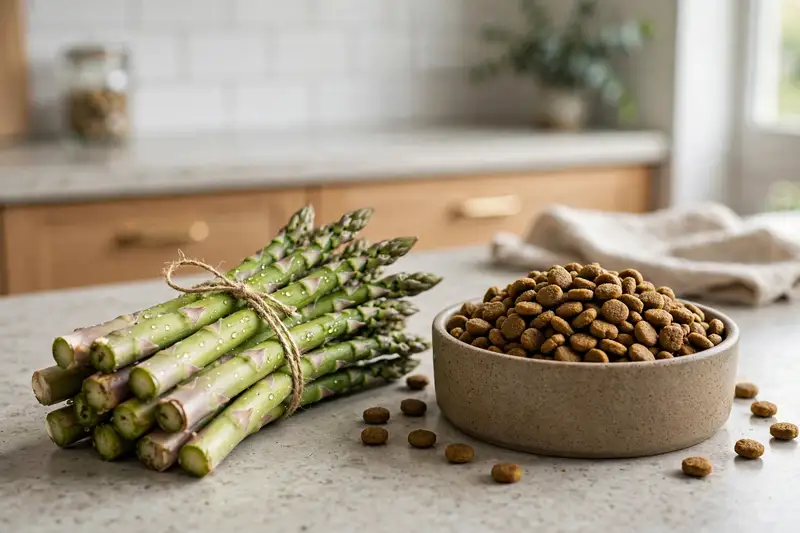
The fiber is the main prize. It supports steady digestion and helps stool hold its form, and the fiber in a dog’s diet works best when it arrives in small amounts from whole foods. Folate supports healthy cell function, and vitamin K plays a role in normal blood clotting. A realistic note on vitamin C: dogs make their own, so they do not need it from vegetables the way people do. The extra does no harm. None of this makes asparagus a superfood for dogs. It is a decent vegetable treat, and it earns that spot through fiber and low calories more than through any single vitamin.
Asparagus also works well as a training reward for dogs on a diet. A pea-size piece of steamed asparagus carries almost no calories, so you can reward generously during a training session without unbalancing the day’s food. Keep a small container of chopped pieces in the fridge and they stay fresh for three to four days, ready for quick rewards.
Raw vs cooked: why cooked wins
Cooked asparagus beats raw every time. Raw spears are fibrous and woody, which makes them hard to chew and digest. A dog that gulps raw stalks can choke, and even careful chewers often end up with stomach upset.

Light steaming or boiling until just tender solves the texture problem. The heat softens the stalks without adding anything a dog should avoid. Grilling works too, as long as the spears go on plain with no oil or seasoning. What you want to avoid is the raw crunch. Dogs do not chew the way people do, and a fibrous stalk can lodge in the throat of a small or gulpy dog.
Frozen asparagus spears work just as well as fresh once they are cooked. Thaw them, steam until tender, and chop small. Microwaving in a covered dish with a splash of water also works when you are short on time. Whatever method you choose, the test is the same: the spear should bend easily and offer no resistance to a fork.
How to prepare asparagus for your dog
Wash the spears, snap off the tough woody ends, steam or boil until tender, then chop into pea-size pieces. Serve plain, with no oil, butter, salt, garlic, or onion anywhere in the process.
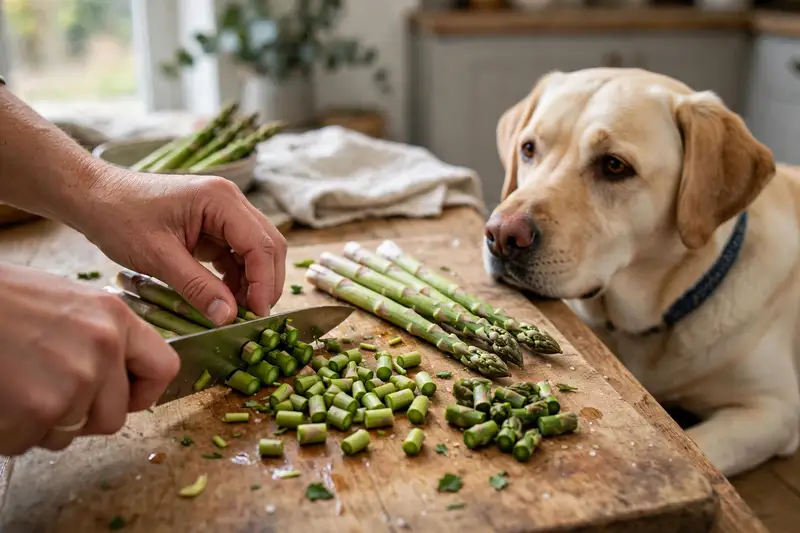
The woody ends snap naturally where the tender part begins, so bend each spear and let it break. That takes care of the toughest bit. Chop the rest small, especially for small dogs. Seasonings are the quiet trap here. Garlic and onion damage a dog’s red blood cells, and the ASPCA’s list of people foods to avoid names both among the items that never belong in a dog’s bowl. Cook your own portion how you like, and set the dog’s portion aside before the seasoning goes on.
If you cook asparagus often, set up a simple routine. Wash the whole bunch at once, snap the ends, and steam the dog’s portion first in plain water before you start your own seasoned batch. Cooked pieces keep in a sealed container in the fridge for three to four days. Discard leftovers that smell off or feel slimy, the same standard you would use for your own food.
How much asparagus is safe to feed
Keep asparagus within 10 percent of your dog’s daily calories. For most dogs that means one or two small pieces for a small dog, a chopped spear or two for a medium dog, and two or three spears for a large dog, a few times a week at most.
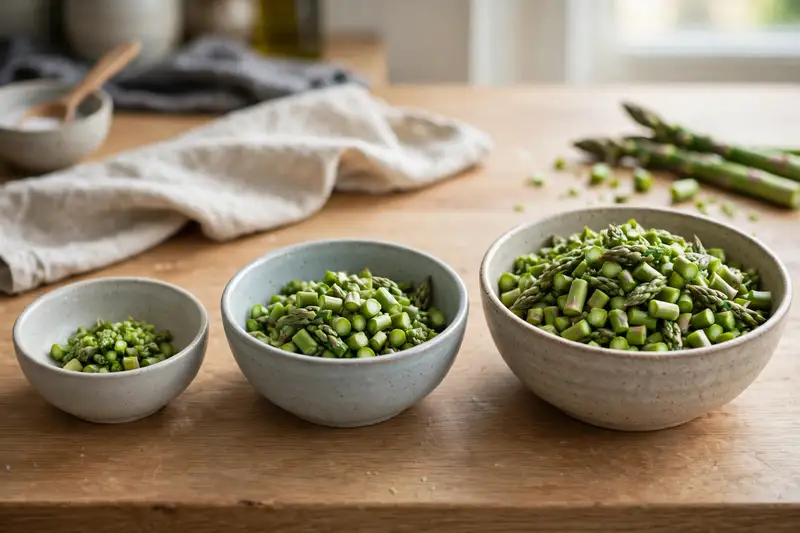
The VCA’s general feeding guidelines put treats, vegetables included, at about 10 percent of daily calories, and that cap protects the balanced nutrition in your dog’s food.
| Dog size | Safe amount | Frequency |
|---|---|---|
| Small (under 20 lbs) | One or two small pieces | A few times a week |
| Medium (20 to 50 lbs) | One spear, chopped | A few times a week |
| Large (over 50 lbs) | Two or three spears, chopped | A few times a week |
The first serving should be smaller than the chart. One small piece, then a full day of watching. Asparagus is gentle on most stomachs, but every dog is an individual, and your dog’s reaction decides the real limit.
It helps to think of asparagus as a some-days food rather than an every-day one. Two or three times a week is plenty, and skipping weeks entirely is fine too. Dogs do not need dietary variety the way people imagine. The vegetable is a bonus, and the balanced dog food underneath does the real nutritional work day after day.
The asparagus fern is toxic: keep it away
The ornamental asparagus fern is toxic to dogs. It causes vomiting, diarrhea, belly pain, and skin irritation. It is a different plant from the vegetable asparagus, but the shared name confuses plenty of owners.

The ASPCA lists the asparagus fern as toxic to dogs, and the culprits are compounds called sapogenins. A curious dog that chews the feathery fronds can start vomiting within hours. The small berries the plant sometimes grows carry the highest concentration. Keep the plant on a high shelf or out of your dog’s rooms entirely, and sweep up any fallen fronds. If your dog chews any part of it, call your vet rather than waiting to see what happens.
Gardeners should know the vegetable patch has its own hazards beyond the houseplant. Asparagus beds grow the same feathery foliage as the ornamental fern once the harvest ends, and dogs that dig in gardens can chew it. Fence off the vegetable patch or supervise garden time during the growing season, and teach a solid leave-it for anything green and feathery.
Seasonings that turn a safe vegetable risky
Garlic, onion, heavy salt, and rich butter sauces turn safe asparagus into a problem. Garlic and onion are the serious ones, since both can damage red blood cells and cause anemia in dogs.

This is where most asparagus incidents start, not with the vegetable itself but with how it was cooked. A pan of asparagus roasted with garlic and olive oil smells wonderful and suits people fine. None of it suits the dog. Onion powder hides in seasoning blends, so read the label on anything pre-mixed. When in doubt, cook the dog’s portion separately in plain water. It takes five extra minutes and removes the whole question.
Restaurant asparagus is the version most likely to cause trouble, since it usually arrives roasted in oil with garlic and parmesan. A dog that begs at the table and scores a restaurant spear gets the full seasoning load. This is another good reason to keep table scraps off the menu entirely and offer the dog its own plain treat instead.
Asparagus vs broccoli, green beans, and spinach
Asparagus belongs with broccoli, green beans, and spinach on the safe list of green vegetables for dogs. All four need plain cooking and small portions, and all four are better choices than seasoned table scraps.
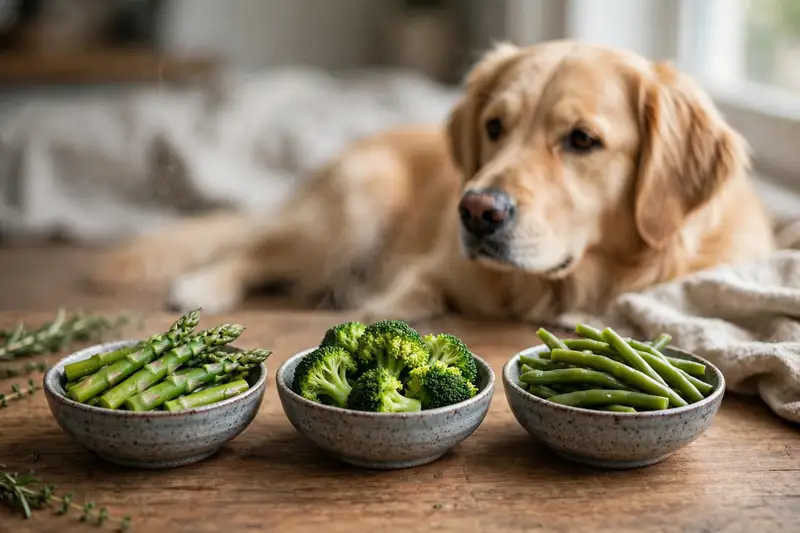
Broccoli brings a similar crunch when steamed, green beans are the classic low calorie training treat, and spinach offers comparable vitamins in leafy form. Asparagus stands out for fiber and for being easy to portion by the spear. Rotating among a few safe vegetables keeps any single one from dominating the treat budget, which is the smarter way to share vegetables with a dog.
All four vegetables share one more trait: they are cheapest in season. Asparagus prices drop sharply in spring, which is the natural time to share a few spears. Buying in season also means fresher produce with better texture, and fresh matters when the whole point is a crisp, clean treat.
Puppies and senior dogs
Puppies and senior dogs can eat asparagus when it is cooked very soft and chopped tiny. Keep portions smaller than an adult’s, and skip it for puppies under eight weeks or any dog with ongoing digestive trouble unless your vet agrees.

Puppies swallow without chewing more than adults do, so tiny pieces are a safety rule, not a preference. Very young puppies are still settling their digestion, and new foods should arrive one at a time so you can tell what caused any upset. Senior dogs usually handle soft asparagus well, and a few tender pieces can tempt a picky older eater. The cautions grow with age and illness. A senior with kidney disease or chronic stomach issues gets new vegetables only on the vet’s word.
For puppies, the first vegetable is often a milestone owners overthink. There is no prize for early variety. A puppy under six months does perfectly well on its complete puppy food alone, and vegetables can wait until the dog is older and its digestion is settled. When you do start, one vegetable at a time and one tiny piece at a time.
When to call the vet
Call your vet if your dog eats asparagus fern, vomits repeatedly, refuses food for more than a day, or shows a swollen or painful belly. A few pieces of plain asparagus need nothing more than normal watching.

Choking is the urgent case. If your dog is gagging on a stalk and cannot clear it, act at once and get to a vet. For mild stomach upset after a first taste, a bland diet for a day or two often settles things. Signs that mean a visit rather than home watching include blood in vomit or stool, extreme tiredness, and repeated retching. When in doubt, the call costs nothing and buys certainty.
Keep your vet’s number and the ASPCA poison control number saved in your phone before you need them. Most owners look them up mid-panic, which wastes the minutes that matter. A note on the fridge with both numbers covers every pet in the house, not just the dog.
Frequently asked questions about dogs and asparagus
Owners usually ask about raw spears, the tips, the fern, and canned asparagus. The answers below cover the questions that come up most often.
Can dogs eat raw asparagus?
Raw asparagus is not poisonous, but it is tough and fibrous. Most dogs struggle to chew it, and the likely result is vomiting or stomach upset. Steam or boil it until tender and chop it small instead.
Can dogs eat asparagus tips?
Yes, and the tips are the best part. They are the most tender section of the spear. The same rules apply: cook them plain, chop them small, and keep the portion at treat size.
Is asparagus fern poisonous to dogs?
Yes. The ASPCA lists it as toxic, and it causes vomiting, diarrhea, abdominal pain, and skin irritation. Keep the plant out of your dog’s reach and call your vet if any of it gets eaten.
Can dogs eat canned asparagus?
Skip it. Canned asparagus sits in salty liquid, and the sodium runs far beyond what a dog’s treat should carry. Fresh or frozen plain spears are the better choice every time.
Will asparagus upset my dog’s stomach?
A small amount rarely does. Too much fiber at once can cause gas or loose stool, which is why portions stay small and new vegetables arrive gradually, one at a time.
My dog grabbed a whole raw stalk. What should I do?
Watch for gagging first, since choking is the immediate risk. If the stalk went down without trouble, expect possible vomiting or loose stool within a day. Call your vet if vomiting repeats or your dog seems distressed.
Asparagus earns a cautious yes. Cook it plain, chop it small, and keep portions modest, and it makes a fine spring treat with real fiber behind it. Keep the fern on the shelf and the garlic in your own pan, and there is very little to worry about.
Disclaimer: This article is for general information only and is not veterinary advice. Every dog is different, and dogs with health conditions, puppies, and nursing dogs may need different guidance. If you are unsure, or if your dog shows symptoms after eating asparagus, contact your veterinarian.


