

The liver does hundreds of jobs: filtering toxins, aiding digestion, storing energy, helping blood clot. It also has a remarkable ability to keep working while damaged, which is exactly what makes liver disease in dogs so sneaky. By the time obvious symptoms appear, the disease is often advanced. The early signs look like nothing much: a little less appetite, occasional vomiting, a dog that seems slightly off. This guide explains what liver disease means, the signs that should not be ignored, how vets find it, and how diet and care fit into treatment. It will not make you a diagnostician. It will make you the kind of owner who catches things early.
What liver disease means in dogs
Liver disease is any condition that impairs the liver’s ability to do its jobs, from filtering toxins to producing clotting proteins. It can be acute, arriving suddenly from poisoning or infection, or chronic, developing slowly over months or years. Because the liver has large reserves and can regenerate, dogs often show no signs until significant damage has occurred.
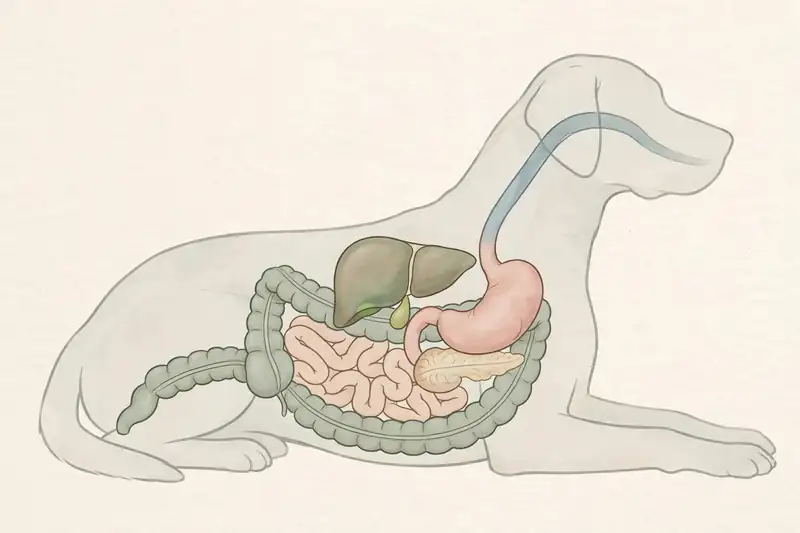
That reserve capacity is both a blessing and a trap. It means the liver can recover from insults that would destroy other organs. It also means “my dog seems fine” is unreliable evidence. The Merck Veterinary Manual emphasizes that the liver’s storage capacity and regenerative ability provide protection against permanent damage, but its central role in metabolizing and detoxifying compounds also makes it uniquely susceptible to injury. Acute liver failure is an emergency: sudden loss of liver function with neurologic signs and clotting problems. Chronic disease is a long management story. Both start with noticing.
The silent organ
If there is one takeaway from this section, it is that waiting for dramatic symptoms means waiting too long. Subtle, persistent changes deserve attention.
Early signs owners miss
The early signs of liver disease are frustratingly vague. Appetite drops, sometimes just slightly. Occasional vomiting. Mild lethargy, a dog that plays a little less. Gradual weight loss. Increased thirst and urination. Any one of these could be nothing. Together, persisting over weeks, they form a pattern worth investigating.

The Merck Veterinary Manual lists the sign spectrum: loss of appetite, vomiting, diarrhea, weight loss, and excessive urination and thirst among the earlier and more general signs. The trap is that every one of these also fits a dozen minor issues. A dog that skips breakfast once is not a liver case. A dog that has been eating less, drinking more, and losing weight for a month is a vet visit. Trust trends over moments. If you keep a mental log and the trend points the wrong way for more than a couple of weeks, make the appointment.
The two-week rule
A vague symptom that persists or worsens over two weeks has earned a vet visit. Write down what you are seeing with dates. That log turns a vague worry into useful clinical information.
Warning signs that need a vet now
Some signs skip the line entirely. Jaundice is the classic one: a yellow tinge to the gums, the whites of the eyes, or the skin. It means bilirubin is building up because the liver cannot process it, and it always warrants prompt evaluation.

A swollen abdomen suggests fluid accumulation, called ascites, which the Merck Manual links to liver disease through high blood pressure in the liver and low blood protein. Bleeding or bruising easily points to clotting problems, since the liver makes clotting proteins. Neurologic signs are the most alarming: dullness, circling, head pressing against walls, aimless wandering, disorientation, or seizures can indicate hepatic encephalopathy, where toxins the liver should clear reach the brain. Vomiting blood or black tarry stool suggests gastrointestinal bleeding. Any of these means the vet now, not next week.
Do not Google your way past jaundice
Yellow gums or eyes are never a wait-and-see finding. They indicate a liver or red blood cell problem that needs professional diagnosis promptly.
Common causes
Liver disease has many possible causes, which is why diagnosis takes work. Toxins are a major category: certain drugs, heavy metals, some chemicals, and ingested poisons. Infections include viruses like infectious canine hepatitis, bacteria like leptospirosis, and parasites like toxoplasmosis.

The Merck Manual also describes chronic hepatitis, long-term liver inflammation that is more common in dogs than cats, and notes that in many cases the cause remains unknown. Copper accumulation causes copper-associated hepatopathy, one of the most common forms of chronic hepatitis. Congenital problems like portosystemic shunts, abnormal blood vessels that bypass the liver, mostly affect young dogs. Cancers, gallbladder disease, and severe infections elsewhere in the body can all involve the liver secondarily. Your vet’s job is to sort this list for your individual dog.
Why cause matters
Treatment follows cause. An infection needs antimicrobials, a toxin needs removal and support, copper accumulation needs dietary management. “Liver disease” is the chapter heading, not the diagnosis.
Breeds with higher risk
Some breeds carry a higher risk of liver disease, particularly chronic hepatitis. The Merck Veterinary Manual names Bedlington Terriers, Labrador Retrievers, Cocker Spaniels, Doberman Pinschers, Skye Terriers, Standard Poodles, Springer Spaniels, Chihuahuas, Maltese, and West Highland White Terriers as predisposed.

Bedlington Terriers are famous for copper-associated liver disease, a genetic defect in copper metabolism. If you own one of these breeds, this is not a reason for anxiety but for awareness. Mention the breed predisposition at checkups, keep up with routine blood work, and report vague signs a little earlier than you otherwise might. Screening catches what symptoms hide. For most owners of predisposed breeds, the practical change is small: be the person who notices the appetite dip in week two instead of month two.
Predisposition is not destiny
Many dogs of these breeds live full lives with healthy livers. Higher risk means higher vigilance, not a worse outcome by default.
How vets diagnose it
Diagnosis usually starts with blood work. Liver enzymes like ALT and ALP rise when liver cells are damaged, though the Merck Manual cautions that enzyme levels can even normalize in end-stage disease, so numbers need expert interpretation. Bilirubin, albumin, bile acids, and clotting tests round out the picture.

Imaging comes next: x-rays and ultrasound show liver size, texture, gallstones, and gallbladder problems. But the definitive answers often require sampling. The Merck Manual describes aspiration or biopsy procedures to obtain samples for cell and tissue analysis, bacterial culture, and toxicology. Ultrasound-guided needle biopsy is common; sometimes surgical biopsy is needed. Less common tests like nuclear scintigraphy can identify abnormal blood vessels such as shunts. It is a stepwise process, and your vet will explain which steps your dog’s case needs.
Ask what the numbers mean
Liver blood work is confusing by design. Ask your vet to walk you through which values are abnormal and what each one suggests. Understanding the plan makes the waiting easier.
How liver disease is treated
Treatment targets the underlying cause whenever one can be found. Infections get appropriate antimicrobials. Toxins get removed and countered. Copper accumulation gets dietary and medical management. Shunts may need surgery. When no specific cause is identified, treatment becomes supportive: slowing progression, minimizing complications, and giving the liver time to regenerate.

The Merck Manual notes that acute liver failure needs early, aggressive treatment, often including IV fluids, diet changes, antibiotics, and liver medications, with the goal of supporting the liver until it can recover. Complications get their own treatments: fluid in the abdomen may need sodium restriction, diuretics, or drainage; clotting problems may need vitamin K or transfusions; hepatic encephalopathy needs measures to reduce gut-derived toxins. This is specialist-level, ongoing care. What you can do is follow the plan precisely, keep every recheck, and report changes promptly.
Consistency is treatment
With chronic liver disease, the daily routine, exact diet, medications on schedule, is as much a part of therapy as anything the vet does in the clinic.
Feeding a dog with liver disease
Diet is a genuine part of liver treatment, and it must be vet-directed. The Merck Manual advises that the diet should include enough calories to maintain normal weight, with small, frequent meals often working best. Dogs that refuse to eat may need assisted feeding, because going without food worsens liver problems.

Protein needs are individual: too little impairs healing, too much can worsen encephalopathy signs in some dogs, so the vet tailors it. Prescribed supplements may include B vitamins, vitamin K, and vitamin E, since deficiencies are common and the Merck Manual notes supplementation is often recommended. Sodium restriction matters when fluid accumulates in the abdomen. What you should not do is design this diet yourself from internet recipes. Liver diets balance competing needs that shift as the disease changes, and that balancing is veterinary work. Ask about appropriate treats too, since well-meaning extras can undermine a therapeutic diet. A little unseasoned bone broth is sometimes suggested to encourage eating, but check with your vet first.
Appetite is information
A liver dog that suddenly refuses food is reporting something. Note when it started and tell the vet. Appetite changes often precede lab changes.
Toxins that attack the liver
Knowing the liver’s enemies helps you protect it. The Merck Manual lists heavy metals, certain herbicides, fungicides, insecticides, and rodent poisons among the culprits. Aflatoxins, produced by mold on spoiled food or grain, can cause life-threatening liver damage. Prevention here is mostly storage and supervision: locked chemicals, secured trash, and no stagnant water.

Some plants are notorious: amanita mushrooms, sago palms (cycads), and blue-green algae in stagnant water can all destroy the liver. Certain medications, even at prescribed doses, can injure the liver in sensitive dogs, which is why vets monitor blood work during long-term drug therapy. Accidental overdoses need immediate vet attention. The practical defenses are familiar: lock away chemicals and medications, do not let dogs drink from stagnant ponds, remove risky plants from the yard, throw out moldy food instead of feeding it, and tell your vet about every drug and supplement your dog takes.
The pond rule
Green, scummy, stagnant water is a no-swim, no-drink zone. Blue-green algae toxins can kill quickly, and the liver is a primary target.
Living with and monitoring liver disease
Chronic liver disease is managed, not cured, in most cases. That means a rhythm of recheck blood work, diet adjustments, and medication tweaks. The schedule your vet sets is based on how your dog responds, so keep every appointment even when things seem stable.

At home, your job is observation and consistency. Same food, same schedule, medications exactly as directed. Watch appetite, energy, stool, thirst, and belly size, and report trends rather than single off days. Know your dog’s red flags: jaundice, fluid belly, bleeding, neurologic changes, or sudden appetite loss all mean calling promptly. Prognosis varies enormously with cause and stage, from full recovery in acute cases caught early to long managed years in chronic cases to, honestly, poor outcomes in end-stage disease. Your vet will be straight with you about where your dog stands. And for hydration support during illness and recovery, our guide to electrolytes for dogs covers what is safe.
Liver disease in dogs rewards the observant owner. The signs start vague, the liver hides damage well, and early action changes outcomes. Learn the early pattern, memorize the warning signs, keep up with blood work especially in predisposed breeds, and let your vet direct the diet and treatment. For the everyday food choices that support overall health, our guide to what human food dogs can eat is a solid reference.
Frequently Asked Questions
What are the first signs of liver disease in dogs?
Early signs are vague: reduced appetite, occasional vomiting, mild lethargy, gradual weight loss, and increased thirst and urination. Because these fit many minor issues, the key is persistence. Vague symptoms lasting more than a couple of weeks deserve a vet visit and blood work.
Can liver disease in dogs be cured?
It depends on the cause and stage. Acute liver failure from a toxin or infection can resolve fully with early aggressive treatment, since the liver regenerates. Chronic hepatitis and end-stage disease are usually managed rather than cured, with diet, medication, and monitoring.
What should I feed a dog with liver disease?
A vet-directed diet with enough calories to maintain weight, often fed as small frequent meals, plus prescribed supplements like B vitamins, vitamin K, or vitamin E as needed. Do not design a liver diet yourself. The protein, sodium, and calorie balance needs professional tailoring.
How do vets test for liver disease?
Blood work first: liver enzymes, bilirubin, albumin, bile acids, and clotting tests. Then imaging with x-ray or ultrasound to assess size and structure. Biopsy or aspiration provides definitive diagnosis through cell and tissue analysis when needed.
Is liver disease painful for dogs?
It can cause discomfort, particularly with abdominal fluid buildup, inflammation, or complications like ulcers. Neurologic signs from hepatic encephalopathy cause confusion rather than pain. Vets address comfort as part of the treatment plan, so report any signs of distress.
Which dog breeds are prone to liver disease?
The Merck Veterinary Manual lists Bedlington Terriers, Labrador Retrievers, Cocker Spaniels, Doberman Pinschers, Skye Terriers, Standard Poodles, Springer Spaniels, Chihuahuas, Maltese, and West Highland White Terriers as predisposed to chronic hepatitis. Owners of these breeds should prioritize routine blood work.
Can a dog live a normal life with liver disease?
Many dogs with well-managed chronic liver disease live comfortably for years. Success depends on the cause, how early it was caught, and consistency with diet, medication, and rechecks. Your vet can give you a realistic outlook for your dog’s specific situation.
This article is general information only and is not a substitute for veterinary advice. If your dog shows signs of liver disease, contact your veterinarian promptly.


8 thoughts on “Liver Disease in Dogs: Signs You Should Not Ignore”