

Can dogs eat pumpkin seeds? Yes, plain pumpkin seeds are safe for dogs in moderation and can even add a little nutritional value as an occasional treat. But the seeds sitting in your Halloween pumpkin are not ready to serve as-is: the stringy pulp, the tough shells, and above all the salt and seasonings people put on roasted seeds are where the problems start. Prepared the right way, plain, roasted, unsalted, and ideally shelled or ground, pumpkin seeds make a fine crunchy extra. This guide covers the benefits, the preparation that matters, and the portions to stick to.
The nutritional case for pumpkin seeds
Pumpkin seeds carry a respectable nutrient profile: fiber, healthy unsaturated fats, antioxidants, and minerals including zinc, magnesium, and iron. Zinc supports skin and immune function, magnesium plays a role in muscle and nerve function, and the fiber can gently support digestive regularity, the same reason plain pumpkin pulp is a well-known vet-recommended remedy for mild digestive upset.
A note of honesty, though, courtesy of veterinary perspective: seeds are not where pumpkin’s real digestive magic lives. As one veterinarian put it, dogs’ digestive systems are not really set up to extract much from whole seeds the way humans do, the celebrated fiber benefits of pumpkin come mostly from the pulp, not the seeds. Seeds are best viewed as a pleasant, mildly nutritious crunchy treat rather than a functional supplement. If your goal is digestive support, plain canned pumpkin (not pie filling) is the proven choice; if your goal is a fun, safe crunch, seeds do the job.
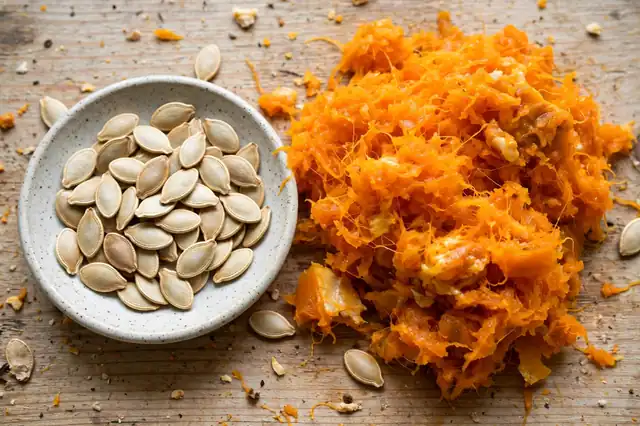
Seeds vs pulp: what’s the difference for dogs?
It helps to separate the two, because they serve different purposes:
- Pumpkin pulp (the orange flesh): high in soluble fiber, low in calories, the go-to for firming loose stools or easing mild constipation. The American Kennel Club notes its fiber content and recommends plain pumpkin, fresh or canned, while warning strictly against pumpkin pie filling, which can contain xylitol, a sweetener deadly to dogs. AKC squash guide
- Pumpkin seeds: higher in fat and minerals, crunchier, more of a treat. Safe in small amounts, but calorie-denser than pulp and without the same fiber payoff.
Both are safe when prepared plainly. Neither should replace balanced dog food, and the two should not be confused when you are troubleshooting digestion, reach for pulp for tummy issues, seeds for an occasional snack.
How to prepare pumpkin seeds safely
Preparation is everything with seeds. Raw, salted, or seasoned seeds range from hard to digest to actively harmful. The safe method:
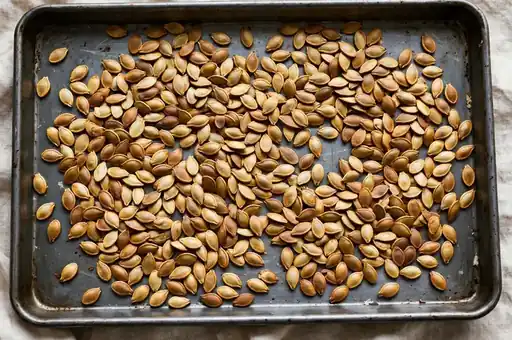
- Scoop and clean. Separate seeds from the stringy pulp and rinse them well.
- Dry them. Pat dry or air-dry; moisture leads to uneven roasting.
- Roast plain. Spread on a baking sheet and roast at a moderate oven temperature until lightly golden and crisp. No oil, no butter, no salt, no spices, nothing.
- Shell or grind. For easier digestion and zero choking risk, remove the hard outer shells (pepitas) or grind the roasted seeds into a coarse powder. Ground seeds also mix neatly into food as a topper.
- Cool completely before serving.
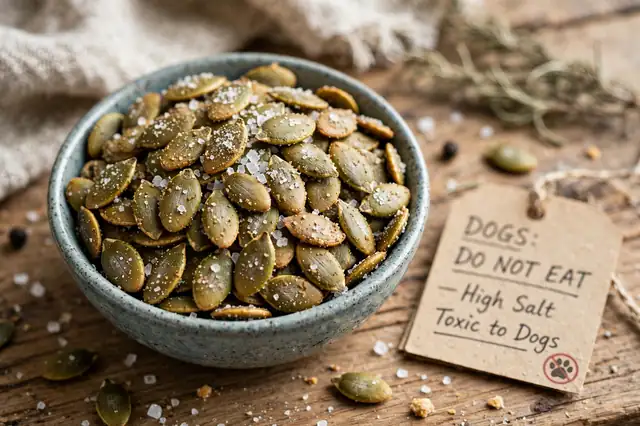
What to never use: salted snack seeds, flavored or spiced varieties (onion and garlic powders are toxic to dogs), seeds roasted in butter or oil, and anything from a trail mix, which may contain raisins, chocolate, or macadamia nuts, all dangerous.
How many pumpkin seeds is safe?
Seeds are calorie-dense for their size, so portions stay small. As a treat topper rather than a snack bowl:
- Small dogs (under 20 lbs): a pinch, roughly 1/2 teaspoon of ground seeds, a few times a week.
- Medium dogs (20-50 lbs): about 1 teaspoon of ground seeds or a small pinch of shelled seeds.
- Large dogs (over 50 lbs): 1-2 teaspoons of ground seeds or a tablespoon of shelled seeds.
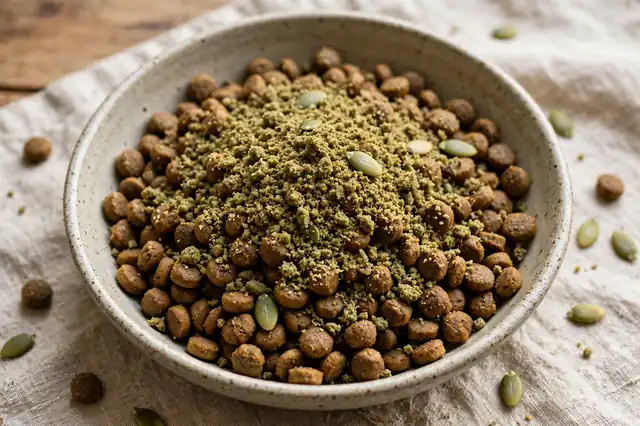
Whole shelled seeds should be given sparingly even to large dogs, they are easy to inhale in a hurry. Ground is genuinely the better format: safer, better absorbed, and easier to portion. And the 10% treat rule always applies, seeds plus all other extras stay within a tenth of daily calories.
Raw vs roasted: does it matter?
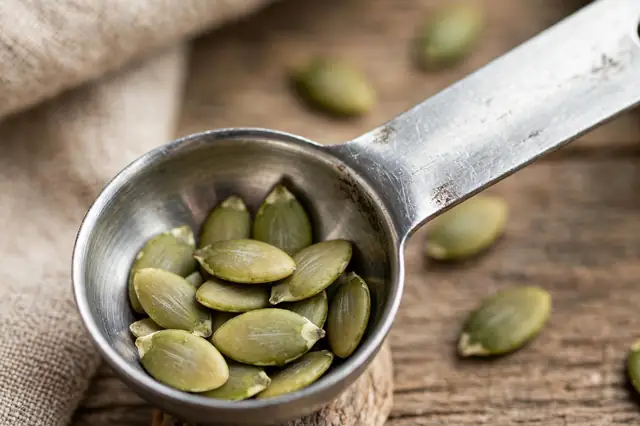
Lightly roasted is the better choice. Roasting makes seeds crisper, more digestible, and more palatable, and it eliminates any surface moisture that could harbor mold. Raw seeds are not toxic, but their tough texture is harder on digestion and the shells pose more of a choking issue.
One caution that applies to both: freshness. Nuts and seeds go rancid, stale, musty-smelling seeds should be thrown out, not fed. Rancid fats can cause digestive upset, and moldy seeds are a genuine hazard. Store prepared seeds airtight and use them within a reasonable time.
Pumpkin seeds and digestion: what they can and cannot do
You will see claims that pumpkin seeds “cure” worms or fix digestive problems. Treat these with skepticism. There is a folk tradition around pumpkin seeds and intestinal parasites, but it is not a substitute for veterinary deworming, if you suspect worms, see your vet for proper diagnosis and treatment.
What seeds can honestly do: add a little fiber and healthy fat to the diet, provide mental enrichment through crunching, and serve as a low-sugar training reward. What they cannot do: replace pumpkin pulp for digestive issues, replace medication, or make up for an unbalanced diet. Keep expectations modest and you will use them well.
What if your dog ate a lot of pumpkin seeds?
A dog that raids the seed bowl will most likely face digestive consequences rather than toxicity: the high fat and fiber load can cause vomiting, diarrhea, gas, or abdominal discomfort. Salted seeds add excessive thirst and, in large amounts, sodium concerns.
Offer fresh water, withhold further treats, and feed the next meal plain. Most mild cases resolve within a day. Call your veterinarian if vomiting repeats, diarrhea persists, your dog becomes lethargic or refuses food, or the seeds were seasoned with onion or garlic powder, those change the picture. Note the approximate amount eaten and whether seasonings were involved before you call.
Puppies and sensitive dogs
Puppies can have tiny amounts of properly prepared seeds, but their digestive systems are less forgiving, start with a pinch of ground seeds and watch for any upset over the next day. Dogs with chronic digestive conditions, pancreatitis history, or nut/seed sensitivities should skip seeds unless your vet approves. And as always, dogs on prescription diets need a vet’s okay before any extras, since therapeutic diets are precisely balanced.
From jack-o’-lantern to dog treat: the full walkthrough
October is the easiest time to make pumpkin seeds for your dog, the raw material is already on your porch. Here is the full routine, start to finish:
Scoop and separate. When carving, scoop the pulp and seeds into a bowl of water. The seeds float; most of the stringy pulp sinks or can be pulled away by hand. Do not stress about getting every strand, the rinse handles the rest.
Rinse well. Pour the seeds into a colander and rinse under running water, rubbing gently to remove remaining pulp. Pulp left on the seeds can scorch during roasting and tastes bitter.
Dry completely. Spread the rinsed seeds on a clean towel or baking sheet and let them air-dry for several hours, or pat them thoroughly dry. Surface moisture is the enemy of crisp roasting, wet seeds steam instead of crisping.
Roast plain. Spread in a single layer on an ungreased baking sheet. Roast at around 300°F (150°C) for 20-30 minutes, stirring once halfway, until lightly golden and crisp. No oil, no butter, no salt, the oven does all the work. Let your nose guide you: nutty and fragrant means done; dark or smoky means overdone.
Shell or grind. For dogs, this step is what separates a safe treat from a choking hazard. Pinch each seed to pop out the inner kernel (pepitas), or blitz the roasted seeds in a clean spice grinder into a coarse powder. Grinding is faster and gives you a topper that mixes into food, the format this guide recommends.
Store right. Airtight container, cool dry place, use within a few weeks. Make only what you will use, a single pumpkin yields far more seeds than any dog needs, so share the human portion with the humans (salted, if you like) and keep the dog’s batch plain.
One seasonal caution: carved pumpkins that have sat on the porch for days grow mold. Only use seeds from a freshly carved pumpkin, and never feed seeds from a pumpkin that smells off or shows any mold.
What about pumpkin seed oil?
Plain, cold-pressed pumpkin seed oil is safe for dogs in tiny amounts, a few drops to a quarter-teaspoon drizzled over food, depending on size. It carries the same minerals and fats as the seeds in concentrated form, which is both the appeal and the limit: it is calorie-dense, so it counts within the treat allowance, and too much at once can loosen stools.
It is a fine option if you want the nutritional gesture without the crunching, for seniors with dental issues, for example. But it is not magic, and it does not replace the fiber benefits of pumpkin pulp. Choose a plain, unflavored oil with no added ingredients, store it as the bottle directs (many need refrigeration after opening), and discard if it ever smells rancid.
The honest summary: pumpkin seeds are a safe, mildly nutritious crunchy treat when they are plain, roasted, unsalted, and preferably shelled or ground, and a poor choice when they are salted, seasoned, or served by the handful. They will never match pumpkin pulp for digestive benefits, but as an occasional topper they earn their place. Prepare them plain, portion them small, and store them fresh.
For the same plain-only, small-portion thinking across the foods dogs meet most often, see our wider guide to what human food dogs can eat. And for another small, healthy treat idea, our blueberry guide covers a fruit most dogs love.
Frequently Asked Questions
Can dogs eat pumpkin seeds every day?
Small amounts most days are fine for healthy dogs, think a pinch of ground seeds as a food topper. Keep the total within the 10% treat allowance and skip days if stools loosen.
Are raw pumpkin seeds safe for dogs?
Not toxic, but not ideal, raw seeds are tougher to digest and the shells pose more choking risk. Lightly roasted, shelled or ground seeds are the safer preparation.
Can dogs eat salted pumpkin seeds?
No, avoid salted seeds. The excess sodium can cause extreme thirst, vomiting, and in large amounts sodium-related illness. Always choose unsalted.
Do pumpkin seeds help with worms in dogs?
There is a folk tradition, but no reliable evidence that seeds replace veterinary deworming. If you suspect intestinal parasites, see your vet for proper testing and treatment.
Can puppies eat pumpkin seeds?
In tiny amounts, yes, a pinch of ground, plain roasted seeds. Puppies have sensitive stomachs, so introduce slowly and watch for any digestive upset.
Are pumpkin seeds better than pumpkin puree for digestion?
No. For digestive support, plain pumpkin puree (not pie filling) is the proven choice, its soluble fiber is what helps. Seeds are a treat, not a remedy.
How should I store roasted pumpkin seeds for my dog?
Airtight container in a cool, dry place; use within a few weeks. Discard anything stale or musty-smelling, rancid or moldy seeds must never be fed.
Can dogs eat pumpkin seed shells?
The hard outer shells are not toxic, but they are tough to digest and a choking risk, especially for small dogs. Shelled kernels (pepitas) or ground seeds are the safer choice, better absorbed, easier to portion, and gentler on sensitive stomachs. If you buy seeds, look for shelled, plain, unsalted ones to skip the prep work.
This article is general information only and is not a substitute for veterinary advice. If your dog has a health condition, is on a prescription diet, or you are unsure about any food, check with your veterinarian first.


4 thoughts on “Can Dogs Eat Pumpkin Seeds? Benefits and Safe Preparation”