Can Dogs Eat Raisins? Dangers, Symptoms, and Vet Steps

No, dogs cannot eat raisins in any amount, and any raisin your dog eats counts as an emergency. Raisins are dried grapes, and they carry the same kidney toxin found in fresh grapes. A small handful can trigger acute kidney failure in some dogs, while the exact amount that harms a given dog cannot be predicted. Call your vet or an animal poison control line the moment you learn your dog ate raisins, even if your dog looks fine.
Raisins hide in cereal bowls, lunchboxes, trail mix bags, cookie jars, and holiday baking, and a dog can swallow a mouthful before anyone notices. This guide covers why raisins harm dogs, where they hide, the symptoms to watch for, and the steps that give your dog the best chance of recovery.
Can dogs eat raisins?
No, dogs cannot eat raisins in any amount. Raisins are dried grapes, and they carry the same toxin that can damage a dog’s kidneys. Even a small handful can trigger acute kidney failure in some dogs, while others show no clear pattern of tolerance. No safe dose exists, so keep every form of raisin away from your dog.

The ASPCA lists grapes as toxic to dogs, and raisins fall under the same warning because drying changes only the water content, not the toxin. Pet Poison Helpline handles thousands of grape and raisin cases each year, and its vets treat every exposure as urgent. Our own guide to fresh grapes covers the fruit in its fresh form, while this article focuses on the dried form and the foods that hide it.
Golden raisins, sultanas, and Zante currants carry the same risk. A currant sold for baking is usually a tiny dried grape, not a true currant from the Ribes family, so it belongs on the same do not feed list. Organic raisins, seedless raisins, and raisins baked into food are no safer than ordinary raisins. Heat from baking does not destroy the toxin.
Why are raisins toxic to dogs?
Raisins are toxic to dogs because they contain tartaric acid, the compound vets now point to as the likely cause of grape and raisin poisoning. Tartaric acid can injure the kidney tubules, the tiny tubes that filter waste from blood. Once those tubules fail, waste builds up in the blood and urine output drops.

Research on the toxin is still open, and vets describe tartaric acid as the leading suspect rather than a proven cause in every case. The Merck Veterinary Manual states that tartaric acid is the proposed toxic principle in grapes, raisins, and tamarinds, and that its content varies between fruits. That variation helps explain why one dog recovers after a few raisins while another develops kidney failure.
Dogs clear tartaric acid poorly compared with people, so the compound lingers in the kidneys and does more damage there. No breed, age, or size is known to be safe from the effect, and healthy dogs with no kidney history have also developed acute kidney injury after eating raisins.
How are raisins different from fresh grapes?
Raisins differ from fresh grapes mainly in concentration, since drying removes water and packs the same fruit into a much smaller bite. A dog can eat a dangerous amount in a few quick gulps. The toxin stays active through drying, and no part of the process makes raisins safer.
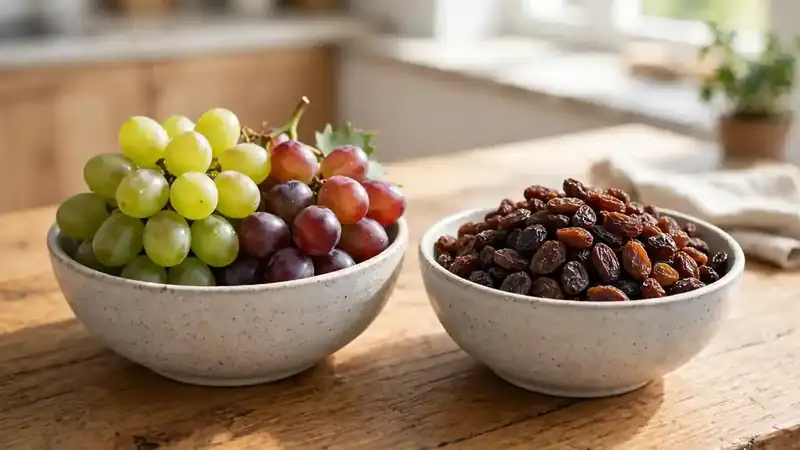
A fresh grape is mostly water, while a raisin holds only a small share of water. A dog that steals ten grapes eats a visible pile, while a dog that steals ten raisins from a trail mix bag barely makes a dent. Owners often miss the small theft, and the dog may have eaten far more than anyone saw.
Fresh grapes burst and pass through the gut fast, while dense sticky raisins can sit in the stomach longer. Vets sometimes find whole raisins in vomit hours after the dog ate them. That slow pace does not make raisins less dangerous.
Which foods hide raisins from dog owners?
Raisin bread, trail mix, oatmeal raisin cookies, granola bars, cereal, and fruitcake hide raisins in plain sight. Most exposures come from baked goods and snack mixes where raisins blend in with oats, nuts, and chocolate chips. A dog that begs at the table can grab a cookie before anyone checks the ingredients.

Breakfast foods deserve a close look. Raisin bran, muesli, oatmeal packets, and some granola mixes list raisins near the top of the ingredient list. Lunchboxes hold another risk, since small boxes of raisins often end up on a kitchen counter at dog nose height. Holiday baking adds fruitcake, hot cross buns, and mince pies that use raisins or currants.
Read the label before you share any baked good or snack mix with your dog. Look for the words raisin, sultana, currant, dried grape, and grape juice concentrate, since all of them signal the same fruit. If the label is gone or the food came from a bakery without a list, treat it as unsafe. A plain slice of bread is a safer share, and it carries none of the raisin risk.
What are the symptoms of raisin poisoning in dogs?
Vomiting is usually the first sign of raisin poisoning, and it often starts within 6 to 12 hours after a dog eats raisins. Diarrhea, loss of appetite, tiredness, and belly pain often follow in the first hours. Some dogs drink more water than usual at first, then pass less urine as the kidneys start to fail.

The timeline matters because kidney damage can build while a dog still looks fairly well. Pet Poison Helpline notes that signs of kidney injury often appear 12 to 72 hours after eating raisins, and a dog can seem better for a while before the kidneys worsen. The PetMD grapes guide notes the same early signs and urges owners to call a vet at once. A chemical or ammonia like smell on the breath, tremors, and seizures point to advanced kidney failure and need emergency care at once.
Watch the urine most of all. A dog that strains to pass urine, passes very little, or stops passing urine altogether is showing a red flag sign. Weakness, collapse, and trouble breathing are also emergency signs. Do not wait for these late signs before you call for help, since treatment works best before kidney damage sets in.
What should you do if your dog eats raisins?
Call your vet or an animal poison control line if your dog eats raisins, and do not wait for symptoms to appear. Time is the main factor in raisin poisoning, and care given in the first few hours gives the best result. Tell the vet your dog’s weight, how many raisins your dog ate, and when it happened.

Save the packaging if you have it, since the label helps the vet judge the amount and spot other toxic ingredients. Some trail mixes add onion powder or garlic seasoning, so the AKC grapes guide warns owners to check every ingredient, not just the raisins.
Do not try to make your dog vomit at home unless a vet tells you to do it. Home vomiting methods can cause harm, and the right choice depends on how much time has passed and how your dog looks. Do not offer food or water before you call, since that can interfere with treatment. Write down the time your dog ate the raisins and any symptoms you see.
How do vets treat raisin poisoning in dogs?
Vets treat raisin poisoning by removing the toxin from the gut first, then protecting the kidneys with fluids and monitoring. If a dog arrives within a few hours of eating raisins, the vet may induce vomiting and give activated charcoal to bind any toxin left in the stomach. This decontamination step works best when it starts early.

Intravenous fluid therapy is the main part of treatment. Fluids flush the kidneys, keep blood flowing through them, and correct the dehydration that vomiting and diarrhea cause. Most dogs that ate raisins stay in hospital for at least 48 to 72 hours on IV fluids while the vet checks kidney values with repeated blood tests.
Dogs that already show kidney injury need longer care, and some need dialysis or other intensive support. A few dogs with severe kidney failure do not survive, and some survivors keep lasting kidney damage that needs a special diet and regular checkups.
How can you keep raisins away from your dog?
Store raisins and every food that holds them in sealed containers in high cabinets your dog cannot reach. Never leave a box of raisins, a trail mix bag, or a plate of cookies on a low table or counter. Fruit bowls belong up high too, since a dog that can reach grapes can reach raisins just as easily.

Tell everyone in the house about the rule, and brief guests, children, and pet sitters as well. Children often share snacks with a dog out of kindness, and a small box of raisins can look like a treat to a child. Keep the kitchen bin behind a closed door so a dog cannot dig out raisin bread crusts or cookie wrappers.
Check the floor after baking and after packing school lunches. A dropped raisin is easy to miss on a dark floor, and a small dog can find it fast. Sweep the kitchen after you bake with raisins. A tidy floor and a closed pantry door do more to prevent raisin poisoning than any treatment given after the fact.
What safe treats can dogs eat instead of raisins?
Safe fruit treats for dogs include apple slices without seeds or core, banana pieces, blueberries, strawberries, and watermelon without seeds. These fruits give a dog a sweet bite without the kidney risk that raisins carry. Keep portions small, since treats should stay under 10 percent of daily calories.

Plain peanut butter without xylitol works well as a training reward, and you can spread a thin layer on a toy or a slice of apple. Check the label for xylitol first, since some peanut butters use it as a sweetener, and our xylitol poisoning guide explains why that sweetener is so dangerous. Carrot sticks, cucumber slices, and plain cooked pumpkin also make good low calorie treats for dogs that like crunch.
Skip any treat that mixes safe fruit with dried fruit, since trail mix and fruit blends often hide raisins among the safe pieces. Read the label on every mixed snack before you offer it. When you want a sweet reward, pick one plain fruit you checked yourself, and save the raisin foods for the people in the house.
Frequently asked questions about raisins for dogs
These questions cover the details owners ask most after a dog eats raisins: how few raisins can cause harm, whether baked raisins are safer, which dried fruits carry the same risk, and how fast symptoms appear. Each answer gives the short version first, then the detail you need to act on it.

Can one raisin hurt a dog?
One raisin can hurt a dog, though most single raisin cases cause less harm than a larger amount. No safe number exists, and vets have seen kidney injury after very small amounts in some dogs. Call your vet even if your dog ate only one raisin, and tell the vet your dog’s weight and the time it happened.
Can dogs eat raisin bread?
Dogs cannot eat raisin bread, since the raisins baked into the bread stay toxic. Heat does not destroy the toxin, and a small dog can eat enough raisins from a few slices to face kidney injury. If your dog eats raisin bread, call your vet at once and save the wrapper so the vet can see the ingredients.
Can dogs eat golden raisins or sultanas?
Dogs cannot eat golden raisins or sultanas, since they are dried grapes with the same toxin as dark raisins. The lighter color comes from a different drying method, not from a safer fruit. Treat sultanas exactly like raisins, and keep them out of your dog’s reach at all times.
Can dogs eat currants?
Dogs cannot eat the small dried currants sold for baking, since those are tiny dried grapes and carry the same kidney risk as raisins. True currants from the Ribes family have not been linked to kidney injury, but shop currants are almost always the dried grape kind.
How long after eating raisins do symptoms appear?
Symptoms of raisin poisoning often start within 6 to 12 hours, with vomiting and diarrhea first. Kidney signs such as low urine output often appear 12 to 72 hours later, and a dog can look well in between. Call a vet at once rather than waiting to see if symptoms appear, since early treatment protects the kidneys.
Can a dog recover after eating raisins?
A dog can recover fully after eating raisins when treatment starts early, before kidney damage sets in. Dogs treated with prompt vomiting induction and IV fluids often go home within a few days with normal kidney values. Dogs that arrive late or already show kidney failure face a harder recovery, and some keep lasting kidney damage.
Raisins look harmless on a kitchen shelf, yet they rank among the most dangerous foods a dog can eat. No safe amount exists, drying makes them more concentrated by weight, and they hide in bread, cookies, cereal, and trail mix. Keep every raisin food out of reach, read labels before you share a snack, and call your vet the moment your dog eats one. Fast action is the difference between a short hospital stay and lasting kidney damage.