Can Dogs Eat Bell Peppers? Safety and Serving Guide

Yes, dogs can eat bell peppers, and every color is safe when the pepper is plain, seeded, and cut into small pieces. Red, yellow, orange, and green bell peppers all share the same gentle profile, with no heat and no toxic compounds in the flesh. A few crunchy pieces make a low calorie snack with vitamins and water. The pepper must stay plain, with no salt, oil, or seasoning, and the stem and seeds come out before serving.
Green peppers turn up in most kitchens, and they have a guide of their own on this site. This guide covers the whole bell pepper family: how the colors differ, how much suits each dog size, and where the real risks sit. Hot peppers and seasoned pepper dishes follow different rules.
Can dogs eat bell peppers?
Dogs can eat bell peppers in small amounts when the pepper is washed, seeded, stemmed, and cut into bite sized pieces. All four colors are safe, red, yellow, orange, and green, and the flesh carries no capsaicin, the compound that makes hot peppers burn. Serve bell pepper plain, raw or lightly cooked, with no salt, oil, or seasoning.

Bell peppers are sweet varieties of Capsicum annuum, the same species that gives us hot chilies, but a natural change in the plant blocks capsaicin production in bell peppers entirely. That difference is why a bell pepper crunches like a mild vegetable while a jalapeno burns. The AKC bell peppers guide confirms that bell peppers are not toxic to dogs when served plain.
Treats of every kind, bell pepper included, should stay within about 10 percent of a dog’s daily calories, with the other 90 percent coming from a complete and balanced dog food. A medium red bell pepper holds only about 40 calories, so the limit that matters is the stomach, since too much raw vegetable at once can loosen stools.
Which bell pepper colors are safe for dogs?
Red, yellow, orange, and green bell peppers are all safe for dogs, and the color marks ripeness rather than a different plant. Green peppers are picked unripe, yellow and orange sit in the middle, and red peppers stay on the vine longest until fully ripe. The flavor turns sweeter and the vitamin levels rise as the pepper ripens.
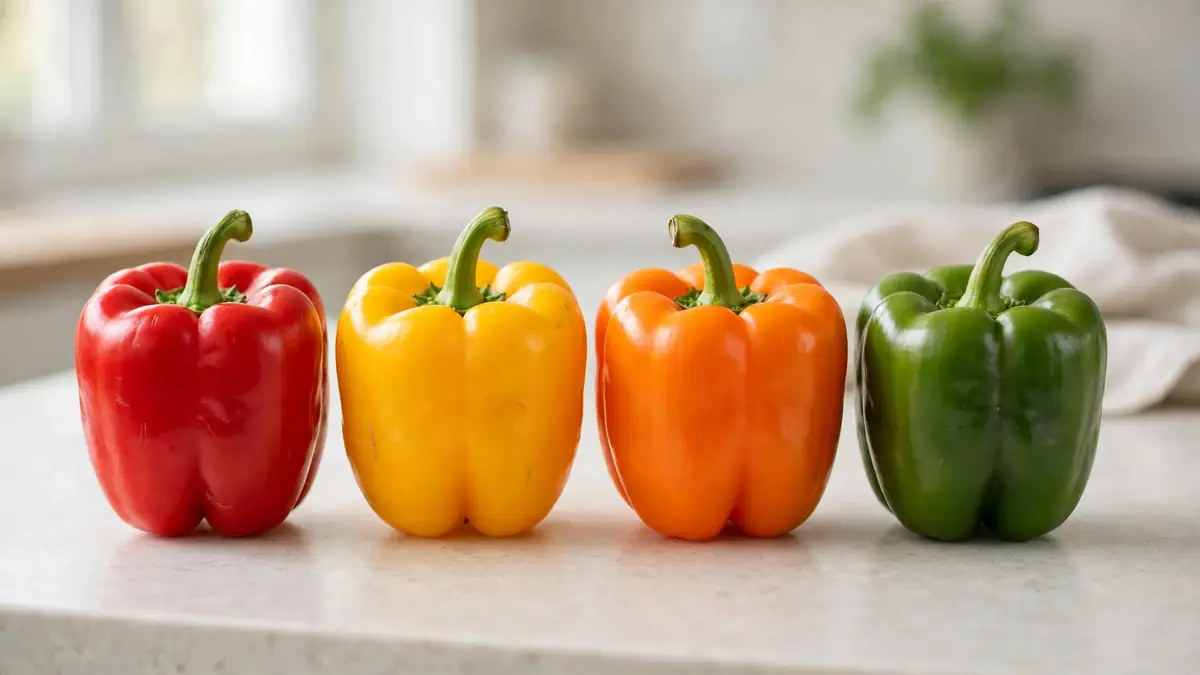
Red peppers carry the most beta carotene and vitamin C, because the longer ripening time lets the fruit build more nutrients. Yellow and orange peppers sit between green and red on sweetness and vitamin content, while green peppers taste slightly bitter next to a red one. Our green peppers guide looks at the unripe pepper on its own.
Color choice can follow the dog in front of you. A picky dog that walks away from green pepper often accepts red without a fuss, and a dog watching its weight gets the same low calories from any color. Rotating colors across the week adds variety without changing the safety rules.
What nutrients do bell peppers offer dogs?
Bell peppers give dogs vitamins A, C, E, and B6, plus potassium, fiber, and water, all for very few calories. Red peppers add beta carotene and lycopene, two antioxidants that give the ripe fruit its deep color. The pepper works as a small nutrient top up, not as a meal, since a complete dog food already covers daily needs.

Vitamin A supports eye health, vitamin C helps the immune system, vitamin E supports healthy skin and coat, and vitamin B6 plays a part in normal nerve function. Potassium helps muscles and nerves work as they should. The PetMD bell peppers guide lists the same spread of vitamins and notes the fiber and antioxidants that make bell peppers a useful occasional snack.
Fiber helps keep stools formed and digestion steady, and the high water content adds hydration on hot days. A medium red bell pepper holds only about 40 calories, so a few pieces fit easily into a weight loss plan, and vets often suggest bell pepper as a swap for biscuits in training.
Are bell peppers raw or cooked better for dogs?
Raw and lightly cooked bell peppers are both fine for dogs, and the better choice depends on the dog eating them. Raw pepper keeps its crunch and its full vitamin C, which suits most healthy adult dogs. Light steaming softens the tough outer skin, which suits puppies, seniors, and dogs that chew poorly.

Raw serving takes a minute. Wash the pepper, cut out the stem and seeds, pull away the pale inner ribs, and slice the flesh into pieces that fit the dog’s mouth. Thin strips work for large dogs, while small dice suit toy breeds. Serve the pieces plain, and skip any dip or dressing.
Steaming takes only a few minutes more. Place the cut pieces in a steamer basket over boiling water, cover, and lift them out while they are soft but still hold their shape. Let the pieces cool fully before they reach the bowl. Never fry bell peppers for a dog, since oil and garlic turn a safe vegetable into a stomach problem.
How much bell pepper can a dog eat?
Keep bell pepper inside the 10 percent treat budget, and match the portion to the dog’s size. A small dog does well with a few small pieces, while a large dog can handle up to half a small pepper at a time. The pepper is a treat, not a side dish, so the bowl should never hold a whole pepper.

Body weight sets the rough guide. A toy breed under 10 pounds gets one or two pea sized pieces, a small dog between 10 and 25 pounds gets a tablespoon or two, and a large dog over 60 pounds can take up to half a small pepper. These amounts assume the pepper is the only extra that day, so cut back if training treats also appear.
Frequency matters as much as size. Most dogs do best with bell pepper a few times a week rather than at every meal, and a daily sliver is fine for a dog that digests it well. If stools turn soft, drop the portion in half or skip a few days before trying again.
How do you prepare bell peppers for dogs?
Wash the pepper, cut out the stem and seeds, remove the pale inner ribs, and slice the flesh into bite sized pieces that match the dog’s mouth. Serve the pieces plain, with no salt, oil, garlic, onion, or sauce. That short routine is the whole safe preparation.

Start by rinsing the pepper under running water and patting it dry. Cut off the top around the stem, then pull out the core with the seeds attached. Scrape away the white ribs inside, since they taste bitter. Slice the walls into strips, then cross cut them into pieces a dog can chew in one or two bites.
A dog safe stuffed pepper uses the same rules. Fill a hollowed pepper half with plain cooked vegetables and a spoonful of the dog’s regular food, bake until soft, cool fully, and cut off a portion that fits the treat budget. Seasoning stays out, and onion and garlic stay out entirely, since both damage a dog’s red blood cells. Restaurant stuffed peppers are never a safe swap, because they arrive cooked with oil, salt, and seasoning.
Can bell peppers upset a dog's stomach?
Yes, bell peppers can upset a dog’s stomach when the portion is too large or the dog eats them too fast. The fiber and raw skin are the usual causes, and the signs show up as gas, a soft stool, or vomiting hours after eating. Seeds and stems add to the trouble, since both are hard to digest.

A mild upset needs little more than a pause. Skip the next pepper serving, feed plain food for a day, and keep fresh water close by. Most dogs settle within a day. Call the vet if vomiting repeats, if the dog refuses water, if blood appears in stool or vomit, or if a small dog or puppy looks weak.
The stem deserves a special note. It is tough and fibrous, and easy to choke on for small dogs that gulp. The seeds are not toxic, but they pass through poorly and can add to stomach upset. Removing both before serving takes seconds and removes the two most common mechanical risks.
Which peppers are dangerous for dogs?
Hot peppers are dangerous for dogs, and the list covers jalapenos, habaneros, chili peppers, cayenne, serranos, and any pepper with heat. Capsaicin, the compound that makes these peppers burn, irritates a dog’s mouth, throat, and gut, and dogs react to it more strongly than people do. Bell peppers alone are safe, because they carry no capsaicin at all.

The signs of capsaicin trouble appear fast. A dog may drool, paw at its face, pant, or refuse food, and stomach pain, vomiting, or diarrhea can follow within hours. Offer fresh water, keep the dog calm, and call the vet if vomiting continues or the dog shows signs of pain.
Seasoned pepper dishes bring a second danger that has nothing to do with heat. Onion and garlic damage a dog’s red blood cells in any form, and both turn up often in fajitas, stir fries, and stuffed peppers. The ASPCA people foods list names onion and garlic among the foods to keep away from pets, and our tomatoes guide covers another nightshade relative where ripeness changes the safety picture. Only peppers you prepare yourself count as safe.
How do bell peppers compare with other crunchy vegetables?
Bell peppers sit beside carrots, cucumbers, celery, and broccoli as low calorie crunchy snacks, and each one brings a different strength. Peppers win on vitamin C, carrots win on crunch, cucumbers win on water, and celery wins on the lowest calories. No single vegetable covers everything, which is why rotation beats repetition.
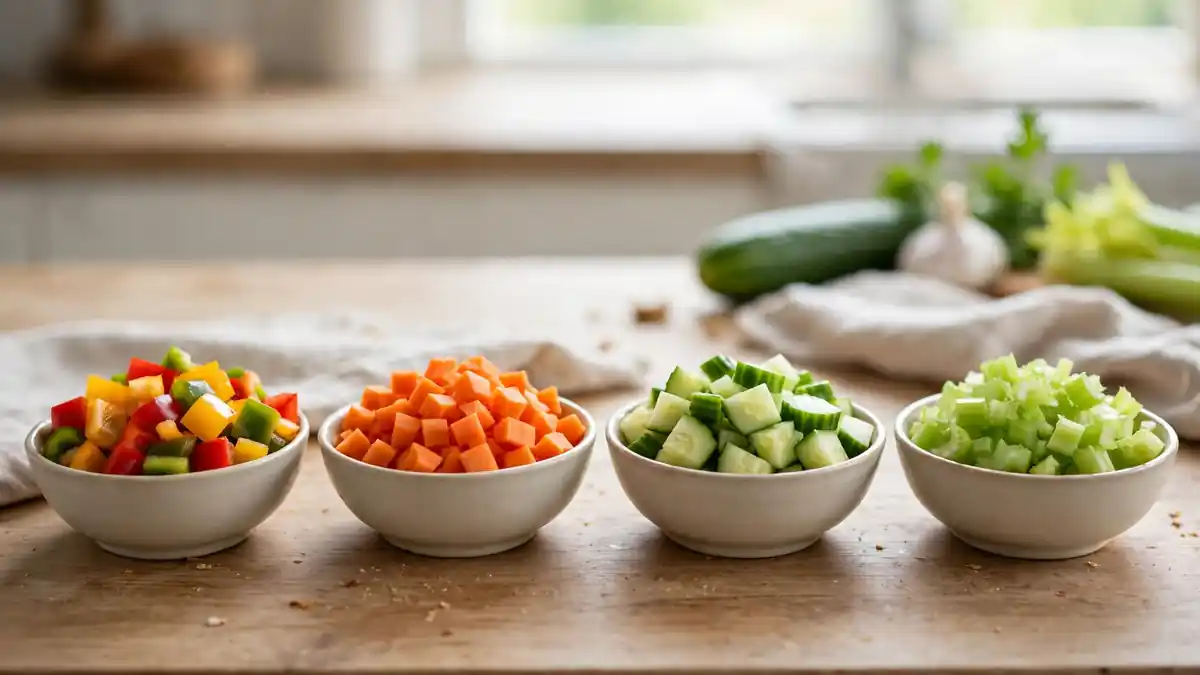
Carrots are harder and take more chewing, so they suit dogs that like to gnaw. Our carrots guide covers the choking care that hard pieces need in small dogs. Cucumbers are softer, cooler, and mostly water, and our cucumbers guide covers the seeding and slicing that keeps them safe. Celery brings fiber and a stringy texture, and our celery guide explains why the strings need cutting. Broccoli adds more fiber and a stronger flavor, and our broccoli guide covers the cooking step that tames it.
The AKC fruits and vegetables guide lists bell peppers among the safe choices and places onions, garlic, and grapes on the other side of the line. A simple rule covers most cases: if the vegetable is plain, raw or steamed, and free of seasoning, it is probably fine, and if it came from a seasoned dish, it is not.
Rotation also protects the gut. A dog that eats the same vegetable every day can develop a mild intolerance to it, while a dog that sees a different vegetable every few days keeps a broader tolerance. Try pepper on Monday, cucumber on Wednesday, and carrot on Friday, inside the treat budget.
Frequently asked questions about bell peppers for dogs
Owners ask the same few questions about bell peppers, from puppies to seeds to hot pepper accidents. The answers below cover the cases that come up most often in kitchens and at the vet, with the short version first each time.

Can puppies eat bell peppers?
Yes, puppies can eat bell peppers once they are weaned and eating solid food, but the pieces must be tiny and soft. Steam the pepper first, cut it into pea sized bits, and offer one piece as a trial. A puppy’s stomach is more sensitive than an adult’s, so watch a full day before any second serving. Ask the vet first if the puppy has a sensitive stomach.
Can dogs eat bell pepper seeds and stems?
No, dogs should not eat bell pepper seeds and stems, even though neither is toxic. The seeds are small and hard to digest, and the stem is tough enough to choke a small dog. Both add to stomach upset without adding nutrition. Pull the core out, scrape away the ribs, and serve only the flesh.
Can dogs eat bell peppers every day?
A small amount of bell pepper most days is fine for a healthy dog that digests it well, as long as the portion stays inside the 10 percent treat budget. Variety still beats a daily habit, since rotating vegetables spreads nutrients and lowers the chance of a mild intolerance. If gas or soft stools appear, drop back to a few times a week.
Can dogs eat stuffed bell peppers?
Dogs can eat stuffed bell peppers only when the filling is dog safe and the pepper is cooked plain. A safe filling uses plain cooked vegetables and the dog’s regular food, with no salt, oil, onion, garlic, or cheese. Restaurant stuffed peppers and homemade versions with seasoned meat and sauce are not safe, since the seasoning does the harm, not the pepper.
Are red bell peppers better than green bell peppers?
Red bell peppers are the most nutritious of the colors, since they ripen longest and build more beta carotene and vitamin C, and they taste sweeter. Green peppers are still safe and healthy, with a slightly bitter bite. The better pepper is the one the dog will eat happily, and rotating colors gives the dog the best of both.
What should I do if my dog eats a hot pepper?
Stay calm, move the pepper away, and offer fresh water to rinse the mouth. Watch for drooling, pawing at the face, panting, vomiting, or diarrhea over the next few hours. A small taste usually passes with water and time, but call the vet if vomiting repeats or the dog shows signs of belly pain. Never give milk or medicine unless the vet tells you to.
Bell peppers earn their place as a dog treat by being simple: plain, seeded, cut small, and shared in modest amounts. Every color is safe, red brings the most nutrients, and the only peppers to fear are the hot ones and the seasoned dishes that hide onion and garlic. Start with a piece or two, watch the stool, and ask the vet first if the dog has a gut condition.