Can Dogs Eat Peas? Safety, Portions, and Serving Guide
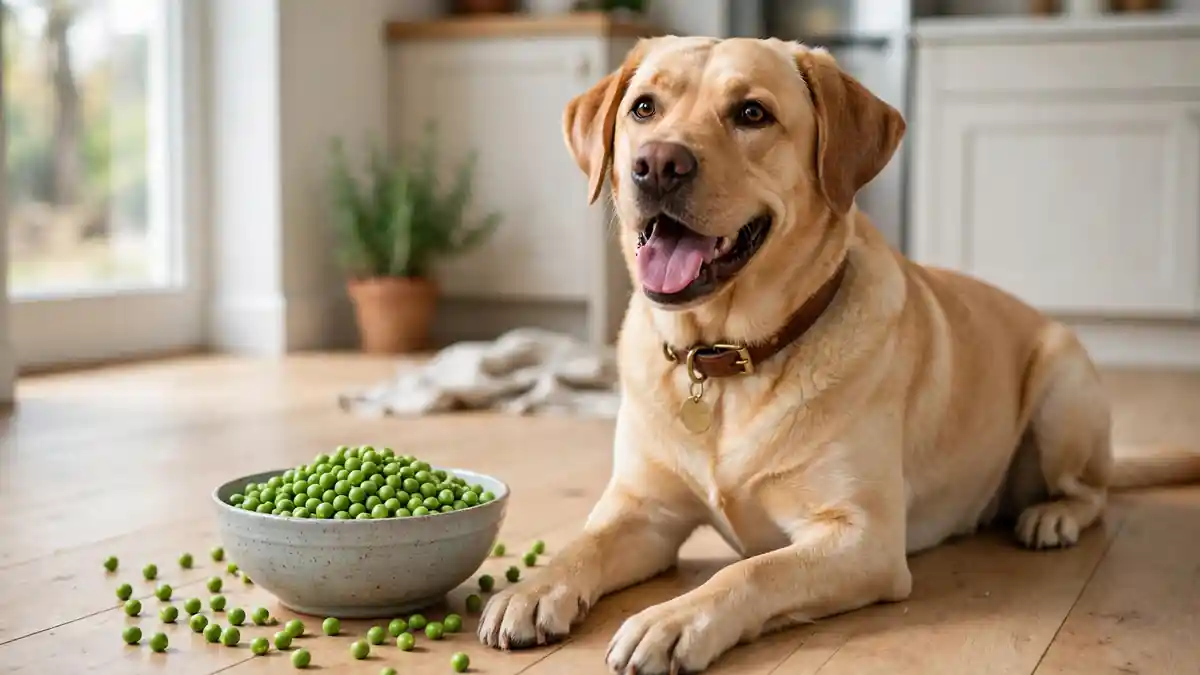
Yes, dogs can eat peas when the peas are plain, fresh or frozen, and served in a small amount. Green peas, snap peas, and snow peas are all safe for most healthy dogs, and they bring fiber, plant protein, and vitamins for very few calories. The peas must stay plain, with no salt, butter, garlic, or onion, and canned peas with added sodium stay out of the bowl.
Peas sit in a funny spot. A spoonful from the kitchen is a fine treat, while a bag of peas as the main ingredient in a grain free food has raised heart questions with vets. This guide sorts out both sides: which pea types are safe, how much suits each dog size, and which dogs should skip peas.
Can dogs eat peas?
Dogs can eat peas in small amounts when the peas are plain, fresh or frozen, and served without salt, butter, garlic, onion, or seasoning. Green peas, snap peas, and snow peas are all safe, and most dogs enjoy them as a crunchy treat. Keep peas inside the 10 percent treat budget, so the main diet stays balanced.
Peas are legumes, the same family as beans and lentils, and they carry more protein and starch than most green vegetables. That mix is why a small spoonful works well as a treat, and why a large bowlful can cause gas. The AKC peas guide lists peas among the vegetables dogs can eat, with a warning to keep portions small and plain.
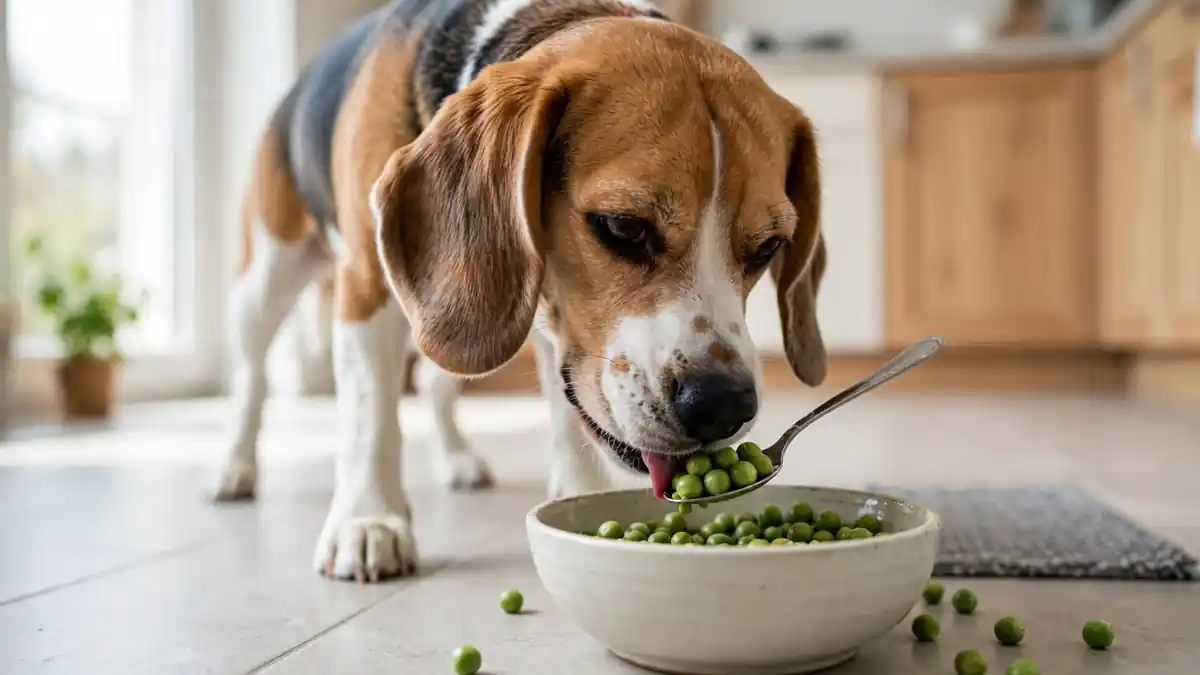
Start with a small amount the first time, about an eighth of a cup for a medium dog, and watch the next day for gas or soft stool. A dog that shows any upset goes back to plain food, and peas stay off the menu for a few days.
What kinds of peas can dogs eat?
Garden peas, sugar snap peas, and snow peas are all safe for dogs when served plain. Garden peas are shelled and soft, snap peas come in a sweet edible pod, and snow peas have a flat, crisp pod. All three work fresh, frozen and thawed, or steamed.
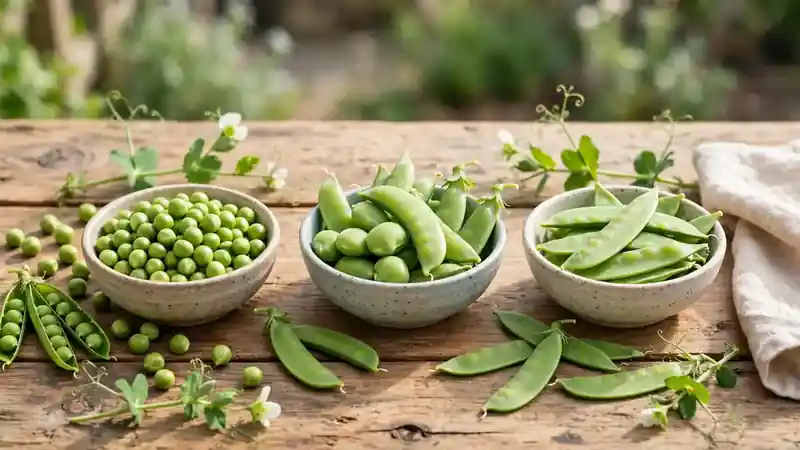
Snap and snow peas can be eaten pod and all, which makes them easy to share straight from the bag. Garden peas need shelling first, since the tough outer shell of a garden pea pod is hard to chew and can catch in the throat. Thaw frozen peas fully before serving, since a hard frozen pea can be a choking risk for a small dog.
One pea name needs a firm warning. Sweet peas are a flowering garden plant, not a vegetable, and they contain a toxin called aminopropionitrile that can cause weakness, lethargy, and seizures in dogs. Keep dogs away from sweet pea plants in the garden. If a dog eats any part of a sweet pea plant, call the vet or the Pet Poison Helpline right away.
What nutrients do peas offer dogs?
Peas give dogs fiber, plant protein, B vitamins, vitamin A, vitamin K, iron, zinc, magnesium, potassium, and lutein, all for few calories. Cooked frozen peas carry about 78 calories, 5 grams of protein, and 5 grams of fiber per 100 grams, with vitamin K and vitamin C. That is a strong nutrient mix for such a small vegetable.
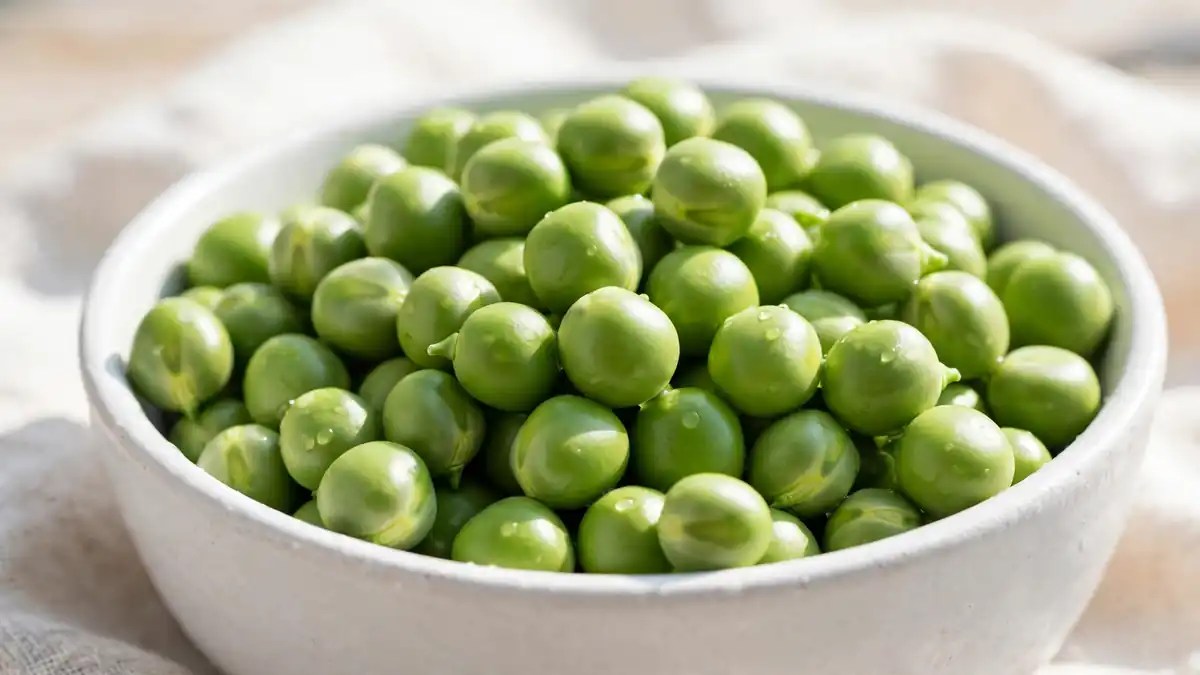
Fiber helps keep stools formed, while protein supports muscle and repair. B vitamins help the body turn food into energy, vitamin A supports vision, and vitamin K plays a part in normal blood clotting. Iron carries oxygen in the blood, zinc supports the immune system and skin, and magnesium and potassium help muscles and nerves. The PetMD peas guide lists the same spread of vitamins and minerals, and notes that peas suit dogs on a weight loss plan because they are filling for few calories.
Lutein is the nutrient most owners miss. It is an antioxidant that supports eye health, and peas carry more of it than most vegetables in the bowl. A complete dog food already covers daily needs, so peas work as a top up rather than a foundation.
Are canned peas safe for dogs?
Canned peas are not a good choice for dogs, because most cans pack the peas in salted water with far more sodium than a dog needs. A dog with heart or kidney disease suffers most from the extra salt. Fresh or frozen peas carry none of the sodium risk.
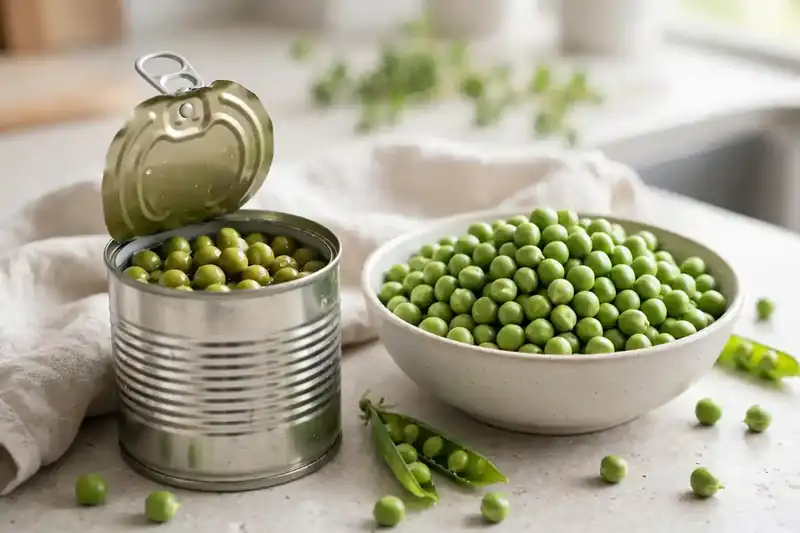
Rinsing canned peas under running water can cut the salt, but it cannot remove all of it. A rinsed can works in a pinch if nothing else is on hand, yet it should stay a rare backup rather than a habit. Check the label every time, since some cans add sugar or onion powder that makes them unsafe even after rinsing.
Canned chickpeas follow the same rule. Plain, well cooked chickpeas are safe in small amounts, and a canned tin works if the chickpeas are rinsed well. Dried chickpeas need a full soak and cook first, since raw dried legumes are hard to digest. Skip any chickpeas cooked with garlic, onion, or chili.
How many peas can a dog eat?
Keep peas inside the 10 percent treat budget, and match the portion to the dog’s size. A small dog does well with a tablespoon of peas, a medium dog with one to two tablespoons, and a large dog with two to three tablespoons. Start at the low end, since peas carry more starch and calories than green beans.
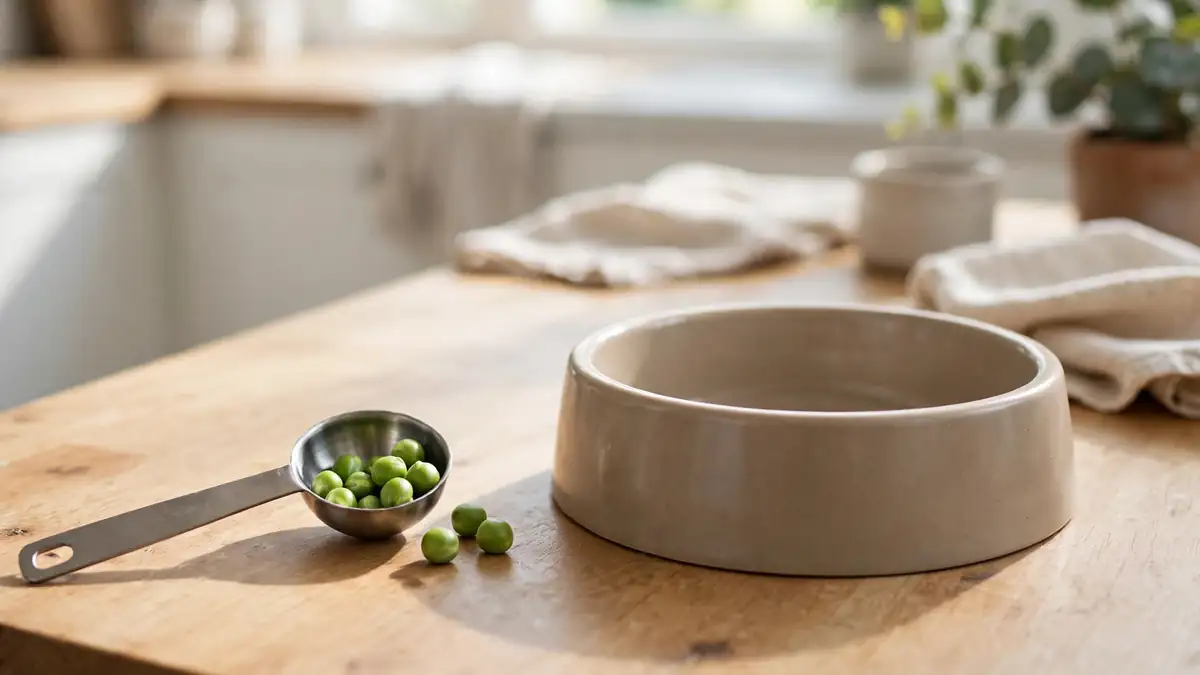
Body weight sets the rough guide. A toy breed under 10 pounds gets a teaspoon or two, a small dog between 10 and 25 pounds gets about a tablespoon, and a large dog over 60 pounds gets two to three tablespoons. These amounts assume peas are the only extra that day, so cut back if training treats also appear.
Frequency matters as much as size. Most dogs do best with peas a few times a week rather than at every meal. A daily spoonful is fine for a dog that digests them well, but a pea heavy diet can crowd out balanced food. If stools turn soft, drop the portion in half or skip a few days before trying again.
How should you serve peas to dogs?
Serve peas plain, fresh or frozen and thawed, or lightly steamed, with no salt, butter, garlic, onion, or seasoning. Scatter them over the dog’s regular food, mix them into a meal topper, or offer them by hand as a training reward.
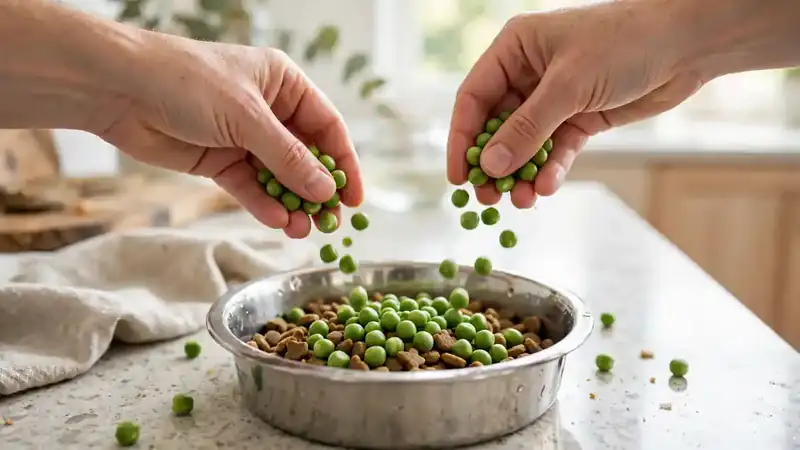
Frozen peas need a thaw before they reach the bowl. Run them under cool water for a minute, and a small dog gets mashed peas to cut the choking risk. Lightly steaming fresh peas softens them for puppies and seniors. Skip boiling peas in salted water.
Mash peas for toy breeds and for dogs that gulp their food. A whole pea can slip down whole in a fast eater, and mashing takes seconds. For larger dogs, whole peas work fine, and the round shape makes a good scatter treat across a snuffle mat.
Can peas upset a dog's stomach?
Yes, peas can upset a dog’s stomach when the portion is too large or the dog eats them for the first time. The fiber and starch are the usual causes, and the signs show up as gas, a bloated belly, soft stools, or vomiting a few hours after eating. A sudden spoonful too many is the most common trigger.

A mild upset needs little more than a pause. Skip the next pea serving, feed plain food for a day, and keep fresh water close by. Most dogs settle within a day. Call the vet if vomiting repeats, if the dog refuses water, or if a small dog or puppy looks weak.
Introduce peas slowly, a few at a time, and build up over a week rather than starting at a full portion. A dog with a sensitive stomach does best with steamed and mashed peas in a tiny amount, since cooking softens the fiber and mashing slows the eating.
Which dogs should skip peas, and what about DCM?
Dogs with kidney disease, a history of bladder stones, or a liver shunt should skip peas unless the vet approves them. Peas carry a moderate purine load, and the body breaks purines down into uric acid, which can feed urate stones in dogs that form them. Dalmatians are the breed vets watch most closely here.
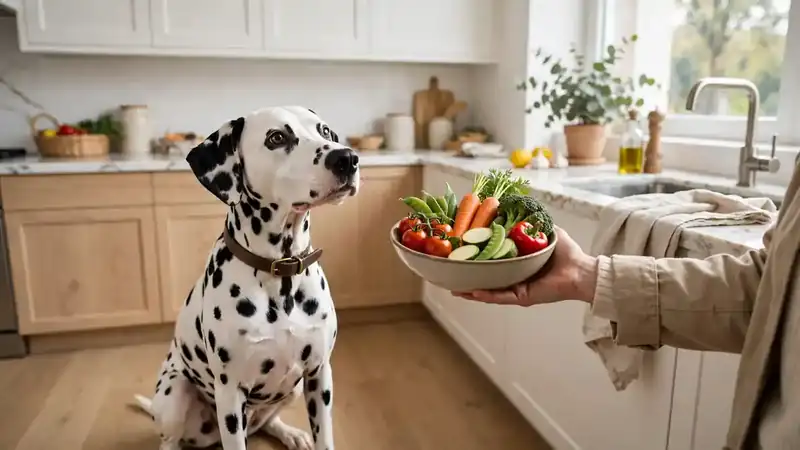
Dogs on a prescription diet should also check first. A vet diet is built as a whole, and adding peas can shift the balance it was designed to hold. The same caution covers dogs with diabetes, since peas carry more starch than green vegetables, and a large portion can move blood sugar. A small taste may still be fine, but the vet decides.
Dogs with a known legume sensitivity should skip peas too, though true pea allergy is rare. Watch for itchy skin, ear scratching, or soft stools that follow pea servings and clear up when peas stop.
Peas became a talking point because many grain free dog foods list peas, lentils, or pea protein high on the label, and the FDA has looked into reports of dilated cardiomyopathy, a heart condition, in dogs eating these diets. The FDA has not found a causal link, and it has said pulses are not inherently dangerous. The investigation is about whole diets, not a spoonful of peas.
A Tufts University study suggested that dog food with high amounts of peas may be linked with dilated cardiomyopathy in canines, and later research found that feeding healthy dogs a diet with up to 45 percent pulse content had no impact on heart function. What is clear is that a small pea treat and a pea heavy daily food are two different exposures.
Talk to the vet before changing foods, especially if the dog eats a grain free diet or has a heart murmur. The vet can weigh the diet, the breed, and the dog’s history, and decide whether a food change makes sense. Never switch a dog’s food on the basis of a single headline.
How do peas compare with other vegetables?
Peas sit between green beans and sweet potatoes on the vegetable scale: more protein and starch than green beans, less sugar than sweet potatoes, and more calories than cucumbers. No single vegetable covers everything, so rotation across the week beats serving the same one every day.
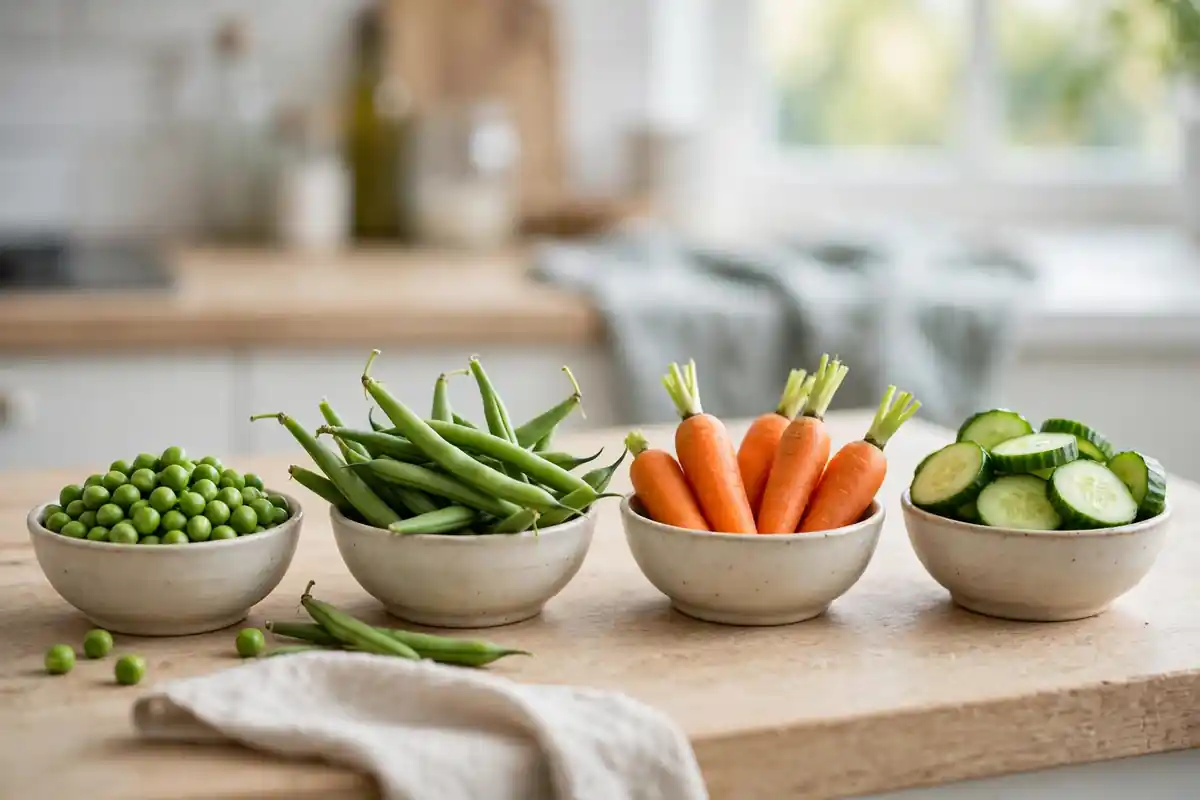
Carrots are harder and crunchier, and they suit dogs that like to gnaw, while our carrots guide covers the choking care hard pieces need. Broccoli adds more fiber and a stronger flavor that can cause gas faster than peas, and our broccoli guide covers the cooking that tames it. Corn is another starchy vegetable that needs cooking and care, and our corn guide covers the cob danger. Cucumbers are mostly water and the lightest choice of the group, and our cucumbers guide covers the seeding and slicing.
Green beans are the lighter swap, with fewer calories and less starch, and our green beans guide covers the snap and the serving size. Sweet potatoes bring more sugar and starch, and our sweet potatoes guide covers the cooking step that makes them safe.
The AKC fruits and vegetables guide lists peas among the safe choices and places onions, garlic, and grapes on the other side of the line. The ASPCA people foods list names the same dangers. A simple rule covers most cases: plain and small is fine, seasoned and large is not.
Frequently asked questions about peas for dogs
Owners ask the same few questions about peas, from puppies to pods to pea snacks. The answers below cover the cases that come up most often in kitchens and at the vet, with the short version first each time, in plain words.
Can puppies eat peas?
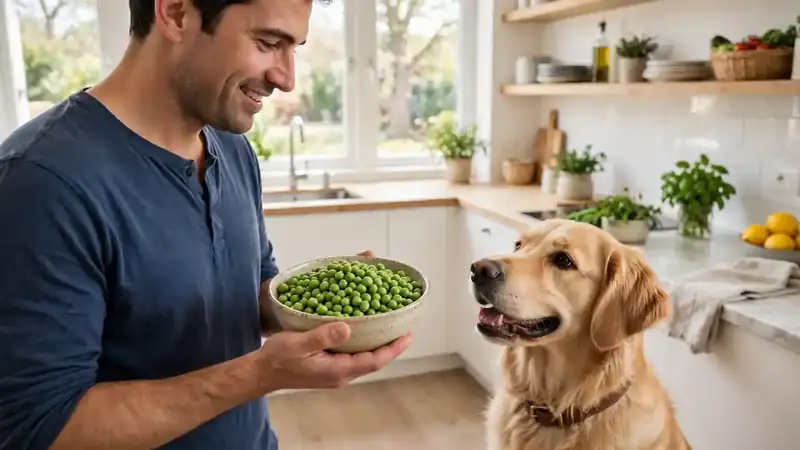
Yes, puppies can eat peas once they are weaned and eating solid food, but the peas must be soft and tiny. Steam the peas first, mash them lightly, and offer a teaspoon as a trial. A puppy’s stomach is more sensitive than an adult’s, so watch a full day before any second serving.
Can dogs eat pea pods and shells?
Dogs can eat the pods of snap peas and snow peas, since both pods are soft, sweet, and safe. Garden pea pods are tougher and should be shelled first, since the shell can catch in the throat. Cut long pods into short pieces for small dogs.
Can dogs eat peas every day?
A small spoonful of peas most days is fine for a healthy dog that digests them well, as long as the portion stays inside the 10 percent treat budget. Variety still beats a daily habit, since rotating vegetables spreads nutrients. If gas or soft stools appear, drop back to a few times a week.
Can dogs eat wasabi peas or pea snacks?
No, dogs should not eat wasabi peas, roasted pea crisps, or coated peas such as barbecue flavored ones. These snacks are salty, often fried, and the wasabi or horseradish coating can burn a dog’s mouth and upset the stomach. The coatings also hide onion and garlic powder, which damage a dog’s red blood cells.
Can dogs eat chickpeas?
Yes, dogs can eat chickpeas in small amounts when they are plain and well cooked. Canned chickpeas work if they are rinsed well, and dried chickpeas need a full soak and cook first. Skip chickpeas cooked with garlic, onion, or chili, and keep the portion small, since chickpeas are starchy.
Can dogs eat sweet peas from the garden?
No, dogs must never eat sweet peas from the garden. Sweet peas are a flowering plant, not a vegetable, and they contain a toxin called aminopropionitrile that can cause weakness, lethargy, and seizures. Keep dogs away from sweet pea plants, and call the vet or the Pet Poison Helpline at once if a dog eats any part of one.
Peas earn their place as a dog treat by being simple: plain, fresh or frozen, served small, and shared a few times a week. Skip the canned peas with added sodium, skip the seasoned snack peas, and keep sweet pea flowers out of reach. Ask the vet first if the dog has kidney trouble, bladder stones, or a heart condition.