Weight Loss Dog Food: How to Choose It and Slim Your Dog Safely
Weight loss dog food is a complete diet with fewer calories per cup, extra fiber, and enough lean protein to protect muscle while your dog slims down. A good weight loss food lets your dog eat a full bowl, feel satisfied, and still run a calorie deficit day after day. The food does the heavy lifting, but the plan around it, measured portions, limited treats, daily walks, and regular weigh ins, decides whether the pounds come off.
This guide shows you how to tell if your dog needs to lose weight, what to look for on a label, how fast loss should happen, and how to switch foods without upsetting the stomach. You will also learn the mistakes that stall progress.
What is weight loss dog food?
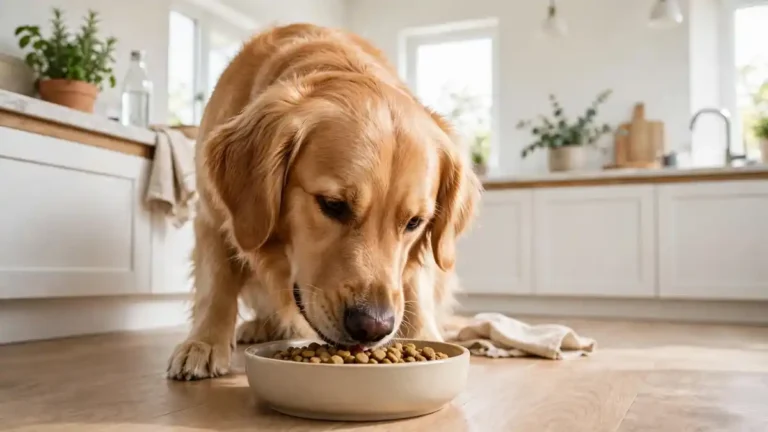
Weight loss dog food is a complete diet made to cut calories while keeping protein and fiber high enough to protect muscle and keep a dog full. It works by lowering calories per cup, not by shrinking the bowl to a few bites. A vet should set the daily amount, since every dog needs a different target.
It trims fat, which carries the most calories per gram, and it adds fiber from sources such as beet pulp or pea fiber to bulk up the meal. Protein stays high, often 24 to 28 percent, so the body burns fat instead of muscle. Some formulas add L-carnitine, which helps the body burn fat.
Over the counter weight management foods suit dogs with a few pounds to lose, and you can buy them without a prescription. Veterinary diets, such as Hill’s Prescription Diet Metabolic and Royal Canin Satiety Support, suit dogs with a large amount to lose, and your vet must authorize them. The prescription foods run lower in calories per cup and higher in fiber.
How do you know your dog needs to lose weight?
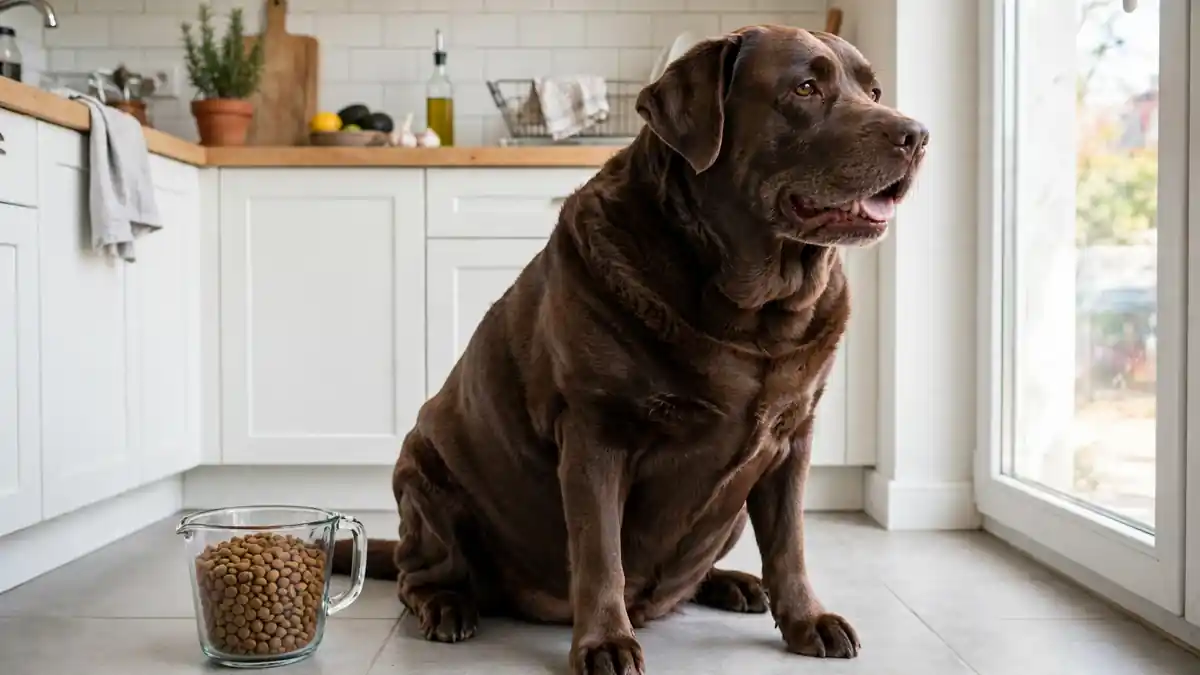
You can tell your dog needs to lose weight when you cannot feel the ribs under a thin fat layer, the waist disappears from above, and the belly hangs low from the side. A vet uses a body condition score from 1 to 9 to judge it. A score of 6 or more means the dog carries extra weight.
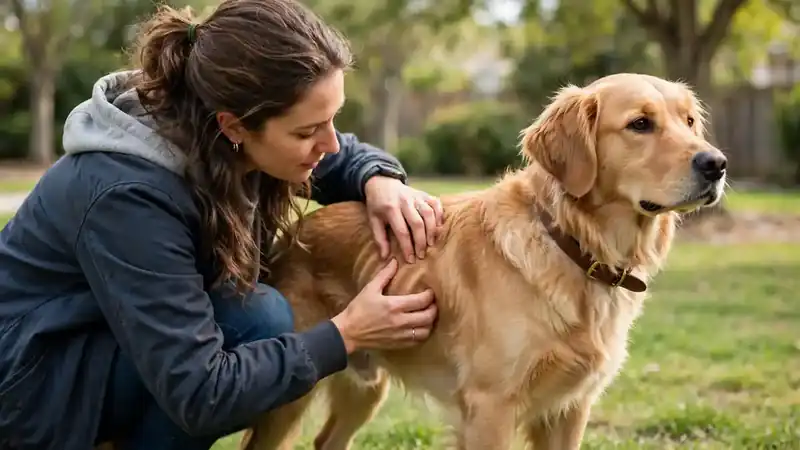
The rib test is the fastest check you can do at home. Run your hands along your dog’s sides with light pressure. You should feel each rib under a thin cover of fat. If you press hard and still feel no ribs, the dog carries too much fat. Look from above too: a healthy dog narrows in behind the ribs.
The AKC guide on telling if your dog is fat explains the same checks and notes that a vet weigh in is the surest way to judge. The AKC puts a dog at overweight when it weighs 15 percent or more above its ideal, and obese at 30 percent or more above ideal. More than half of dogs in the United States fall into one of those two groups. The VCA guide to obesity in dogs notes that pets kept at ideal weight through life live about 15 percent longer than overweight pets.
What makes a weight loss food work?
A weight loss food works when it packs fewer calories into each cup, adds fiber to fill the belly, and holds protein high to protect muscle while fat comes off. Water in wet food helps too, since a full bowl with fewer calories beats a tiny dry portion. The food only works when portions are measured and treats stay counted.
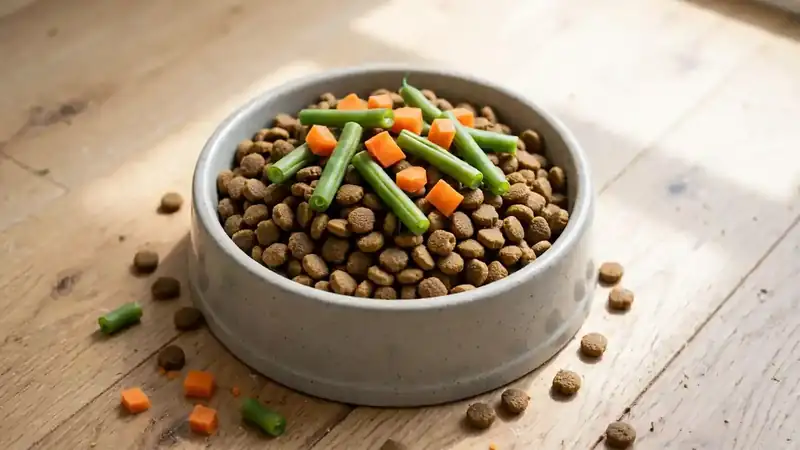
Calories per cup is the number that matters most on the label. A maintenance food often runs 350 to 450 calories per cup, while a weight loss food lands nearer 270 to 340. Fiber does the second job: it slows digestion, steadies blood sugar, and stretches the stomach so the dog feels full. PetMD notes that the best weight loss foods are high in fiber and low in calories without shortchanging protein.
Wet food can help a hungry dog, since water adds bulk with no calories. Quality matters as much as the numbers: pick a food that meets AAFCO standards, comes from a maker that runs feeding trials, and fits your dog’s life stage.
How fast should a dog lose weight?
A dog should lose weight slowly, at about 1 to 2 percent of body weight per week, with heavy dogs often aiming nearer 0.5 percent. Faster loss can strip muscle and leave a dog weak, hungry, and tired. A vet should set the pace, weigh the dog every two weeks, and adjust the food when loss stalls or speeds up.
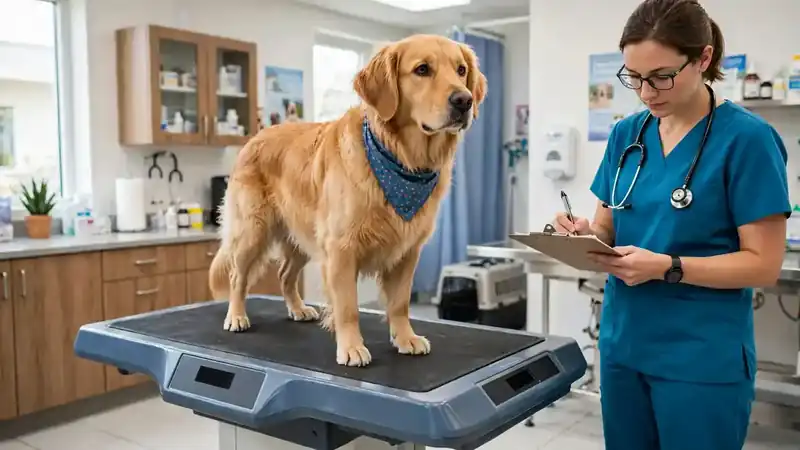
Slow loss protects muscle, and muscle is what keeps a dog strong and burns calories at rest. A dog that loses weight too fast sheds muscle along with fat, and a weaker dog moves less, which slows loss further.
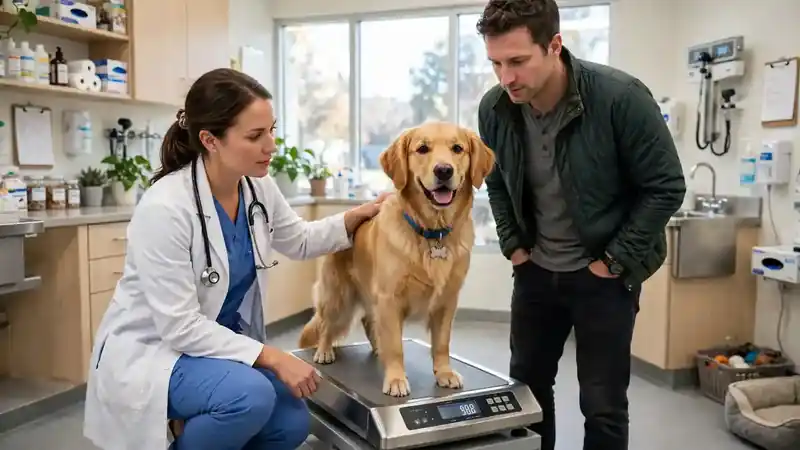
Weighing on a fixed schedule keeps the plan honest. Weigh your dog every two weeks at the same time of day, on the same scale, and write the number down. If the number stalls for a month, your vet may trim the daily amount by 10 percent or look for a health cause such as low thyroid. If the number drops too fast, the vet will raise the food before the dog loses muscle.
How do you switch to a weight loss food?
Switch to a weight loss food over seven to ten days by mixing new food into the old food and raising the share each day. A slow switch keeps the stomach settled and shows how the new food suits your dog. If loose stool or vomiting appears, call your vet if it lasts more than a day.
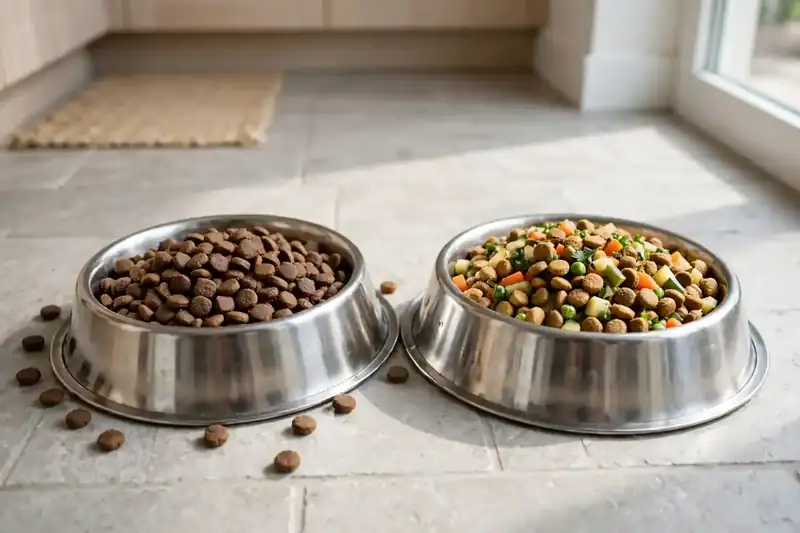
Start with about one quarter new food and three quarters old food for two or three days. Move to half and half for the next two or three days, then three quarters new, then all new by day seven to ten.
A dog with a sensitive stomach may need two full weeks to switch, and that is fine. Never switch foods on the same day you start cutting calories hard, since two changes at once leave you guessing which one caused the upset. Once the dog eats the new food happily, your vet can set the final daily amount for the weight loss phase.
How much should you feed for weight loss?
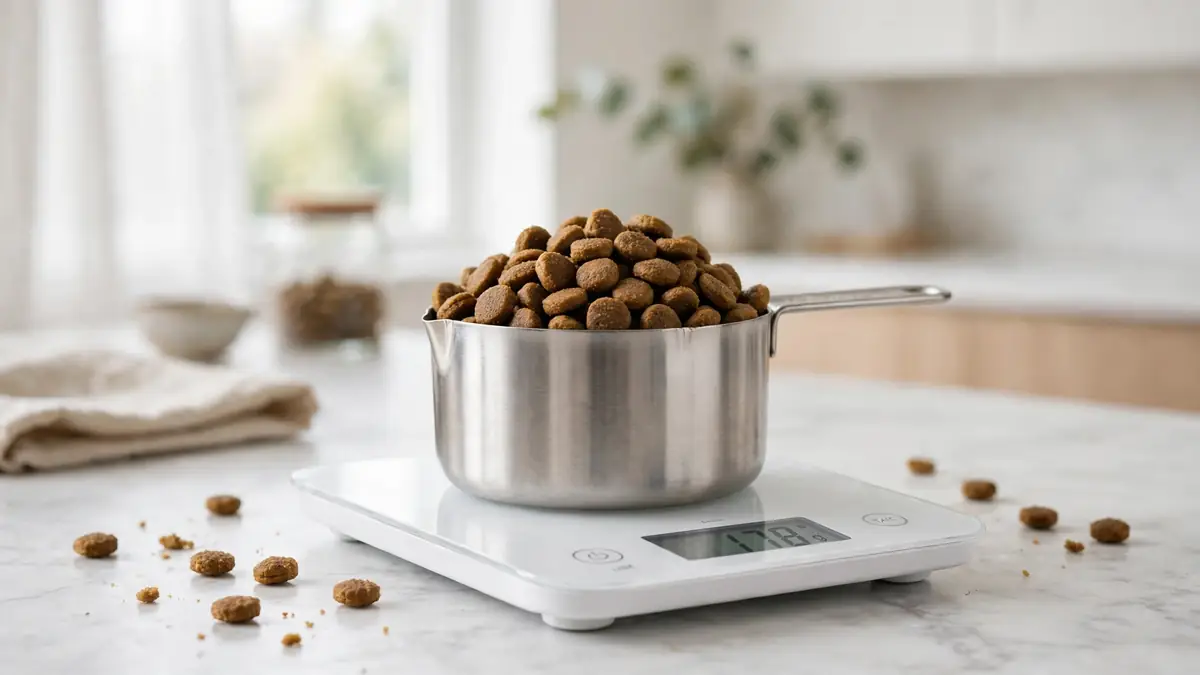
Feed the amount your vet sets for your dog’s target weight, not the amount printed on the bag for a dog of its current size. Weigh the food on a scale or use a measuring cup every time, and count treats inside the daily total. A small cut of 10 percent often starts weight loss without leaving a dog starving.
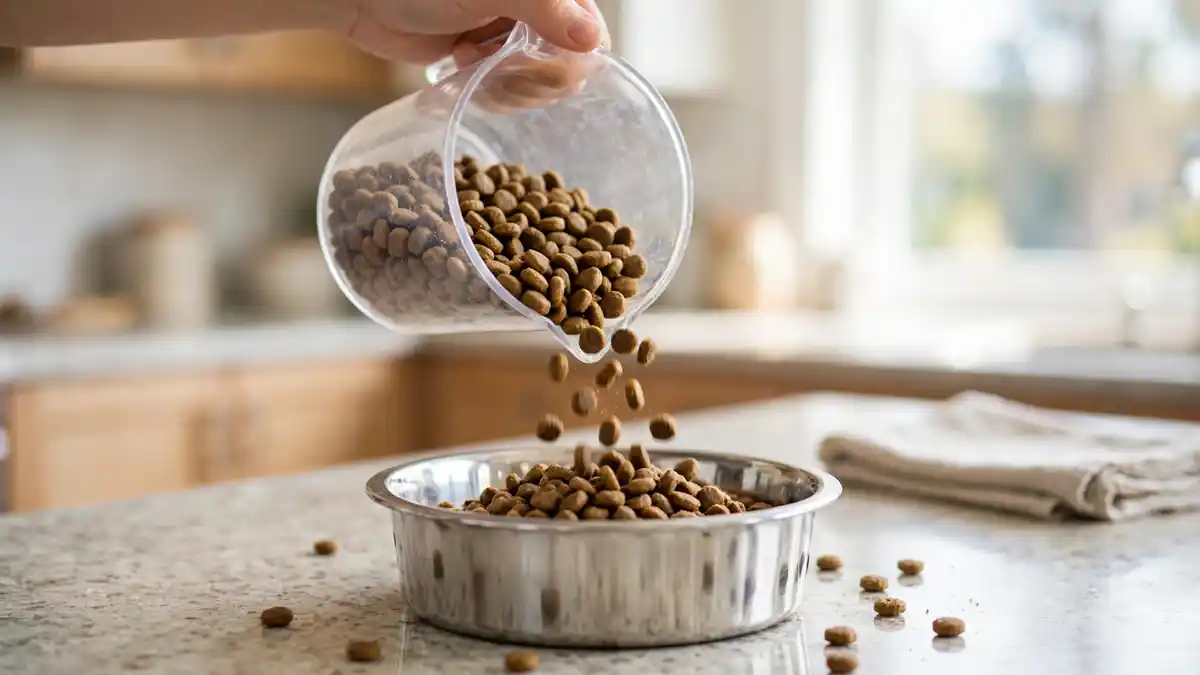
The feeding guide on the bag aims at maintenance, not weight loss, and it often overshoots for a dog that needs to slim down. Your vet works out the calories from the target weight and turns that into cups or grams of the new food. The AKC guide to safe weight loss in dogs suggests asking your vet about the resting energy formula and the maintenance energy need, then building the daily amount from those numbers.
Measuring beats guessing every time. A kitchen scale gives the most exact portion, and a standard measuring cup is the next best tool. Scoops, mugs, and handfuls drift from day to day, and a drift of a quarter cup can erase the whole deficit. Split the daily amount into two meals.
What role does exercise play in dog weight loss?
Exercise helps weight loss by burning extra calories, keeping muscle strong, and lifting a dog’s mood, but food matters more than walks. A heavy dog should start with short gentle walks and build up slowly, since sore joints and heavy breathing set the limit. Aim for two walks a day and add play once the dog moves with ease.
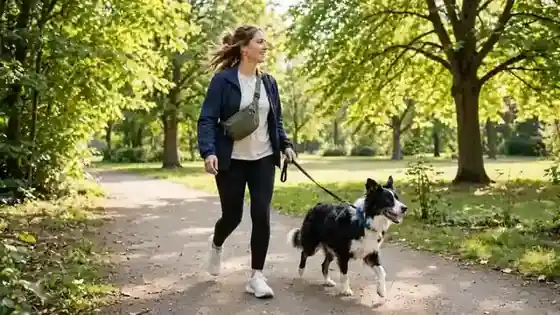
Vets often put the split at 60 to 70 percent diet and 30 to 40 percent exercise, which surprises owners who count on long walks to fix an overfed dog. A walk burns far fewer calories than a single extra biscuit adds, so food stays the lever that moves the scale.
Start where your dog is, not where you wish it were. A heavy dog may manage ten minutes of slow walking twice a day at first, and that is a fine start. Swimming suits dogs with sore joints, since water holds the weight while the legs work, and gentle games of fetch beat a jog for a dog that still carries extra pounds. Watch for heavy panting, lagging behind, or limping. Heat is a real risk for a heavy dog, so walk in the cool morning or evening.
What mistakes slow down dog weight loss?
Weight loss stalls when treats, table scraps, and extra hands feeding the dog add calories nobody counts. Free feeding, guessing portions, and switching foods every few weeks also break the plan. A health problem such as low thyroid can block loss too, so a dog that eats right and still gains weight needs a vet check.
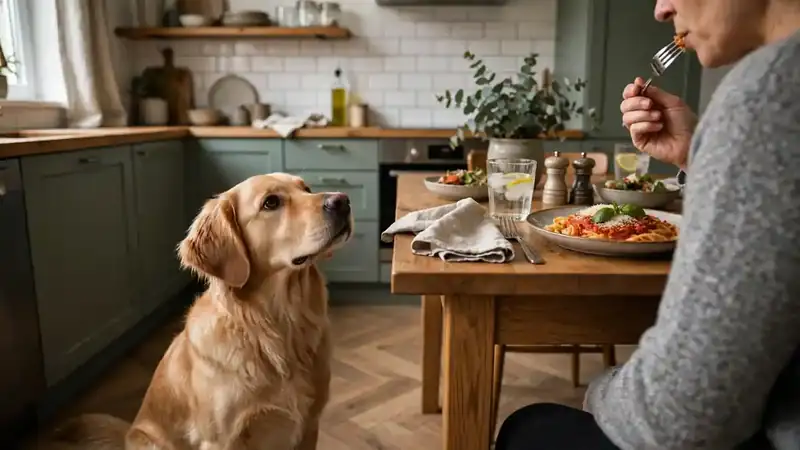
Treats are the biggest leak in most plans. A biscuit here, a piece of cheese there, and a scrap from each plate can add a quarter of the daily calories without anyone noticing. Swap biscuits for low calorie options such as carrots, green beans, cucumbers, blueberries, and apples.
The second leak is the family. If one person measures the food and another hands out scraps, the plan fails in silence. Free feeding, where the bowl stays full all day, hides the same problem: nobody knows how much the dog ate. When a plan stalls despite honest measuring, a vet check for low thyroid or Cushing’s disease is the next step, since no diet fixes a hormone problem.
How do you keep the weight off for good?
Keep the weight off by feeding the maintenance amount your vet sets, weighing your dog once a month, and keeping treats under 10 percent of daily calories. Daily walks and play should stay part of the routine for life. If the scale creeps up by a pound or two, trim the food a little before it becomes five.
Maintenance is a plan, not a return to old habits. Your vet sets a new daily amount for the target weight, usually a little higher than the weight loss amount, and you keep measuring it the same way. A pound gained is a small fix; five pounds gained is a second diet. The AKC warns against yo-yo dieting, where weight swings up and down again and again.
The habits that worked during the diet should stay. Keep the two daily walks, keep the play sessions, and keep treats in the jar. Our guide to the best dog food for small dogs can help you pick a food that fits a little dog at its new weight.
Frequently asked questions about weight loss dog food for dogs
Owners ask the same questions when they start a dog on a weight loss food, so this section gathers the most common ones in one place. You will find answers on wet versus dry food, treats, puppies, and how long loss takes. Use these answers as a starting point, and ask your vet to set the plan for your dog.
Is wet or dry food better for weight loss?
Wet food can help, since water adds bulk with no calories, so a dog feels full on fewer calories. Dry food works too, and it costs less and stores longer. Both can slim a dog down when the portion is measured and the recipe is built for weight loss. Pick the one your dog eats happily.
How long does it take a dog to lose weight?
A dog that needs to lose 10 percent of its body weight often needs two to three months at a safe pace of 1 to 2 percent per week. Your vet will adjust the plan if the scale stalls for a month.
Can I just feed less of my dog's normal food?
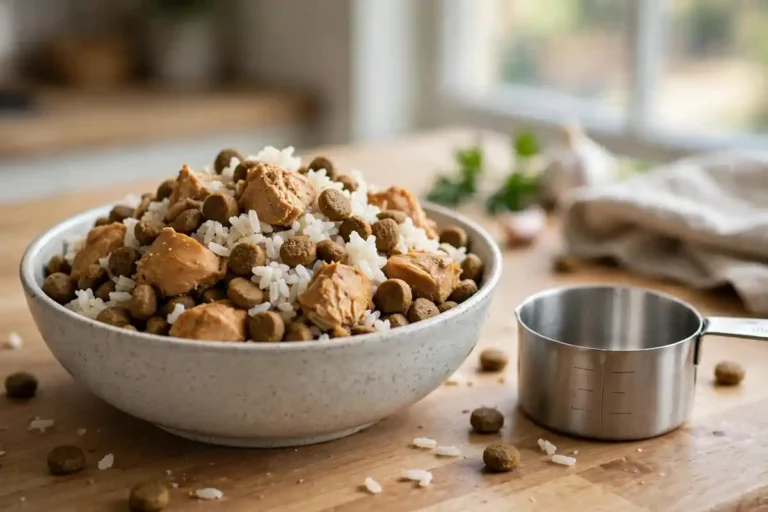
Feeding less of a normal food can work for a few pounds, and cutting the daily amount by 10 percent is a fair first step. The catch is that a small portion of normal food may leave the dog hungry and short on some nutrients. A weight loss food keeps the bowl full and the nutrition complete.
What treats can I give a dog on a diet?
Give low calorie treats such as baby carrots, green beans, cucumber slices, blueberries, and apple slices with no seeds. Keep treats under 10 percent of daily calories and count them in the total. Skip biscuits, cheese, and fatty scraps, since a few of those can erase the whole day’s deficit.
Should puppies eat weight loss dog food?
No, puppies should never eat weight loss dog food. Puppies need full calories and balanced nutrients to grow, and a diet food can slow growth and harm development. If a puppy looks heavy, ask your vet to check its growth curve and set the right amount of puppy food.
My dog is not losing weight, what should I do?
Check the leaks first: measure every meal, count every treat, and make sure no one else feeds the dog. If the plan is honest and the scale still will not move, book a vet visit. Low thyroid, Cushing’s disease, and some medicines can block weight loss, and your vet can test for them.
A slimmer dog moves easier, breathes easier, and likely lives longer, and the food bowl is where that change starts. Pick a weight loss food with fewer calories per cup, real fiber, and solid protein, measure every portion, and let your vet set the pace. Expect months, not weeks, and expect the scale to stall now and then.