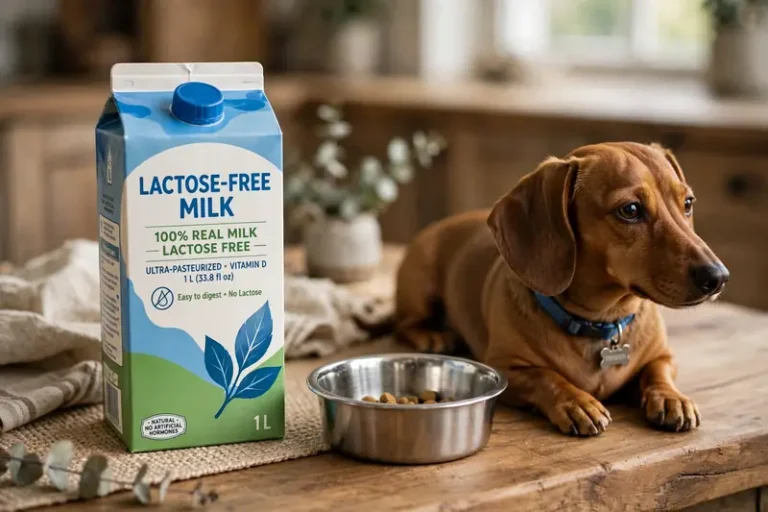
Unsweetened buttermilk with nothing added is safe for most dogs in small amounts. Fermentation eats up a good share of the lactose, which is the part of milk that troubles most adult dogs, and the live cultures add a mild probiotic bonus. The real trouble comes from the salted, spiced, or flavored versions people actually drink, plus the temptation to pour a big bowl. A few tablespoons as an occasional treat is the whole story for a healthy dog.

Can dogs drink buttermilk? The short answer
Yes, dogs can drink buttermilk when it is plain, unsweetened, and unsalted, served in small amounts as an occasional treat. Fermentation lowers the lactose compared with regular milk, so many dogs handle it better. Dogs with dairy allergies, pancreatitis, or sensitive stomachs should skip it, and flavored or salted versions are never okay.
Buttermilk sits in an odd middle ground among dairy products. It is not as gentle as plain yogurt, which the AKC lists among fermented foods that can support gut health in dogs that tolerate dairy. But it is easier on most dogs than a bowl of whole milk, which the AKC flags for lactose intolerance in a large share of adult dogs. Knowing where your dog falls on that spectrum decides whether buttermilk earns a place in the treat rotation.
What buttermilk actually is
Cultured buttermilk, the kind sold in cartons, is low-fat milk fermented with lactic acid bacteria. Those bacteria convert much of the milk sugar into lactic acid, which gives buttermilk its tang and thick body. Traditional buttermilk, or chaas, is thinner: yogurt or curd whisked with water, sometimes with salt and spices for people.
The distinction matters because only the plain version belongs near a dog. Salted chaas with black salt, cumin, or ginger is a people drink, and the sodium alone rules it out for dogs. Sweetened or flavored buttermilk drinks carry the same additive risks as any flavored dairy. When this article says buttermilk, it means the plain cultured kind with nothing added.
Why buttermilk is easier on dogs than regular milk
Fermentation does real work on lactose. Buttermilk carries roughly a quarter less lactose than whole or skim milk, and the live cultures keep breaking lactose down even after bottling. A dog that gets gassy from milk may handle a small pour of buttermilk without any drama, because there is simply less of the offending sugar to ferment in the gut.
This is not the same as lactose-free. Buttermilk still contains lactose, just less of it. A severely lactose-intolerant dog can still react. Think of buttermilk as milk with the volume turned down, not a different product entirely. PetMD’s guide to milk for dogs makes the same point about dairy in general: regular milk tolerance varies dog to dog, and the only way to know is a small, careful test.
What a small serving actually offers
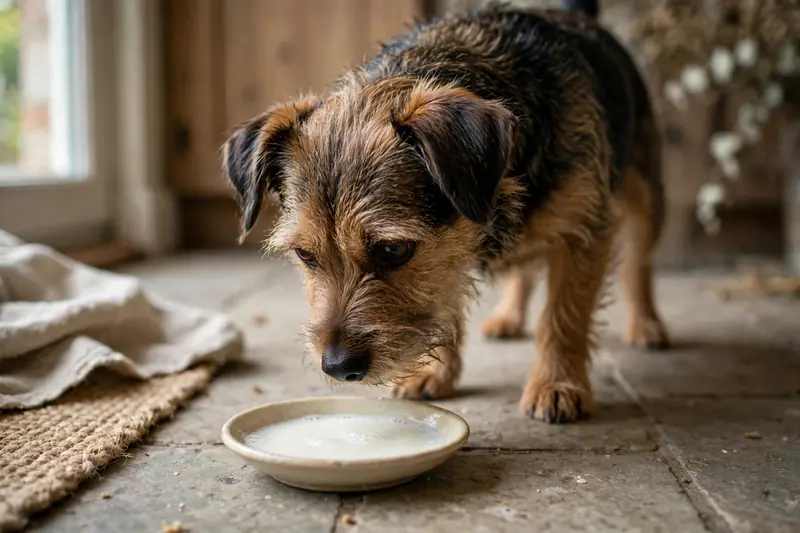
Buttermilk brings protein, calcium, vitamin B12, vitamin B2, some vitamin D, and live probiotic cultures. None of this fills a nutritional gap in a dog eating complete food. The honest framing is simpler: it is a low-calorie, tangy treat with a modest probiotic side benefit, not a supplement.
The probiotic angle deserves a reality check. Buttermilk is not a treatment for diarrhea, no matter what well-meaning advice says. One veterinary answer widely shared online warns specifically against giving buttermilk to a dog with diarrhea, because the fat content can aggravate the gut and, in sensitive dogs, even trigger pancreatitis. Probiotics help healthy guts stay balanced. They do not fix a sick one, and a fatty dairy drink is the wrong tool for an upset stomach. For actual digestive support, products made for the job, like Proviable or FortiFlora, exist for a reason.
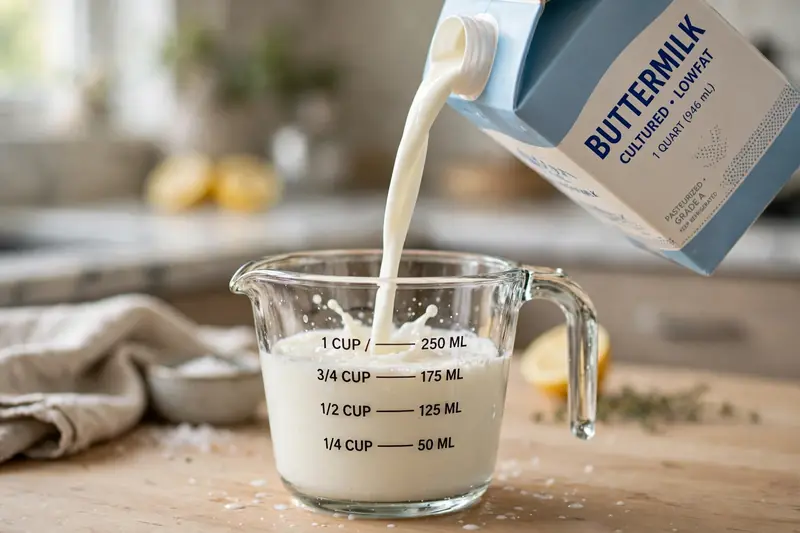
How much buttermilk is safe: portions by size
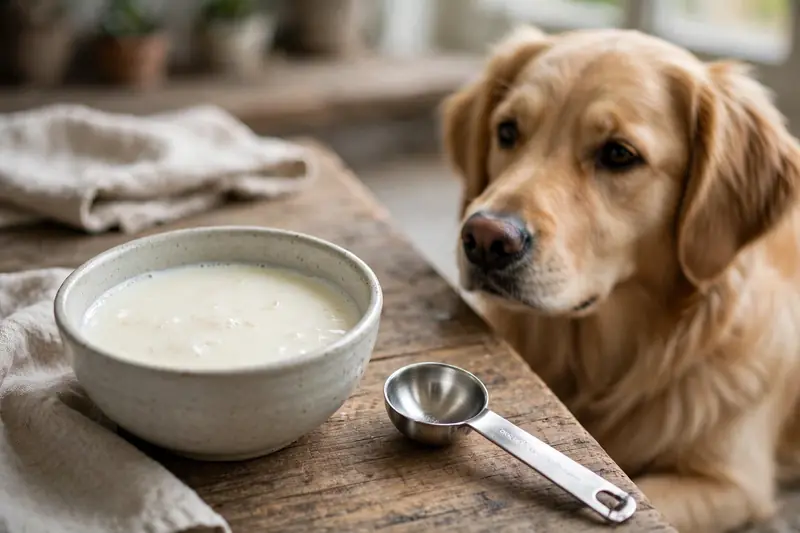
Start smaller than you think, watch for a full day, and only then settle into a routine amount. The table below gives conservative starting points, offered two or three times a week at most, never daily.
| Dog size | First test amount | Routine serving |
|---|---|---|
| Small (under 20 lbs) | 1 teaspoon | 1 to 2 tablespoons |
| Medium (20 to 50 lbs) | 1 tablespoon | 2 to 4 tablespoons |
| Large (over 50 lbs) | 2 tablespoons | Up to 1/4 cup |
Treats, buttermilk included, should stay within about 10 percent of daily calories. Buttermilk is light, so the calorie math is rarely the problem. Volume is. A dog that tolerates two tablespoons can still get loose stool from half a cup, because even reduced lactose adds up. If the first test produces gas, bloating, or soft stool within 24 hours, your dog has answered the question. Stop there.

The salt and spice trap
This is where most buttermilk trouble starts. Nobody’s dog is drinking plain cultured buttermilk from the carton on its own. The dog is drinking what the family drinks, and family buttermilk is often salted, spiced, or both. Salt in quantity causes excessive thirst and can push a small dog toward sodium problems. Cumin and ginger cause no harm in tiny amounts, yet neither belongs in a dog’s treat, and seasoned drinks train the dog to beg for the wrong thing.
The rule is absolute: plain and unsalted, or nothing. If your household drinks masala chaas, the dog gets its own separate pour from a plain batch, or it gets water. The ASPCA’s list of people foods to keep away from pets is worth a skim here, not because buttermilk appears on it, but because it trains the habit of checking the whole ingredient list, seasonings included.

Lactose intolerance versus dairy allergy: know which your dog has
These two get mixed up constantly, and the difference decides whether buttermilk is a maybe or a never. Lactose intolerance is a digestive shortfall: the adult dog makes too little lactase enzyme, undigested milk sugar ferments in the gut, and the result is gas, bloating, loose stool, or vomiting a few hours after dairy. It is uncomfortable, not dangerous, and small amounts of low-lactose dairy may be fine.
A dairy allergy is an immune reaction to milk proteins, and it is one of the most common food allergies in dogs. The signs look different: itchy skin, ear inflammation, hives, facial swelling, plus gut upset. An allergic dog should not get buttermilk at all, because fermentation does nothing to the proteins. If your dog scratches after dairy or has ever broken out in hives, skip the test pour and ask your vet about an elimination diet instead.

When to skip buttermilk entirely
Pancreatitis, or any history of it, rules out buttermilk. The fat content, modest as it is, is not worth the risk for a dog whose pancreas has already objected once. Dogs with chronic digestive disease, dogs on strict prescription diets, and puppies under a year old should also sit this one out unless the vet says otherwise. A puppy’s gut is still calibrating, and there is no nutritional reason to introduce dairy early.
Overweight dogs get a smaller yes. Buttermilk carries few calories, so the calorie math is rarely the problem. Dogs taking medications that interact with dairy, which is rare but real with certain antibiotics, should check with the vet first.

Buttermilk versus yogurt versus kefir
The practical difference comes down to culture count and lactose. Kefir typically carries more live strains than buttermilk, while plain yogurt sits between the two on thickness and tang. All three beat sweetened commercial versions, which add sugar dogs do not need. For a dog that tolerates dairy, rotating among the three across weeks adds variety without overdoing any single one.
All three are fermented dairy, and all three beat plain milk for digestibility. Plain yogurt usually wins for dogs: thicker, higher in protein, widely tolerated, and easy to portion by the spoonful. Yogurt for dogs is the safer first experiment if you have never given your dog fermented dairy. Kefir goes further on the probiotic side with a wider range of live cultures, and dogs that handle yogurt usually handle kefir. Buttermilk lands third: perfectly fine, just thinner, tangier, and less versatile than the other two.
One practical difference: yogurt and kefir work as meal toppers, frozen treats, and pill disguises. Buttermilk mostly works as a drink or a pour-over. If you are choosing one fermented dairy to keep in the fridge for the dog, yogurt is the better all-rounder. Buttermilk is the one you share when you happen to have it open.
Three safe ways to serve it
A plain pour over kibble is the simplest. The tang wakes up boring dry food, and a tablespoon or two disappears into the bowl without changing the meal. Freeze the rest of the carton in an ice cube tray and you get portioned buttermilk cubes that keep for weeks. One cube thaws into a small treat on a hot afternoon.
A thin smear on a lick mat buys ten quiet minutes. Buttermilk is thin enough to spread and thick enough to slow an enthusiastic licker down. Skip the peanut butter pairing if your dog is dairy-sensitive and watching calories at the same time. Two rich treats in one sitting is how sensitive stomachs file complaints.
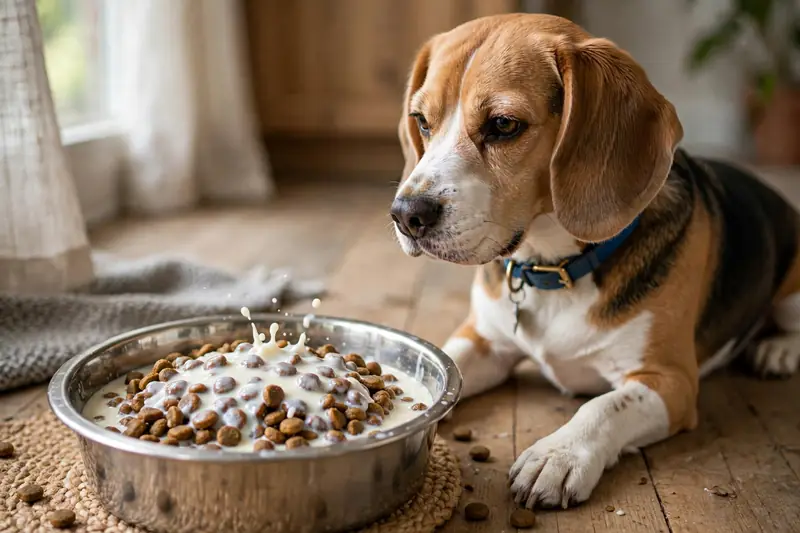
Buttermilk works best as an occasional extra, not a daily habit. A spoonful over food a few times a week gives most dogs the taste they enjoy without the digestive bill that full-cream dairy brings. Keep it plain and unsweetened, skip the salted chaas versions meant for people, and watch the first serving the way you would any new food. Dogs with dairy allergies, chronic stomach trouble, or weight problems should skip it entirely, and puppies do better on food made for their age. When the goal is probiotics rather than flavor, plain kefir or yogurt usually delivers more live cultures per spoonful. As always, your vet knows your dog’s history and gives the final word faster than any article can. Start with a teaspoon.
Frequently asked questions about buttermilk and dogs
Owners usually ask about chaas, puppies, and using buttermilk for stomach trouble. The answers below cover the questions that come up most often.
Can dogs drink salted buttermilk (chaas)?
No. Salted or spiced buttermilk is not safe for dogs. The sodium can cause excessive thirst and dehydration, and spice blends add nothing a dog needs. Only plain, unsweetened, unsalted buttermilk is ever appropriate.
Is buttermilk good for a dog with diarrhea?
No, and this is a common myth worth killing. Buttermilk’s fat content can worsen diarrhea, and in sensitive dogs it risks pancreatitis. Use a bland diet for mild stomach upset and call your vet if diarrhea lasts more than a day or two.
Can puppies drink buttermilk?
Puppies under a year old should skip it unless your vet approves. Their digestion is still developing, and dairy adds nothing they need. Stick to puppy food and water.
How often can I give my dog buttermilk?
Two or three times a week at most, in the portion sizes above. It is an occasional treat, not a daily drink. If you want a daily probiotic habit, ask your vet about a product formulated for dogs.
What are the signs my dog can’t handle buttermilk?
Gas, bloating, loose stool, or vomiting within 12 to 24 hours point to lactose intolerance. Itching, hives, ear redness, or facial swelling point to a dairy allergy, which is more serious. Stop the buttermilk either way and call your vet about the allergy signs.

Buttermilk earns a cautious yes with a short ingredient list. Plain, unsweetened, and unsalted, poured small and offered rarely, it is a harmless tangy treat with a little probiotic character. The moment salt, spice, sugar, or a sick stomach enters the picture, the answer flips. Keep the chaas for yourself and pour the dog its own plain splash, or just stick with water.
*Disclaimer: This article is for general information only and is not veterinary advice. Every dog handles dairy differently, and dogs with allergies, pancreatitis, or chronic digestive conditions need their vet’s guidance before trying new foods.*