Search “Pure Balance dog food recall” and you get two different internets. Review sites say the brand has a clean recall record. Social media posts insist there were recent recalls for copper and salmonella. Both cannot be right, and the FDA’s database settles it: no verified FDA recall exists for Pure Balance dog food as of the latest check.

The pure balance dog food recall question is really three questions wearing one costume. Has the brand ever faced a recall? Why do some sites claim otherwise? And how do you check the next claim yourself? This article answers all three, separates verified facts from rumors, and shows the two-minute check that ends every recall argument.
Has Pure Balance dog food ever faced a recall?
No verified FDA recall exists for Pure Balance dog food. Canine Journal’s review states the brand “has not been subject to any recalls, according to publicly available records” from the FDA. Petful’s recall database shows no Pure Balance recalls to date. DogFoodAdvisor’s automated recall list, which tracks the brand continuously, shows no recalls noted. Three independent recall trackers, one answer: nothing on the official record.

Pure Balance is Walmart’s private-label dog food brand, launched in 2012 and manufactured by Ainsworth Pet Nutrition, a company owned by J.M. Smucker. That corporate family tree matters, because most of the confusion about this brand’s recall history starts there. A recall of a different brand made by the same manufacturer, or owned by the same parent company, is not a Pure Balance recall. The FDA’s animal and veterinary recalls page lists recalls by brand and product, and Pure Balance does not appear on it.
Why the search results disagree with each other
The disagreement comes from sources with very different standards. Established review sites and recall databases check the FDA’s records and report what they find, which is nothing. A few content sites publish alarming headlines about Pure Balance recalls without linking to any FDA notice, lot number, or company announcement. Social media then amplifies the alarming version, because fear travels faster than a database query. A recall claim without a lot number, a date, and an FDA or company source is a rumor, not a recall.
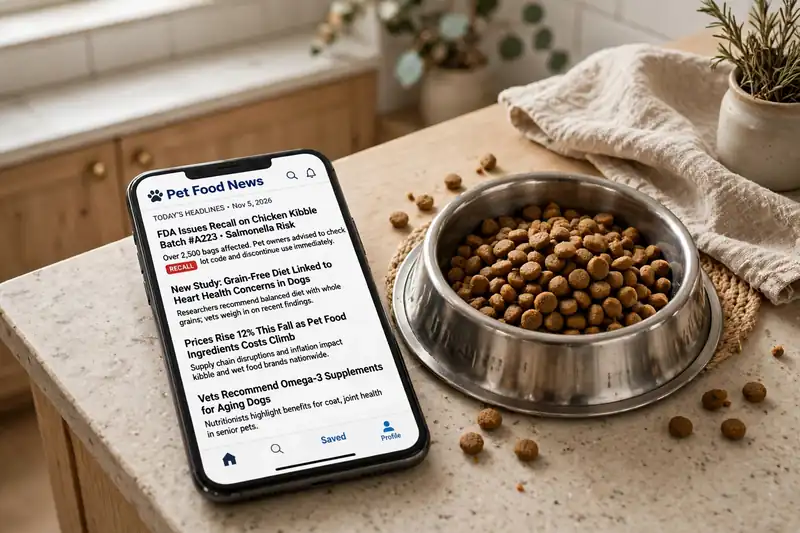
The pattern is worth recognizing because it repeats across brands. A post mislabels an old recall of a different brand sold at the same retailer. People describe a market withdrawal as a recall. People attach a manufacturer’s recall of one product line to every brand the manufacturer makes. Each step adds a layer of wrongness, and by the time the claim reaches a Facebook group, it reads as settled fact. The defense is boring but effective: check the FDA record, check the lot, and ignore any claim that cannot produce both.
The 2021 “mold-like odor” story and what it really was
One site describes a 2021 incident in which Walmart quietly pulled a single lot of Pure Balance Pro+ Chicken and Brown Rice from select stores in Arkansas and Texas after customers reported a mold-like odor. According to that account, Walmart handled it as a market withdrawal: product removed from shelves, but regulators never classified it as an official health-hazard recall. I could not verify this incident against any FDA record, and the claim published no lot number.
That last sentence is doing important work. A market withdrawal and a recall are different regulatory events, and the distinction is the subject of its own section below. But the deeper point is about evidence. An unverified anecdote on one site, with no lot number and no agency record, cannot become a recall in a responsible article. It belongs in the article only as an example of the kind of claim that circulates, clearly labeled as unverified. If you bought Pure Balance Pro+ Chicken and Brown Rice in Arkansas or Texas in 2021 and want certainty, the two-minute check in the verification section will give you a better answer than any rumor.
The recalls that belong to the manufacturer, not the brand
Here is where most of the confusion originates. Ainsworth Pet Nutrition, which manufactures Pure Balance, recalled products in its Rachel Ray Nutrish line. J.M. Smucker, the parent company, issued voluntary recalls of other pet food brands, including a widely reported 2018 action involving pentobarbital, a euthanasia drug, found in canned dog food. Those were real recalls. Neither named Pure Balance.
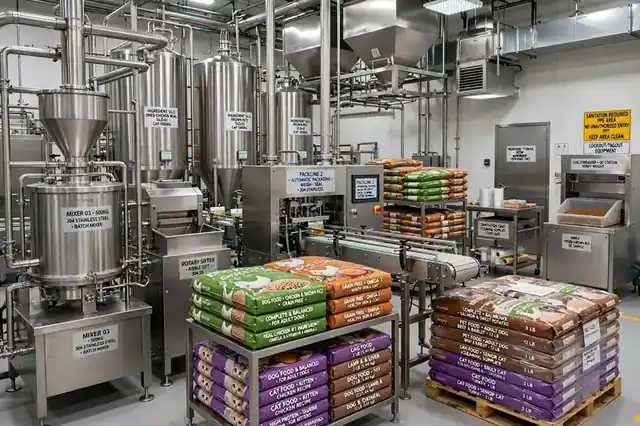
Private-label manufacturing makes this mix-up almost inevitable. One factory makes food for several brands, and when regulators recall one brand, search engines and social media smear the news across all of them. The legal and practical reality is narrower: a recall names a specific brand, product, and lot. The Rachel Ray recalls named Rachel Ray products. The Smucker canned-food recalls named Smucker brands. Pure Balance was named in neither. When you see a recall headline attached to Pure Balance, check whether the named product is actually Pure Balance before doing anything else. Nine times out of ten, it is not.
The recent social-media claims I could not verify
At least one content site claims that two new Pure Balance recalls landed in the FDA’s database recently, one for elevated copper levels and another for potential salmonella contamination. I checked the FDA’s public recall postings and found no record matching either claim. DogFoodAdvisor’s automated recall list, updated continuously, still shows no recalls noted for the brand. As of the latest check, these claims have no verifiable FDA record behind them.

Another site mentions a 2021 recall for elevated beef thyroid hormone in one lot of Pure Balance canned food. Same result: no verifiable FDA record, no lot number published. I am not calling these claims false. I am saying exactly what the evidence supports: the claims exist, the FDA record does not show them, and no published lot number would let an owner check a bag. That is the complete honest statement. If a future FDA notice appears, this article’s verification section will tell you how to find it in two minutes. Until then, treating unverified claims as fact would be the exact mistake this article exists to prevent.
How to verify any recall claim yourself in two minutes
Open the FDA’s animal and veterinary recalls page and search the brand name. If the claim is real, you will find a company announcement with the product name, lot numbers, best-by dates, and the reason. The FDA’s recalls and safety alerts page posts company announcements the day they go out, so it is the fastest place to catch a new one. No announcement on the FDA’s page means no verified recall, full stop.

Cross-check the lot number against your bag before reacting. Recalls name specific lots, and a real recall of one lot does not implicate the bag in your pantry with a different code. Photograph the lot code, best-by date, and UPC of every new bag when you open it; ink-jetted codes smudge and owners toss the bags, and a photo settles the question in seconds. For the broader recall picture, this site’s FDA dog food recall guide explains how the process works, with brand histories for Purina, Pedigree, Nulo, and Raaw Energy. And if your dog ever does get sick after eating any food, the FDA’s pet food complaint page explains how to file a report with the lot information the agency needs.
Recall vs market withdrawal: why the difference matters
A recall is a formal action to remove a product that violates FDA regulations or presents a health hazard, classified by risk level and published in the agency’s records. A market withdrawal is a company’s removal of a product for a lesser reason, such as a quality complaint or a packaging issue, without the formal recall classification. A withdrawal never appears in the FDA’s recall database, which is why a “quietly pulled” product and a “recalled” product are different claims.

The distinction matters for owners because it changes what you can verify. A recall leaves a paper trail: announcement, lot numbers, FDA posting. A withdrawal may leave nothing public at all, which makes withdrawal claims nearly impossible to confirm or deny from the outside. That asymmetry is exactly what rumor-mongers exploit. “They quietly pulled it” sounds sinister precisely because no one can disprove it, which is why it spreads. The rational response is to weight claims by their evidence. A formal recall with lot numbers deserves action. An unsourced withdrawal story deserves the two-minute check and nothing more.
The grain-free DCM conversation, kept in its own lane
Pure Balance sells grain-free formulas, which pulls the brand into a separate safety conversation: the FDA’s investigation into a potential link between grain-free diets and dilated cardiomyopathy (DCM), a heart condition in dogs. The FDA’s 2018 alert followed hundreds of reports, and the agency has continued updating the public since. DCM is not a recall category, and researchers have established no causal link between any specific Pure Balance formula and DCM.

Keeping this conversation separate from recalls is a matter of accuracy, not reassurance. Owners sometimes treat “the FDA is investigating” as equivalent to “the FDA recalled,” and the two are nothing alike. An investigation gathers data; a recall removes product. If you feed a grain-free formula to a breed with known DCM risk, such as a Golden Retriever, Doberman, or Cocker Spaniel, that is a conversation for your veterinarian, not a reason to search the recall database. Conflating the two produces the worst of both worlds: panic about recalls that do not exist, and inattention to a cardiac question that deserves a vet’s input.
How Walmart actually handles a recall when one happens
Walmart controls Pure Balance distribution end to end, which changes how recall news travels. When a real recall hits a Walmart private-label product, the notice appears on Walmart’s product recall page, often before the FDA’s press process finishes. Registering your email on Walmart’s recall page gets you automated alerts with photos of the affected codes. For a Walmart-exclusive brand, the retailer’s own alert system is the fastest channel.

This centralized distribution is also why a genuine Pure Balance recall would be hard to miss. The product sells only through Walmart’s stores and site, so the company can identify purchasers, pull inventory from every location at once, and push the notice through its own channels. Contrast that with a regional raw brand sold through hundreds of independent retailers, where recall news trickles out store by store. The absence of any Walmart recall notice for Pure Balance, combined with the empty FDA record, is meaningful precisely because a real event in this distribution system would be loud.
If your dog gets sick after eating any dog food
Stop feeding the product and keep the bag. The lot number, best-by date, and UPC are the three codes your vet and the FDA need, and manufacturers stamp them on packaging that most owners throw away. Call your vet promptly with the product name and the symptoms you are seeing: vomiting, diarrhea, refusal to eat, lethargy, or anything else out of the ordinary. Do not wait to see if it passes when a commercial food is the suspect.

File a report with the FDA’s Safety Reporting Portal once your dog is stable. The agency’s pet food complaint page lists exactly what to include: the exact product name as printed on the label, the lot number, the best-by date, where and when you bought it, and your dog’s symptoms with veterinary findings. Your report joins a surveillance system that has triggered real recalls; the 2018 pentobarbital investigation started with consumer and vet reports, not with company testing. One report rarely moves the needle alone. A pattern of them does. The AKC’s dog food myths article is also worth a read if the scare started online, since rumor-driven panic around dog food follows predictable patterns.
Frequently asked questions about the pure balance dog food recall
The answers below stick to what the records show.
Has Pure Balance ever been recalled by the FDA?
No verified FDA recall exists for Pure Balance. Three independent recall trackers (Canine Journal, Petful, DogFoodAdvisor) all show a clean record.
What about the copper and salmonella claims on social media?
Those claims have no verifiable FDA record behind them. The claims published no lot numbers, and the FDA’s postings show nothing matching either claim as of the latest check.
Was there a 2021 Pure Balance recall for thyroid hormone?
One site mentions it, but no FDA record or lot number supports the claim. No one can verify it, so treat it as unproven, not fact.
Are Rachel Ray or Smucker recalls the same thing?
Those recalls named different brands made or owned by the same companies. A recall names a specific brand, product, and lot; none of them named Pure Balance.
Should I stop feeding Pure Balance because of the rumors?
That is a question for your veterinarian, who knows your dog’s health history. The recall record itself gives no reason to panic: it is empty.
Where is the fastest place to hear about a real Pure Balance recall?
Walmart’s own product recall page, since the brand sells exclusively through Walmart. The FDA’s email alerts are the second channel to set up.
The pure balance dog food recall record is empty, and the rumors filling that vacuum share a pattern: no lot number, no FDA source, no verifiable date. Check the FDA’s page, check your bag’s lot code, and let the evidence decide. If a real recall ever lands, the lot number will be public within hours, and you will know exactly where to look.
Disclaimer: This article is for general information only and is not veterinary advice. Recall information changes over time, so verify the current status on the FDA’s official recall pages. If your dog shows symptoms after eating any dog food, contact your veterinarian promptly.