Dogs can eat raw pumpkin flesh in small amounts, though plain cooked or canned pumpkin is easier to digest and far more useful. Raw cubes carry no toxin. They are simply tough and watery, and light on the fiber that makes pumpkin worth feeding in the first place. Most owners reach for pumpkin because a vet suggested it for loose stool or constipation, and raw flesh does almost nothing for either problem. The rind, stem, and leaves are a different story and should never be offered.
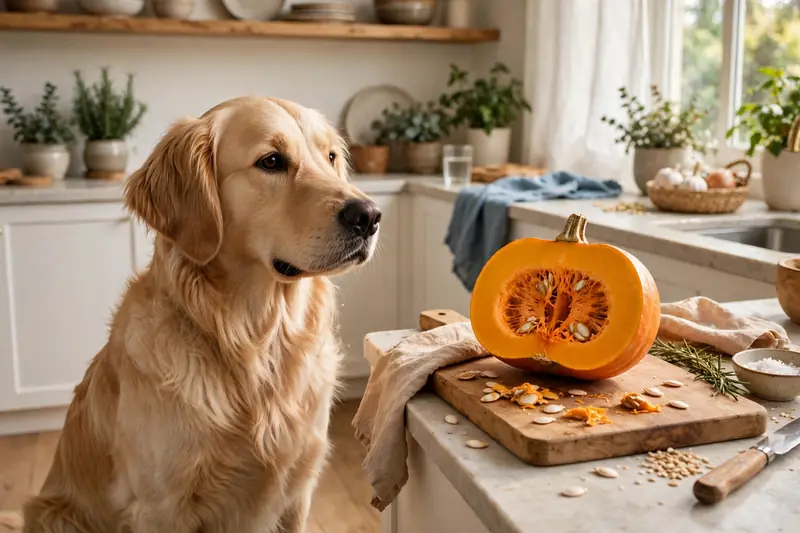
Pumpkin season puts raw chunks within snout range. Carving jack-o-lanterns leaves piles of flesh and guts on the counter, and a curious dog will absolutely steal a piece. A stolen bite of raw flesh calls for watching, not panic. The parts worth worrying about are the hard rind, the woody stem, and the sheer quantity a determined dog can inhale while you look away.
Can dogs eat raw pumpkin? The short answer
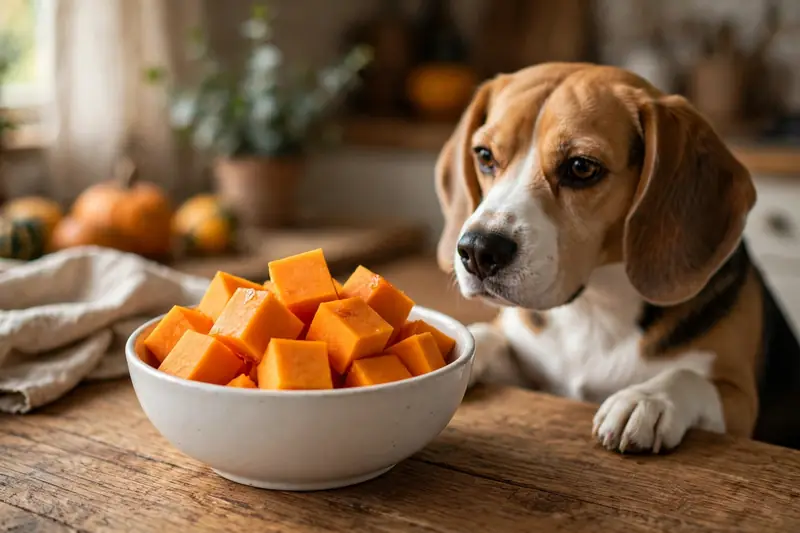
Yes, dogs can eat raw pumpkin flesh in small amounts. The raw flesh carries no toxin; it is simply firm and fibrous, harder to digest than cooked pumpkin. Peel it, cut it into tiny cubes, and keep the portion small. None of the hard parts belong in the bowl: rind, stem, seeds, or leaves.
PetMD advises against raw pumpkin as a regular choice, noting that the raw flesh is tough to digest and the rind in particular can be hard for dogs to chew and swallow safely. That matches what most vets tell owners: a little raw flesh rarely causes trouble, while cooked or canned plain pumpkin does the job better. Dogs that gulp food are the exception to the casual rule. A gulper that swallows a large raw chunk faces a real choking risk, so tiny pieces are non-negotiable for that type of eater.
Owners sometimes assume raw means healthier, the way a raw carrot feels more virtuous than a cooked one. Pumpkin breaks that pattern. Cooking softens the cell walls and makes the small amount of fiber present easier to use. Raw pumpkin is safe the way a raw potato is safe: technically edible and practically pointless, risky in the wrong form.
What raw pumpkin offers nutritionally

Raw pumpkin is mostly water with a modest mix of fiber, beta-carotene, and potassium. About 90 percent of its weight is water, and its fiber sits near 0.5 grams per 100 grams, low for a vegetable people think of as a fiber fix. Beta-carotene converts to vitamin A, and potassium supports normal muscle and nerve function.
Here is the complicating fact most pumpkin guides skip. Canned plain pumpkin carries about 2.9 grams of fiber per 100 grams, roughly six times what raw pumpkin offers, according to USDA FoodData Central figures.
A dog that gets two tablespoons of canned puree receives close to a gram of fiber. A dog that gets two tablespoons of raw cubes gets about a seventh of that, plus a tougher chew. The AKC describes pumpkin fiber as working like a prebiotic in AKC’s gut health guide, feeding beneficial gut bacteria as it ferments. That fermentation needs fiber to work with, and raw flesh barely supplies it. The fiber for dogs guide explains why the amount per spoonful matters more than the vegetable’s reputation.
None of this makes raw pumpkin harmful. It makes it a weak tool. Dogs already get complete nutrition from their regular food, and the treat value of raw pumpkin is a little moisture and a little fiber, not a meaningful nutrient boost. Owners who want the digestive benefit should read the nutrition math and reach for the can or the steamer.
Raw vs cooked pumpkin: why cooking wins

Cooking turns pumpkin from a chew toy into a food. Heat softens the firm flesh, breaks down the fibrous structure, and makes the modest fiber content easier for a dog’s short digestive tract to handle. A steamed or baked cube yields to the teeth. A raw cube resists, and dogs are not patient chewers.
Raw pumpkin also sits heavier in the stomach. Several veterinary sources note that large amounts of raw pumpkin can cause stomach upset, and dogs with sensitive digestion are the first to show it. Cooked pumpkin rarely causes the same complaint at the same portion size. The difference is preparation, not the plant.
Frozen pumpkin chunks work fine once cooked. Thaw them, steam or bake until completely soft, and mash or chop small. Microwaving in a covered dish with a splash of water gets the same result in minutes.
The fork test decides readiness: the flesh should offer no resistance. Raw pumpkin fails that test by design, which is the whole point of cooking it.
The pumpkin parts your dog should never get

The rind is the most dangerous part of a raw pumpkin for a dog. It is thick and rigid, nearly impossible for a dog’s digestive tract to break down. A small dog that swallows a piece can choke, and several pieces can cause an intestinal blockage in a larger dog, which is a surgical problem.
The stem is worse in its own way. It is woody and sharp at the broken end, and it can cut the mouth or throat on the way down. Stems also resist digestion completely.
Leaves carry the same fibrous toughness and add little besides a stomach ache. None of these parts contain a meaningful toxin; the danger is mechanical, and mechanical injuries are the ones that send dogs to the emergency clinic at midnight.
Carving night is the highest-risk moment. Bowls of rind scraps sit at dog height, dogs are excited by the activity, and a whole rind section can vanish in one gulp. Bag the scraps and get them into a closed bin before the dog finishes its investigation. Compost piles deserve the same caution, since dogs love to raid them and rotting pumpkin flesh can make a dog sick on its own.
How to prepare raw pumpkin for your dog

Wash the pumpkin, cut it open, scoop out the seeds and stringy guts, peel away every bit of rind, and cut the flesh into pea-size cubes. Serve the cubes plain, with no salt, butter, oil, sugar, or spices. That is the entire recipe.
The peeling step is the one owners skip. A vegetable peeler handles the rind faster than a knife and keeps the fingers safer. Cut the peeled flesh into slabs, then sticks, then tiny cubes.
Dogs do not chew methodically, so small cubes protect gulpers and small breeds. Seeds go in the trash or into a separate preparation; whole seeds are a choking hazard for small dogs, and the stringy guts are messy without being nutritious. Keep a mental note of the human foods dogs can eat if you share table foods often, since the plain-preparation rule applies across the board.
Freshness matters with raw pumpkin. Use flesh from a firm, fresh pumpkin, not one that has sat on the porch for three weeks. Rotting pumpkin grows mold, and moldy food can cause serious illness in dogs.
Leftover cubes keep in a sealed container in the fridge for three to four days. Anything slimy or off-smelling goes in the bin.
One more thing to keep out of the dog’s portion: anything from a can labeled pie filling. Pie filling is a different product from plain pumpkin. It carries sugar, spices like nutmeg and cloves, and sometimes xylitol, the artificial sweetener that is extremely toxic to dogs. The ASPCA’s people foods to avoid names xylitol among the items that never belong near a dog, and pie filling is one of its common hiding places. Plain canned pumpkin lists one ingredient: pumpkin. Pie filling lists a paragraph, so read the label before the can gets opened.
How much raw pumpkin is safe to feed
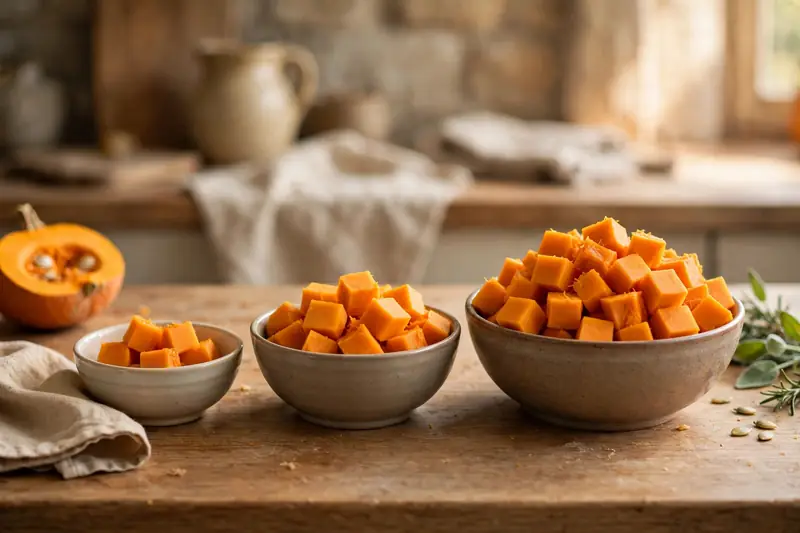
Keep raw pumpkin within 10 percent of daily calories, and stay well under that in practice. Raw pumpkin is a sometimes food, not a daily supplement. A few tiny cubes a couple of times a week is plenty for most dogs.
The VCA’s feeding guidelines set the 10 percent cap for all treats combined, and pumpkin shares that budget with every other extra. Start with one small cube and watch for a full day before offering more.
| Dog size | Safe amount | Frequency |
|---|---|---|
| Small (under 20 lbs) | One or two tiny cubes | Once or twice a week |
| Medium (20 to 50 lbs) | One tablespoon of small cubes | Once or twice a week |
| Large (over 50 lbs) | Two tablespoons of small cubes | Once or twice a week |
Too much raw pumpkin at once can cause gas or loose stool, and a sudden fiber increase is the usual culprit. Dogs with a history of digestive trouble should skip raw pumpkin entirely and use the cooked version if the vet approves. Repeated vomiting or diarrhea after eating pumpkin points to gastroenteritis, which needs a vet’s attention rather than more home remedies.
Raw pumpkin vs canned puree: which to actually use

Canned plain pumpkin wins for every practical purpose. It is cooked during processing, which means the fiber is accessible and the texture is safe, and it stays consistent from can to can. It keeps for years unopened and for about a week in the fridge once opened, frozen in portions for longer.
Raw pumpkin wins at exactly one thing: availability in October. A fresh pumpkin on the counter is convenient, and a few raw cubes will not hurt a healthy dog.
But convenience says nothing about nutrition. The AKC suggests one to four tablespoons of plain pumpkin per meal for digestive support, and hitting that with raw cubes means feeding a large volume of tough, watery chunks. Hitting it with canned puree means a spoonful stirred into dinner.
Price and waste tip the scale further. A can of plain pumpkin costs little and produces zero rind waste. A whole pumpkin bought for the dog leaves most of itself uneaten, and the rind disposal becomes a dog-safety chore. Owners who want the full picture on forms and amounts can read the main pumpkin for dogs guide for the cooked and canned details this article skips.
Rotation still makes sense for owners who share vegetables often. No single vegetable should dominate the treat budget, and dogs that get bored with one accept another more readily. Serve each in its best form and keep raw pumpkin cubes as the occasional odd one out, not the star.
Puppies and senior dogs

Puppies can have a tiny piece of raw pumpkin once they eat solid food well, but there is no reason to rush it. A puppy’s digestion is still settling, so new foods should arrive one at a time. Pea-size pieces only, since puppies swallow with enthusiasm and chew with reluctance.
Senior dogs handle raw pumpkin the way they handle most raw vegetables: tolerably, but cooked is kinder. Older teeth and older stomachs both prefer soft food. A senior dog that loves pumpkin will get more comfort and more benefit from a spoonful of canned puree than from raw cubes. Dogs with dental disease should skip raw chunks entirely, since hard cubes can crack a fragile tooth.
The standing caution applies at both ends of life. For puppies under eight weeks, nursing dogs, or any dog with a diagnosed digestive condition, new foods wait for the vet’s word. Pumpkin is gentle as vegetables go, but gentle is relative when the stomach in question is already compromised.
When to call the vet

Call your vet if your dog swallows rind or stem pieces, vomits repeatedly, strains without producing stool, or shows a swollen or painful belly. Those signs point to a blockage, and blockages do not improve with waiting. A dog that ate a large amount of raw pumpkin and then becomes lethargic or refuses food also needs a prompt call.
A single small cube of raw flesh needs no action beyond normal watching. Mild gas or one soft stool after a first taste usually resolves on its own. A bland diet for a day or two settles most minor upsets. Blood in vomit or stool, repeated retching, or extreme tiredness means the emergency clinic, not the regular appointment line.
Prevention beats every cure here. Rind scraps go straight into a closed bin, carving happens behind a baby gate if the dog is a known thief, and the plain canned pumpkin lives in the pantry for the times pumpkin is actually needed. The phone numbers for the vet and the nearest emergency clinic belong on the fridge before the emergency, not after.
Frequently asked questions about dogs and raw pumpkin

Owners usually ask about the skin, the guts, daily feeding, plus what to do after a stolen bite. The answers below cover the questions that come up most often.
Can dogs eat raw pumpkin skin?
Skip the skin entirely. The rind is the one part of a raw pumpkin that poses a real mechanical danger to dogs. It is too tough to digest and can cause choking or an intestinal blockage. Always peel pumpkin completely before offering any to a dog.
Can dogs eat raw pumpkin guts?
The stringy guts hold no toxin, yet they earn no place in the bowl either. They are messy, low in nutrition, and usually tangled with seeds. Scoop them out and discard them. The pumpkin seeds inside can be prepared separately if you want to use them.
Will raw pumpkin give my dog diarrhea?
A small amount rarely does. A large amount can, because the sudden fiber and water load overwhelms the gut. Dogs with sensitive stomachs are the most likely to react. Introduce any new food gradually and keep portions small.
Can dogs eat raw pumpkin every day?
Daily raw pumpkin is a bad habit to build. It adds bulk without much nutrition and can unbalance the diet over time. A few times a week at most, and the cooked or canned form is the better daily-adjacent choice if a vet recommends pumpkin regularly.
Can dogs eat canned pumpkin instead of raw?
Yes, and they should. Plain canned pumpkin is cooked, safe, consistent, and far richer in usable fiber than raw flesh. Check the label for a single ingredient and avoid anything marked pie filling.
My dog ate a chunk of raw pumpkin. What should I do?
Nothing urgent, as long as it was flesh without rind. Watch for choking first, then monitor stool and appetite for a day. Call your vet if vomiting repeats, the belly swells, or your dog seems distressed.
Raw pumpkin earns a qualified yes. Peel it, cube it tiny, and keep portions small, and a healthy dog will handle it fine. For every real job pumpkin does in a dog’s diet, from firming stool to soothing a mild upset, the cooked or canned version does it better. Keep a can of plain pumpkin in the pantry, keep the rind in the bin, and the October carving session stays fun for everyone.
Disclaimer: This article is general information, not veterinary advice; call your vet if your dog has a health condition or shows symptoms after eating pumpkin.