One veterinary editorial team reviewed pancakes for dogs and landed on two words: not really. A small piece of plain cooked pancake will not harm a healthy dog, they wrote, but it offers nothing, and the toppings are where the real problems live. Dogs can eat a small piece of plain pancake as an occasional treat, and that is the entire good news. Everything after that sentence is warnings.
Can dogs eat pancakes? The short answer
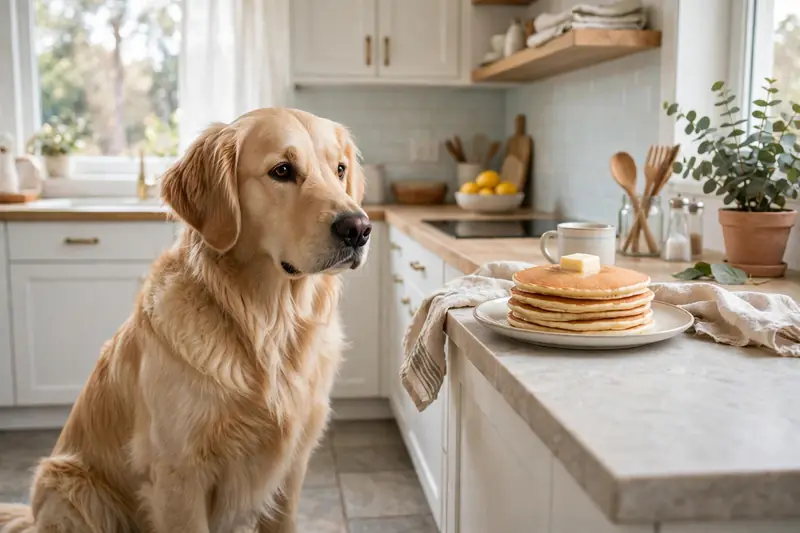
A plain pancake will not poison your dog. Dogs can eat pancakes when the pancake is plain and fully cooked, served in a small piece as a rare treat. Three conditions, all mandatory. The pancake must be cooked through, it must carry no toppings, and the piece must fit the dog.

PetMD agrees with the narrow yes. PetMD’s pancake guide for dogs calls a small amount of plain pancake safe to share, then spends the rest of the article on everything that makes pancakes dangerous. That ratio, one line of permission and paragraphs of warnings, tells you where the weight of the evidence sits.
Keep the human foods that are safe for dogs list bookmarked if your dog begs at breakfast often. The safe list is shorter than the hopeful list, and pancakes sit right on its edge.
What is actually in a pancake
A basic pancake is flour and egg, with milk or water, cooked on a griddle. None of those three ingredients is toxic to dogs, which is why a plain pancake is safe in the narrow sense and pointless in every other sense. Flour is refined carbohydrate. Egg is fine cooked. Milk is fine in the small amount a pancake holds.
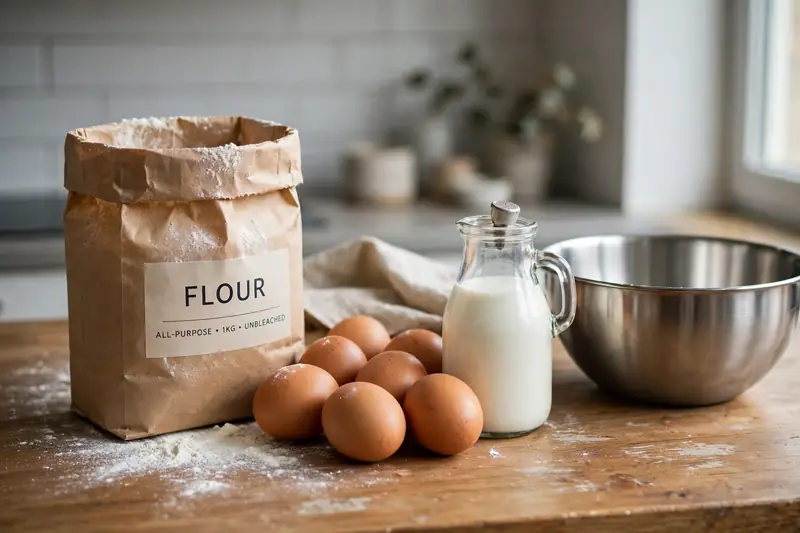
Empty calories is the honest description. A pancake gives a dog energy with almost no protein, no meaningful vitamins, and nothing the dog’s regular food does not already provide better. Dogs do not need carbohydrate treats the way people imagine, and a pancake displaces real nutrition when it fills the treat budget, which is why the occasional piece is a harmless indulgence rather than a habit worth building.
The occasional tiny piece does no measurable harm. It also does no measurable good, and that symmetry is worth sitting with.
Box mixes complicate the picture slightly. Most contain the same basic ingredients plus leavening and salt, sometimes with sugar. A few include dried dairy or flavorings that add nothing for a dog.
The label is worth a glance, but no common pancake mix hides a true toxin. The batter bowl is a different story, and it gets its own section next.
Raw batter: the part that is actually risky
Do not let your dog lick the batter bowl. Raw pancake batter carries Salmonella from the uncooked egg and E. coli from the raw flour, and both can make a dog sick. This is the one part of pancake-making that is actually dangerous rather than merely pointless.
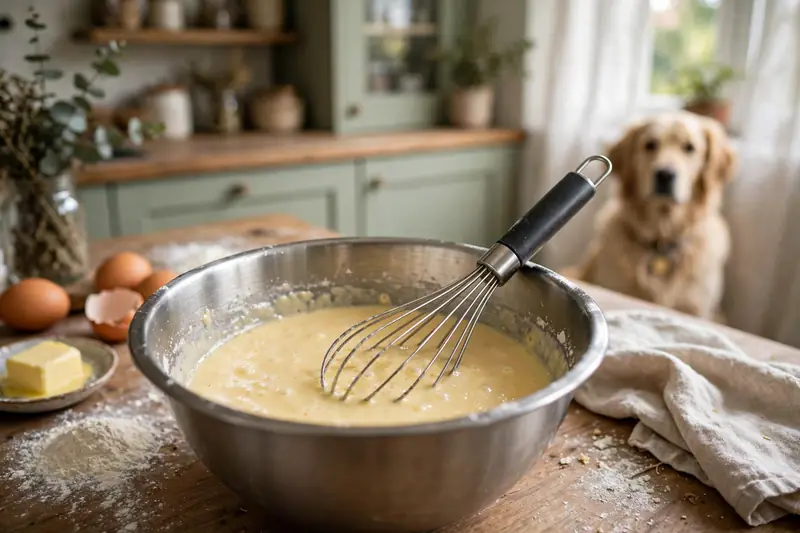
Raw flour surprises people. Flour is a raw agricultural product, and outbreaks of E. coli linked to raw flour have made people seriously ill.
Dogs are less sensitive than people to some foodborne bacteria, but less sensitive is not immune, and a puppy or senior dog has much less margin. The uncooked egg brings the classic Salmonella risk on top.
Yeasted batters add a third hazard. Raw yeast ferments in the warm stomach. It produces gas and alcohol, and a dog that eats raw batter in quantity can bloat.
Keep the dog out of the kitchen while you mix, and wipe up drips. The cooked pancake is the safe version. The bowl is not.
Toppings that turn pancakes dangerous
Here is where pancakes turn from pointless to dangerous. Syrup and chocolate can each poison a dog, and xylitol-sweetened toppings are the true emergency. Breakfast tables often hold all three at once. The pancake underneath is irrelevant once the toppings arrive.
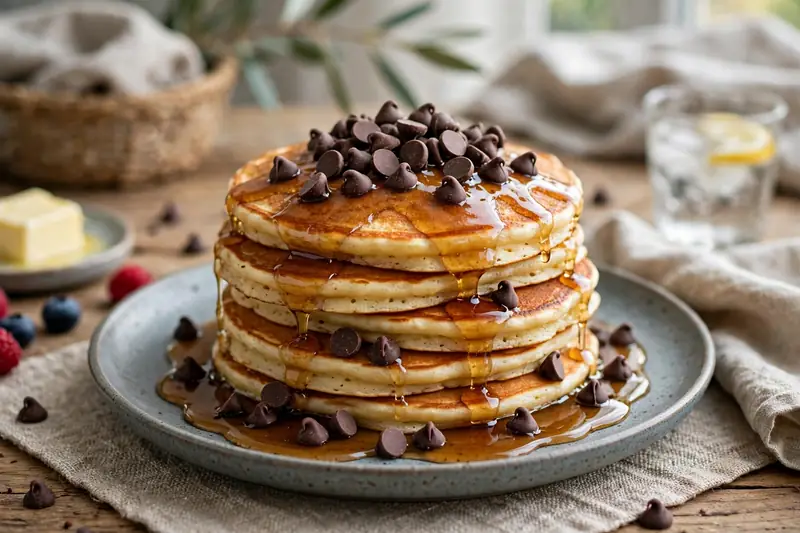
Real maple syrup is concentrated sugar. It will not poison a dog the way xylitol does, but the sugar load hits hard, with vomiting and diarrhea now and the same obesity and dental damage over time. Artificial syrups are worse. Many are mostly corn syrup with flavoring, and the sugar-free versions are the true emergency, because sugar-free usually means xylitol.
Xylitol deserves its own alarm. The sweetener triggers a massive insulin release in dogs, and blood sugar crashes within 10 to 60 minutes. Higher doses attack the liver, and liver failure can follow.
The toxic dose is tiny, around 0.1 grams per kilogram of body weight, which means a single serving of sugar-free syrup can endanger a small dog. Pet Poison Helpline’s xylitol warning lists syrups and peanut butter, with baked goods among the products that hide it. Check the label for xylitol or birch sugar, which is the same chemical under a friendlier name.
Chocolate is the third topping hazard. Chocolate chips and chocolate spread, with cocoa powder close behind, all contain theobromine, which dogs process slowly enough for it to build to toxic levels. Dark chocolate is the worst, milk chocolate less so, but no chocolate belongs on a dog’s pancake. If your dog ate a pancake with any of these three toppings, skip the watching and call your vet.
Butter and whipped cream: quieter hazards
Not every dangerous topping is an emergency. Butter and whipped cream will not poison most dogs in small amounts, and nutmeg earns its place on the no list for a different reason. They are the toppings owners forget to worry about.

Butter is concentrated saturated fat. A thin spread will not hurt a healthy dog, but a dog that steals a butter-slathered pancake can end up with stomach upset. Fat-sensitive dogs can develop pancreatitis. It is a painful and expensive inflammation of the pancreas.
Whipped cream adds fat and sugar together, the combination most likely to produce a gassy, uncomfortable afternoon. Neither is toxic. Both are unwise.
Nutmeg is the sleeper. The spice contains myristicin, which is toxic to dogs in more than tiny amounts, and it shows up in pumpkin spice blends and holiday pancake recipes. A dusting on your own pancake is not the issue. A dog eating a nutmeg-heavy pancake, or licking a spice jar, is.
Fruit compotes often hide nutmeg alongside their sugar load, which makes them a double problem. When a topping is not plainly safe, the default answer is no.
Safe toppings for the dog’s pancake
A plain pancake is a blank canvas, and a few toppings are safe. Sliced banana and blueberries are both safe, and a spoonful of plain pumpkin puree is safe too. They add flavor and a little nutrition without the risks above.

Bananas bring fiber and potassium in a package most dogs love. A few thin slices on a small pancake piece is plenty, since bananas are sugary for a fruit. Blueberries are the closest thing to a perfect dog treat in the fruit world: low calorie, rich in antioxidants, and sized for training rewards. Pumpkin puree, the plain canned kind with no spices, is gentle on stomachs and many dogs find it irresistible.
Peanut butter needs a warning label of its own. Natural peanut butter without xylitol is a fine high-value treat, but some brands now use xylitol or birch sugar, which turns a safe treat toxic. Read the peanut butter guide on this site and check every new jar.
The same caution applies to yogurt: plain unsweetened is fine for dogs that tolerate dairy, while flavored yogurts hide sugars and sometimes xylitol. The safest topping strategy is fruit, and the second safest is reading labels, because the ingredient list is the only place where a quiet hazard like xylitol or birch sugar actually announces itself.
How much pancake per dog size
PetMD publishes specific portions, and they are smaller than owners expect. PetMD’s portion guide runs from a 2-inch square for extra-small dogs to a 9-inch square for giant breeds, served once a week at most. A human-size pancake is too much for every dog.

| Dog size | Safe amount | Frequency |
|---|---|---|
| Extra-small (2 to 20 lbs) | 2-inch square | Once a week |
| Small (21 to 30 lbs) | 3-inch square | Once a week |
| Medium (31 to 50 lbs) | 4-inch square | Once a week |
| Large (51 to 90 lbs) | 6-inch square | Once a week |
| Extra-large (91+ lbs) | 9-inch square | Once a week |
Once a week is the ceiling, not the schedule. Most dogs do perfectly well never tasting a pancake, and there is no nutritional argument for making it a ritual. Cut the piece small, serve it cool, and skip the syrup even if the dog gives you the eyes. The VCA’s general feeding guidelines keep all treats within about 10 percent of daily calories, and a pancake eats through that budget fast.
Diabetic and overweight dogs
For some dogs the narrow yes becomes a no. Diabetic and overweight dogs should not eat pancakes, because the refined carbohydrate spikes blood sugar and adds empty calories. The pancake that is merely pointless for a healthy dog is actively harmful for these two groups.

Diabetes management runs on predictable carbohydrate intake, and a pancake is a fast-digesting carb bomb with no fiber to slow it down. Even a small piece can push blood sugar out of range, and the syrup most people serve alongside makes it worse. If your dog is diabetic, breakfast sharing is off the menu entirely, and your vet can suggest treats that fit the meal plan.
Overweight dogs face the quieter version of the same math. A medium pancake carries around 90 calories, which is a meaningful fraction of a small dog’s daily needs. Treats that do not fill the dog up or add nutrition are the first thing a weight-loss plan cuts.
A blueberry or a apples slice gives the begging dog something with fewer calories and more fiber. The kindest thing for a chubby dog is a boring treat.
What to do if your dog ate pancakes with toppings
Work the problem backwards from the topping. If your dog ate pancakes with toppings, identify the topping first, because the topping decides whether this is a wait or an emergency. Plain pancake with butter is a waiting situation. Pancake with sugar-free syrup is not.

Xylitol is the call-the-vet-now topping. Do not wait for symptoms, since the blood sugar crash can start within 10 to 60 minutes and early treatment changes the outcome. Note the product name and, if you still have the bottle, the ingredient list. Chocolate is the second emergency: note the type and amount, and call your vet or poison control with the dog’s weight ready.
For plain pancake overindulgence, the likely result is stomach upset within a few hours: vomiting, diarrhea, or both. Withhold food for a few hours and offer water. Feed a bland diet for a day or two once the stomach settles.
Call your vet if vomiting repeats, if the dog ate raw batter, or if anything with xylitol was involved. The ASPCA’s people-foods guidance lists the ingredients that should never reach a dog’s bowl.
When to call the vet
Call your vet if your dog ate sugar-free syrup, chocolate, or a large amount of raw batter, or if vomiting and diarrhea do not stop within a day. Xylitol ingestion is the emergency that cannot wait: call immediately, even if the dog looks fine. The crash comes fast and the treatment works best early.
Watch for the xylitol signs in the first hour. Weakness and wobbliness come first, then vomiting. Seizures or collapse follow in severe cases. Chocolate signs take longer, often several hours: restlessness and a rapid heartbeat, with vomiting common. Raw batter signs follow the food-poisoning timeline. Vomiting and diarrhea start within a day, and Salmonella signs take one to three days.
Keep the syrup bottle or the chocolate packaging so you can read the label to the vet. The exact product name matters more than your description of it. And keep your vet’s number in your phone before pancake day, not during it.
Frequently asked questions about dogs and pancakes
Owners usually ask about blueberry pancakes and chocolate chips, plus whether box mix changes anything. The answers below cover the questions that come up most.
Can dogs eat blueberry pancakes?
Yes, blueberry pancakes are one of the safer versions, as long as the pancake itself is plain and the blueberries are real. Many commercial blueberry pancakes use artificial flavoring and extra sugar, so homemade with fresh berries is the better choice. Keep the portion small.
Can dogs eat chocolate chip pancakes?
No, chocolate chip pancakes are not safe. The chocolate chips contain theobromine, which is toxic to dogs, and the dose adds up fast in a small dog. If your dog ate one, note how many chips and call your vet.
Can dogs eat pancake mix from a box?
The cooked pancake from a standard box mix is about as safe as a homemade plain pancake. Check the ingredient list for xylitol, which occasionally appears in sugar-free mixes. The raw batter carries the same Salmonella and E. coli risks either way.
Can dogs eat frozen pancakes?
Plain frozen pancakes, heated through, are fine in the same small portions as fresh. Avoid the pre-sweetened or chocolate chip varieties. Check the ingredient list, since frozen products sometimes contain preservatives and extra sugar.
Can dogs eat crepes?
Crepes are thinner pancakes with the same basic ingredients, so the same rules apply. A small piece of plain crepe is safe as a rare treat. Filled crepes with chocolate, jam, or sweetened cream follow the topping rules above.
Can dogs eat waffles?
Plain waffles follow the same rules as pancakes: a small piece of plain, fully cooked waffle is safe but pointless. The same topping dangers apply, and frozen waffles often contain extra sugar. Check the label.
Pancakes are the rare food where the safest advice is also the most boring: a tiny piece, plain and rare, with no toppings ever. The pancake itself will not hurt your dog, but it will not help either, and everything that makes pancakes worth eating is exactly what makes them dangerous for dogs. Make the dog’s piece first, before the syrup comes out, or skip the sharing entirely and hand over a blueberry instead.
Disclaimer: This article is for general information only and is not veterinary advice. Every dog is different, and dogs with health conditions or with puppies and nursing dogs may need different guidance. If your dog shows symptoms after eating pancakes, contact your veterinarian.