
Yes, dogs can eat spinach. Small amounts of plain spinach are safe for most dogs, and the leaves bring iron, vitamins, and fiber to the bowl. The one real catch is oxalic acid, which is why spinach stays a treat-sized addition and why dogs with kidney or bladder problems should skip it. Cooked beats raw for digestion, seasoning ruins it, and a handful a few times a week is plenty.

Can dogs eat spinach? The short answer
Yes, spinach is safe for dogs in small amounts. It is not toxic, and most dogs digest a few plain leaves without any trouble. Keep servings small because spinach contains oxalic acid, which can block calcium absorption and aggravate kidney or bladder problems in susceptible dogs.

The AKC list of human foods dogs can and cannot eat puts spinach in the safe-but-limited group, which matches what vets say. Plain leaves are the whole story: no butter, no garlic, no onion. A couple of tablespoons for a small dog or a quarter cup for a large one, a few times a week, is the comfortable range the sections below work out in detail.
What spinach does for dogs
Spinach gives dogs iron, vitamins A, C, and K, folate, fiber, and antioxidants such as beta-carotene and lutein. These support red blood cells, vision, immune function, and digestion. The amounts in treat-size servings are modest, so think of spinach as a useful extra rather than a health overhaul.

Iron is the nutrient spinach is famous for, and dogs need it for healthy red blood cells just like people do. Vitamin A supports vision and skin. Vitamin K plays a role in blood clotting. The fiber helps digestion along, and the antioxidants do the quiet work of protecting cells. None of this is magic. A dog eating balanced kibble already gets these nutrients, so spinach adds a little on top.
Compared with other greens, spinach is middle of the road. Broccoli brings similar vitamins with less oxalic acid, which is why some owners prefer it. That does not make spinach bad. It makes spinach a sometimes-green rather than an everyday-green, and that is a perfectly fine job for a leafy vegetable to have.
Raw vs cooked spinach: which is better for dogs
Cooked spinach is the better choice. Light steaming breaks down the tough cell walls, makes the nutrients easier to absorb, and reduces oxalic acid. Raw spinach is not dangerous, but it is harder to digest and most dogs get more out of a few steamed leaves.

Raw leaves pass through some dogs nearly whole, which tells you how little their gut extracts from them. A quick steam, about two to three minutes until the leaves wilt, changes that without turning the spinach to mush. Boiling reduces oxalates the most, though it also leaches vitamins into the water, so steaming is the practical middle ground.
Chopping matters either way. Long leaves can make a dog gag, and whole raw leaves are the worst combination of hard to chew and hard to digest. Chop steamed spinach fine and mix it into the regular meal, or offer a few pieces by hand. Frozen spinach works too. Thaw it, squeeze out the extra water, and treat it the same as fresh.
How much spinach can a dog eat
Keep spinach at treat size: a tablespoon or two for small dogs, up to a quarter cup for large dogs, a few times a week. It should stay well under 10 percent of daily calories, and first-timers get less than the chart so you can watch for stomach upset.

The 10 percent rule protects the main diet. Kibble is formulated to be complete, and every spoonful of spinach replaces a spoonful of balanced food. Small amounts do no harm. Large amounts do no good either, since excess spinach just adds oxalic acid and fiber without extra benefit.
| Dog size | Safe amount (chopped, cooked) | Frequency |
|---|---|---|
| Small (under 20 lbs) | 1 to 2 tablespoons | 2 to 3 times a week |
| Medium (20 to 50 lbs) | 2 to 3 tablespoons | 2 to 3 times a week |
| Large (over 50 lbs) | Up to a quarter cup | A few times a week, not daily |
Start below the chart on the first try. A teaspoon or two, then wait a full day and check the stool before serving more. Dogs with iron stomachs will be fine, and dogs with touchy stomachs will tell you quickly. If your dog already gets other vegetables as treats, celery and cucumbers are lower-oxalate options for rotating through the week.
Oxalates, kidneys, and bladder stones
Oxalic acid is the real risk in spinach. In dogs prone to kidney disease or calcium oxalate bladder stones, oxalates can contribute to crystal formation, so those dogs should avoid spinach entirely. Healthy dogs handle the small amounts in treat-size servings without problems.

Here is what happens. Oxalic acid binds with calcium in the body, and in susceptible dogs the resulting calcium oxalate can crystallize in urine. Over time those crystals can grow into bladder stones, which are painful and sometimes need surgery. The Merck Veterinary Manual veterinary reference documents this chemistry in detail for practitioners.
Three groups sit outside the safe zone. Dogs already diagnosed with kidney disease, dogs with a history of bladder stones or urinary crystals, and dogs on prescription urinary diets should not get spinach, even in small amounts. The oxalate load from one serving will not create a stone by itself, but a dog already forming them does not need more raw material. For everyone else, the portion chart above keeps oxalates at levels a healthy kidney clears easily.
How to prepare spinach for your dog
Wash fresh leaves well, steam them lightly, chop them fine, and serve them plain. No butter, no oil, no salt, and no garlic or onion seasoning. Garlic and onion damage red blood cells in dogs, so any seasoning blend containing them makes the spinach unsafe.

Preparation takes five minutes. Rinse the leaves to remove grit and pesticide residue. Steam for two to three minutes until wilted, then chop. You can mix the spinach into the regular meal or serve it as a topper. Skip the microwave-in-bag seasoned varieties from the freezer aisle, since those usually contain salt and flavorings.
Seasoning is where owners get into trouble. Garlic powder in a seasoning blend is still garlic, and the feeding guides for garlic and onions explain why alliums are off limits. Salt, butter, and oil add nothing a dog needs and turn a light green into a fatty salty side dish. Plain is the entire recipe.
Spinach in commercial dog food and spinach dishes to skip
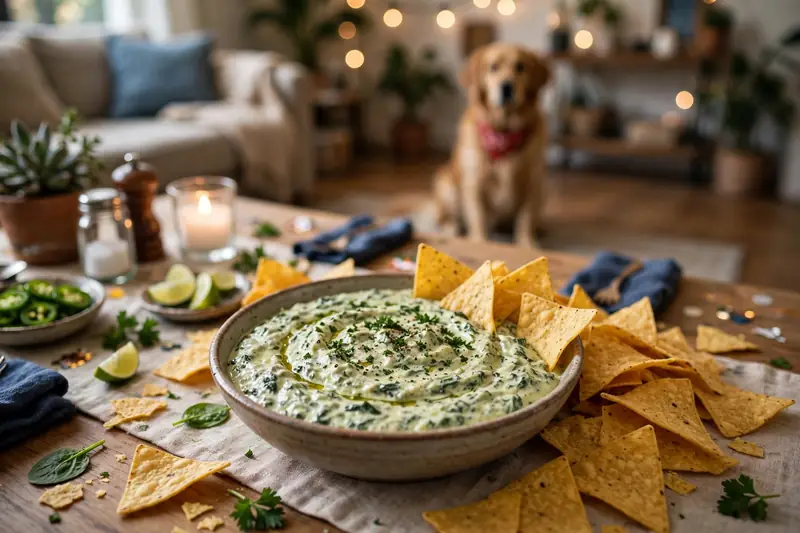
Many kibbles and wet foods already list spinach among their ingredients, and those tiny amounts are perfectly safe. What is not safe is creamed spinach, spinach dip, and spinach artichoke dip, which carry dairy, fat, heavy salt, and usually garlic.
Spinach already in your dog’s kibble
Seeing spinach on a dog food label surprises some owners, but it is common. Manufacturers add it as a fiber and vitamin source in amounts far below anything that could cause oxalate trouble. The FDA regulates pet food labeling, so the ingredient list is a reliable guide to what is in the bag. If your dog’s food already contains spinach, there is no reason to add more as a separate treat every day.
Creamed spinach and spinach dips
These are party food, not dog food. Creamed spinach is spinach cooked in cream and butter with salt, which makes it a fatty dairy dish. Spinach dip and spinach artichoke dip are worse: cheese, sour cream or mayonnaise, heavy salt, and very often garlic powder or onion powder. A dog that licks a dip bowl can end up with vomiting, diarrhea, and in the case of allium seasoning a genuine toxicity concern. Keep the dip bowl on the high table and the dog on the floor.
Spinach for puppies and senior dogs
Puppies can have tiny amounts of plain cooked spinach once they are eating solid food, but it should stay an occasional taste rather than a regular treat. Senior dogs follow the adult rules, with one extra check: older dogs get kidney problems more often, so a senior with any urinary history should skip spinach.

A puppy’s digestion is still learning its job. A teaspoon of finely chopped steamed spinach mixed into the meal is enough for a first test, and puppy-formulated food already covers the nutrition. There is no reason to build spinach into a puppy’s routine.
Seniors need the kidney question answered before the first leaf. Kidney function declines with age in many dogs, and an owner may not know it yet if the last bloodwork was a while ago. A healthy senior on regular adult food handles the adult portions fine. A senior with diagnosed kidney disease, bladder stones, or a prescription urinary diet gets no spinach at all. When in doubt, the vet visit that checks the kidneys can settle it in one blood panel.
When to call the vet
Call your vet if your dog eats a large amount of spinach at once and develops vomiting or diarrhea lasting more than a day, or if a dog with kidney disease or bladder stones eats any spinach at all. A dog that gets into creamed spinach or dip and then shows belly pain, lethargy, or repeated vomiting needs same-day attention.

Spinach emergencies are uncommon. The usual scenario is a dog that raids a salad bowl or knocks over a container of cooked spinach and eats far more than the treat-size range. Most of the time this means a day of loose stool. Watch for dehydration if the diarrhea is heavy, and withhold the next spinach serving permanently if the reaction was strong.
The dip scenario is the one to take seriously. Dairy and fat cause the stomach upset, but garlic or onion powder in the dip is the toxic ingredient. If the dip contained either, call your vet with the ingredient list in hand rather than waiting to see symptoms. For after-hours guidance, the ASPCA Animal Poison Control line is the resource most vets point owners to.
Frequently asked questions about dogs and spinach
Owners usually ask about daily feeding, frozen spinach, baby spinach, and the kidney question in sharper form. The answers below cover the ones that come up most, with the safety rules from the sections above baked in. A dog with any medical condition gets the vet’s word first.

Can dogs eat spinach every day?
They should not. Daily spinach turns a treat into a routine oxalate source with no added benefit. A few times a week is the right rhythm. If you want a daily green, rotate through lower-oxalate vegetables instead.
Is raw spinach bad for dogs?
It is not toxic, but it is the harder option to digest. Raw leaves pass through some dogs barely chewed. Lightly steaming the spinach and chopping it fine gives your dog more of the nutrition with less digestive work.
Can dogs eat frozen spinach?
Yes. Thaw it fully, squeeze out the excess water, and serve it plain in the same amounts as fresh. Check the package first: plain frozen spinach is fine, but seasoned or creamed frozen spinach is not.
Is baby spinach different from regular spinach?
No meaningful difference for dogs. Baby spinach is just younger leaves, a little more tender and a little milder. The same safety rules, portions, and kidney warnings apply.
Can spinach cause bladder stones in dogs?
In healthy dogs eating treat-size amounts, no. In dogs already prone to calcium oxalate stones, the oxalates in spinach can add to the problem, which is why those dogs should avoid it. Diet is one piece of stone formation, and the vet manages the full picture.
Can dogs eat spinach stems?
The stems are safe but fibrous and chewy. Chop them fine or leave them out. Most dogs prefer the leaves, and the leaves are the part worth serving.
What vegetables are safer than spinach for dogs?
Green beans, carrots, cucumbers, and celery carry fewer oxalates and suit dogs that need to avoid spinach. Broccoli is the closest nutritional match among the common options. Rotating a few of these keeps treat time interesting without leaning on one green.
Spinach earns its yes when it is plain, cooked, chopped fine, and kept at treat size a few times a week. The dogs that should skip it are the ones with kidney disease, a history of bladder stones, or a prescription urinary diet. Everyone else gets a simple green that asks for nothing more than a quick steam and a light hand.


