

Lima beans show up in soups, succotash, and freezer bags, and dogs are always nearby when food is involved. So can dogs eat lima beans? Yes, but with a condition that matters more here than with most vegetables: they must be thoroughly cooked and served plain. Raw or undercooked lima beans contain linamarin, a natural compound that can release cyanide when digested. Cooking neutralizes it. That single fact shapes everything else in this guide, from how to prepare them to how much to serve and which dogs should skip them entirely.
Can dogs eat lima beans?
Yes, dogs can eat lima beans as long as they are fully cooked and served plain, in small amounts as an occasional treat. Raw or undercooked lima beans are unsafe because they contain linamarin, which can release cyanide during digestion. Boiling for at least ten minutes neutralizes the risk, and no salt, seasoning, or oil should be added.

That is the whole verdict in one paragraph. Cooked plain, lima beans are a reasonable vegetable treat with fiber, protein, and minerals. Raw, they are a genuine hazard. Most owners will never face the raw-bean scenario, since the lima beans in our kitchens are usually cooked or frozen. But dogs do raid pantries, and dried beans sit on shelves for months. Knowing the difference between the safe form and the dangerous one is what this article is for.
The one rule
If the beans are not soft all the way through, they are not done. When in doubt about whether beans were cooked, treat them as raw and keep them away from the dog.
The raw bean problem
Raw lima beans contain linamarin, a cyanogenic glycoside. That is a technical way of saying the bean carries a compound that can turn into hydrogen cyanide when chewed or digested. Cyanide interferes with how cells use oxygen, which makes it dangerous for dogs and people alike.

A dog would need to eat a meaningful quantity of raw beans for serious poisoning, and a single raw bean snatched off the floor is unlikely to cause a crisis. But “unlikely” is not “safe,” and raw beans also contain lectins that irritate the digestive tract. The risk is real enough that every veterinary source treats raw beans as off-limits. Dried beans from the pantry are the main exposure route, since they look like kibble-adjacent snacks to a curious dog. Keep the bag sealed and stored high.
Why cooking fixes it
Heat breaks linamarin down. Boiling for at least ten minutes is the standard guidance for neutralizing the cyanide-releasing compounds in lima beans. Steaming until fully tender works too. The key is thoroughness: partially cooked is not cooked.
How to cook lima beans for dogs
Start with plain beans: fresh, frozen, or dried. If dried, soak them first according to the package directions, then boil in plain water until completely soft. Frozen lima beans just need boiling until tender. Fresh shelled beans cook fastest of all.

Add nothing to the water. No salt, no oil, no garlic, no onion, no bouillon, no seasoning blends. Dogs do not need flavor enhancement, and several common seasonings are toxic to them on their own. Let the beans cool completely before serving. Hot beans burn mouths, and dogs do not test temperature the way people do. Cooked beans keep in the refrigerator for three to four days in a sealed container. Make a small batch rather than a pot, because your dog needs only a spoonful or two.
The cooling test
If you would not pop one in your own mouth yet, it is too hot for the dog. Spread the portion on a plate for a few minutes rather than serving from the pot.
What lima beans offer nutritionally
Once cooked, lima beans are a solid little package. They provide plant protein and a good amount of dietary fiber, which supports healthy digestion in appropriate amounts. They also supply iron, magnesium, potassium, and some B vitamins. No single nutrient here is a reason to feed them, but together they make a respectable occasional treat.
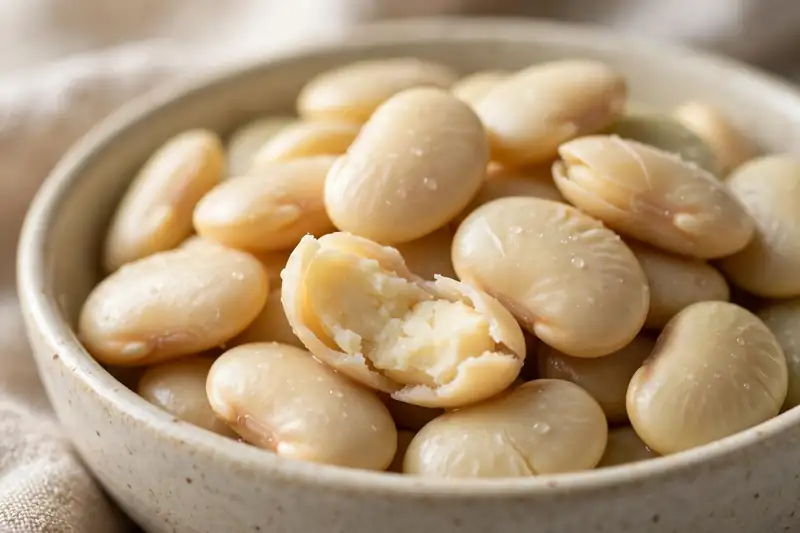
None of this makes them a superfood your dog needs. A complete dog food already covers these nutrients in the right balance. Think of lima beans the way you think of any vegetable treat: a pleasant extra, not a nutritional strategy. The fiber is the most practically useful part, since many dogs enjoy the texture and it adds a bit of bulk that can help a dog feel satisfied. But fiber cuts both ways, which brings us to portions and gas.
Nutrients are a bonus, not a reason
Do not start feeding lima beans to fix a nutritional gap. If you suspect your dog’s diet is lacking something, that is a vet conversation, not a bean conversation.
Safe portions for dogs
Small. A tablespoon or two of cooked lima beans is plenty for a medium dog, less for a small one. Treats of all kinds should stay within about ten percent of daily calories, and beans should be a small slice of that slice.
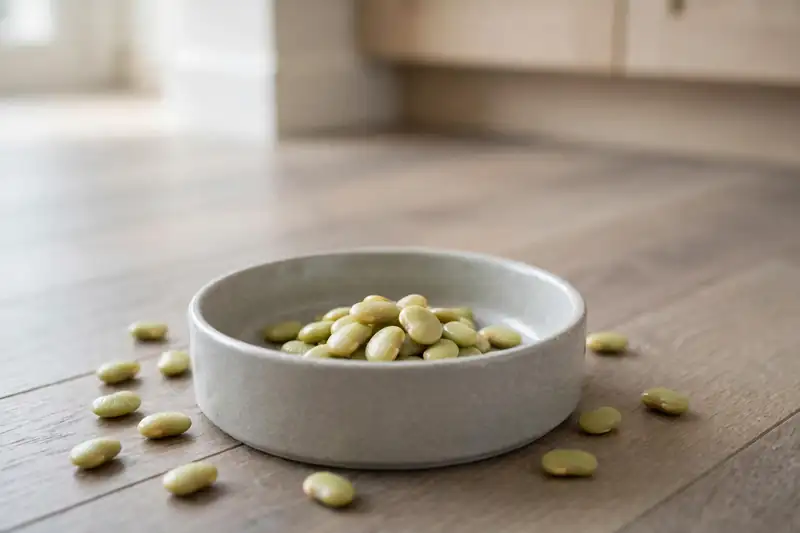
Start with even less the first time. Offer a few beans and watch for the next day or so. Dogs react to new foods individually, and legumes are famous for digestive surprises. If all is well, you can make it an occasional treat, a few times a week at most. Mix the beans into the regular meal or offer them on their own as a training reward. Either way, the portion stays small. A dog that fills up on beans is a dog eating less of its balanced food, and that trade never favors the beans.
The first-taste rule
Any new food gets a tiny test portion first, then a waiting period. Lima beans are no exception. One cautious introduction prevents a rough night for everyone.
Canned, frozen, or dried: which to buy
Frozen lima beans are the easiest safe choice. They are typically just beans, no additives, and they cook quickly from frozen. Fresh shelled beans are equally good when in season. Check every label regardless, since some frozen blends include butter or seasoning packets tucked inside the bag.
Canned beans need label scrutiny. Many are packed with added salt, and some contain preservatives or flavorings. If you use canned, choose no-salt-added varieties packed in water, drain them well, and rinse thoroughly. Even then, frozen is simpler. Dried beans are the most economical and perfectly fine, but they demand the full soak-and-boil routine, and undercooking is the exact mistake that leaves linamarin intact. Do not shortcut dried beans. The ten-minute minimum boil after soaking is not a suggestion.
Skip the seasoned varieties
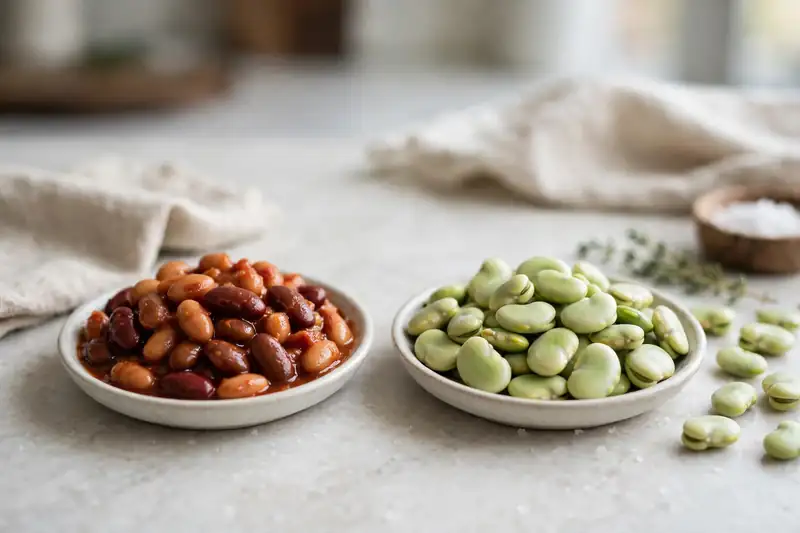
Baked beans, refried beans, chili beans, and any beans in sauce are out. They contain salt, sugar, spices, and often onion or garlic. Plain is the only style.
Gas and digestive upset
Beans have a reputation, and dogs are not exempt. The same fiber and complex carbohydrates that make beans nutritious also ferment in the gut, producing gas. Some dogs handle this with nothing worse than a fragrant evening. Others get visibly uncomfortable, with bloating, gurgling, or loose stool.

Large portions make it worse, which is another reason the serving stays small. Dogs with sensitive stomachs may not tolerate legumes at all, and that is fine. No dog needs lima beans. If beans consistently cause trouble, drop them from the rotation without a second thought. There are plenty of gentler vegetables. And if a dog that normally tolerates beans suddenly reacts badly, consider whether the beans were the only new variable before blaming the whole food.
When gas means stop
Occasional mild gas is a nuisance. Repeated bloating, discomfort, or diarrhea means beans are not for this dog. Listen to the gut, literally.
Lima beans versus other beans
Not all beans are equal for dogs. Green beans are the easiest win: safe raw or cooked, low calorie, and widely loved by dogs. Black beans, pinto beans, and chickpeas are fine cooked plain in moderation, with the same gas caveat.

Lima beans sit a notch below green beans on the convenience scale purely because of the raw-bean hazard and the stricter cooking requirement. Nutritionally they are comparable. Then there are the beans to avoid: raw kidney beans are toxic due to lectins, fava beans can cause serious trouble, and baked or refried beans are disqualified by their seasonings. If you want a bean your dog can also crunch raw from the garden, green beans win. If you have cooked limas on hand, they are a fine occasional choice. Our guides to beans for dogs and green beans cover the wider family.
The practical ranking
For most owners, the order of ease is green beans first, then other cooked plain beans, then lima beans with their extra cooking care. All are occasional treats, none are dietary staples.
Dogs who should skip lima beans
Some dogs should pass on lima beans entirely. Dogs with sensitive stomachs or chronic digestive issues do not need a high-fiber legume experiment. Dogs with known legume sensitivities, itching, ear inflammation, or digestive upset after beans, should avoid them. When a food has caused trouble before, trust that history over any article.

Dogs on prescription diets should not get extras that could interfere with the diet’s purpose, unless the vet approves. Overweight dogs on strict calorie plans do not need the extra, though a few plain beans are among the lighter treat options if the vet allows treats at all. Puppies can have tiny amounts of well-cooked beans once they are eating solid food confidently, but there is no reason to rush. And any dog that has reacted badly to beans before has already voted.
Prescription diets stay pure
Therapeutic diets are formulated precisely. Random additions, even healthy ones, can undermine them. Check with the vet first.
What to do if your dog ate raw lima beans
Do not panic, but do act. Estimate how many were eaten and when. A single raw bean is unlikely to cause serious harm, but a handful of dried beans is a different story. Call your veterinarian and describe what happened.

Watch for vomiting, weakness, difficulty breathing, or unusual lethargy, which can signal cyanide effects, though these would be expected only after a substantial amount. Do not induce vomiting unless your vet specifically instructs it. Secure the bean supply so there is no second helping while you are on the phone. Most single-bean incidents end with monitoring and no treatment, but the vet makes that call, not the internet. For the general rules on which everyday foods are safe, our guide to what human food dogs can eat is the reference to keep.
Lima beans are a good example of a food where preparation is everything. Raw, they carry a genuine toxin. Boiled plain for ten minutes or more, they become an unremarkable, reasonably nutritious treat. Serve them small, serve them occasionally, skip the seasonings, and listen to your dog’s stomach. Do that, and lima beans earn their place in the treat rotation without any drama.
Frequently Asked Questions
Are lima beans poisonous to dogs?
Raw or undercooked lima beans are unsafe because they contain linamarin, which can release cyanide during digestion. Thoroughly cooked plain lima beans are safe in small amounts. The danger is entirely in the preparation.
How long should I cook lima beans for my dog?
Boil them for at least ten minutes after soaking, until completely soft all the way through. Frozen or fresh beans need less time but must still be fully tender. When in doubt, cook them longer rather than shorter.
Can dogs eat canned lima beans?
Only if they are plain, with no added salt or seasonings, and even then rinse and drain them well. No-salt-added varieties packed in water are the only acceptable kind. Frozen plain beans are a simpler choice.
How many lima beans can a dog eat?
A tablespoon or two of cooked beans for a medium dog, less for small dogs, as an occasional treat. Start with a few beans the first time to check tolerance. All treats combined should stay within about ten percent of daily calories.
Do lima beans cause gas in dogs?
They can. The fiber and complex carbohydrates in beans ferment in the gut, which produces gas in many dogs. Small portions minimize it. If beans consistently cause bloating or loose stool, stop feeding them.
Are butter beans the same as lima beans?
Yes. Butter bean is another name for the lima bean, and the same rules apply: safe only when fully cooked and plain, unsafe raw. Do not confuse them with other beans that have different safety profiles.
Can puppies eat lima beans?
Tiny amounts of thoroughly cooked plain beans are generally fine once a puppy is eating solid food well, but there is no need to introduce them early. Start with a few beans and watch for digestive upset.
This article is general information only and is not a substitute for veterinary advice. If your dog has a health condition, is on a prescription diet, or you are unsure about any food, check with your veterinarian first.
Source: American Kennel Club: Fruits and Vegetables Dogs Can or Can’t Eat.



1 thought on “Can Dogs Eat Lima Beans? Only Cooked Plain”