

Can dogs eat salmon skin? Yes, if it is fully cooked, served plain, and given in small amounts. Salmon skin is one of the most omega-3-rich bites you can share with a dog. But the same skin served raw is a different story entirely: raw salmon can carry the parasite behind salmon poisoning disease, a potentially fatal illness. And even cooked skin is very fatty, so “a little” is the whole philosophy. This guide covers the benefits, the non-negotiable cooking rule, and the portions that keep this treat safe.
Can dogs eat salmon skin?
Yes, when it is fully cooked and served plain. Cooked salmon skin is safe for dogs in small amounts and delivers a strong dose of omega-3 fatty acids. Raw skin is never safe, because raw salmon can carry a parasite that causes a potentially fatal illness. Keep portions small and skip all seasoning.

The short version really is that simple, but the details matter. “Cooked” means cooked through to a safe internal temperature, not seared on the outside and raw in the middle. “Plain” means nothing added: no butter, no oil, no salt, no lemon pepper, no garlic or onion seasoning. “Small amounts” means a strip, not a fillet. Get those three right and salmon skin earns its reputation as a genuinely nutritious treat. Get any of them wrong and the same skin becomes a vet visit. The sections below walk through each rule so there is no guesswork.
Why salmon skin is worth sharing
The case for salmon skin is the fat it carries, the right kind. Skin is loaded with EPA and DHA, the long-chain omega-3 fatty acids with the strongest evidence in canine nutrition. They support skin and coat health, calm inflammatory processes, help senior joints, and DHA aids brain development, which is why fish oils appear in puppy formulas.

The American Kennel Club calls salmon one of the healthiest fish for dogs, noting it as a great source of protein and omega-3s, and it is a staple ingredient in many quality commercial dog foods for exactly these reasons. The skin concentrates those same fats, which is both the benefit and the reason portions stay small. Owners often report a visible coat improvement within weeks of adding fish-based omega-3s to the diet. That is real, and it is one of the better-supported nutritional interventions in dog care. But keep expectations honest about scale: a thumb-sized strip a few times a month is a pleasant bonus, not a therapeutic dose. Dogs with diagnosed joint disease or chronic skin conditions need consistent, measured supplementation at veterinary guidance, not occasional treats.
The cooked-only rule: no exceptions
This is the line that matters most. Raw or undercooked salmon can harbor Neorickettsia helminthoeca, the parasite responsible for salmon poisoning disease. The AKC advises directly against feeding raw or undercooked salmon. The disease can be severe and even lethal, with symptoms including vomiting, diarrhea, fever, lethargy, and appetite loss appearing days after exposure.

Cooking to a safe internal temperature of 145 degrees Fahrenheit (63 Celsius) eliminates the parasite risk. Boiled, baked, steamed, or grilled, the method matters less than two things: it must be cooked through, and it must be plain. Every addition humans love on salmon is either empty calories or actively harmful to dogs. If your dog ever gets into raw salmon, from the counter, the trash, or a fishing trip, do not take a wait-and-see approach. Call your veterinarian promptly and describe what happened. Early treatment is what makes salmon poisoning survivable, and the symptoms can take days to appear, which makes waiting especially dangerous.
Fat: the reason portions stay small
Salmon skin is about as fatty as food gets, and that richness is a double-edged sword. In small amounts, those fats deliver the omega-3 benefits described above. In larger amounts, they can cause vomiting, diarrhea, and weight gain, and in susceptible dogs they contribute to pancreatitis, a painful pancreatic inflammation that needs veterinary treatment.

Dogs with a history of pancreatitis, chronic digestive trouble, or obesity should get salmon skin rarely or never, and it is worth checking with your vet first. For healthy dogs, skin works as an occasional topper or training reward, not a meal component. A strip the size of your thumb for a medium dog is plenty, and you scale down for small breeds. The fat is also why salmon skin can never become a daily habit. The calories add up silently, and no single treat, however nutritious, should dominate the treat budget. Variety in treat choices beats any single superfood, fish one week, a vegetable crunch the next.
Bones, scales, and preparation details
Before the skin reaches your dog, handle the details. Remove all bones, since fish bones can lodge in the throat or puncture the digestive tract. Run your fingers along the flesh side to check. Take off any hard, sharp scales that could scratch the mouth or throat.

Cook it plain, which means plain, not even a little garlic powder. Cool it to room temperature before serving, never hot from the pan. Cut it into bite-size strips suited to your dog so nobody gulps a whole sheet of skin. These steps take two minutes and eliminate nearly every mechanical risk the treat carries. One more practical tip: cook a separate plain piece for your dog rather than sharing from your plate. Restaurant and takeout salmon, and most home cooking, is buttered, oiled, or seasoned, and trying to scrape seasoning off a cooked fillet never quite works.
What about smoked, canned, or seasoned salmon?
Not all salmon preparations are equal, and most human-facing ones fail the dog test. Smoked salmon is cured with heavy salt, so skip it. Canned salmon can work if packed in water with no added salt, but many cans contain salt and some contain bones. Read the label and rinse if needed.
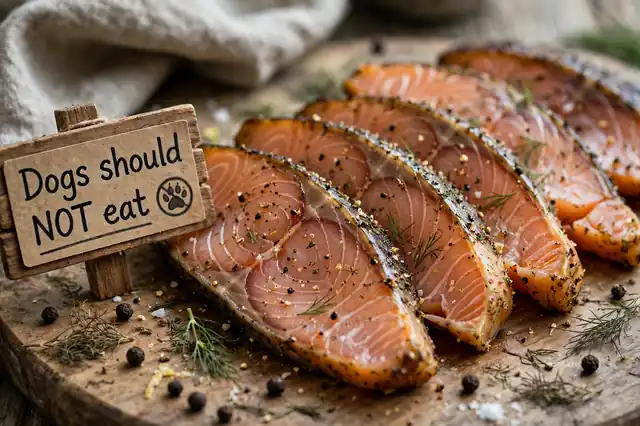
Seasoned or marinated salmon is out: garlic, onion, and heavy spice blends are common, and all are problematic. Only plain-cooked qualifies. Raw preparations like sushi, ceviche, and poke are never acceptable, since the parasite risk is the entire point of this guide. When in doubt, the rule is boring and safe: plain fish, cooked through, nothing added. That single sentence covers every preparation you will ever encounter.
How much salmon skin is safe?
Think topper, not portion. For plain, cooked skin, a bite-size strip is enough for a small dog under 20 pounds, a thumb-sized strip suits a medium dog from 20 to 50 pounds, and a large dog over 50 pounds can have two thumb-sized strips. Serve it occasionally, a few times a month, folded into the 10 percent treat allowance.
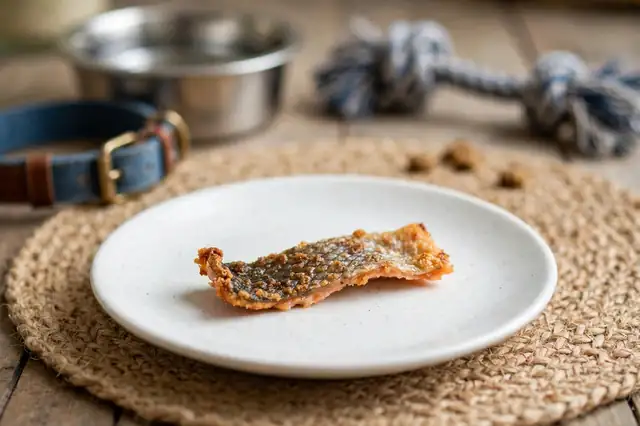
Dogs already eating a fish-based complete diet get these nutrients from their food, so the skin is a bonus, never a requirement. As with any rich new food, introduce a small piece first and watch for digestive upset over the next day. If the stool stays normal and the dog shows no discomfort, the portion was fine. If you see vomiting or loose stool, the piece was too big or this particular dog does not tolerate rich treats, and you scale back or skip it next time. The dog’s response is the final judge of portion size.
Mercury, contaminants, and sourcing
Salmon is a relatively low-mercury fish compared with large predators like tuna or swordfish, which is one reason vets mention it most favorably. Contaminants do concentrate in fatty tissues, including skin, so sourcing matters at the margins. Wild-caught generally tests better than farmed, though both are acceptable for an occasional treat.

There is no need to overthink this for a thumb-sized strip a few times a month. The contaminant question is one more reason skin stays an occasional treat rather than a staple, not a reason to avoid it. If you already buy wild-caught salmon for the family, sharing the plain-cooked skin is the easiest version of this treat. If you buy farmed, it is still fine in the same small amounts. Sourcing matters less than the three big rules: cooked through, served plain, kept small.
Puppies, seniors, and sensitive dogs
Puppies over about 12 weeks can have tiny pieces of cooked plain skin. The DHA supports developing brains, but keep portions minimal and watch tolerance. Senior dogs often benefit most from the omega-3s, for joints, coat, and cognition, provided their digestion handles rich foods. Start small and let the dog’s stomach vote.

Dogs with fish allergies exist, though they are less common than chicken or beef allergies. Itching, ear inflammation, or digestive upset after a first taste means stop and talk to your vet. Dogs on blood thinners or with clotting disorders deserve a vet check first, since high omega-3 intake can affect clotting. As always, dogs on prescription diets need their vet’s approval before any extras, because therapeutic diets are precisely balanced and add-ons can undermine them.
Dehydrated salmon skin treats: store-bought and homemade
Crispy salmon skin has become a popular commercial dog treat, and it is one of the better store-bought options, provided you buy well. Good products list a single ingredient, salmon skin, with no added salt, flavorings, or preservatives. The dehydration concentrates the omega-3s along with the flavor, and the crunch gives dogs the satisfying chew they crave.

Before buying, check that the ingredient list is one line long. Avoid products with added salt, smoke flavoring, or seasoning blends, the same disqualifiers as fresh salmon. As with any chew, supervise: even natural chews can splinter or be swallowed in too-large pieces by enthusiastic gulpers. Homemade is straightforward if you own a dehydrator or an oven with a low setting. Lay plain, boneless skin strips on the rack, dehydrate at around 150 to 160 degrees until fully crisp and dry, which takes several hours, and cool completely. The result keeps for a week or two in an airtight container, less than commercial treats, because you added no preservatives, which is rather the point. Break into appropriate pieces for your dog’s size, and remember the fat rules still apply: a chew is a treat, not a meal.
The honest summary: salmon skin is a genuinely nutritious treat, arguably the most omega-3-dense bite in the treat world, wrapped in two firm rules. Cook it fully and plain, and keep it small. The raw risk is real and serious, the fat demands respect, and everything humans put on salmon stays off your dog’s portion. Follow those rules and a strip of crispy skin becomes one of the better rewards you can offer. When the salmon comes off your grill, set the plain piece aside first. Your dog will thank you.
For the same plain-only, small-portion thinking across the foods dogs meet most often, see our wider guide to what human food dogs can eat. And for another fish done right, our shrimp guide follows the same cooked-plain rules.
Frequently Asked Questions
Can dogs eat raw salmon skin?
No. Never feed raw salmon or raw skin. Raw salmon can carry the parasite that causes salmon poisoning disease, which can be fatal. Always cook salmon fully before sharing.
How should I cook salmon skin for my dog?
Bake, boil, steam, or grill to 145 degrees Fahrenheit internal temperature, with absolutely no seasoning, oil, butter, salt, garlic, or onion. Cool to room temperature, remove bones and hard scales, and cut into bite-size pieces.
Is salmon skin too fatty for dogs?
In large amounts, yes. The high fat can cause digestive upset, weight gain, and pancreatitis risk in susceptible dogs. In small, occasional portions it is fine for healthy dogs.
Can dogs eat smoked salmon?
No. Smoked salmon is cured with far too much salt, and the fat plus sodium combination makes it a poor choice. Stick to plain cooked salmon.
Can puppies eat salmon skin?
Yes, from around 12 weeks, in very small pieces of cooked plain skin. The DHA supports brain development. Start tiny and watch for digestive tolerance.
What are the signs of salmon poisoning in dogs?
Vomiting, diarrhea, fever, lethargy, and loss of appetite, typically starting days after eating raw salmon. It is potentially fatal, so contact your vet immediately if raw salmon was eaten.
Is farmed or wild salmon better for dogs?
Wild-caught generally has better omega-3 levels and fewer contaminants, but both are acceptable for an occasional treat. Sourcing matters less than cooking it plain and keeping portions small.
Is canned salmon safe for dogs?
Canned salmon packed in water with no added salt can work in small amounts, but check the label carefully. Many cans contain added salt, and some contain soft bones. Rinse it before serving, and treat it with the same portion discipline as fresh salmon.
This article is general information only and is not a substitute for veterinary advice. If your dog has a health condition, is on a prescription diet, or you are unsure about any food, check with your veterinarian first.



3 thoughts on “Can Dogs Eat Salmon Skin? Cooked Yes, Raw Never”