

Yes, can dogs eat corn? Plain corn kernels, cut off the cob and served without butter or seasoning, are safe for dogs in moderation. But the corn on the cob itself is one of the most dangerous things a dog can swallow: the cob does not digest, and it is a leading cause of intestinal blockages that require emergency surgery. So the rule is simple, kernels yes, cob never. This guide covers both sides fully.
The short answer on corn
Corn sits in an odd spot among dog foods. The kernels themselves are a wholesome, nutritious grain, so much so that corn is a staple ingredient in many commercial dog foods. The American Kennel Club confirms that plain corn kernels are generally safe for dogs when fed in moderation.
The cob, though, is a completely different story. The AKC is blunt: no matter how lovingly your dog looks at you while you are enjoying corn on the cob, do not share it. Dogs chew quickly and swallow large sections, and the tough, fibrous cob does not break down in the digestive tract. It can lodge in the stomach or intestines and create a hard blockage, one of the most common food-related surgical emergencies vets see, especially in enthusiastic breeds like Labradors and Golden Retrievers.
So when someone asks about corn and dogs, the real question is always: kernels or cob? Kernels are a safe occasional treat. The cob is an emergency waiting to happen.
Why corn kernels are fine for dogs
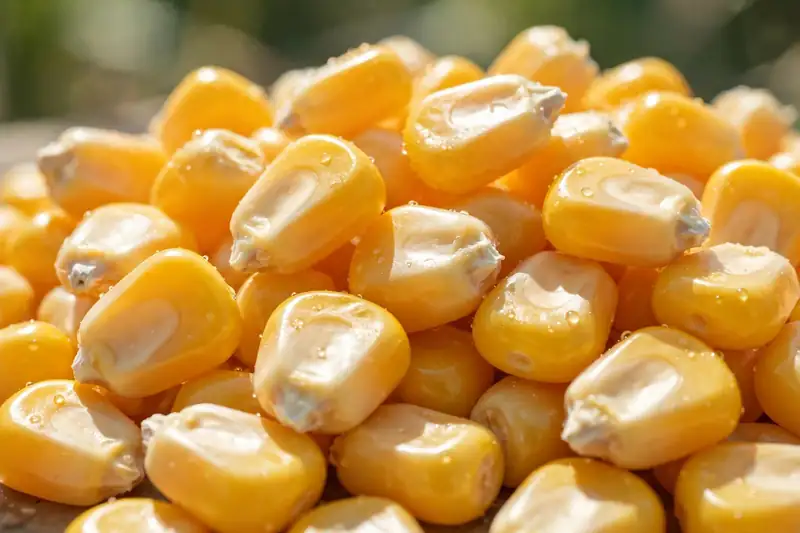
Corn kernels bring genuine nutrition to the bowl. According to the AKC’s veterinary review, corn contains several nutrients that support overall health:
- Protein, contributes to the amino acid pool dogs need for muscle maintenance.
- Carbohydrates, an efficient energy source, particularly useful for active dogs.
- Linoleic acid, an essential omega-6 fatty acid that supports healthy skin and coat.
- Antioxidants, help combat oxidative stress at the cellular level.
- Fiber, promotes healthy digestion and gut function.
- Vitamins and minerals, varying by corn variety, including B vitamins.
This is why you will find corn, cornmeal, or corn gluten meal on the ingredient panel of countless dog foods, including vet-recommended brands. It is a digestible, energy-dense grain, not a filler in the dismissive sense, but a legitimate carbohydrate source. A spoonful of plain cooked kernels as an occasional treat fits comfortably inside a balanced diet.
Sweet corn, the kind most of us eat, follows the same rule: plain sweet corn kernels, removed from the cob, are safe in moderation.
The cob problem, why it is so dangerous

A corn cob is essentially a dense cylinder of indigestible fiber. Dogs cannot break it down, and because dogs tend to gnaw off chunks and swallow them whole, particularly at barbecues and picnics where cobs land in trash cans or on low tables, pieces of cob travel into the gut intact.
Once there, chewed-up cob does not digest and does not pass easily. It can cause a hard blockage in the stomach or small intestine. The AKC’s veterinary sources note that corn cobs are among the foods most commonly responsible for intestinal obstructions in dogs. These blockages typically require surgery to remove, and a delayed or untreated blockage can cut off blood supply to sections of intestine, a life-threatening situation.
Even small pieces are risky. A fragment can lodge in the narrower parts of the small intestine, and the damage builds silently for a day or two before obvious symptoms appear. This is why vets treat every swallowed cob as urgent, even when the dog seems fine at first.
Signs your dog swallowed a cob
If your dog got into corn on the cob, from the trash, the table, or the grill, watch closely for these signs of intestinal blockage, which the AKC lists as the key warnings:
- Repeated vomiting (the most common early sign)
- Loss of appetite or refusing food entirely
- Lethargy and reduced activity
- Abdominal pain, bloating, or tenderness when touched
- Diarrhoea, or conversely, inability to pass stool
- Dehydration, dry gums, sunken eyes
Symptoms can take 12-72 hours to develop as the cob fragment travels. Do not assume that a happy, normal-acting dog twelve hours later is in the clear, call your vet at the first suspicion and describe exactly what happened. Early imaging (x-ray) can locate the obstruction before it becomes critical.
My dog ate a corn cob, what to do
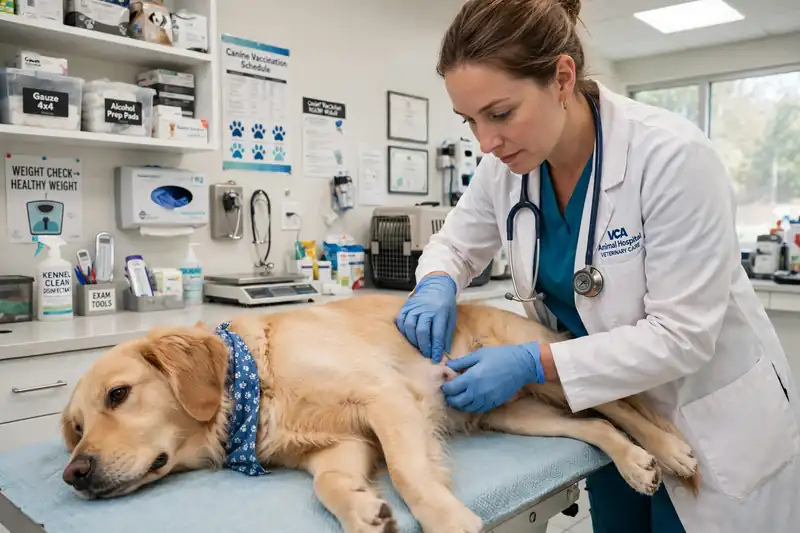
Act quickly and in this order:
- Call your veterinarian immediately, or the nearest emergency clinic after hours. Describe how much cob was eaten and when, plus your dog’s size and breed.
- Do not induce vomiting unless the vet instructs it, bringing a jagged cob fragment back up can injure the oesophagus.
- Watch and note symptoms, vomiting, appetite, energy, stool. Write down timing; it helps the vet.
- Get to the clinic, the vet will likely x-ray to locate the cob. Small fragments sometimes pass with monitoring, IV fluids, and a careful diet, but lodged cobs usually need endoscopic or surgical removal.
Never “wait and see” with a swallowed cob. The difference between a straightforward procedure and a crisis is usually measured in hours.
How to serve corn safely

When you want to share corn, do it this way:
- Cut the kernels off the cob first, never hand over an ear of corn, even “just to gnaw.”
- Cook it plain, boiled or steamed kernels are ideal. Dogs may not fully digest raw kernels, so cooked is better.
- Serve plain, no butter, salt, oil, or seasoning.
- Keep portions small, a tablespoon or two for a small dog, a small handful for a large dog, inside the 10% treat allowance.
- Secure the cobs, the serving is only half the job; make sure leftover cobs go straight into a dog-proof trash can, especially after barbecues.
Frozen corn kernels, thawed, work the same as fresh. Canned corn is acceptable only if it is no-salt-added, standard canned corn carries far too much sodium.
Corn in dog food, should you worry?
You may have heard corn criticized as a dog-food ingredient. Here is the balanced view: corn is a digestible source of carbohydrates, protein, and essential fatty acids, and it appears in many complete, AAFCO-balanced dog foods, including lines vets recommend. Unless your dog has a diagnosed corn allergy (uncommon, beef, dairy, and wheat top the allergy lists), there is no nutritional reason to avoid corn-containing kibble.
The “filler” criticism mostly confuses the cob with the kernel. The kernel nourishes; the cob obstructs. In commercial food, only the nutritious grain is used.
How much corn is safe
Corn is an energy-dense grain, so it is a treat and a topper, not a meal base. Keep it within the 10% treat allowance:
- Small dogs: a tablespoon of plain kernels.
- Medium dogs: two tablespoons.
- Large dogs: a small handful.
Dogs that are overweight or diabetic should get corn cautiously, the carbohydrate load adds up, and blood sugar matters. When offering corn for the first time, start small and watch for digestive upset over the next day, as with any new food.
Corn allergies in dogs, the real story
Corn gets blamed for dog allergies far more than it deserves. The truth, backed by veterinary dermatology research, is that true food allergies in dogs are most commonly triggered by beef, dairy, wheat, chicken, and soy, corn sits well down the list. When a dog does have a genuine corn allergy, the signs look like any food allergy: itchy skin, ear infections that keep coming back, paw chewing, and sometimes digestive upset.
Do not confuse an allergy with simple overfeeding. A dog that gets gassy after a big bowl of corn is usually reacting to quantity and fiber, not mounting an immune response. If you suspect a real allergy, persistent itching, hot spots, chronic ear trouble, the only reliable diagnosis is a vet-supervised elimination diet, not a guess based on the ingredient panel. And never put your dog on a restrictive homemade diet without veterinary guidance; nutritional deficiencies develop faster than most owners expect.
For the vast majority of dogs, corn is simply a safe, digestible grain, not an allergen to fear.
What to avoid
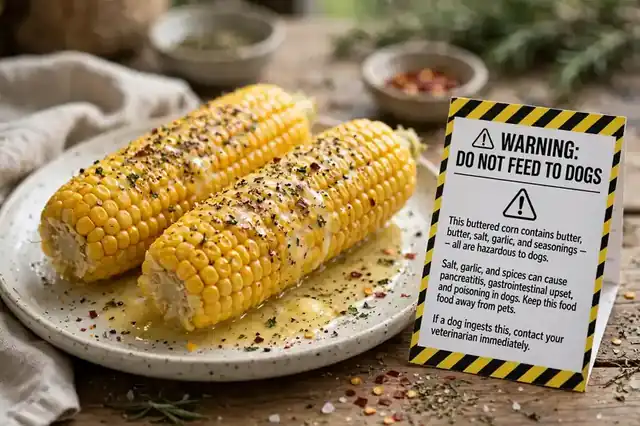
- Corn on the cob, the headline danger, always.
- Buttered or seasoned corn, butter, salt, and seasonings add fat and sodium that upset stomachs; garlic and onion seasonings are toxic.
- Creamed corn, loaded with cream, sugar, and salt; not for dogs.
- Corn chips, tortillas with seasoning, popcorn with butter, the seasonings and fat are the problem. (Plain air-popped popcorn is a separate, safer treat.)
- Raw dried corn, hard kernels can be difficult to digest and a choking risk for small dogs.
The honest summary: corn kernels are a safe, nutritious, everyday grain for dogs, the cob is one of the most dangerous food objects a dog can swallow. Respect that split and corn becomes one of the easiest shares in your kitchen: cut off the kernels, keep them plain and modest, and make the cob disappear into a secure bin before your dog even notices it.
For the same plain-only, small-portion thinking across the foods dogs meet most often, see our wider guide to what human food dogs can eat. And for another crunchy vegetable treat with firm portion rules, our carrot guide follows the same approach.
Frequently Asked Questions
Can dogs eat corn on the cob?
No, never. The cob is indigestible and commonly causes intestinal blockages that require emergency surgery. Always cut kernels off the cob before sharing, and keep cobs out of reach.
Can dogs eat sweet corn?
Yes. Plain sweet corn kernels, removed from the cob and served without butter or seasoning, are safe in moderation.
Can dogs eat canned corn?
Only no-salt-added canned corn, and even then in small amounts. Standard canned corn is too high in sodium for dogs. Frozen kernels (thawed) or fresh cooked corn are better choices.
Is corn in dog food bad for dogs?
No. Corn is a digestible source of carbohydrates, protein, and linoleic acid used in many complete dog foods. True corn allergies in dogs are uncommon.
My dog swallowed a piece of corn cob, what should I do?
Call your veterinarian immediately, do not wait for symptoms and do not induce vomiting unless instructed. The vet will advise whether to monitor or come in for x-rays. Watch for vomiting, appetite loss, lethargy, and abdominal pain over the next 72 hours.
Can puppies eat corn?
Yes, plain cooked kernels in tiny amounts are safe for puppies. The cob danger applies doubly to puppies, never let a puppy near corn on the cob.
How much corn can I give my dog?
A tablespoon or two for small dogs, a small handful for large dogs, kept within the 10% treat allowance. Corn is calorie-dense, so modest portions are the rule.
Is corn a common allergen for dogs?
No. The most common dog food allergens are beef, dairy, wheat, chicken, and soy, corn is well down the list. Suspected allergies need a vet-supervised elimination diet to diagnose properly.
Can dogs eat popcorn instead of corn kernels?
Plain air-popped popcorn is safe in small amounts and many dogs love it, but it is a separate treat from corn kernels, skip butter, salt, and flavorings, and avoid unpopped kernels, which are a choking hazard.
This article is general information only and is not a substitute for veterinary advice. A swallowed corn cob is a veterinary emergency, contact your vet immediately. If your dog has a health condition, is on a prescription diet, or you are unsure about any food, check with your veterinarian first.


3 thoughts on “Can Dogs Eat Corn? Kernels Yes, the Cob Never”