
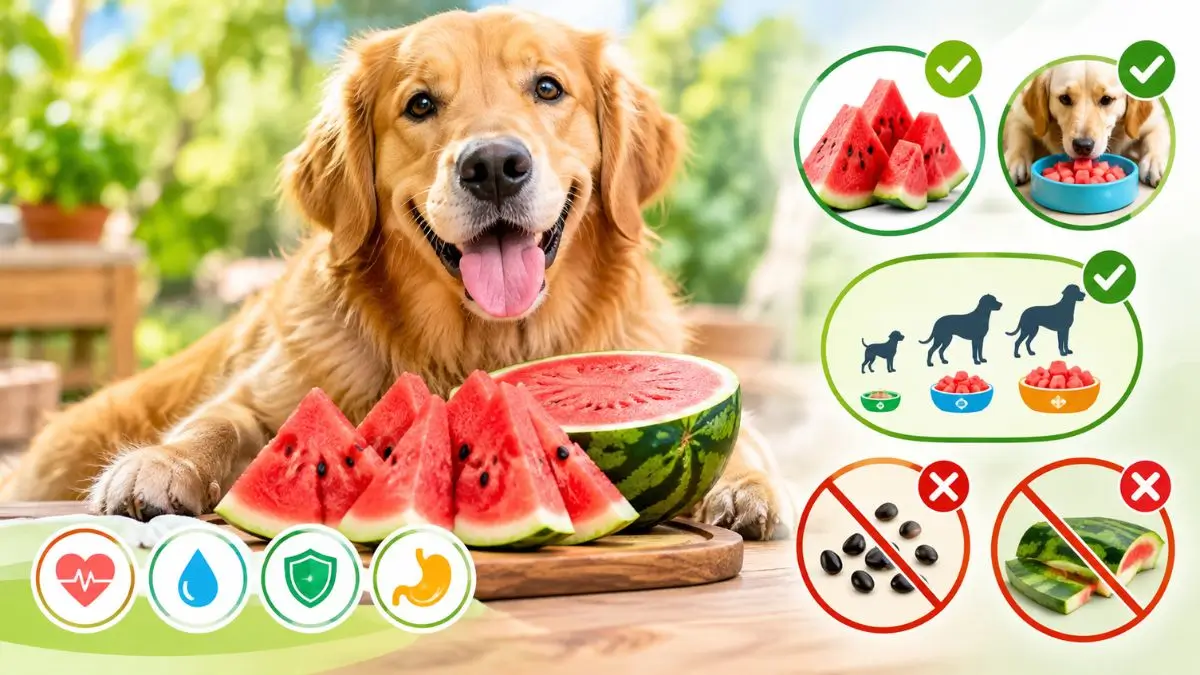
Can dogs eat watermelon? Yes. Most healthy dogs can eat plain, seedless watermelon flesh in small amounts, and plenty of them love it. The rind and the hard black seeds are the parts that cause trouble, and portion size matters more with this fruit than most owners expect.
Watermelon is about 91% water, so a few cubes on a hot afternoon cost very few calories. That same water is why a big bowl can end with loose stools by evening. The full answer to can dogs eat watermelon comes with a few conditions, and this guide covers each one, from portions by body weight to what to do if your dog already ate the rind.
Nutrition figures here come from USDA FoodData Central, and the safety advice follows ASPCA and American Kennel Club guidance. For a dog with a health condition, your own vet’s advice comes first.
Is watermelon good for dogs? What the nutrition numbers show
Watermelon is a good occasional treat for most dogs because it is low in calories, almost fat free, and mostly water. One cup of diced flesh has about 46 calories and 9.4 grams of natural sugar, so it hydrates well but should stay small.
Here is what one cup of diced raw watermelon (152 grams) contains, based on USDA FoodData Central, and what each number means for a dog.
| Nutrient | One cup, diced (152 g) | What it means for your dog |
| Calories | 46 kcal | About 5 calories per 1-inch cube |
| Water | 139 g (about 91%) | Extra fluid on hot days |
| Natural sugar | 9.4 g | The main reason to keep portions small |
| Fiber | 0.6 g | A small amount, gentle in small servings |
| Potassium | 170 mg | A mineral dogs use for muscle and nerve function |
| Vitamin C | 12.3 mg | A bonus, since dogs make their own vitamin C |
Watermelon also contains vitamin A, vitamin B6, and lycopene, a red pigment with antioxidant activity, though most lycopene research involves people, not dogs. Five 1-inch cubes come to roughly 25 calories, a handy swap for a dense biscuit if your dog needs to lose weight.
Which parts of watermelon are safe for dogs?
Only the ripe red or yellow flesh is safe to share. Remove the green and white rind and the hard black seeds first. The soft white seeds in seedless watermelon are generally harmless in small numbers, but picking them out is sensible for small dogs.

| Part of the watermelon | Safe for dogs? | Why |
| Flesh (red or yellow) | Yes, in small amounts | Soft, mostly water, and easy to digest |
| Black seeds | No | Hard and slippery; many swallowed at once can cause a blockage |
| White seeds (seedless melons) | A few are fine | Soft, immature seed coats; remove them for toy breeds and puppies |
| Rind (green and white layers) | No | Tough and fibrous; large pieces can cause choking or a blockage |
| Candy, sorbet, sugar-free products | No | Added sugar, and some contain xylitol, which is toxic to dogs |
Can dogs eat watermelon seeds?
No, remove the black seeds before serving. A dog that swallows two or three seeds will usually pass them without trouble, but a large number can clump together in the intestine. Small dogs and puppies face the highest risk of a blockage.
Poisoning is not the main worry with seeds. Size and number are: one slice from a seeded melon can hold dozens, and a 10-pound dog has a narrow intestine. Buying seedless watermelon removes most of the problem.
Can dogs eat watermelon rind?
No. The rind is not poisonous, but it is tough, fibrous, and hard for dogs to chew into small pieces. Dogs often swallow chunks whole, which can lead to vomiting, diarrhea, choking, or an intestinal blockage that needs treatment from a vet.
This is worth repeating because rind is getting attention as a human food. In 2026 the USDA added a nutrient profile for raw watermelon rind to FoodData Central, and people usually eat it pickled or cooked. For a dog the risk is physical, not nutritional: a rubbery piece swallowed whole is how many rind blockages start. Pickled rind is off the menu anyway because of its salt and sugar.
How much watermelon can a dog eat? Portions by size
Keep all treats, watermelon included, under 10% of your dog’s daily calories. In practice that means one to three 1-inch cubes for small dogs, three to five for medium dogs, and up to about one cup for giant breeds, a few times a week.
The 10% treat rule is standard veterinary guidance, and the American Kennel Club applies it to watermelon too. Calorie figures below are rough estimates for healthy, neutered adults, based on the standard resting energy formula. Puppies, working dogs, and seniors differ, and your vet’s number beats any chart.

| Dog size | Example breeds | Approx. calories per day | 10% treat budget | Watermelon serving |
| Toy and small (5 to 20 lb) | Chihuahua, Yorkie, Shih Tzu | 200 to 590 | 20 to 60 | 1 to 3 cubes |
| Medium (21 to 50 lb) | Beagle, Cocker Spaniel, Border Collie | 610 to 1,160 | 60 to 115 | 3 to 5 cubes |
| Large (51 to 90 lb) | Labrador, Golden Retriever, German Shepherd | 1,180 to 1,810 | 120 to 180 | 5 to 8 cubes |
| Giant (over 90 lb) | Great Dane, Mastiff, Newfoundland | 1,800 and up | 180 and up | 8 to 10 cubes (about 1 cup) |
For example, a 12-pound Shih Tzu at a healthy weight needs roughly 400 calories a day, so its treat budget is about 40 calories. Three cubes of watermelon add about 15, which leaves room for a training treat or two. A full cup (46 calories) would go over that budget on its own.
A few times a week suits most dogs. Daily is fine for some if the serving stays small and their stools stay normal.
How to prepare watermelon for dogs: 7 essential safety rules
Wash the melon, cut away all the rind, remove the black seeds, and dice the flesh to a size your dog cannot gulp. Start with one or two pieces, count them as treats, and serve watermelon plain, without salt, sugar, spices, or sweet toppings.
- Wash the whole melon under running water before cutting, because a knife can carry dirt and bacteria from the rind into the flesh.
- Remove every bit of rind, including the pale white layer next to the green skin.
- Take out the black seeds with the tip of a knife or a fork. With seedless melons, you only need to pick out the soft white seeds for toy breeds and puppies.
- Cut pieces to your dog’s size: half-inch pieces for toy breeds and fast eaters, 1-inch cubes for medium and large dogs. Never hand over a whole wedge, because many dogs try to swallow it in one go.
- Start with one or two pieces and watch for loose stool, vomiting, or gas over the next 24 hours before working up to the portion in the table above.
- Count it as a treat. Watermelon shares the 10% budget with chews, biscuits, and table scraps.
- Serve it plain and fresh, with no salt, chili-lime seasoning, sugar, or syrup. Refrigerate cut watermelon, use it within three to five days, and do not leave it out in the heat for more than two hours.
Safe ways to serve watermelon and the products to avoid
Plain fresh cubes, frozen cubes, and mashed watermelon spread on a lick mat are all safe options. Avoid watermelon candy, sorbet, flavored drinks, and sugar-free watermelon products, because they carry added sugar or sweeteners such as xylitol, which is toxic to dogs.
Frozen cubes take longer to eat, which makes them a good hot-weather treat; cut them smaller for small dogs and seniors with worn teeth. Mashed watermelon frozen into a lick mat stretches a small portion into a long, quiet activity.
For a creamy version, blend watermelon with plain, unsweetened yogurt and freeze it in an ice cube tray. Check the yogurt label for sweeteners first.
The human watermelon products are where owners get caught out. Sugar-free gum, candy, ice cream, and drink mixes can contain xylitol, and the ASPCA explains that it triggers a sudden insulin release in dogs that can drop blood sugar to dangerous levels and, in larger doses, damage the liver. The ASPCA Animal Poison Control Center reported more than 10,000 calls in 2024 about dogs that had eaten xylitol.
Watermelon-flavored dog treats are a separate case. Many are fine, but some list sugar, syrup, or artificial colors near the top of the label, so run the ingredient list through our dog treat ingredient checker before you buy.
Which dogs should not eat watermelon?
Dogs with diabetes, dogs on a weight-loss plan, dogs with sensitive stomachs or chronic gut disease, and dogs on prescription diets should only get watermelon if their vet agrees. Puppies can have tiny amounts once they eat solid food comfortably.
Can dogs eat watermelon if they have diabetes? Only with your vet’s approval. A cup holds 9.4 grams of sugar, and diabetic dogs need predictable meals matched to their insulin, so some vets allow a cube or two in a fixed routine while others prefer lower-sugar treats.
For dogs on a weight-loss plan, swap watermelon in for a biscuit rather than adding it on top. Dogs with sensitive stomachs may get loose stools from the water and sugar, and a dog recovering from vomiting or diarrhea should be back on normal meals for a few days first.
Prescription diets for kidney, urinary, or food-allergy care are carefully formulated, so ask before adding any treat. Dogs that once needed surgery for a swallowed object should get small pieces and full supervision.
My dog ate watermelon rind or seeds: what should I do?
Stay calm and work out how much was eaten. A few seeds or a small bite of rind usually pass without trouble. Call your vet if a small dog ate many seeds, any dog swallowed a large piece of rind, or vomiting starts.

First, take away what is left and estimate the amount, then compare it with your dog’s size. A Labrador that swallows a few seeds will probably never notice. A 9-pound Yorkie that ate through the seeded center of a slice, or any dog that gulped a palm-sized piece of rind, deserves a call to the vet that day.
Do not try to make your dog vomit unless a vet tells you to, because hard pieces can cause harm on the way back up.
Then watch for 24 to 72 hours. Repeated vomiting, refusing food, a tender or swollen belly, straining with little or no stool, or unusual tiredness can signal a blockage and need a vet promptly, since blockages are easier to treat early. A day of mildly loose stool after eating rind is common and usually settles on its own.
Watermelon vs other fruits dogs can eat
Watermelon is one of the lowest-calorie fruits you can share, at about 46 calories per cup. Bananas and strawberries are also safe in small portions, while grapes and raisins are toxic to dogs and should never be given in any amount.
A medium banana has about 14 grams of sugar, roughly one and a half times a cup of watermelon, so it calls for smaller portions; see our guide on whether dogs can eat bananas. Strawberries bring fiber and vitamin C in a small package, and our guide to strawberries for dogs explains how to prepare them.
Cantaloupe and honeydew follow the same rules as watermelon: flesh only, no rind or seeds. Grapes and raisins sit on the ASPCA’s list of people foods to avoid, and our list of human foods dogs can and cannot eat covers the rest.
Can dogs eat watermelon? Frequently asked questions
Quick recap: serve the flesh only, never the rind or black seeds, keep portions inside the 10% treat budget, and start with one or two pieces. Call your vet about any dog with a health condition. The answers below cover the most common follow-up questions.
Can dogs eat watermelon every day?
Most healthy adult dogs can have a few small cubes daily, as long as the total stays inside the 10% treat budget and their stools stay firm. For most households, a few times a week is the easier routine and keeps some variety in treats.
Can puppies eat watermelon?
Yes, once they are weaned and eating solid puppy food comfortably. Give one or two small pieces with no seeds or rind. Puppies have small stomachs and small treat budgets, so watermelon should stay an occasional reward rather than a regular snack.
Can dogs eat frozen watermelon?
Yes. Frozen seedless cubes make a cooling summer treat and take longer to eat than fresh ones. Cut them small for toy breeds, let them soften slightly for seniors with dental wear, and supervise dogs that tend to swallow pieces whole.
Does watermelon give dogs diarrhea?
It can if a dog eats too much at once or is not used to fruit. Watermelon is over 90% water and contains natural sugar, which can loosen stools in large servings. Small portions rarely cause trouble, while eaten rind often upsets the stomach.
Can dogs drink watermelon juice?
Plain juice you blend at home is safe in small amounts, such as a few tablespoons poured over food or frozen in an ice tray. Skip store-bought watermelon juice and drinks, which often contain added sugar, and never use juice in place of water.
Can dogs eat watermelon ice cream?
Not the kind made for people. Store-bought watermelon ice cream and sorbet are high in sugar, and sugar-free versions may contain xylitol, which is toxic to dogs. Blend frozen watermelon with plain, unsweetened yogurt instead, or buy a frozen treat made for dogs.
Can dogs eat yellow watermelon?
Yes. Yellow and orange varieties are as safe for dogs as red watermelon. They contain less lycopene than red flesh but follow exactly the same rules: remove the rind and black seeds, cut the flesh into small pieces, and keep the portions small.
The bottom line on watermelon for dogs
So, can dogs eat watermelon? Yes, most healthy dogs can enjoy plain watermelon flesh as a low-calorie treat. Remove the rind and black seeds, keep portions inside the 10% treat budget, and ask your vet first if your dog has a health condition.
Nearly every watermelon problem comes from one of two mistakes: too much at once, or the wrong part of the fruit. Get those right and it is one of the easiest treats to share on a hot afternoon. For dogs with diabetes, a prescription diet, or a habit of swallowing things whole, a short call to your vet settles the question.
Before buying any watermelon-flavored chew, check its label with our ingredient checker, since the risk in those products usually comes from what has been added rather than from the fruit. Start with one cube, watch the next day’s stool, and you will know quickly whether watermelon suits your dog.