Can Dogs Eat Nutritional Yeast? Benefits, Risks, and Safe Portions

Yes, nutritional yeast is safe for most healthy dogs in small amounts, and plain deactivated flakes are the only kind to buy. The flakes in your pantry look like pale gold fish food and smell faintly cheesy. They are a dead yeast grown for its B vitamins and protein, then heated and dried so it can never ferment. The mix-up starts because the word yeast also covers the live yeast that makes bread rise, and that one is dangerous raw.
This guide answers the safety question first, then sorts out the three yeasts, the portions, the honest benefits, and the dogs that must skip it. It also names the one point the guides disagree on, the amount.
Can dogs eat nutritional yeast?
Yes, dogs can eat nutritional yeast, and plain deactivated flakes are safe for most healthy dogs in small amounts. It adds B vitamins and protein as a topper, not a required food. Skip seasoned blends, and ask your vet if your dog has kidney disease.

Safe sounds simple, but is it the same yeast that makes bread rise?
The safety story comes down to one step: heat. The yeast is Saccharomyces cerevisiae, grown in a nutrient bath, then heated and dried until it is dead. Dead yeast cannot ferment, cannot make gas or alcohol, and cannot rise in a stomach. The flakes taste cheesy because of glutamic acid, the compound that gives food a savory note, and most dogs eat a sprinkled bowl faster than a plain one. DogTime’s short guide gives the same verdict, yes in small amounts, and puts the starting amount at half a teaspoon with your vet to confirm the rest.
What it is not matters as much as what it is. It is not a probiotic, since the yeast is inactive and carries no live-yeast benefits. It is not a required food and not a medicine. A dog on a complete commercial diet already gets these nutrients, so the flakes add flavor and a little extra nutrition, not a missing piece. The real use is getting a picky or recovering dog to eat. The cheesy flavor comes without the fat and lactose of real cheese, which our cheese guide covers in full.
What is nutritional yeast, and how is it different from other yeasts?
Nutritional yeast is deactivated Saccharomyces cerevisiae, heated and dried so it can never ferment. Brewer’s yeast is a bitter beer by-product, and baker’s yeast is alive and ferments. Only nutritional yeast tastes mild and cheesy. The jars look alike, so read the label first.

| Yeast | What it is | Alive or dead | Taste | Safe as a dog topper |
|---|---|---|---|---|
| Nutritional yeast | Saccharomyces cerevisiae grown for nutrients | Dead, heated and dried | Mild, cheesy | Yes, plain flakes in small amounts |
| Brewer’s yeast | Beer by-product, also Saccharomyces cerevisiae | Dead when sold as a supplement | Bitter | Yes, as a supplement, different taste and nutrients |
| Baker’s yeast | Live yeast for bread | Alive, ferments | Yeasty, doughy | No, raw dough is an emergency |
Tell the jars apart by the label. Nutritional yeast says “nutritional yeast flakes” or “deactivated” on the front. Brewer’s yeast turns up as bitter tablets or powder for beer making. Active dry yeast comes in small packets for baking, and the label says “active”, “instant”, or “rapid rise”. That last jar stays out of the dog bowl. Great Pet Care’s nutritional yeast guide, written with board-certified veterinary nutritionists, explains the heating step and why the dead yeast is not a probiotic.
What are the benefits of nutritional yeast for dogs?
Nutritional yeast gives dogs B vitamins, complete protein, zinc, selenium, and beta-glucans, and its main proven benefit is taste. Dogs eat more of a meal sprinkled with it. Coat and immune claims are plausible, not proven, and a complete dog food already covers these nutrients.

The nutrient list is solid. The flakes carry B1 thiamine, B2 riboflavin, B3 niacin, B6 pyridoxine, and B12 cobalamin in fortified flakes only, plus complete protein with all ten essential amino acids dogs need, the antioxidant glutathione, zinc, and selenium. The best proof of any benefit is taste: in a Beagle study reported by Great Pet Care, dogs ate the yeast diet at a 1.9:1 ratio over the plain diet. It may also lower fecal E. coli counts, which points to gut and immune support, though the evidence is thin. Eggs give a similar complete protein in a whole food, and oatmeal is another plain topper for a picky eater, with soluble fiber the flakes do not have.
Be honest about the limits. Dog-specific studies are minimal, and no page in the research proves the flakes prevent or cure disease. They are not an essential supplement. The main real use is appetite: a picky or recovering dog that turns away from plain kibble often eats when the flakes go on. One claim needs a clear no. Some pages say the B vitamins in yeast repel fleas. No study in the research backs that, so do not skip flea prevention because of a sprinkle. A vet-approved flea product is the route, not a pantry topper.
How much nutritional yeast can a dog eat?
Start with half a teaspoon, watch the stool and gas for a day, and raise it only if the dog stays settled. Guides disagree on the top amount, from one teaspoon to one tablespoon for a large dog, so ask your vet for your dog.

The amount looks tiny, so why do some guides give a tablespoon and others a teaspoon?
| Dog size | Houndsy’s guide |
|---|---|
| Under 20 lb | 1/4 teaspoon |
| 20 to 50 lb | 1/2 to 1 teaspoon |
| 51 to 90 lb | 1 to 2 teaspoons |
| Over 90 lb | 1 tablespoon |
Start at half the table amount for the first week. The table above is one published guide, from Houndsy, and it is not veterinary consensus.
The guides disagree, and the disagreement is worth naming. Cuteness caps every dog at one teaspoon whatever the size. LoveToKnow gives half a teaspoon per 10 lb, which would be more than four teaspoons for a 90-lb dog. DogTime says half a teaspoon to start and ask your vet. The numbers cannot all be right for the same dog, and that is why this guide gives no single standard dose. The rule every source agrees on is the conservative one: start low, watch the stool, and let your vet set the amount. Houndsy’s nutritional yeast guide is the source of the table above, and its page also explains the phosphorus and purine risks in full.
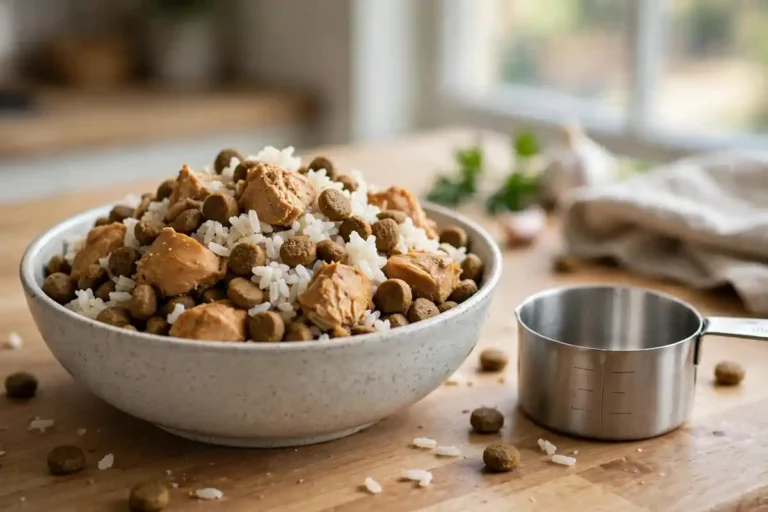
Serve it simply: sprinkle it over kibble or mix it into wet food. A little goes far because the flavor is strong. Puppies follow a smaller rule: LoveToKnow’s puppy amount is a quarter teaspoon per 10 lb until adulthood, and a vet should confirm it. A small daily sprinkle is the normal use for a healthy dog, yet the calories count, so a dog that gains weight needs the portion cut or the topper dropped.
Can dogs eat baker’s yeast or raw bread dough?
No, dogs must never eat baker’s yeast or raw bread dough. Live yeast ferments in the stomach, the dough swells and can twist, and the ethanol it makes can poison the dog. Fully baked bread is different, and a slice is safe as a treat.

Raw dough ferments carbohydrates into ethanol and carbon dioxide. In the warm stomach it keeps rising and distends the stomach, which can lead to bloat, and the ethanol is absorbed into the blood. The result can be drunkenness, disorientation, ataxia, vomiting, acidosis, tremors, low blood pressure, low body temperature, and breathing trouble. Watch for vomiting or unproductive retching, a swollen belly, panting, unsteadiness, and mental dullness. The ASPCA’s dough advisory explains the mechanism and lists the symptoms to watch. Give small sips of cool water if the dog will drink, then call the ASPCA poison line at (888) 426-4435 or your vet at once. Do not wait for symptoms, and do not try to treat it at home.
Fully baked bread is safe as an occasional treat, and our bread guide explains which loaves are safe and why raisin bread is not. Keep dough up and out of reach, especially during holiday baking, and watch the counter and the trash.
What are the risks of nutritional yeast for dogs?
Nutritional yeast is low risk for healthy dogs, and the common problems are gas, loose stools, and extra calories when the portion grows too fast. The bigger risks sit with sick dogs: kidney disease, yeast allergy, and dogs on medication all need a vet first.

Most dogs handle it fine, so which dogs should never get a sprinkle?
Start low and the common problems stay small. Gas, bloating, and loose stools show up when the portion grows too fast or the first dose is too big. The fix is a smaller amount and a slower start, and a dog whose stools stay loose should come off it and see a vet. Weight gain is the quiet risk: the flakes carry calories, and a topper that grows week by week can push a dog over its daily limit. Some products add garlic, which is toxic to dogs in high doses, so read the ingredient list. Very high doses can cause flushing, feeling hot, and rapid breathing. A dog with a sensitive stomach should start even slower, and our sensitive stomach food guide explains how to test a new topper without a flare-up.
Two risks need a vet before the first sprinkle. The yeast is rich in purines, which the body turns into uric acid, so Dalmatians and breeds prone to urinary stones should avoid it. It also adds phosphorus and protein, and a kidney-disease dog already lives with limits on both, so the flakes add a load the kidneys must clear.
Which dogs should never eat nutritional yeast?
Dogs with kidney disease, a yeast allergy, immune problems, or chronic stomach trouble should skip nutritional yeast unless a vet clears it. Dogs on prescription diets or medication need the check, since the yeast adds nutrients the diet already controls and can interact with drugs.

Take the groups one by one. Kidney disease means phosphorus and protein limits, and the flakes add both. A true yeast allergy affects a small percentage of dogs, yet for those dogs any amount is wrong. Immune problems and GI bleeding call for caution, since the yeast can stir up a gut that is already fragile. A prescription diet is balanced down to the last nutrient, and a topper can undo that balance. Medication can interact with the yeast, so the vet checks first.
Puppies are not banned from it, yet a puppy on a complete puppy food needs nothing extra, and the amount is smaller than an adult’s. For the dogs in this section, the answer is a plain topper the vet approves, not a different yeast. The dog loses nothing by skipping it, since it is optional.
Does nutritional yeast cause yeast infections in dogs?
No, eating nutritional yeast does not cause yeast infections in dogs. Skin and ear yeast infections come from Malassezia, a different fungus that lives on the skin, and dead flakes cannot feed it. A dog with ear infections needs a vet to find the cause.

Two different fungi share one word, and that is where the myth starts. Saccharomyces cerevisiae is the food yeast, dead in the flakes. Malassezia is a skin fungus that grows when an ear or skin fold stays warm and damp, often after allergies or an ear shape that traps moisture. Eating dead flakes cannot seed a live skin infection.
Call the vet for repeated ear scratching, a yeasty smell, dark discharge, red skin, or hair loss. Those signs need a diagnosis and treatment, not a diet change, and stopping the flakes will not fix them.
How do you choose safe nutritional yeast for dogs?
Buy plain, unseasoned nutritional yeast flakes with a short ingredient list. Skip blends with salt, onion powder, or garlic powder, and pick fortified only if your vet wants extra B12. Check the label for third-party testing, since the FDA does not regulate supplements.

Fortified versus unfortified is a vet decision, not a label contest. Fortified flakes carry added B12 and sometimes other vitamins. Unfortified flakes are the plain natural product. More is not necessarily better on a balanced diet, so the choice follows the vet.
Seasoned blends are the trap. Some add garlic powder, and garlic is toxic to dogs in high doses, as our garlic guide explains. Onion powder hides in the same blends, and our onions guide covers why even small amounts matter. For quality, look for NASC verification on vet products and USP marks on human products, and ask who formulates the product and whether it is independently tested. Store the jar in a cool, dry cupboard, keep it closed, and use the flakes before the date on the label.
Frequently asked questions about dogs and nutritional yeast
The questions below cover what owners ask most about nutritional yeast: daily use, puppies, picky eaters, fleas, skin and coat, and the baker’s yeast mix-up. Each answer gives the short version first, then the detail that decides the amount or the product for your dog.

Can dogs eat nutritional yeast every day?
Yes, a small daily sprinkle is the normal use for a healthy dog. Keep it a topper, not a meal, watch the weight and the stools, and skip a day if the stools loosen.
Can puppies eat nutritional yeast?
Puppies can have small amounts once they eat solid food, and the amount is smaller than an adult’s. LoveToKnow’s puppy rule is a quarter teaspoon per 10 lb until adulthood, and your vet should confirm it. A complete puppy food needs nothing extra, so the flakes stay optional.
Does nutritional yeast help picky dogs eat?
Yes, that is its best proven use. The glutamic acid gives food a savory taste, and in a Beagle study reported by Great Pet Care, dogs ate the yeast diet at a 1.9:1 ratio over the plain diet. Sprinkle a little and let the smell do the work. If appetite stays low for days, call your vet.
Does nutritional yeast repel fleas?
No reliable evidence says it does. Some pages repeat the idea that B vitamins keep fleas away, yet no study backs it, so do not skip flea prevention because of a sprinkle. A vet-approved flea product is the route, and the flakes stay a food topper.
Is nutritional yeast good for a dog’s skin and coat?
It supplies biotin and riboflavin, which support skin and coat, yet no dog study proves it fixes coat problems. A dog on a complete diet already gets these nutrients, so the honest answer is that it may help and is not proven. A dull coat with itching or hair loss needs a vet, not a topper.
Is nutritional yeast the same as brewer’s yeast?
No. Brewer’s yeast is a beer by-product with a bitter taste, while nutritional yeast is grown for nutrients and tastes mild and cheesy. Both are sold deactivated as supplements, so neither ferments. And neither one is baker’s yeast, which is alive and belongs nowhere near a dog bowl raw.
Nutritional yeast earns its place as a pantry topper, not as a medicine. A small sprinkle helps a picky dog finish a bowl, adds B vitamins and protein a healthy dog can use, and stays safe when the product is plain and the portion is small. The two rules that matter are the ones this guide keeps coming back to: never confuse it with live baker’s yeast, and ask your vet before the first sprinkle if your dog has kidney disease, an allergy, or takes medicine.