What to do if your dog eats something toxic: first steps, calls to make, and what never to do

Call your vet or animal poison control the moment you suspect your dog ate something toxic, even if your dog looks fine. Fast action gives your dog the best chance, and waiting only makes treatment harder. This guide covers the first steps, the numbers to call, the signs to watch, and the mistakes to avoid.
The ASPCA guidance for a poisoned pet lists four steps: check on your pet, gather evidence, call at once, and do not panic. Save the two hotline numbers in your phone today, since a poisoning never waits for office hours.
What should you do first if your dog eats something toxic?
Move your dog away from the toxin, then call your vet or animal poison control right away, even if your dog looks fine. Note what your dog ate, how much, and when. Do not wait for signs or try a home remedy before you call.
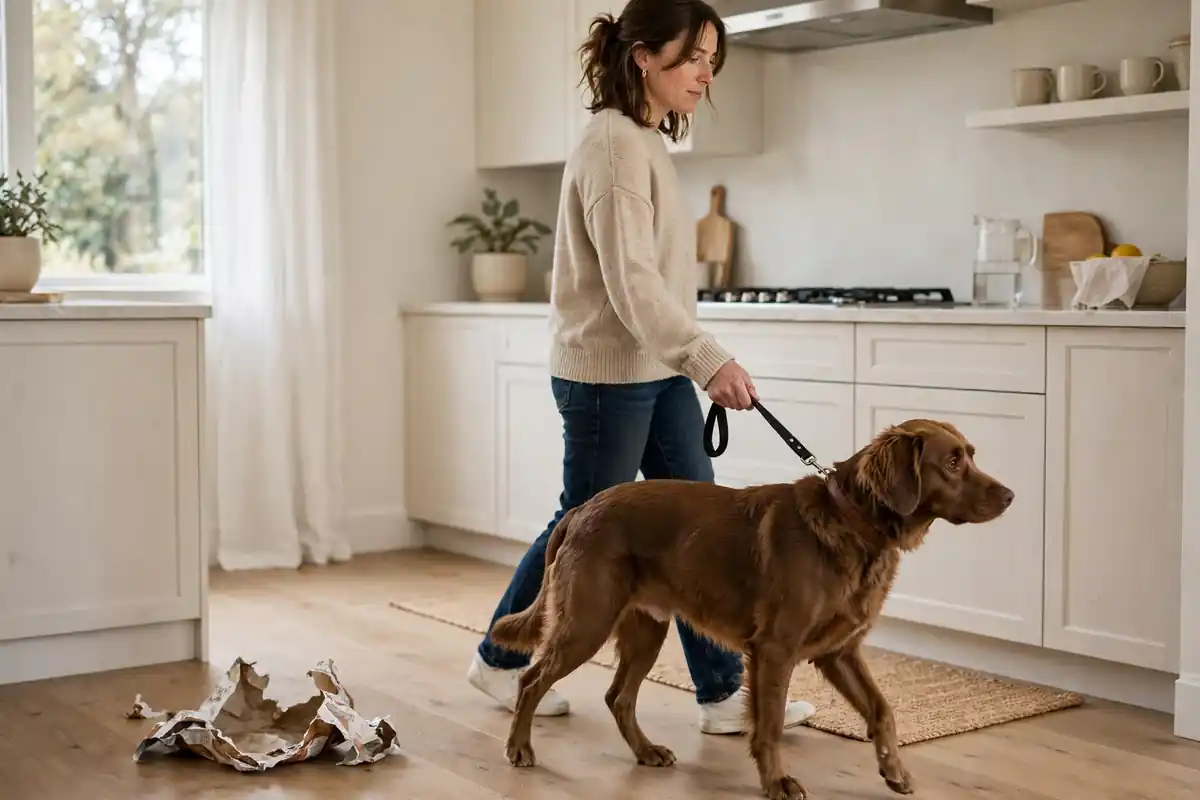
If your dog is still eating the substance, take it away calmly and check the mouth for stuck pieces. Do not chase your dog around the house. Running and stress can speed up how fast a poison moves through the body, and a frightened dog may bite. Move your dog to a safe room with water nearby, away from children and other pets.
Make the call now. The ASPCA Animal Poison Control Center answers at (888) 426-4435, and Pet Poison Helpline answers at 855-764-7661. Both lines run 24 hours a day in the United States, Canada, and the Caribbean. Pet Poison Helpline charges $99 per incident, and that fee covers all follow-up calls about the same incident. Your own vet comes first if the clinic is open. After hours, call the nearest emergency clinic.
Give nothing by mouth before the call: no food, no milk, no medicine, and no home remedy. The ASPCA says to talk to a professional before giving your dog anything, since the wrong remedy can make things worse. The person on the phone will tell you what to do next.
You made the call. But what if the voice on the phone says to come in right now?
When should you go straight to the emergency vet?
Go to the emergency vet at once if your dog is unconscious, struggling to breathe, bleeding, having seizures, or collapsing. A dog that ate rat poison, antifreeze, or a large amount of xylitol also needs emergency care now, even without signs.
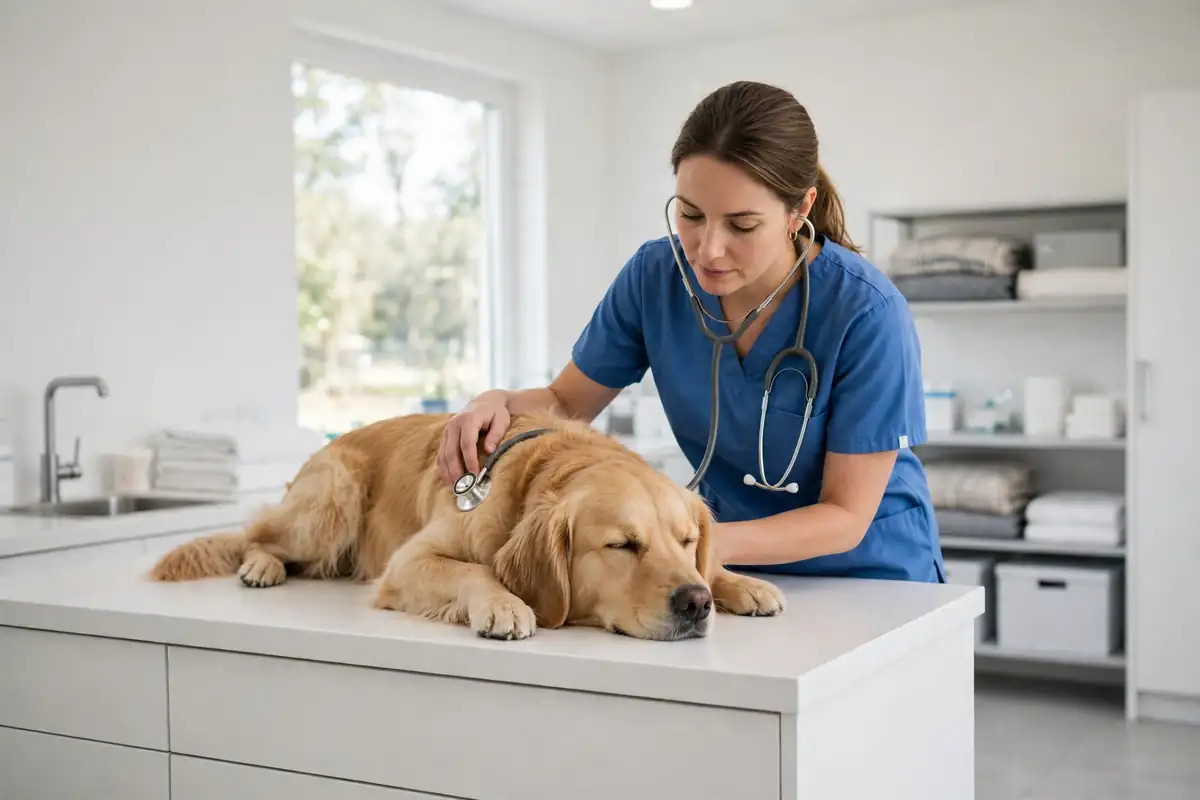
The ASPCA is clear about the red flags. A dog that is unconscious, has trouble breathing, is bleeding, or is having seizures goes straight to a clinic, with no call first and no waiting at home. Collapse, repeated vomiting, tremors, and a swollen belly belong in the same group. With these signs, minutes matter more than a phone call.
Some poisons send a dog to the emergency vet before signs appear. Rat poison, antifreeze, and a large amount of xylitol fall in that group, since each one can cause serious damage while the dog still looks normal. Call the clinic while you drive, so the team can prepare, and bring the packaging.
At the clinic, the vet will check breathing and heart rate, run blood work, and may give IV fluids. Treatment depends on the poison. Some rodenticides have an antidote, and the vet may give activated charcoal, but only in the clinic, never at home. The dog may stay for monitoring, since some poisons take hours to show their full effect.
What should you tell the vet or poison control?
Tell them what your dog ate, how much, and when, plus your dog’s breed, age, and weight. Bring the packaging or a photo of the label, and describe how your dog is acting now. If you are unsure of the amount, say so.
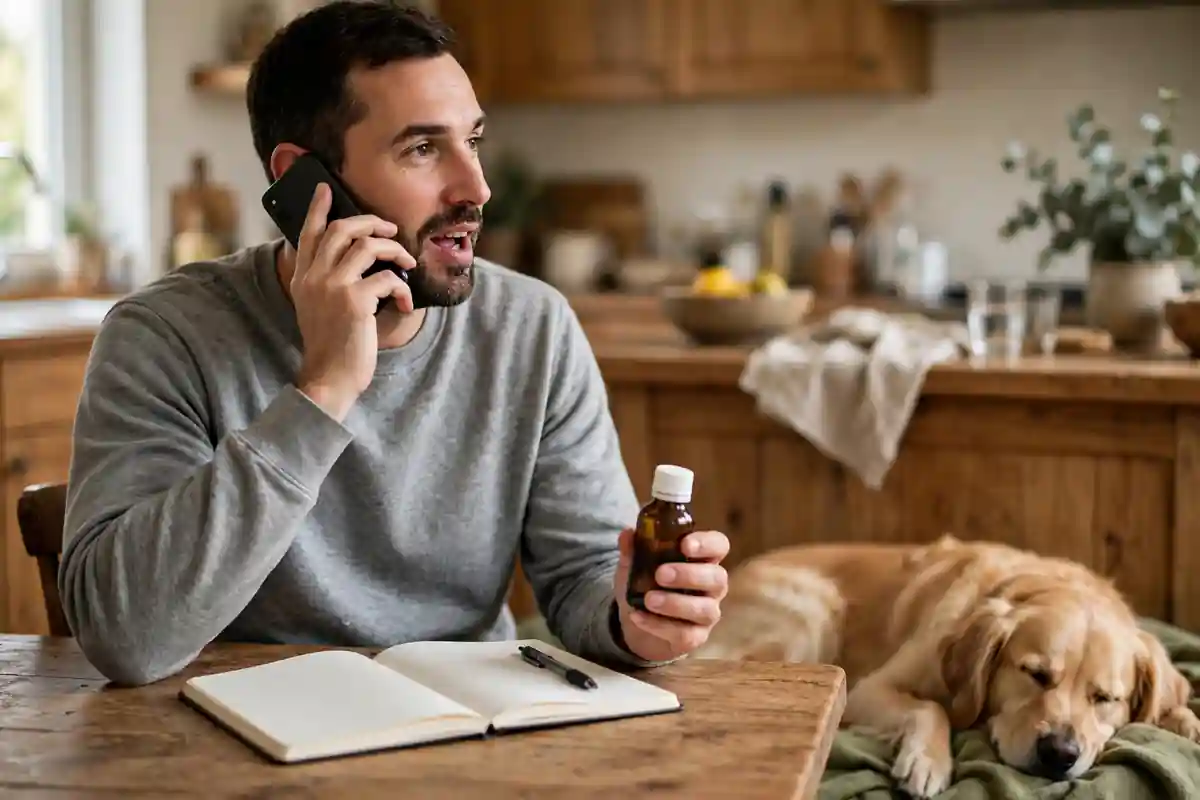
The ASPCA lists the questions its staff will ask: how your dog is doing, the breed, age, and weight, your dog’s health, and what it got into. Add the amount eaten, the time it happened, any vomiting so far, and any medicine your dog takes. A dog with kidney or liver trouble faces a different risk from the same poison.
Bring the packaging or a clear photo of the label. The label names the exact product, the active ingredient, and the strength, and that detail can change the treatment plan. For a plant, photograph the whole plant and a leaf. For food, keep the wrapper, even if it is torn. If you are unsure how much your dog ate, say so and assume the largest amount it could have reached.
Write down the time you found your dog and the time you called, since a guess made under stress is often wrong.
What are the signs of poisoning in dogs?
Watch for vomiting, diarrhea, drooling, loss of appetite, weakness, shaking, seizures, or trouble breathing. Pale or yellow gums, a swollen belly, and sudden collapse also signal trouble. Signs may start minutes after eating or take days to appear, even when your dog looks fine.

The most common early signs are vomiting, diarrhea, drooling, and loss of appetite. A dog that turns weak, wobbly, or unusually sleepy after eating something strange needs a vet call the same hour. Tremors and seizures mean the poison has reached the nervous system, and trouble breathing means the dog needs a clinic now.
Some signs point at a specific poison. Xylitol first causes vomiting, then weakness, staggering, loss of coordination, collapse, and seizures as blood sugar falls. Pale gums can mean blood loss, and yellow gums can mean the liver is failing.
The hardest part is that a poisoned dog can look fine at first. Signs depend on the poison, the amount, and the dog’s size, so a small dog can fall ill from an amount a large dog tolerates. Never judge the danger by how your dog looks in the first hour.
Some dogs look fine for hours, then crash without warning. Why does that happen?
Why do some signs take hours or days to appear?
Some poisons act slowly because the body needs time to absorb them. Rat poison takes one to two days to use up clotting factors, and bleeding signs follow in three to seven days. Xylitol drops blood sugar fast, yet liver damage may take a day.

Rat poison works on a slow clock. VCA explains that an anticoagulant rodenticide takes one to two days to use up the body’s clotting factors, and bleeding signs follow in three to seven days. The antidote is vitamin K1, given for several weeks, and the vet must start it early.
Xylitol runs on two clocks at once. The FDA explains that xylitol triggers an insulin surge that drops blood sugar within 10 to 60 minutes, so vomiting and weakness can start fast. Liver damage is slower, and serious effects may take 12 to 24 hours. A dog that seems to recover after the first low blood sugar episode can still face liver failure the next day. Grapes work the same slow way, since kidney damage can take time to show.
Macadamia nuts sit between the two speeds. The ASPCA notes that signs usually start within 12 hours and recovery takes 24 to 72 hours. The lesson is the same for every slow poison: a calm dog is not a safe dog.
Should you make your dog vomit?
No, never make your dog vomit unless a vet or poison control says so. Vomiting helps only in a short window and only for some poisons, and it can injure a dog that swallowed something sharp or caustic. Ask the professional on the phone instead.

The AKC states the rule plainly: never induce vomiting without explicit instruction from a vet or animal poison control. Vomiting works best within two hours of eating, and for chocolate it may still help at four to six hours. It never helps once the dog already shows signs of illness.
Some substances must never come back up. Sharp objects can cut the throat, caustic chemicals can burn it a second time, and petroleum products can reach the lungs. Dogs with nerve signs, flat-faced breeds, and megaesophagus face extra risk. Activated charcoal is not always safe either: the AKC warns it can cause trouble with strong acids, xylitol, sharp objects, and drugs that cause sleepiness.
Even when a vet approves vomiting, it is not a full fix. Hydrogen peroxide removes only about 40 to 60 percent of the stomach contents, according to Embrace Pet Insurance, and clinics use medicines such as apomorphine or ropinirole instead. This article prints no vomiting dose and no home recipe. Every step here ends at the phone, where a professional decides.
Vomiting stays off the table unless a professional says so. What else should never reach your dog’s mouth?
What should you never do after a poisoning?
Never give salt, oil, ipecac, mustard, milk, or water to force vomiting, and never put your fingers down your dog’s throat. Salt can cause seizures, oil can reach the lungs, and ipecac can disturb the heart. Never wait to see if your dog gets worse.

The ASPCA lists the home remedies that cause real harm. Salt can push blood salt levels so high that a dog starts walking unsteadily, then suffers tremors, seizures, and coma. Cooking oil can slip into the lungs and cause pneumonia, and it can inflame the pancreas. Syrup of ipecac causes drooling, breathing difficulty, and heart rhythm problems.
The remedies that do nothing are just as dangerous, since they waste time. Mustard, toast, water, and milk do not make a dog vomit, and milk does not neutralize poison. Nothing by mouth helps until a professional says otherwise.
Two more mistakes cost dogs their lives. The first is waiting to see if the dog gets worse: the ASPCA warns not to wait even when a pet acts normal, since some effects are delayed and treatment gets harder once signs appear. The second is bathing a dog that got a chemical on its coat without asking first. Move the dog away, stop it from licking the area, and ask the vet first.
Which toxins do dogs get into most often?
Dogs most often get into chocolate, xylitol gum, grapes and raisins, onions and garlic, macadamia nuts, human medicines, and rat poison. Chocolate danger grows with darker types, and baking chocolate and cocoa powder carry the highest risk. Keep every one of these out of reach.
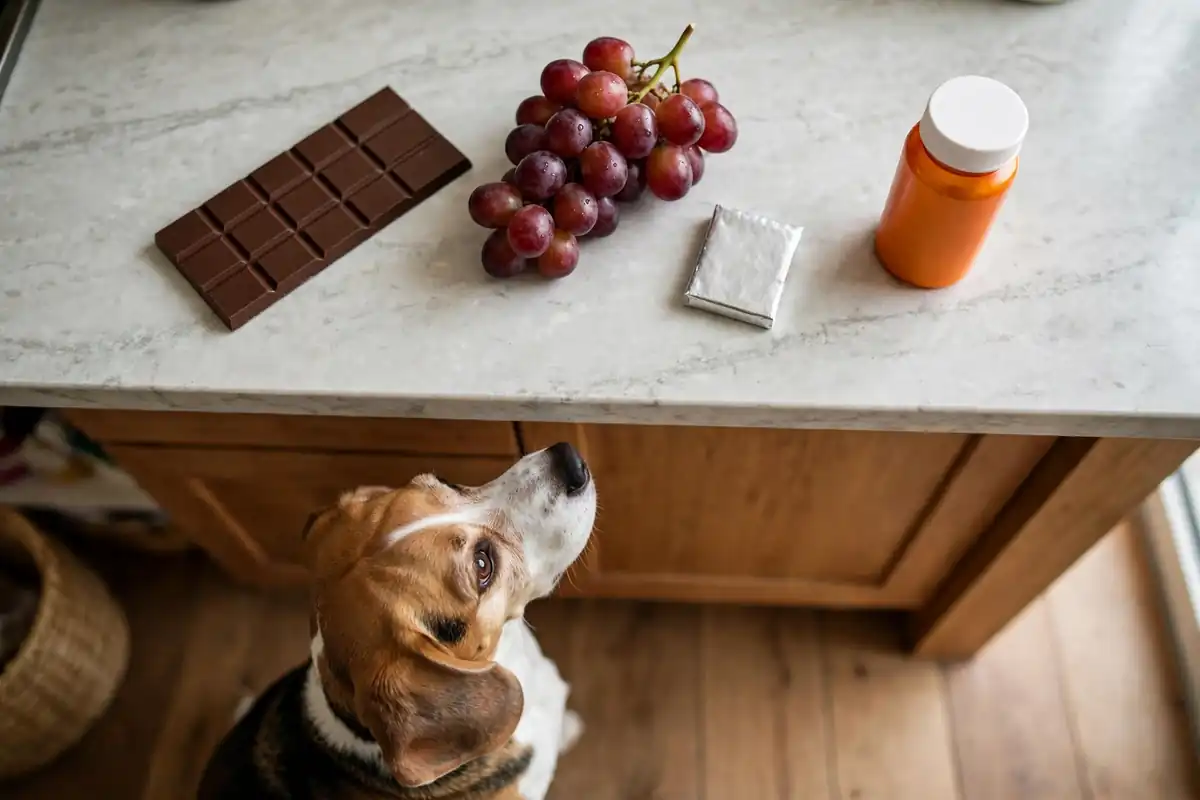
Chocolate tops most lists because it sits in plain sight. The ASPCA people foods list explains that chocolate, coffee, and caffeine carry methylxanthines, and the danger grows with darker types. Baking chocolate and cocoa powder carry the highest risk, while white chocolate carries the lowest. A small dog that eats a baking chocolate bar faces a far worse day than a large dog that eats a milk chocolate square. The full guide to chocolate covers amounts and signs.
Xylitol hides in places owners forget. The FDA xylitol warning lists gum, mints, candy, baked goods, cough syrup, chewable vitamins, mouthwash, toothpaste, some peanut and nut butters, over-the-counter medicines, supplements, and sugar-free desserts. It also appears on labels as birch sugar or wood sugar. Check every label, use pet toothpaste only, and read the nut butter jar first. The full guide to xylitol poisoning in dogs covers the timing and the treatment.
The kitchen holds three more common poisons. Grapes and raisins can damage the kidneys, and tartaric acid is the suspected cause. Onions, garlic, and chives irritate the gut and damage red blood cells, which can lead to anemia. Macadamia nuts cause weakness, poor coordination, depression, vomiting, tremors, and a raised temperature.
Human medicines and rat poison round out the list. The AKC warns that a childproof container does not mean pet-proof, and dogs chew through bottles and blister packs with ease. Store every medicine in a high closed cabinet, never on a nightstand or counter. Rat poison belongs in locked bait stations, and the vitamin K1 antidote works only when the vet starts it in time.
How can you prevent poisoning at home?
Store medicines, cleaning products, and food in high closed cabinets, and keep rubbish in a lidded bin your dog cannot open. Check the floor after cooking and shopping, and keep bags and coats off the floor. Teach every person in the house the same rules.
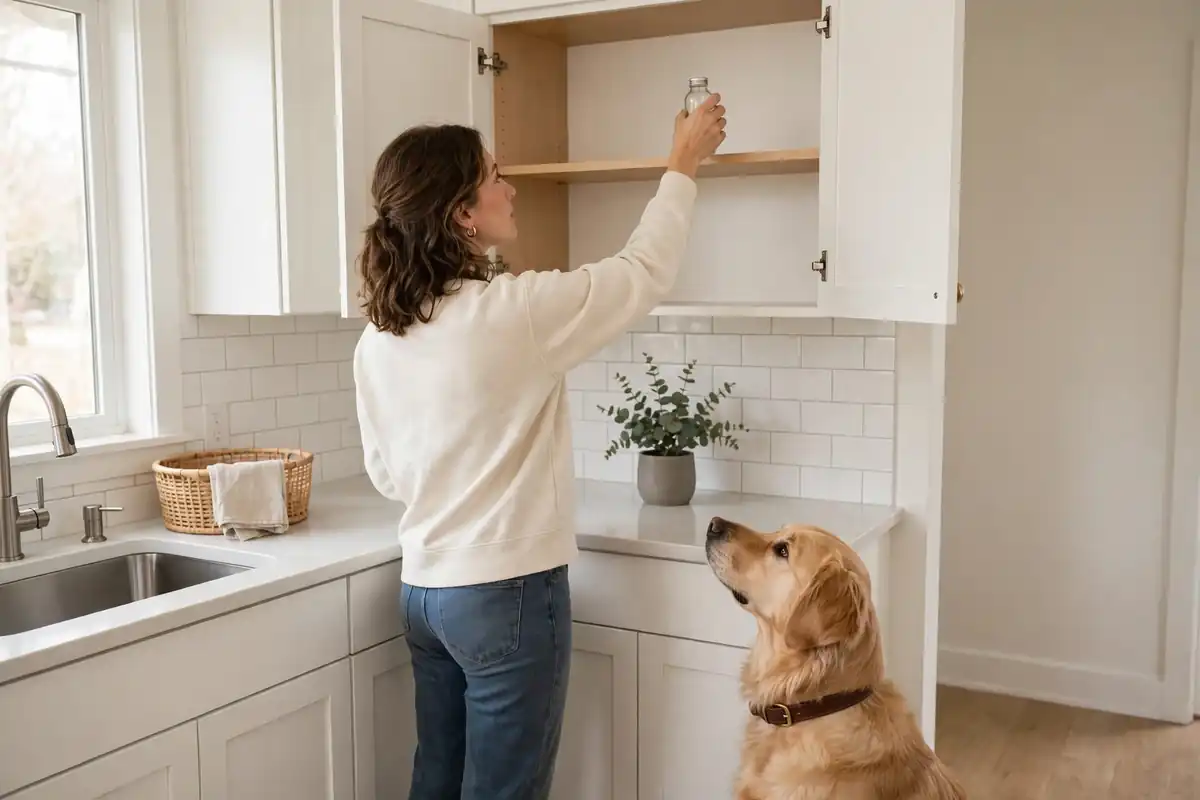
Storage does most of the work. Medicines, cleaning products, and food go in high closed cabinets, and rubbish goes in a lidded bin your dog cannot tip over. Keep shopping bags off the floor until you unpack them, since one bag can hold gum, chocolate, medicine, and grapes together. Coats and purses hang up, since pockets hold cough drops, mints, and pill bottles.
The yard and garage need the same care. Know which plants in your home and garden are toxic, and keep them out of reach. Store antifreeze, rat poison, and garden chemicals in locked cabinets, and clean up any spill at once.
Prevention is a household habit, not a one-time fix. Teach every person in the house the same rules, including children and guests. A dropped chocolate bar or a bag left on the floor can undo a careful owner’s work in a moment. Walk through your kitchen once a week and move one risky item higher.
Frequently asked questions about dogs eating something toxic
The questions below cover what owners ask most after a poisoning scare: recovery, timing, a dog that looks fine, milk, one grape, and vet treatment. Each answer gives the short version first, then the detail that helps you decide what to do next.

Can a dog recover from poisoning?
Many dogs recover fully when they get help early, and the odds fall the longer treatment waits. Recovery depends on the poison, the amount, the dog’s size and health, and how fast a vet starts treatment. Some poisons leave lasting kidney or liver damage, so follow-up blood work matters.
How long after eating something will a dog show signs of poisoning?
It ranges from minutes to days. Xylitol can drop blood sugar within 10 to 60 minutes, macadamia signs usually start within 12 hours, and rat poison bleeding signs can take 3 to 7 days. That range is why a vet should set the watch period.
What if my dog seems normal after eating something toxic?
Act as if the poisoning is real. The ASPCA warns not to wait even when a pet acts normal, since some effects are delayed and treatment gets harder once signs appear. Call your vet or poison control, describe what happened, and let them set the plan. The toxic foods guide lists the foods that harm dogs.
Can I give my dog milk after poisoning?
No. Milk does not neutralize poison, and the ASPCA lists milk among the remedies that do not work for vomiting. It can also upset the stomach and add fat that a stressed gut does not need. Give nothing by mouth until a vet or poison control tells you to.
Is one grape dangerous for a dog?
Yes, one grape can be dangerous, since grapes and raisins can damage the kidneys and no safe amount is known. Tartaric acid is the suspected cause. Call your vet even for a single grape, and watch for vomiting, loss of appetite, and less urination over the next day.
How do vets treat poisoning in dogs?
Treatment depends on the poison. A vet may induce vomiting in the clinic, give activated charcoal, run blood work, and start IV fluids. Some poisons have antidotes, such as vitamin K1 for rat poison. The dog may stay for monitoring, with follow-up checks first.
A poisoning scare tests every owner’s nerve. The right move stays simple: get your dog away from the toxin and make the call, then let a professional decide. Save the two hotline numbers in your phone now, before you need them. That one small step can keep the next scare from happening at all.